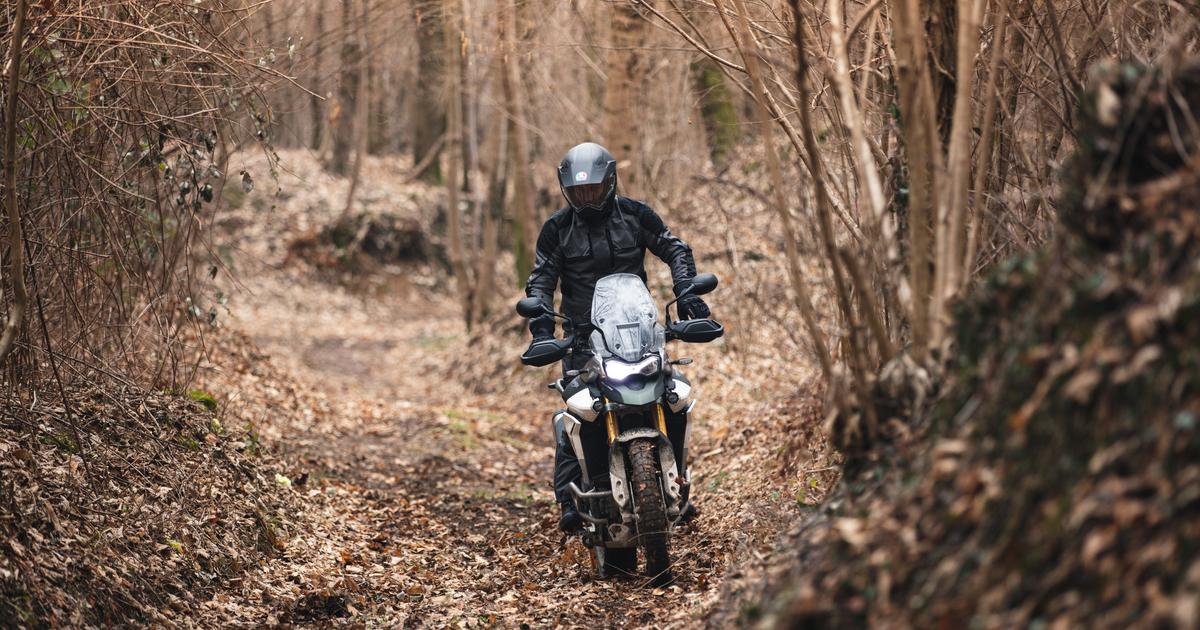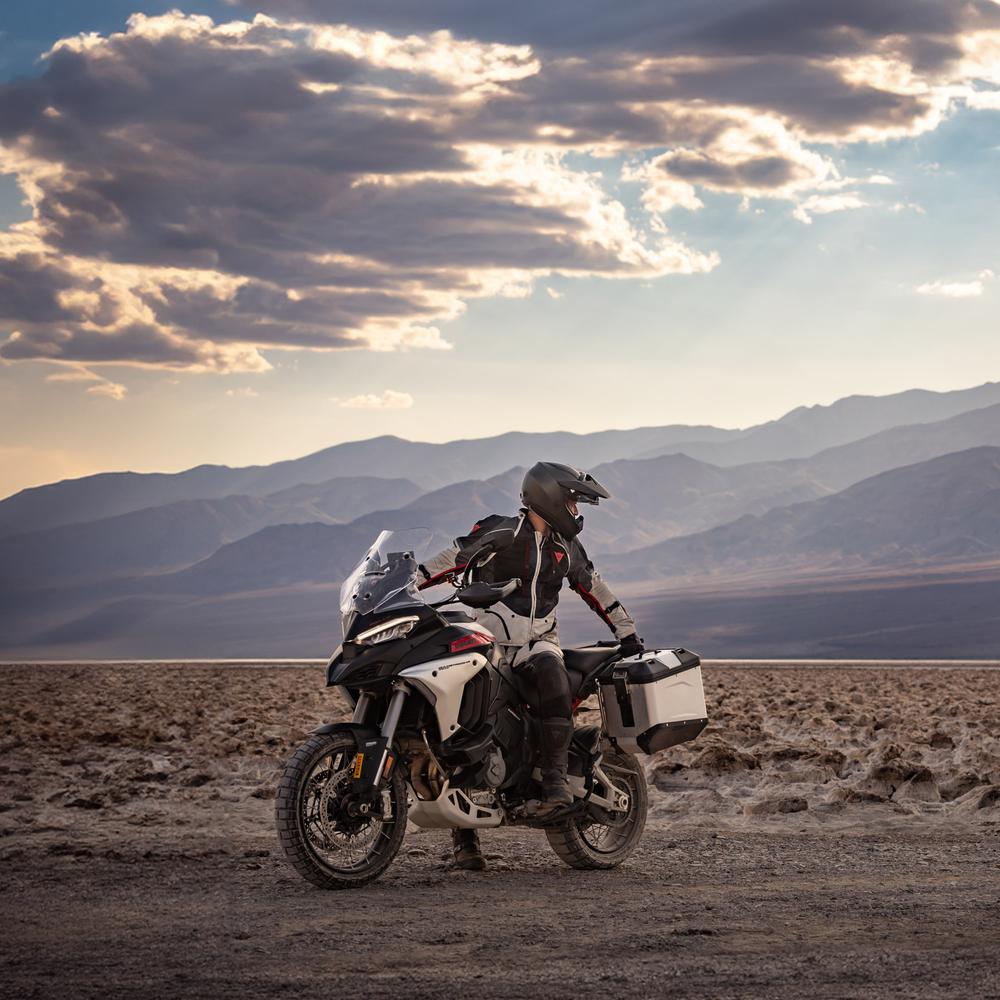


Whether it is a day ride or a longer journey, understanding how to dress for a motorcycle trip becomes essential when you spend hours in the saddle. Comfort, protection, and the ability to adapt to weather conditions can make the difference between an enjoyable ride and a less pleasant one.
That is why, before setting out on any route, it is always worth checking that your gear is complete and suited to the type of riding. Motorcycle touring gear includes a few essentials: Helmet, jacket and pants, gloves, boots, and protectors. Today, all of these items are available in many versions designed to adapt to different climates and the conditions you may encounter on the road.
Here is an overview of the main elements to consider.
Motorcycle helmet for touring: Full-face, modular or adventure
In addition to being required by law, the helmet is the starting point of any motorcycle gear setup, and for road travel the three most common options are these.
The full-face road helmet remains the benchmark for riders who want the highest level of protection and light weight, a feature that is especially appreciated when spending many hours in the saddle.
The modular helmet, on the other hand, is extremely popular among touring riders because of its versatility. The flip-up chinguard makes stops and travel phases more practical when you need to get on and off the bike frequently. On modular helmets, low noise levels are also a major focus.
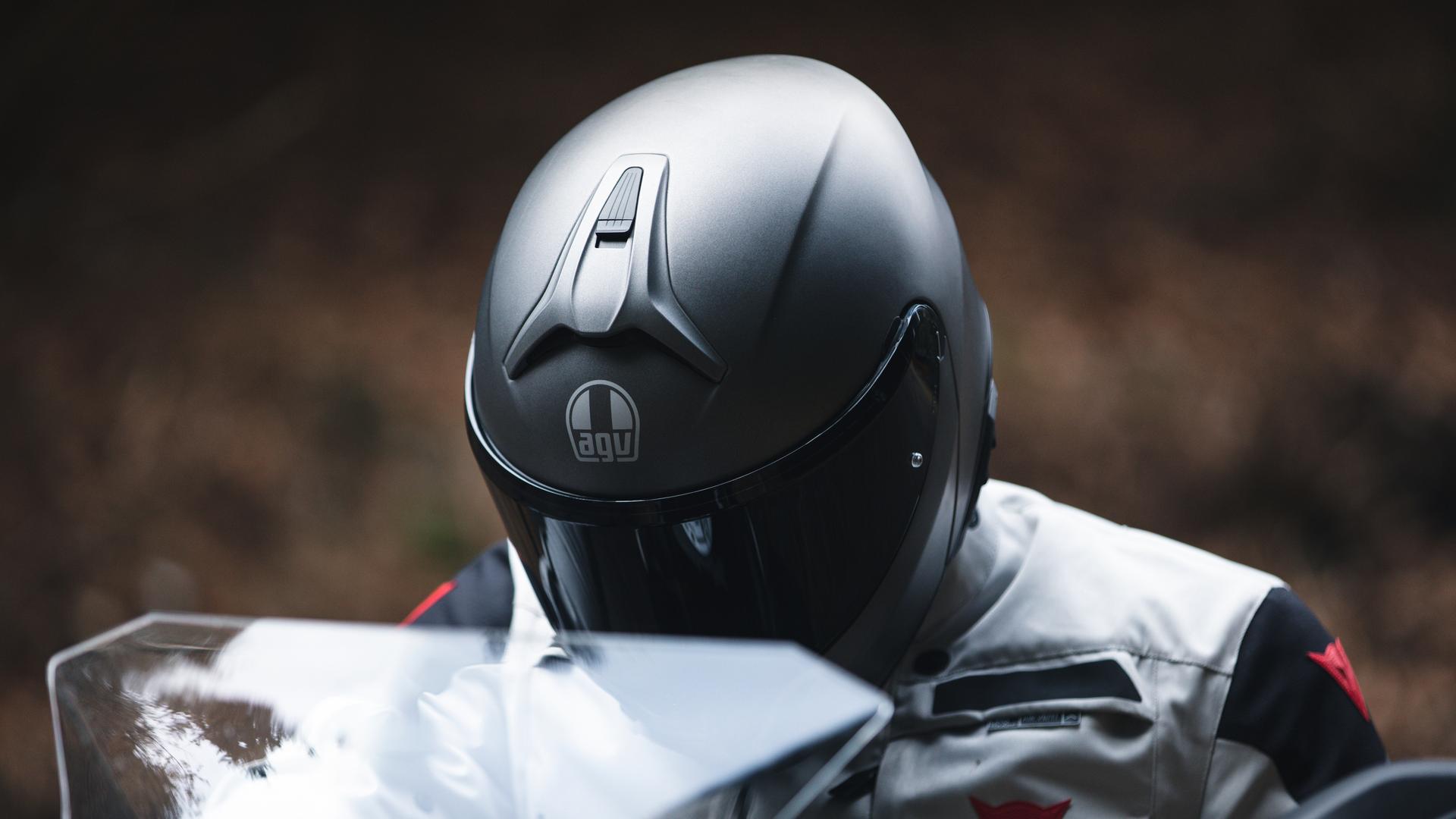
Adventure helmets are also becoming increasingly popular for travel, combining features of touring helmets and off-road helmets. The peak helps shield against the sun and, if you ride on dirt roads, against branches and debris. Given their design, they can be used with either a visor or off-road goggles.
Whatever the type, the helmet needs effective ventilation and high optical-quality visor performance, ideally Class 1, the top rating.
Motorcycle jacket: Ventilated, waterproof, or four-season
The jacket is one of the most complex pieces of touring gear: It must be comfortable, not too heavy, and able to protect against impacts, abrasion, and the elements.
For warmer climates, there are ventilated summer jackets made with large mesh panels that promote airflow and help keep the body cooler.
When the weather becomes unpredictable, waterproof motorcycle jackets come into play. Depending on their construction, they can be as follows:
- Three-layer jackets with a removable waterproof membrane and thermal lining. The most versatile option for year-round use by adjusting the available layers.
- Jackets with a floating membrane, where the waterproof layer is separated from the outer fabric. The most effective in cold temperatures, thanks to the air cushion created between the outer fabric and the membrane, which helps provide insulation.
- Laminated jackets, where the membrane is bonded directly to the outer fabric, a solution that is especially effective in the rain because it makes it harder for the outer fabric to become waterlogged.
Modern touring jackets also integrate certified protectors on the shoulders and elbows, along with multiple adjustable ventilation systems to adapt to the different temperatures encountered during the trip.


Motorcycle pants: Comfort and protection for long-distance riding
When you cover many miles in the saddle, pants also play a key role in comfort and protection. Travel models generally follow the same construction logic as jackets. You can therefore find:
- Ventilated summer pants, ideal for the hottest days
- Waterproof pants with a removable membrane
- Laminated pants designed for more demanding weather conditions
Knee and hip protectors, abrasion-resistant materials, and stretch inserts in key areas are what distinguish them from regular clothing, which is also less comfortable on long rides and provides no protection.
Motorcycle gloves: Control feel in every season
Gloves, which are mandatory in some countries such as France, are also an essential part of motorcycle touring gear because they must provide protection while also ensuring feel on the handlebars and controls.
There are different types designed for different seasons and uses:
- Summer gloves, lightweight and ventilated
- Waterproof touring gloves, with a membrane that resists rain and wind
- Winter gloves, with a waterproof membrane and thermal padding for lower temperatures
On motorcycle gloves for touring, it is also important to have rigid knuckle protection and abrasion-resistant materials in the most exposed areas.
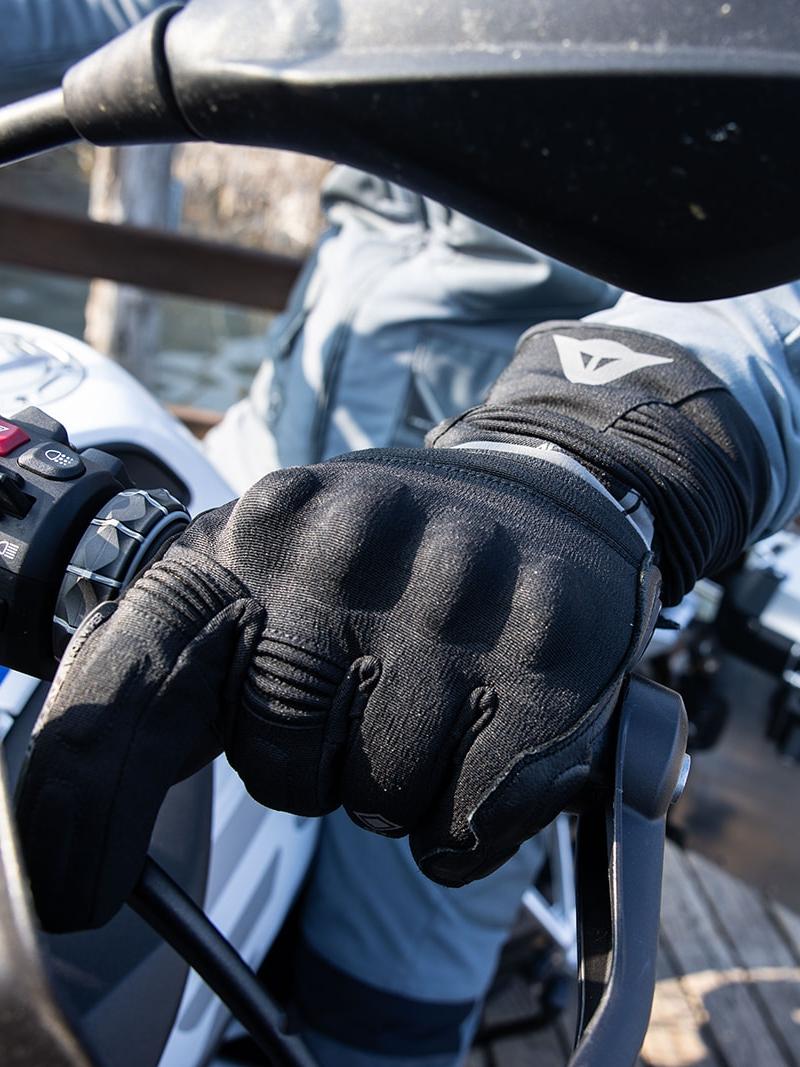
Funes Gore-Tex® Gloves
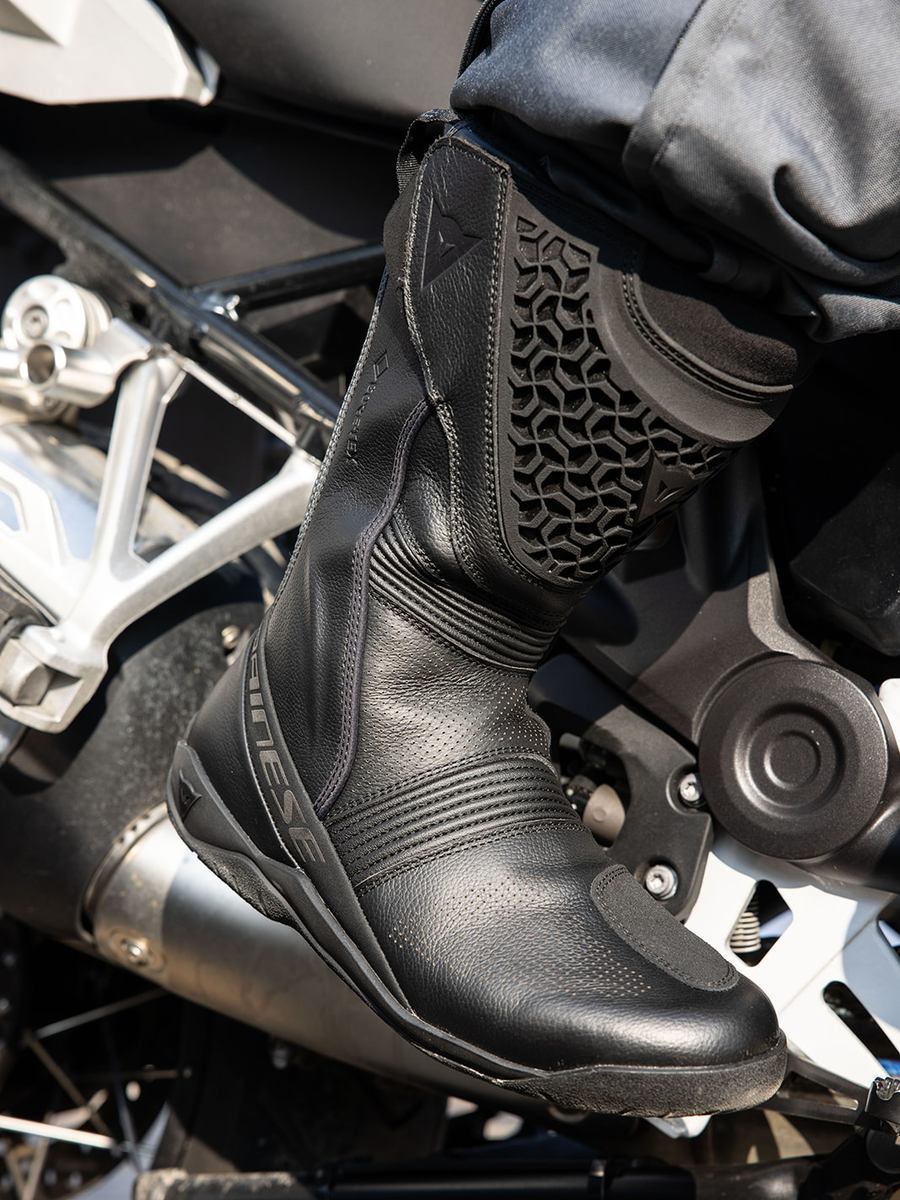
Fulcrum 4 Gore-Tex® Boots
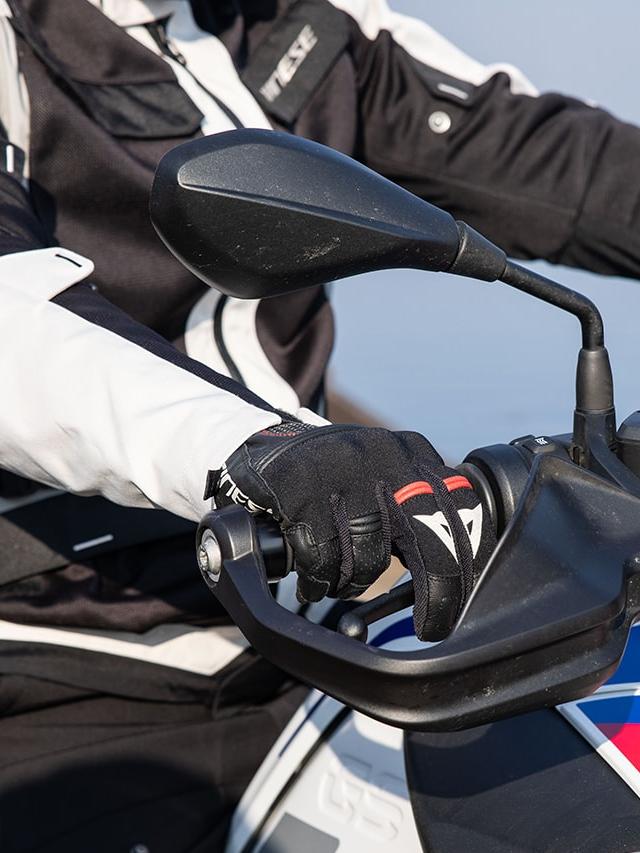
Namib Tex Gloves
Motorcycle boots: Support and protection on every trip
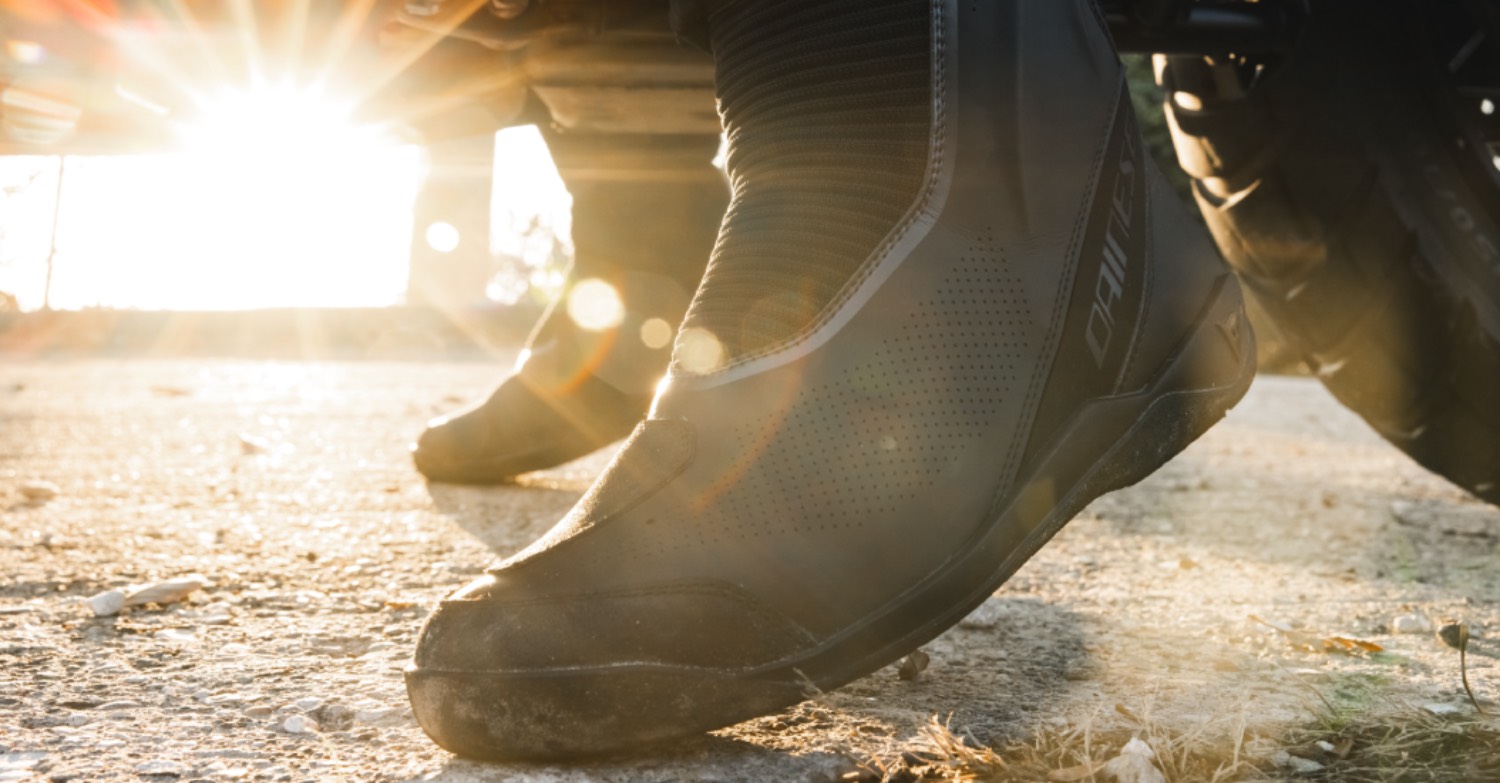
Boots complete the technical gear setup and serve an important function that is unfortunately often underestimated: Protecting the feet, ankles, and shins. After all, is it not true that our feet are the part of the body that touches the ground most often while riding? Just think of every time you stop, perhaps on an incline or less gracefully than expected: Support becomes essential.
Compared to regular footwear, motorcycle boots integrate reinforcements at the ankles, shin, toe, and heel, along with soles designed to resist crushing and provide grip on the foot pegs.
Here too, there are different types of boots:
- Touring boots, designed for maximum comfort and waterproof performance
- Adventure boots, with a taller cut and a more lugged sole They are stiffer and more protective, designed for mixed on-road and off-road use
- The right choice depends on the type of motorcycle and the terrain you expect to tackle during the trip.
Back protector and airbag: Next-generation protectors
Alongside the protectors built into riding gear, wearing a quality back protector is now considered essential, whether it is a standalone version with suspenders and a lumbar band or one designed to fit into the jacket pocket. Dainese offers several versions, in rigid or soft materials, for better ventilation and flexibility.
The real leap forward in motorcycle protection, however, is the D-air® electronic airbag, invented by Dainese and refined over decades after first being introduced in MotoGP™ in 2007. Thanks to sensors and an algorithm capable of recognizing crash dynamics, the airbag deploys automatically in moments, protecting crucial areas such as the back and chest more effectively than a traditional protector could, without its weight and bulk.
Getting ready for the trip, mile after mile
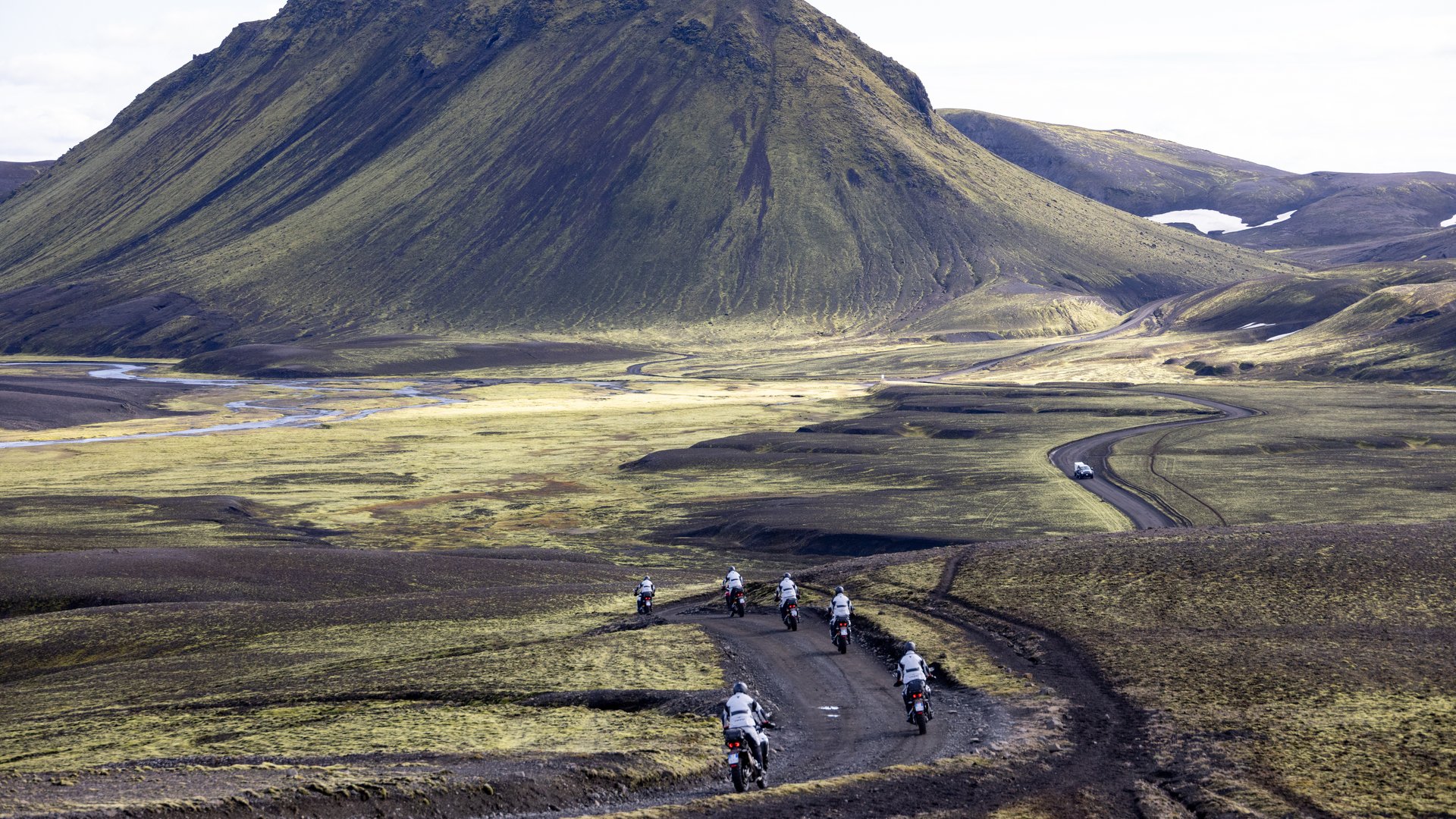
Every motorcycle rider develops a personal way of traveling and preparing over time, but one point remains the same for everyone: The right motorcycle gear for long trips makes it possible to tackle any route with greater comfort and safety.