

Back in 2016, the Fédération Internationale de Motocyclisme launched the FIM Racing Homologation Programme—FRHP—to raise overall safety standards in circuit motorcycle racing. The best-known part of the program is the safety standard for racing motorcycle helmets, which is what we're covering today. Its full code is FRHPhe, where "he" stands for helmets.
In 2019, the homologation for MotoGP and Superbike helmets, often simply called FIM homologation, came into force, setting a much tougher bar than the then-current European road sales standard, ECE22-05. In 2020, compliance with FRHPhe-01 also became mandatory in other FIM-sanctioned competitions, but still only for track racing.
Starting in 2022, people began talking about an evolution of this FIM-developed standard, officially in force from 2026. So today we're talking about FIM 2 homologation, full code FRHPhe-02, for another step forward in motorcycle helmet safety. And this time it applies to both track and off-road, including homologation for motocross, enduro, and rally raid helmets.
FIM FRHPhe-02 helmet homologation: how does it work?
The FIM 2 homologation protocol builds on the already strict FIM 1, but tightens the already stringent rules, but more accurate and severe in various aspects, especially for oblique impacts, which we covered here.
First, helmets must already be homologated under the European ECE22-06 Type P standard (P for protective—full-face), the US SNELL M2015, M2020R, or M2020D standards, or Japan's JIS T8133 2015 Type 2 Full Face.
FRHPhe-02 homologation includes a few baseline requirements: The helmet must be full-face; the shell must be one-piece and non-modular; the chin strap must use a double D-ring fastening; and the cheek pads must include a clearly identifiable quick-release system. Visors, if tinted or otherwise different from those homologated for road use, must meet the same safety criteria required by the standards listed above.
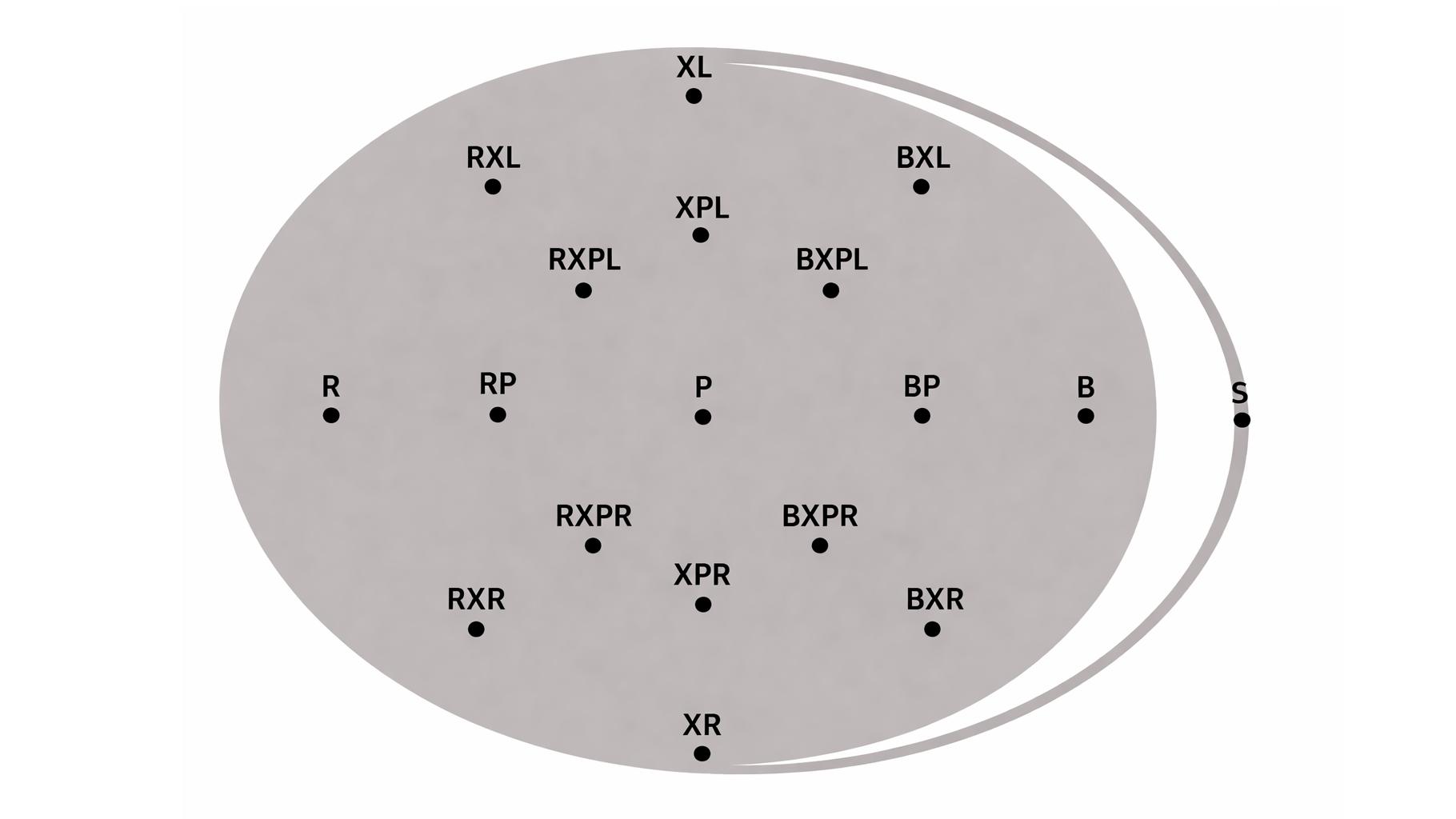
The 17 impact points on the shell, plus the S point on the chin guard
Aerodynamics rules
To see how FIM 2 helmet homologation works, here are a few aerodynamic rules: all add-ons must face rearward, so there can be no forward-facing edges that could snag; sharp edges are prohibited; except for the rear spoiler, no add-on may protrude more than 15 mm from the shell surface; side appendages are limited to one per side.
Homologating different sizes
As with FIM 1, if a manufacturer wants to homologate multiple sizes of the same helmet under FRHPhe-02, it must submit separate homologations for each size. Unless the sizes share the same shell size and differ only in internal padding, and only if the sizes differ by no more than 2 cm in head circumference.
For example, if size XS measures 53–54 cm and size S measures 55–56 cm, a single homologation is allowed because the difference between 54 and 55 is 1 cm (the gap is calculated using the two closest measurements).
Impact test types required by the FIM 2 standard
The FRHPhe-02 FIM 2 standard defines four types of impact tests, based on the shape of the object that strikes the helmet: flat anvil, hemispherical anvil, oblique anvil, and a penetration test with a pointed striker.
For each helmet model, the manufacturer must supply 6 identical samples. These are tested at four points of impact, chosen from 17 predefined points across the entire shell surface, as shown in the diagram below.


Flat anvil test
Helmet #1 is hit at four points using a flat anvil with a circular surface, 13 cm in diameter. The impact speed is 8.2 m/s (29 km/h).
Helmet #1 also undergoes a chin-bar test (point S), again with a flat anvil but at a lower speed of 6 m/s. This test is in addition to the four impacts above and is performed first. This test already exists under ECE22-06, but here it also requires that the visor does not open on impact (a check not included under FIM 1, added after multiple cases of visor detachment, both from falls and from accidental rider actions).
Hemispherical anvil test
Helmet #2 is tested with a hemispherical anvil, a hemisphere with a 48 mm radius, at 7.5 m/s. This is one of the main new requirements in FRHPhe-02 and a key difference between FIM 1 and FIM 2 homologation.
Oblique impact test
Helmet #3 is tested on a 45° inclined impact surface, designed to assess helmet performance in oblique impacts, the kind that generate dangerous rotational accelerations in the brain. The test is performed at different points on the shell:
- front at 8 m/s
- rear at 8 m/s
- left side at 8 m/s
- right side at 5 m/s
The allowed speed tolerance is always +0.15 m/s.
Compared with FRHPhe-01, FRHPhe-02 requires the helmet to withstand more severe impacts, with linear accelerations up to 18% higher and rotational accelerations about 4% higher.
Helmet #3 also undergoes a quick-removal test for the cheek pads.
Penetration test
Helmet #4 is used for the penetration test, carried out at least two randomly chosen points no closer than 75 mm to each other.
Derived from Japanese and US regulations, the procedure uses a pointed steel striker of about 3 kg, launched at about 6.3 m/s. The required result is that the tip must not be able to contact the headform inside the helmet.
Additional helmets
Helmets #5 and #6 are not subjected to standard tests: one is stored intact as a reference, while the other is reserved for any additional tests should they be needed.
How do you identify an FRHPhe-02-homologated helmet?
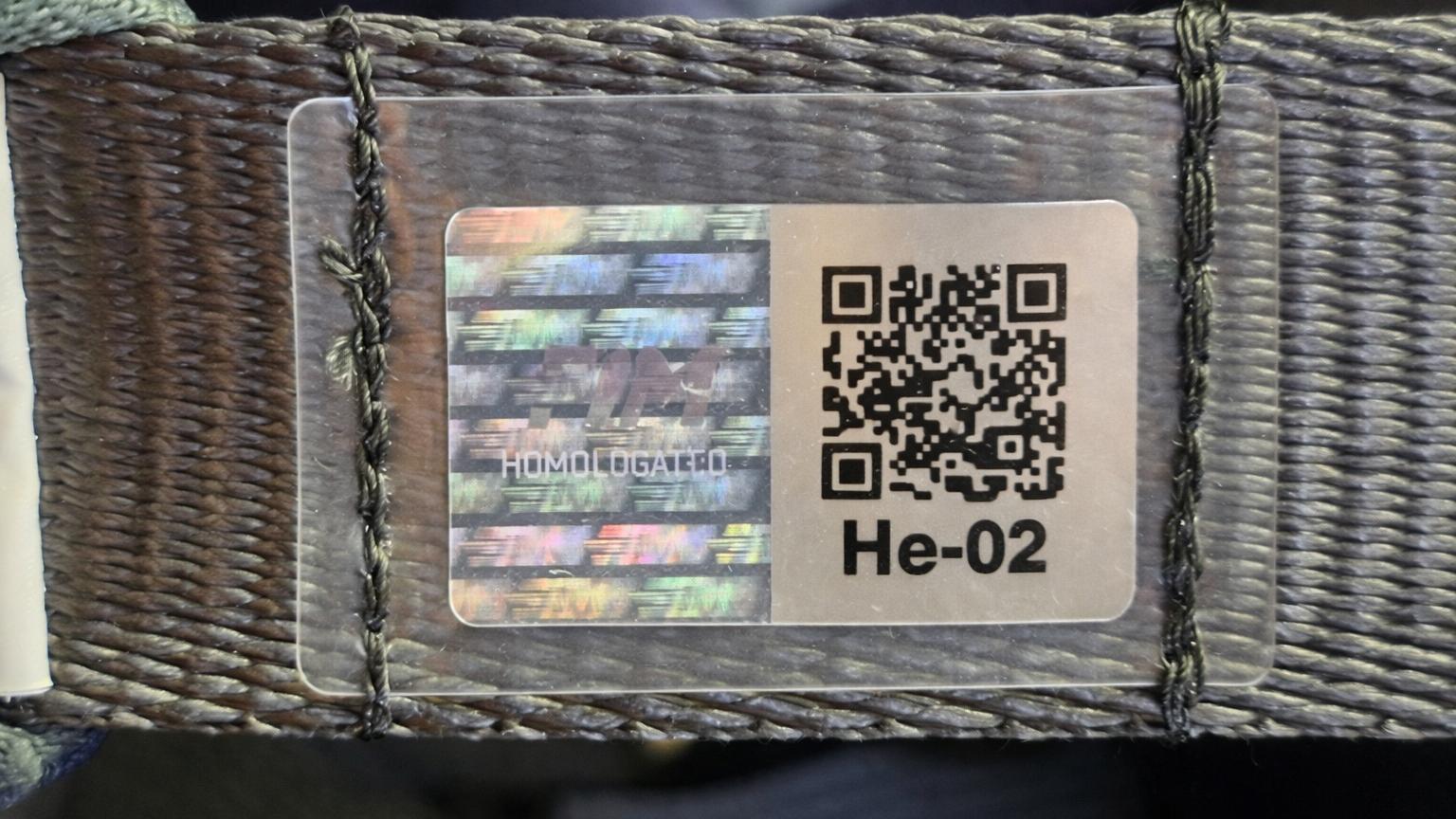
To check whether a helmet is FIM 2-homologated, just look at the chin strap: after it passes all required tests, a QR code is sewn directly onto the helmet strap. Scan it with your smartphone to open a dedicated page that lets you track the helmet and confirm the authenticity and validity of the homologation.
Bottom line: FIM FRHPhe-02 homologation is a real step forward in racing helmet safety. With tougher, more detailed tests and new impact types, FIM 2-homologated helmets offer better overall protection than before and, just as important, FRHPhe-02 now also applies to off-road helmets.
It's a competition standard, but it will inevitably shape the development of street helmets too, raising the safety bar for every motorcycle rider.