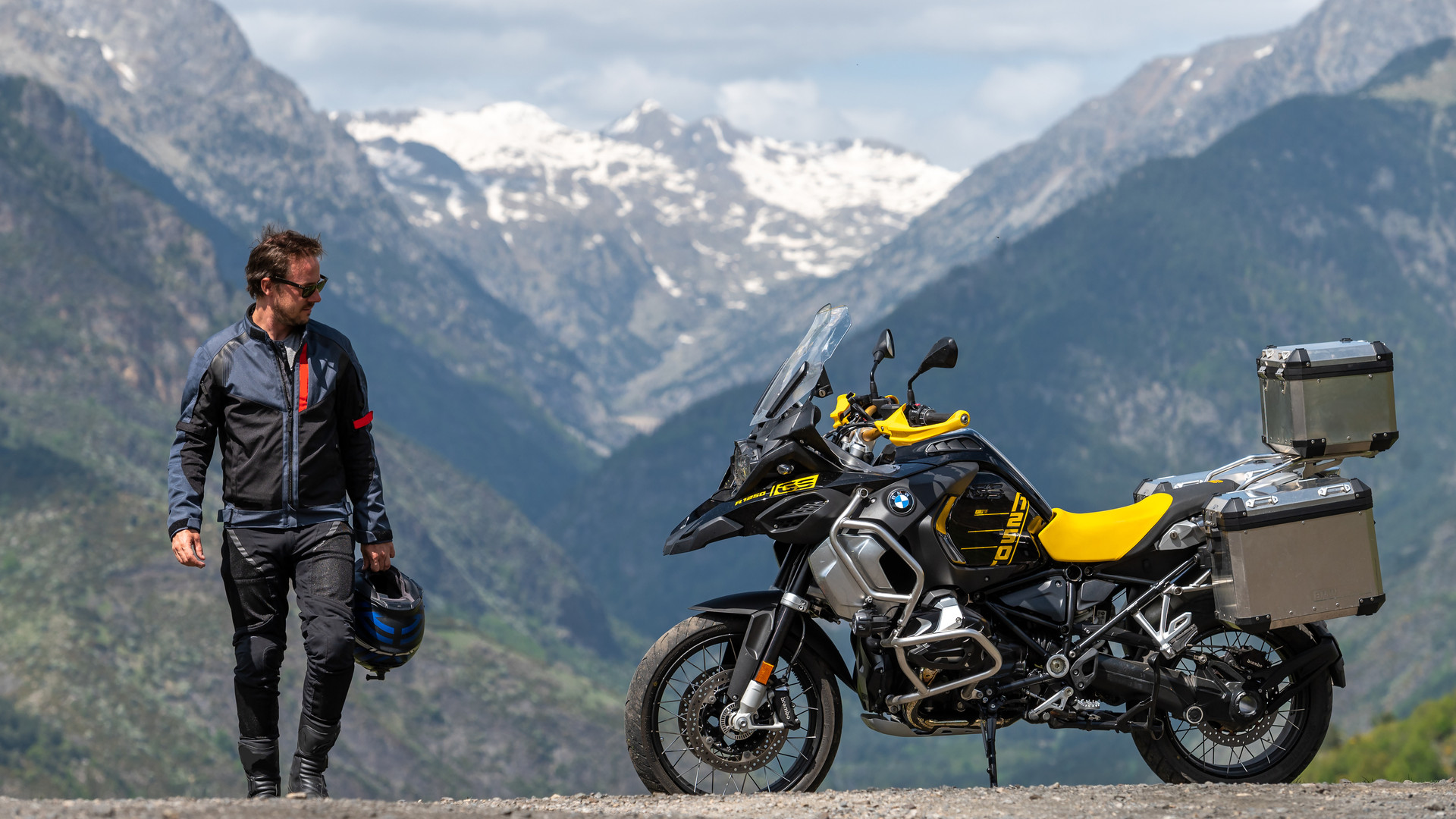
Motorcycle: BMW R 1250 GS ADV
  Mileage: 1,100 km (starting from Barcelona)
  Difficulty: Low
 Duration: 4 days
 Time of the year: June
 Weather: Sunny
 Temperatures: 18 °C - 30 °C
  Essential equipment: Thermal underwear (to be removed in the warmest hours), suit with minimum two removable layers, two pairs of gloves (one spare pair in case of rain), waterproof touring boots – better than sneakers because part of the route, if so chosen, is off-road.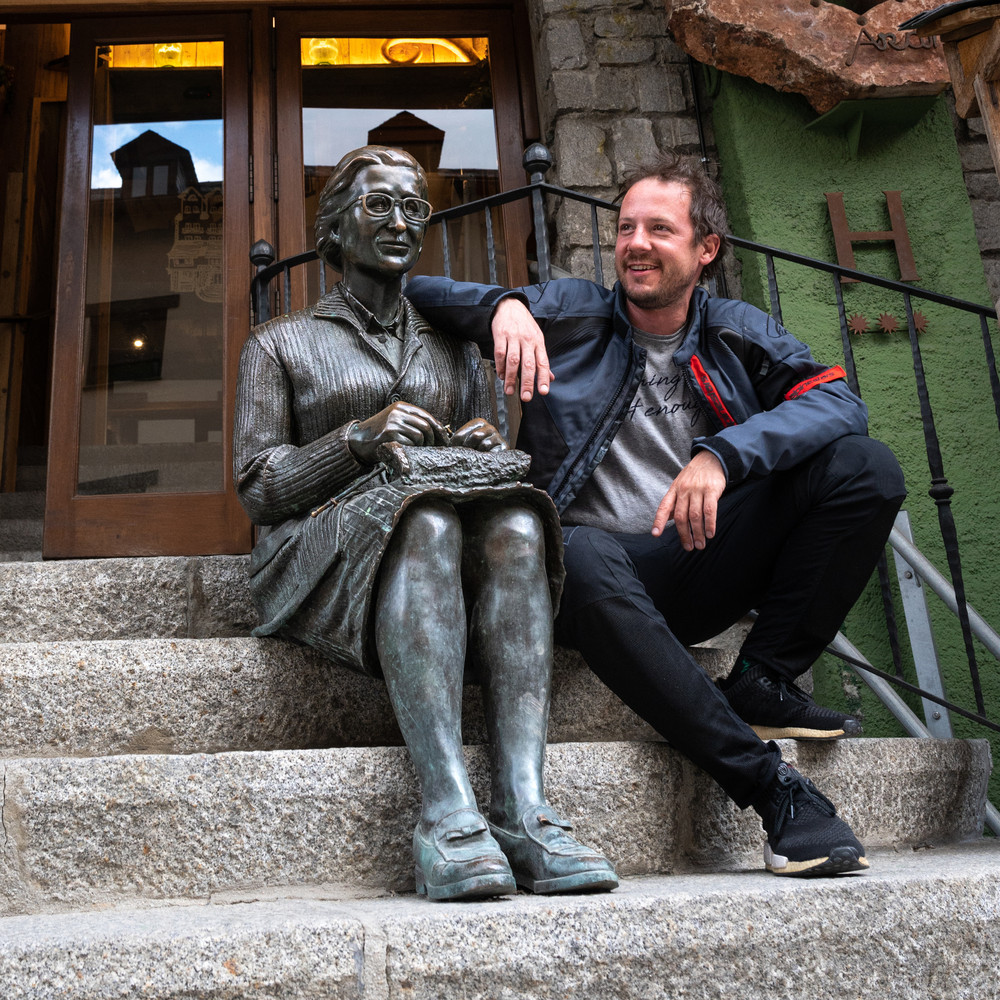
Leonardo Lucarelli
The author
Born in India to traveling parents in 1977, I grew up in awe of my biker and artist dad and with the urge to meet faraway people, discover new landscapes and tell interesting tales. Taking photos, writing and traveling are the three cornerstones of my life, which I’ve combined with my job as photojournalist and journalist. The motorcycle has been my only means of transport for years; it remains my preferred means to take on the horizon, always pushing it a little further.
The people of Catalonia consider themselves as distinct from the rest of Spain, and a trip here will confirm that this region should be treated as a destination in its own right, an amazing area rich in culture, history, gastronomy, nightlife and wilderness.
The Grand Tour of Catalonia by motorcycle
Two sparks ignited my departure – a very dear childhood friend, Cosma, who lived in Barcelona for a long time before moving to Andorra and with whom I’ve been planning to take a nice motorcycle trip to Spain for years, and the discovery of the Grand Tour of Catalonia project promoted by the local Tourist Board, combining historical and cultural heritage, natural landscapes and gastronomic pleasures in one grand itinerary that, from Barcelona, winds along the region’s contours. Over 2,000 kilometers to experience and enjoy the many Catalan sides, divided into routes featuring numerous insights(www.grandtour.catalunya.com).
How to prepare for a road trip to Spain
I’d put this destination among the “easy” ones for a number of reasons – it’s not too far from Italy if you want to ride there, while if you’d rather go by plane there are plenty of motorcycle rentals in the city of Gaudì. To give you an idea, let’s consider Hertz – a BMW R1250 GS Adventure like ours costs 150 euros per day with 300 km included per day, and it’s the same price for the 1300.
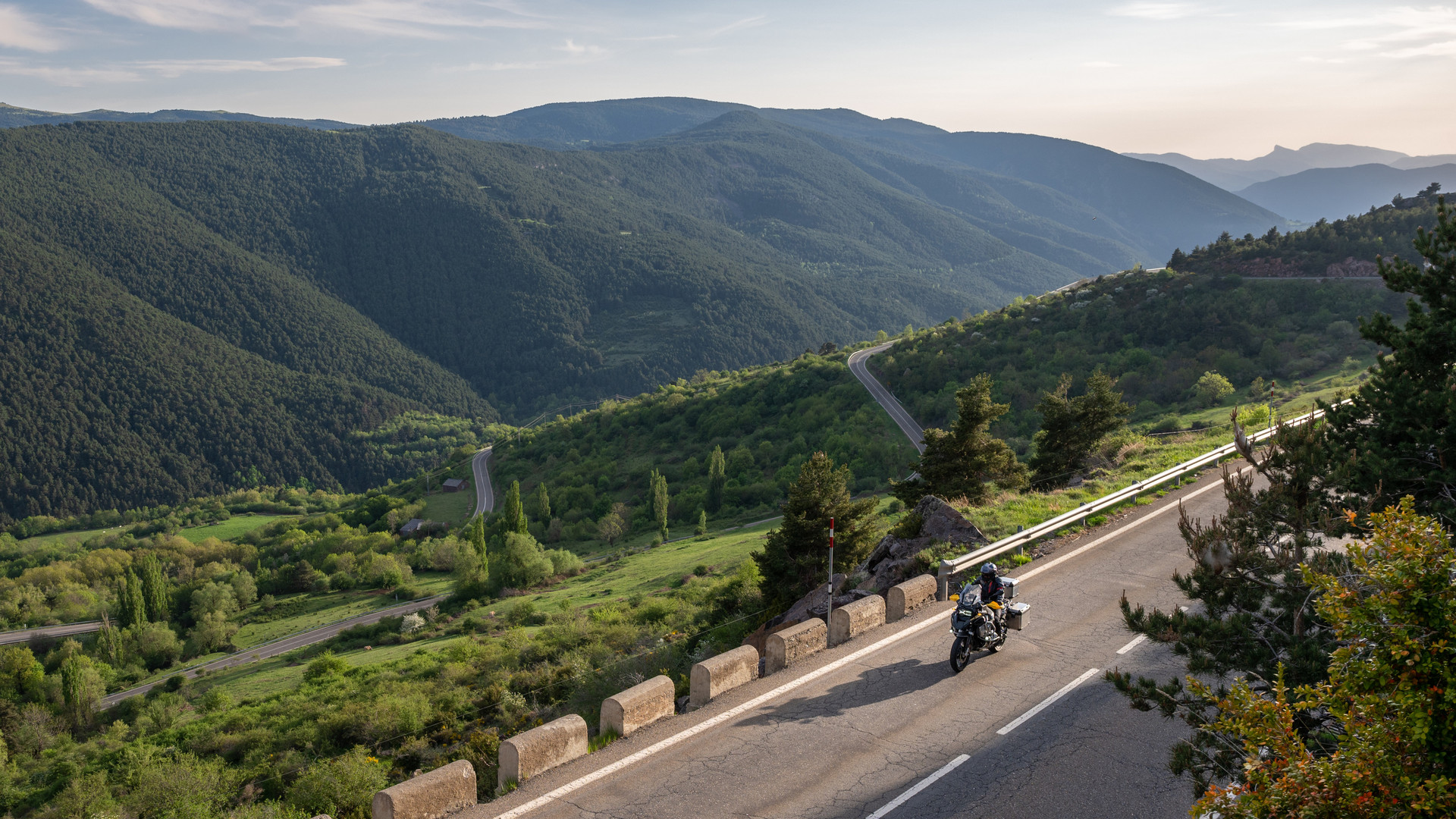
For this motorcycle route in Catalonia, sorting out luggage and clothing is also easy, because while it’s true that the route goes from the beautiful coast to the depths of the Pyrenees, in general the area enjoys a Mediterranean climate, characterized by hot, dry summers and mild, rainy winters. It’s best to wear a waterproof touring suit with at least two layers, so you can put on the inner lining when the temperature drops, as evening approaches or as you climb to higher altitudes. Personally, I always prefer wearing boots, also waterproof, rather than motorcycle sneakers, mainly because nowadays boots are as comfortable as sneakers but, vice versa, there are many soft shoes that take up really little space to be slipped in the luggage.
Sea or mountain? From Barcelona to the Pyrenees by motorcycle
From Barcelona you can't go wrong, wherever you point your wheels. Costa Brava or the hinterland? Costa Brava, which stretches in a northerly direction to the French border and it’s termed the “wild coast” for a reason is probably the most beautiful of Spain's three main tourist coasts. We preferred to head toward the Pyrenees, that is, in a vague Andorran direction, because we wanted to learn about the Moturisme Ara Lleida project first-hand, the only tourist product designed and tailored for motorcycle riders and included in the Grand Tour of Catalonia project.
The jagged mountain – motorcycle tour in Montserrat
The road to Lleida is the first shortish stretch, between 160 and 200 km (depending on the detours you take), which I recommend you follow at least part of the way through the Parc Natural de la Muntanya de Montserrat. We got there from Monistrol de Montserrat; the entrance to the park is announced by clearly visible road signs, but you soon realize you’re in the right place simply by looking around – you’ll notice the unmistakable massif made of bright rust-colored rocky spires, with sheer peaks and ridges following one another like the broken teeth of a giant at rest.
Although St. Jerome, the highest peak, is only 1,236 meters high, the whole limestone complex seems much more imposing because of the surrounding plains, over which tower its almost vertical walls. Montserrat means “jagged mountain” and, in fact, it’s a conglomerate of different rocks and limestone hardened and eroded by weathering over millennia, a small paradise for hikers and geologists.
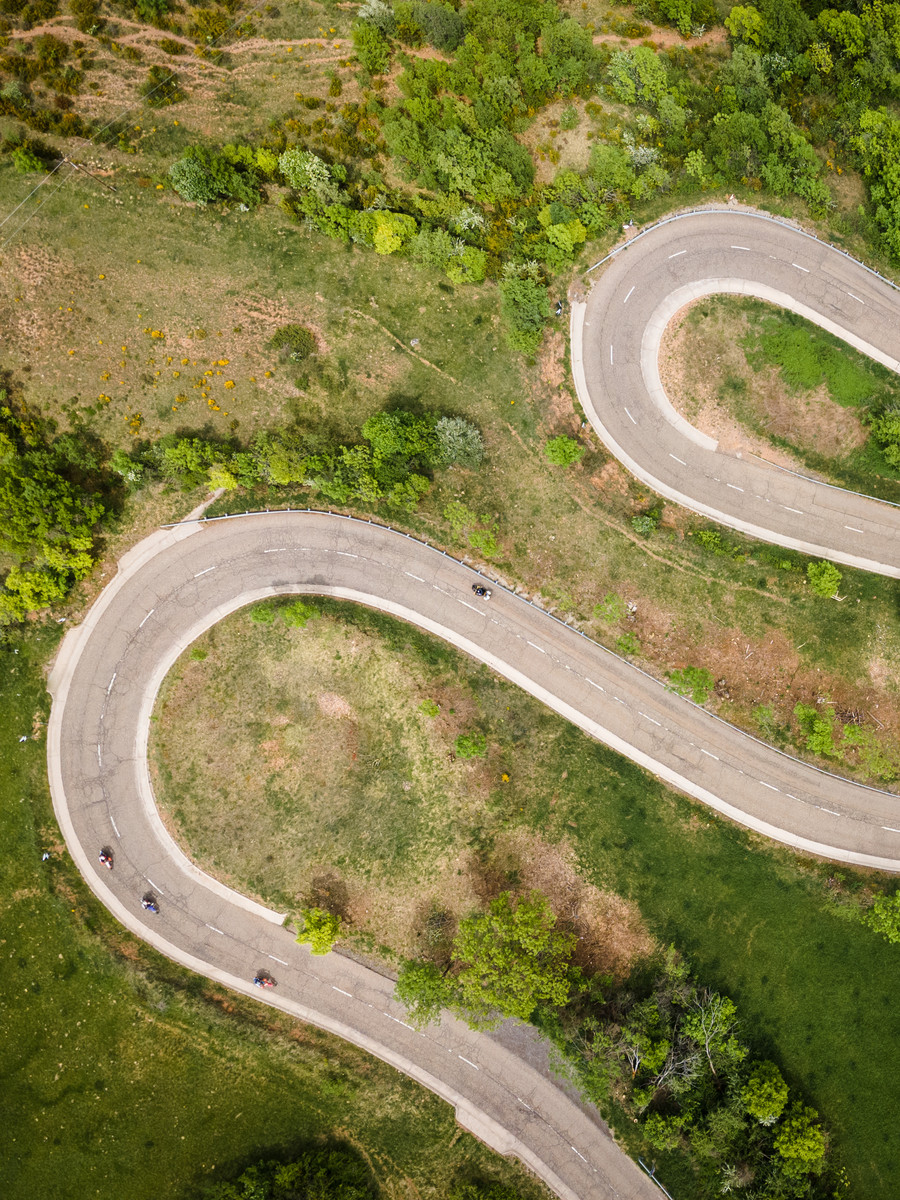
From Terrassa, if you choose not to continue on to Monistrol as we did, you can extend the route and ride toward Rellinars, finding fantastic bends with perfect asphalt, with St. Jerome right in front.
Glorious Lleida
A relatively small town, Lleida has been scarred by several wars that have almost always seen it proudly defeated. In the 14th and 15th centuries, this arid inland town was a hub of economic activity, fueled by the Jewish and Muslim communities. Art and culture flourished thanks to the surrounding monasteries and the university founded in the 14th century, while the true relics of the Holy robe and Sacred thorns made the cathedral an important stop along the Camino de Santiago.
During the War of the Spanish Succession, the Old City was reduced to rubble. The conquerors then built a citadel to protect their new lands, but in 1812 it was sacked by French troops. Finally, in 1937, at the height of the Civil War, a bombing conducted by a squadron of Italian SM.79s destroyed the ancient bridge.
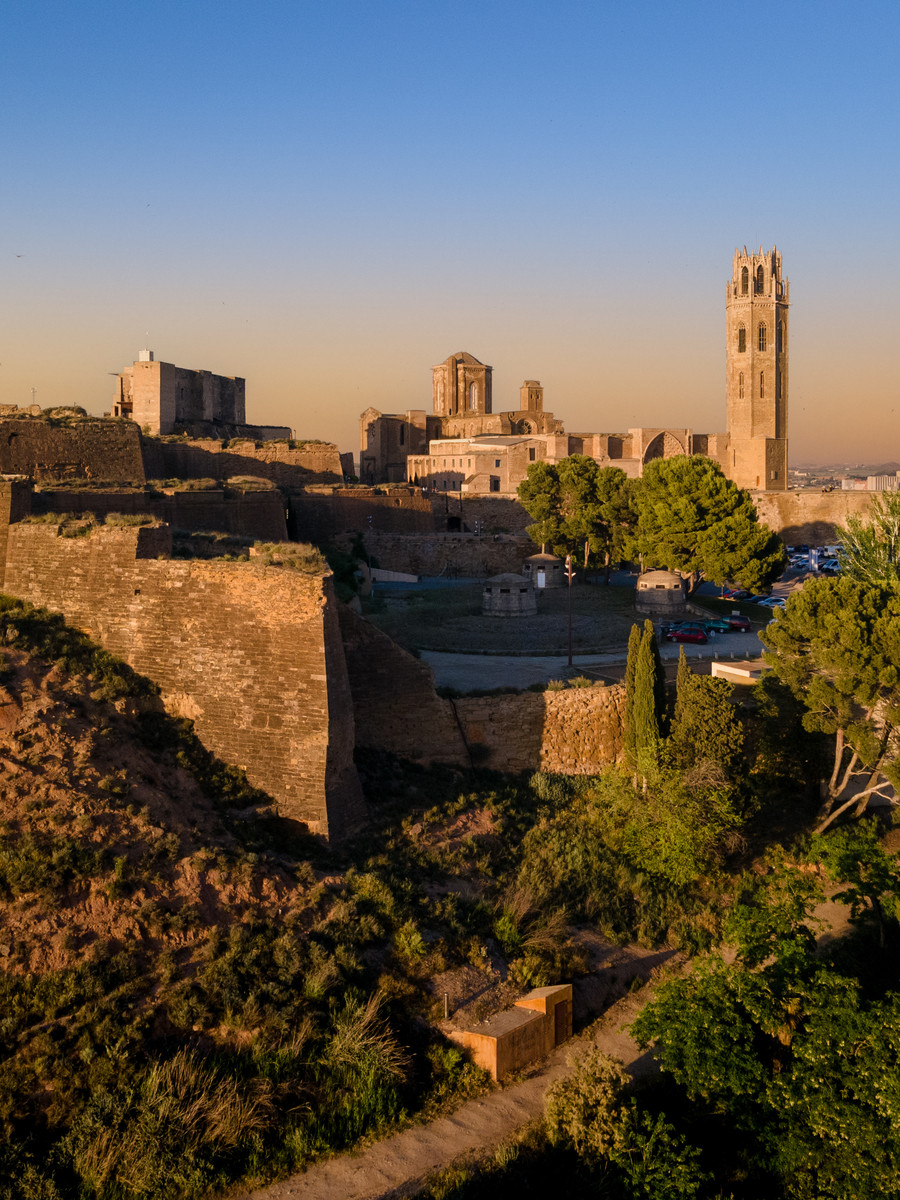
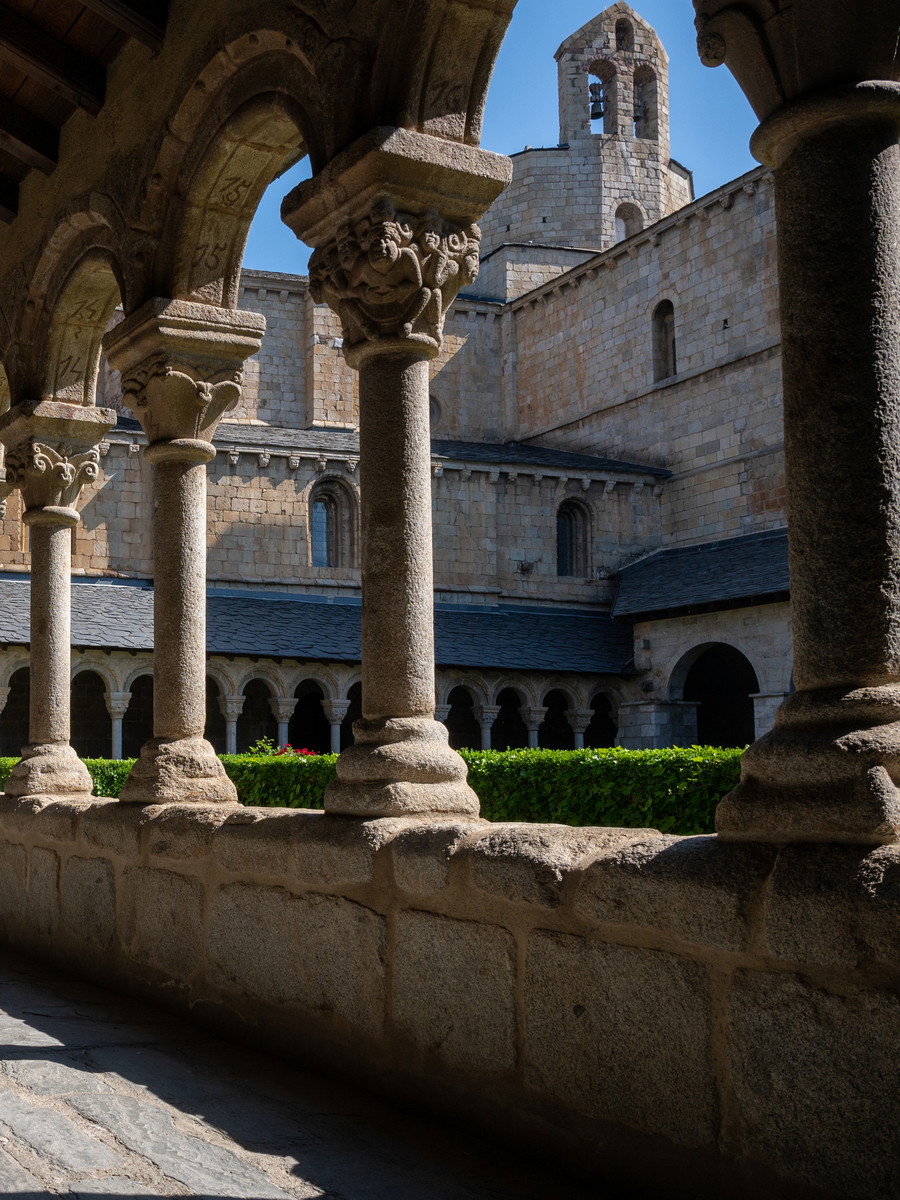
Today, the fortress-cathedral that dominates the city, the Seu Vella, still stands evoking Lleida's former glory – we get there when it’s ablaze with sunset light, and the surreal setting is completed with a theater group rehearsing for a swashbuckling show. The foundation stone of the cathedral was laid in 1203, but what stands before us today is a masterpiece of blended and superimposed styles – bold Romanesque shapes, Gothic vaults, and ornamental fretwork. The octagonal bell tower stands at the southwestern end of the 14th-century Gothic cloister; if you feel up to climbing the 238 steps to the top, you can enjoy endless views (www.turoseuvella.cat; admission 5 euros).


Dances and flatbread Traditions of the Catalan hinterland
Some fifty kilometers from Lleida, going via Gerb and Vilanova de la Sal along the LV-9046 (far more thrilling than the more direct C-12), we find Os de Balaguer. Halfway there, however, we make a stop in Balaguer, near the Segre River, for a walk immersed in the Islamic past and architectural richness, as this is the capital of Urgell County.
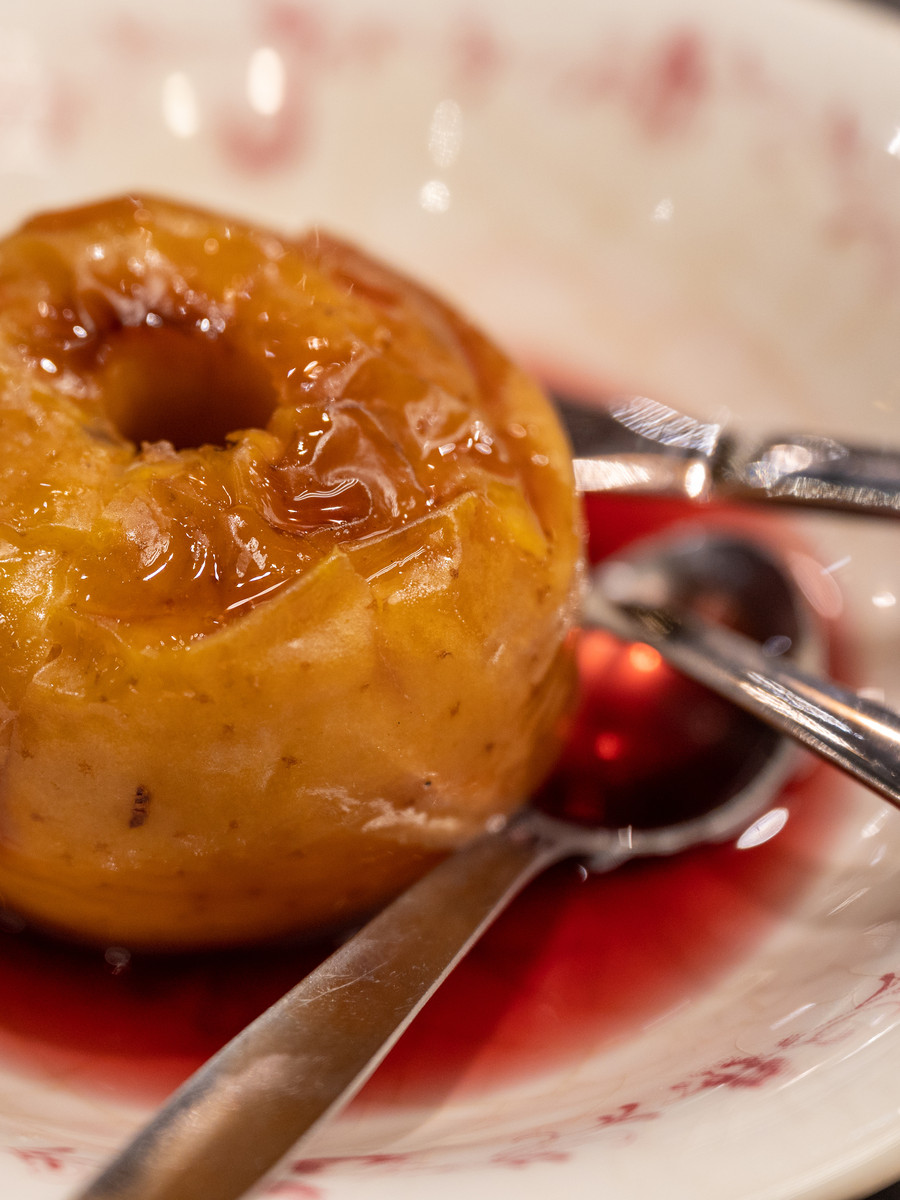
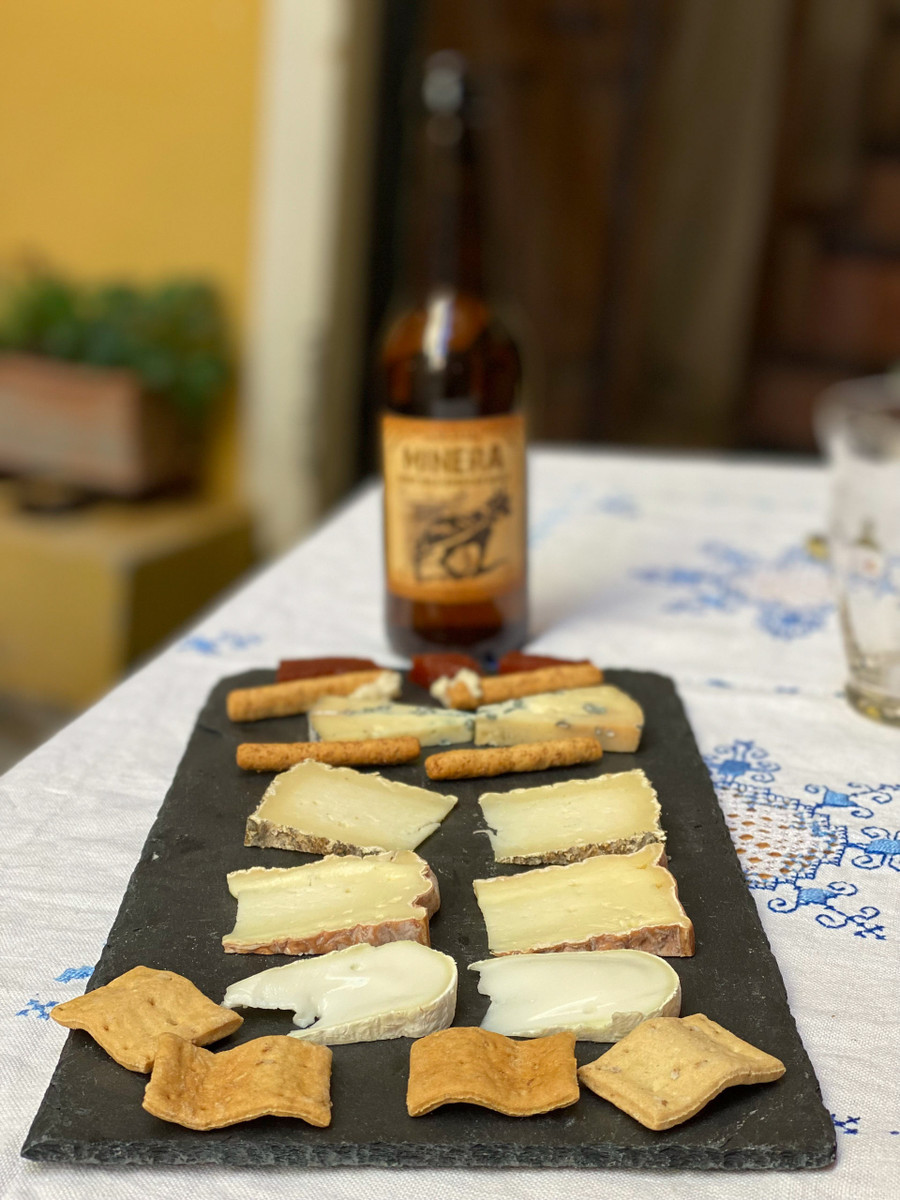
So many things to visit if one wanted to stay longer, but just crossing the old Jewish quarter, the Portal del Gel, the narrow and steep lanes and landscapes of the old medieval city and the old town of Arab origin it’s pleasant enough, before making stop in Mercadal Square to taste the typical Coca de Recapte. It’s a very thin, flatbread-like flattened dough, very greasy (as it should be) and mainly topped with meat or sardines accompanied by vegetables. It should strictly be eaten at room temperature and all its variations are wonderful, including one – very light! – with peppers, onion, hard-boiled egg and Catalan sausage. We had it at Forn de Pa Inalba del Passeig, on the main square, 6 euros apiece worth of pure enjoyment(www.inalba.cat).
As we get back to the motorcycles we see, from a distance, a perfect circle of people holding hands and raising their arms, dancing with small, precise steps, circling around as others join in, making the circle larger and larger. My friend explains that they are dancing the Sardana, a traditional dance that symbolizes Catalan nationalist pride. Cosma dismisses my fascinated gaze by saying, “In Andalusia they have flamenco, we have people walking around in circles holding hands”. Same old story, the place you live in seems boring and monotonous to you, while outsiders would immediately trade it for their own back garden.
Motorcycle graffiti – a plunge into antiquity
In Os de Balaguer we meet Laia Galind, passionate motorcycle rider and manager of Moturisme Ara Lleida, who gives us more the details of the project. Since 2015, ten motorcycle tours in Catalonia , of about 2/300 km each, have been created, crossing the territory of Lleida and combining little-trafficked, scenic secondary roads and main roads. What’s interesting is its guarantee system that, through a seal of quality, currently identifies 50 tourist accommodations and 34 additional restaurants, cafes and museums that assure a dedicated welcome to bikers. They must meet a number of requirements, such as providing covered and enclosed parking, a workshop or tools for repair, laundry service, and storage spaces (www.moturisme.com).
As we chat about the best routes for motorcycle travel in Spain, we set out on foot to the Cova Els Vilars, a limestone opening about twelve meters wide and almost eight meters deep that dominates the valley of Os de Balaguer, right at the mouth of the Els Vilars gorge. A virtually undiscovered little prehistoric gem, where you’re just a few feet away from 29 Bronze Age rock paintings that, through simple lines, depict dancers, animals and magical symbols. Recognized as a UNESCO World Heritage Site, they’re mainly distributed over two areas – the left wall of the cave features most of the pictographs and easily visible figures while to the right of the entrance there are fewer pictorial representations and they’re harder to spot. To be alone in front of such ancient images, surrounded by the sound of cicadas, with a slither of light filtering into the cavern, makes for a mystical experience in some ways superior to those felt at other more famous and significant prehistoric sites in both the Spanish and French Pyrenees.
Traveling with locals – perfect destinations for motorcycle riders in Spain
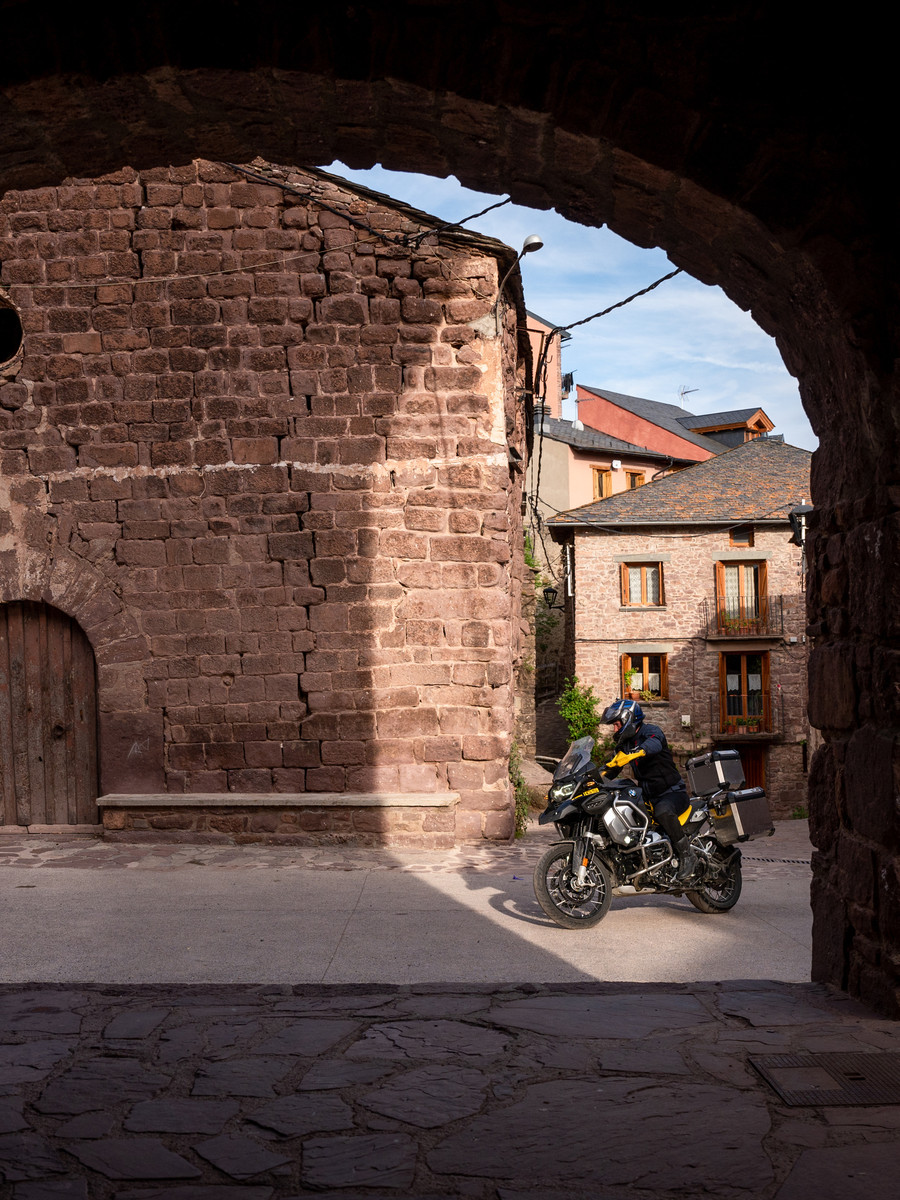
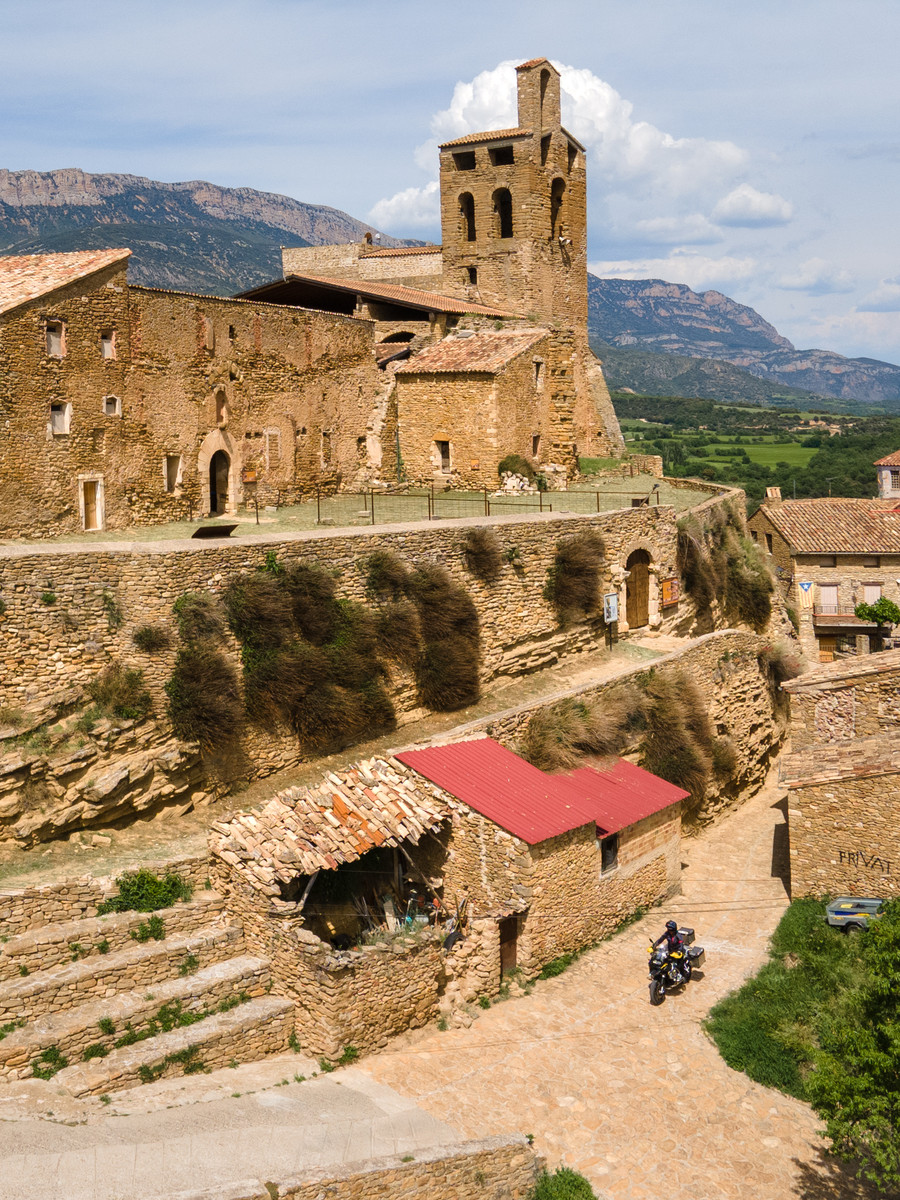
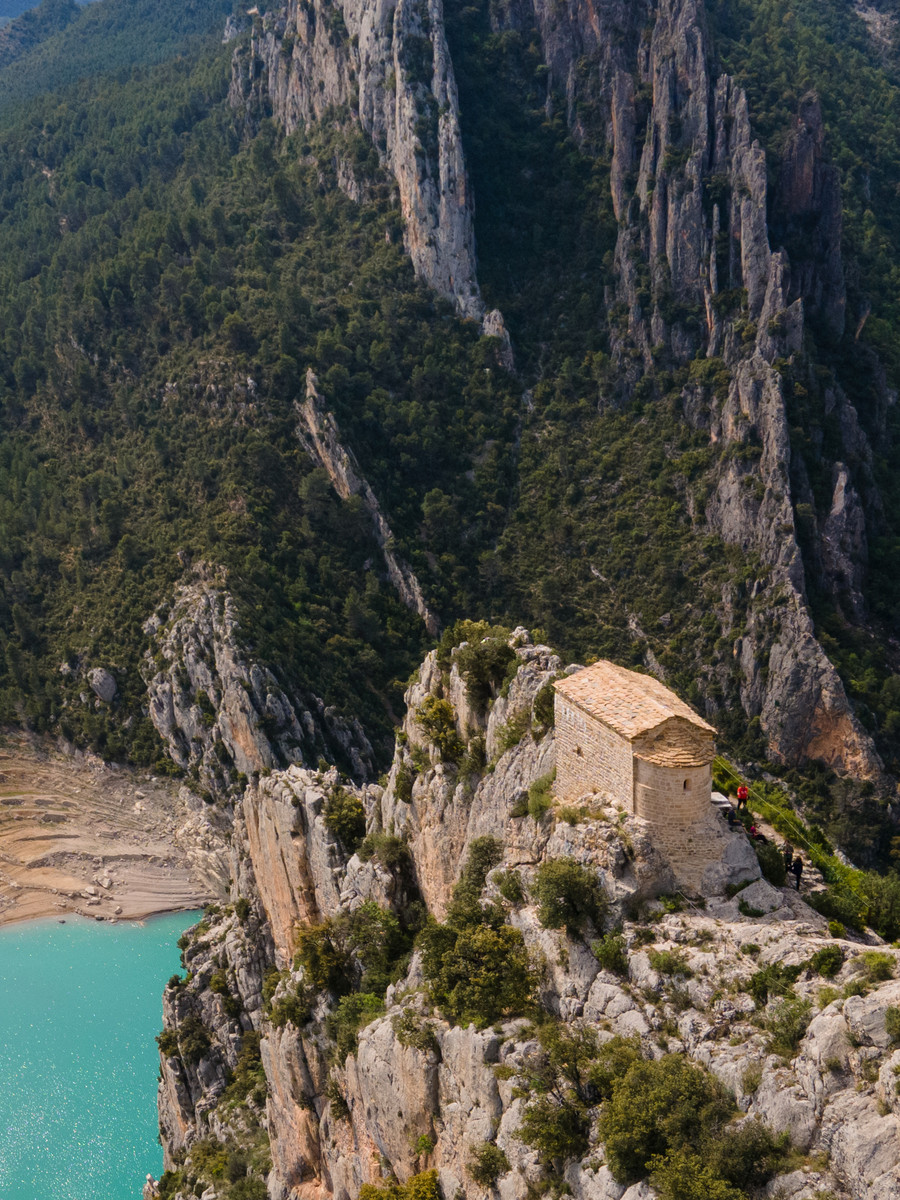
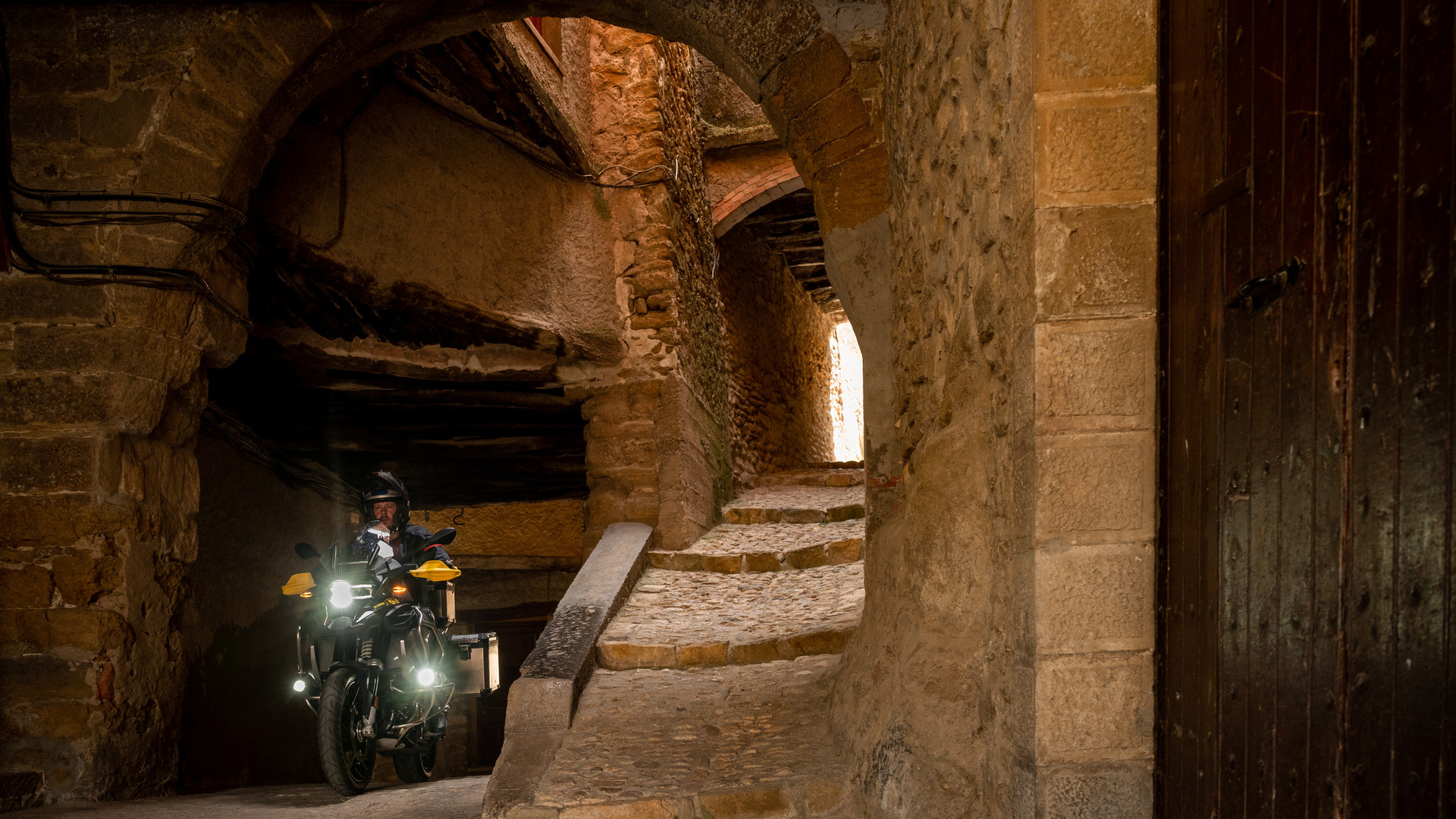
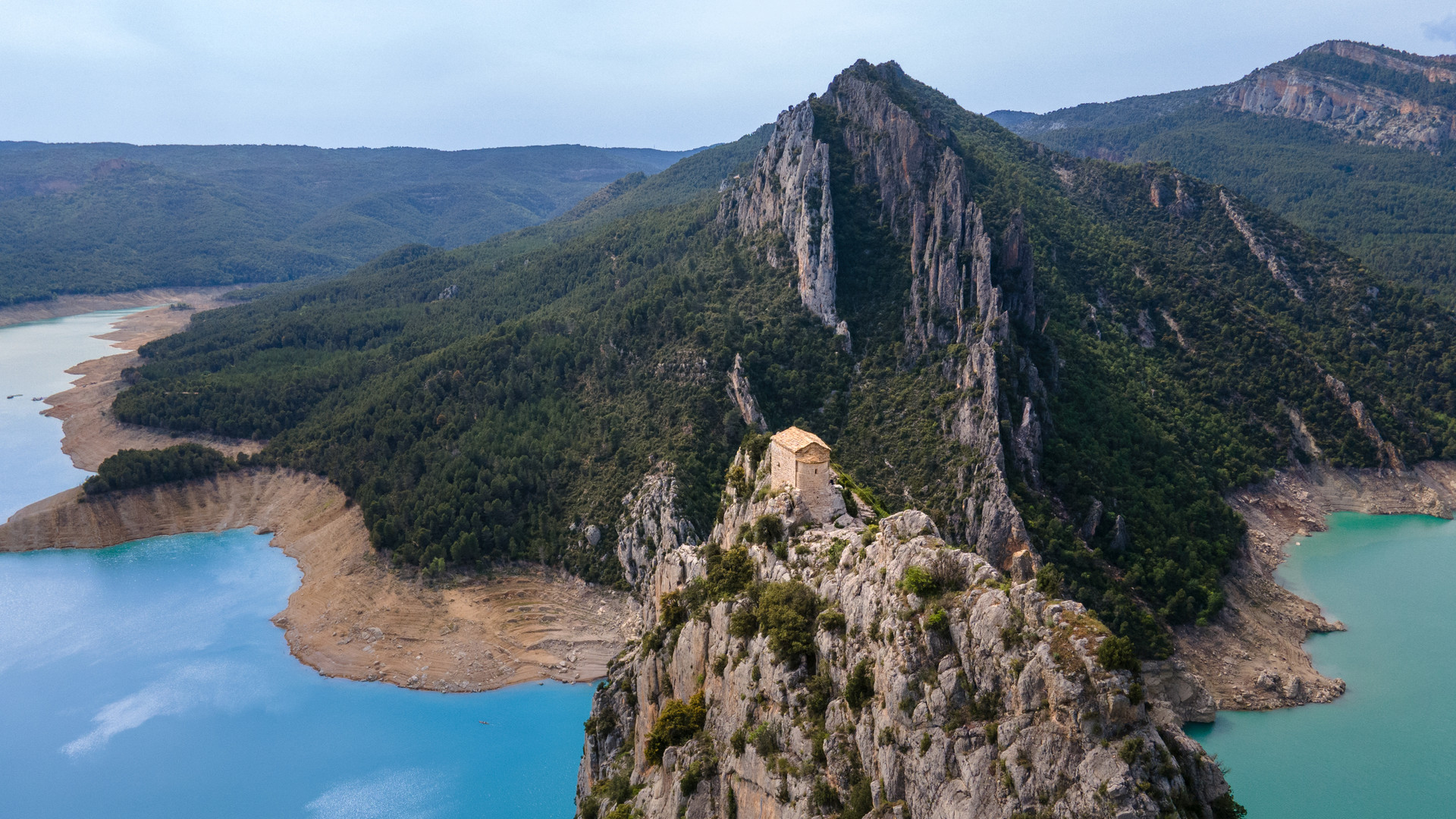
There are at least two extraordinary spots we visited on this motorcycle trip between Barcelona and the Pyrenees for which I have Cosma to thank – Ager and Durro. The first is a small village of 300 people, entirely made of stone and brick, with delightful alleys steeped into a surreal silence, where we took the photo above. But, above all, following what at first glance looks like a path, is nearby Corçà, 32 inhabitants and that gem set among the rocks of the Ermita de la Mare de Déu de la Pertusa – a tiny chatelet built on a sheer rock outcrop above the Noguera Ribagorçana, at the southern entrance to the Mont-rebei gorge. It offers an exceptional vantage point over the turquoise Canelles Basin and the Montsec d'Ares and Montsec d'Estall mountain ranges.
Durro, too, is a typical dark stone village in the Catalan Pyrenees, close to the border with France, and beyond it is the Ermita de Sant Quirc de Durro, a 12th-century hermitage perched 1,500 meters above sea level overlooking the Bohí Valley.
Port de la Bonaigua or a memorable dirt road?
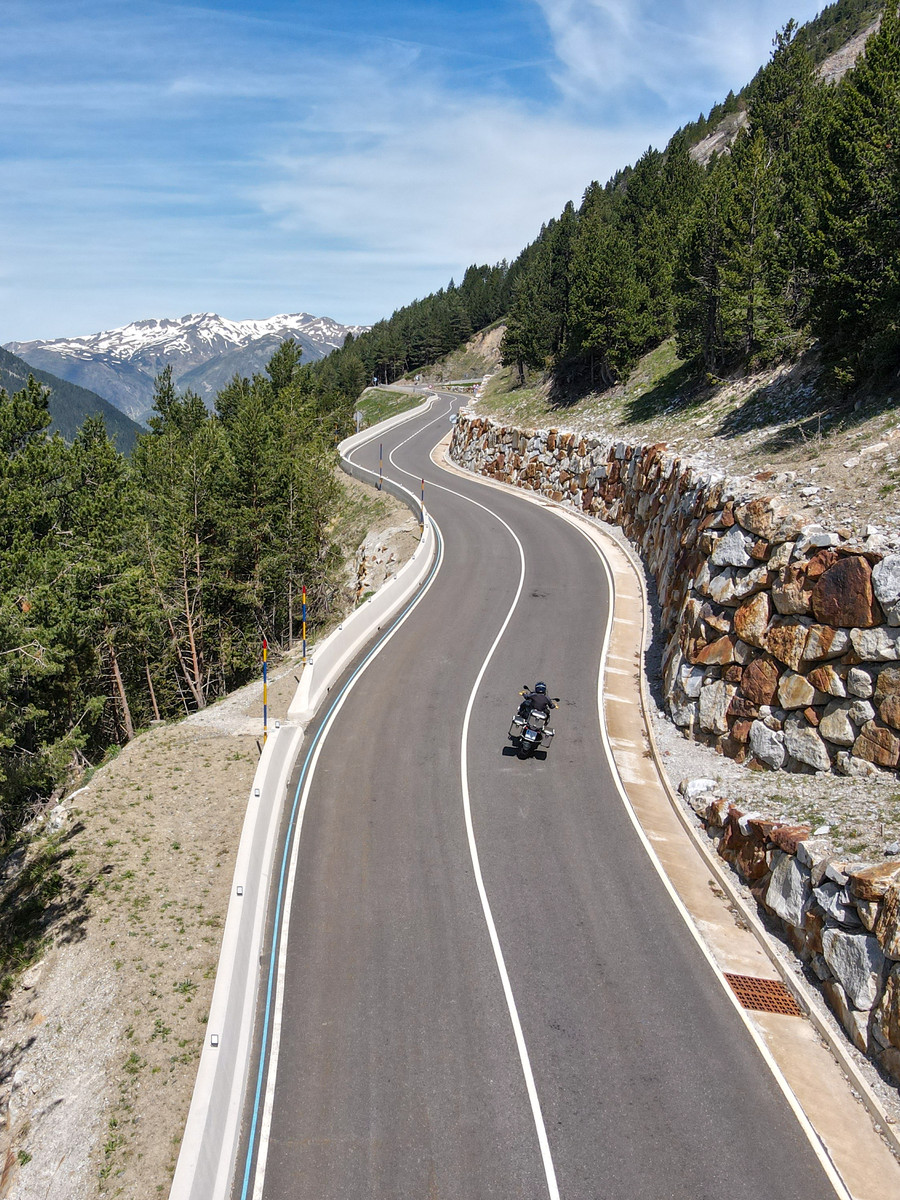
At 2,072 meters, Port de la Bonaigua is the highest point of our tour, a regular destination for cyclists (included seven times in the Vuelta), offering a sumptuous road, going both up and down. We’re still in the province of Lleida and the pass marks the border between the municipalities of Alt Àneu and Naut Aran. We reach it riding on the C-28’s pristine asphalt, heading toward Esterri d'Áneu. If you look carefully at the map, here you’ll see a ring – this is because there are two ways to reach Esterri d'Áneu from join Baqueira. The first is, indeed, the pass, which I’d say it’s unmissable – do you like having your footpads firing sparks? Or you’d rather ride peacefully and enjoy the scenery? There, here you can do both.
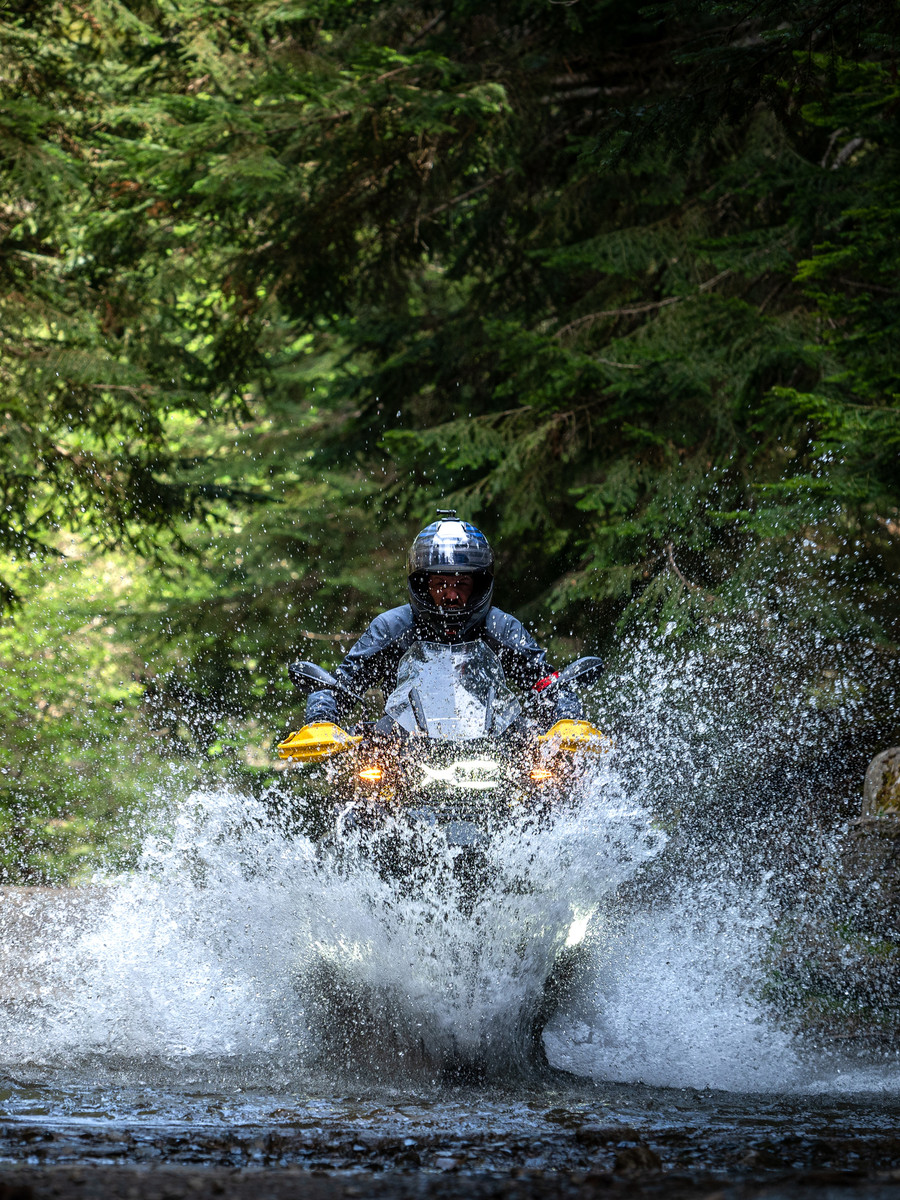
On the other hand, the other way involves following the course of the Noguera Pallaresa River, going toward its source at Pla de Beret, entering the Aran Valley and the Aigüestortes i Estany de Sant Maurici National Park. The road taking you to this complex that includes the main ecosystems of the high Catalan mountains, with peaks exceeding three thousand meters’ height, is all dirt and suitable for vehicles.
We – of course! – would have wanted to do both but a choice must be made, so consider that the scenic route through the forests, fords and valleys of Aigüestortes Park is undoubtedly the most memorable part of this motorcycle tour in Catalonia, so if you’re not afraid of dirt roads, don’t hesitate. Enjoy!
Tips for a motorcycle trip to the Pyrenees
As on any other mountain range, a motorcycle trip to the Pyrenees requires adequate preparation. The altitudes you reach are generally not very high, but as everyone knows, in the mountains the weather can change abruptly and you have to prepare accordingly. In terms of clothing, in addition to the multi-layered touring suit, it’s a good idea to take a waterproof kit with you that remains waterproof even in heavy rain and prolonged exposure.
It’s good to include two pairs of gloves as part of your gear, one waterproof and the other one lighter. Waterproof over-gloves, worn over light gloves, may be a good alternative. These don’t take up space in the luggage and can be left at the bottom of the backpack, to be pulled out when necessary.
One of the tips we feel we should share for crossing the Pyrenees on a motorcycle is the importance of helmet preparation. We recommend installing Pinlock, a visor that can be inserted inside the visor, able to greatly limit the risk of fogging, imperative when it rains or at low temperatures.