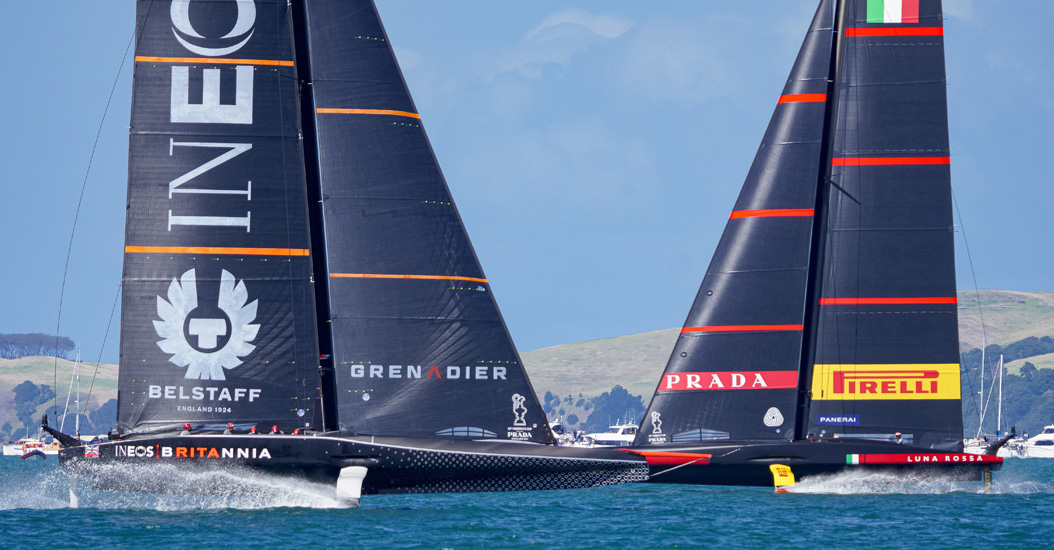
The 36th America's Cup presented by PRADA is ready to get underway in New Zealand, off the coast of Auckland. Luna Rossa Prada Pirelli and Emirates Team New Zealand, challenger and defender respectively, will go head to head in a series of races to establish just which is the fastest sailboat and crew on the water. Both teams will be wearing the Dainese Sea-Guard, a protective vest developed specifically for racing. But why do these athletes need to protect themselves?
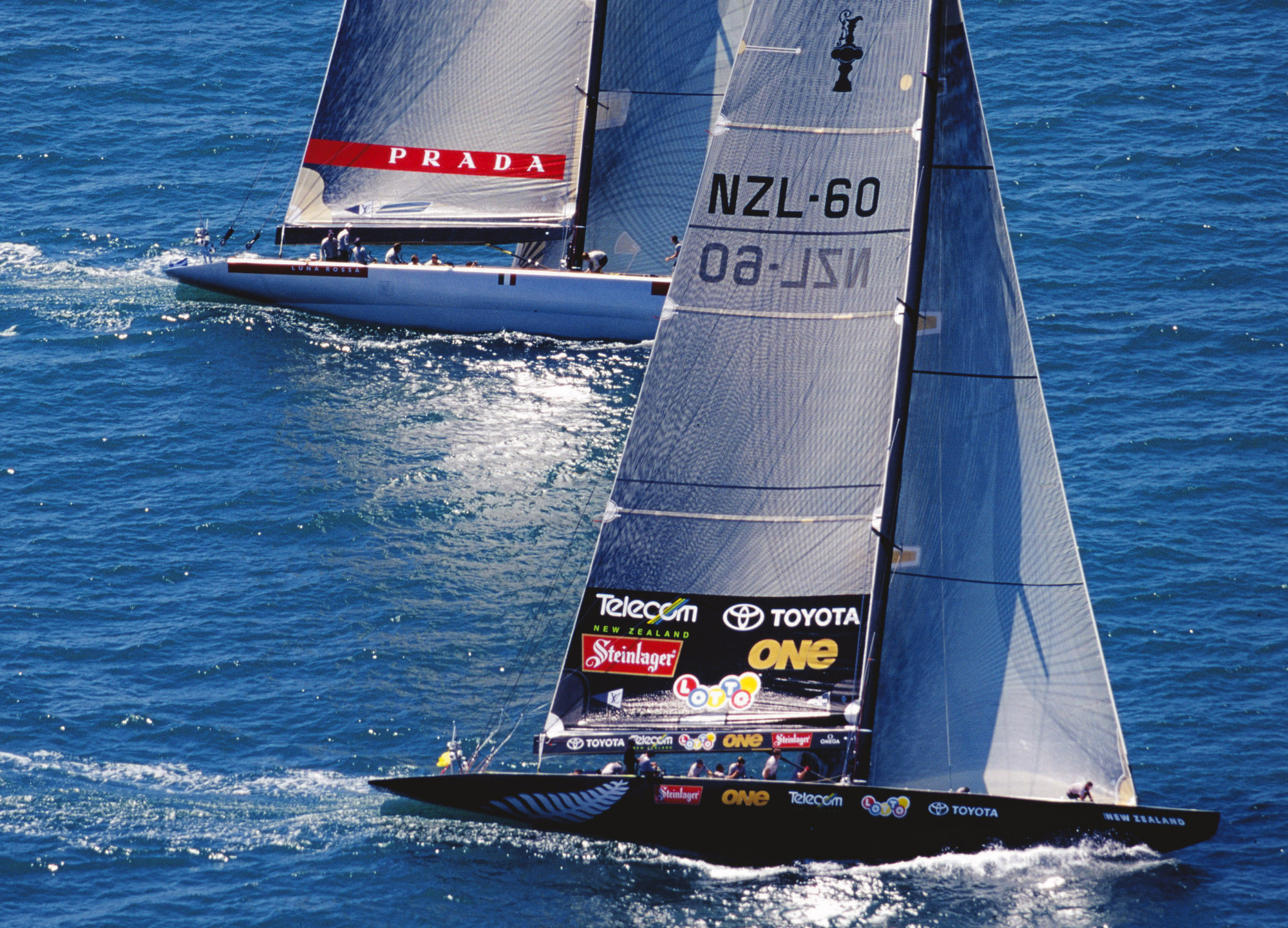
Team New Zealand and Luna Rossa in 2000. © Studio Borlenghi
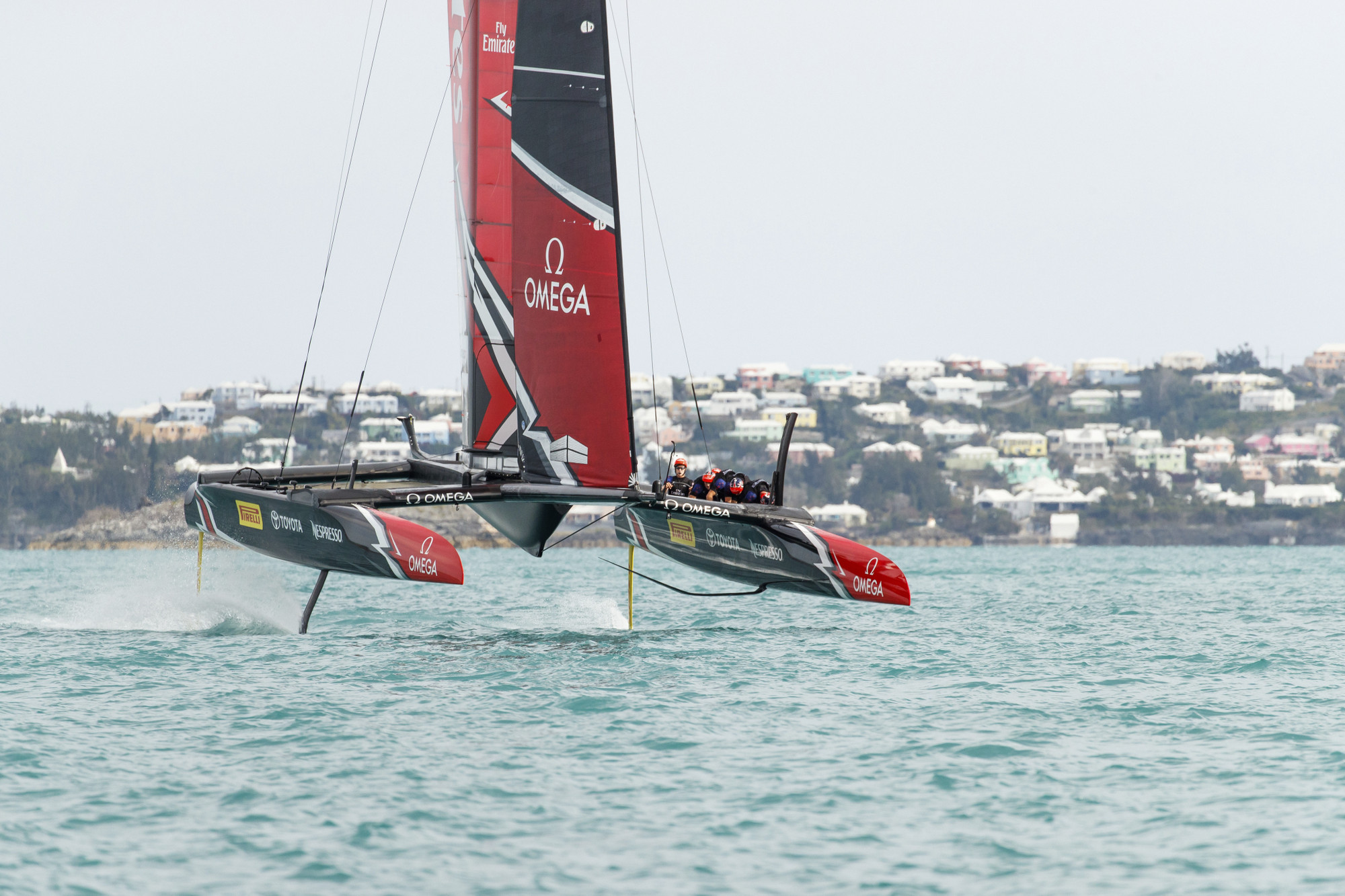
Emirates Team New Zealand's yacht in 2017, winner of the 35th America's Cup
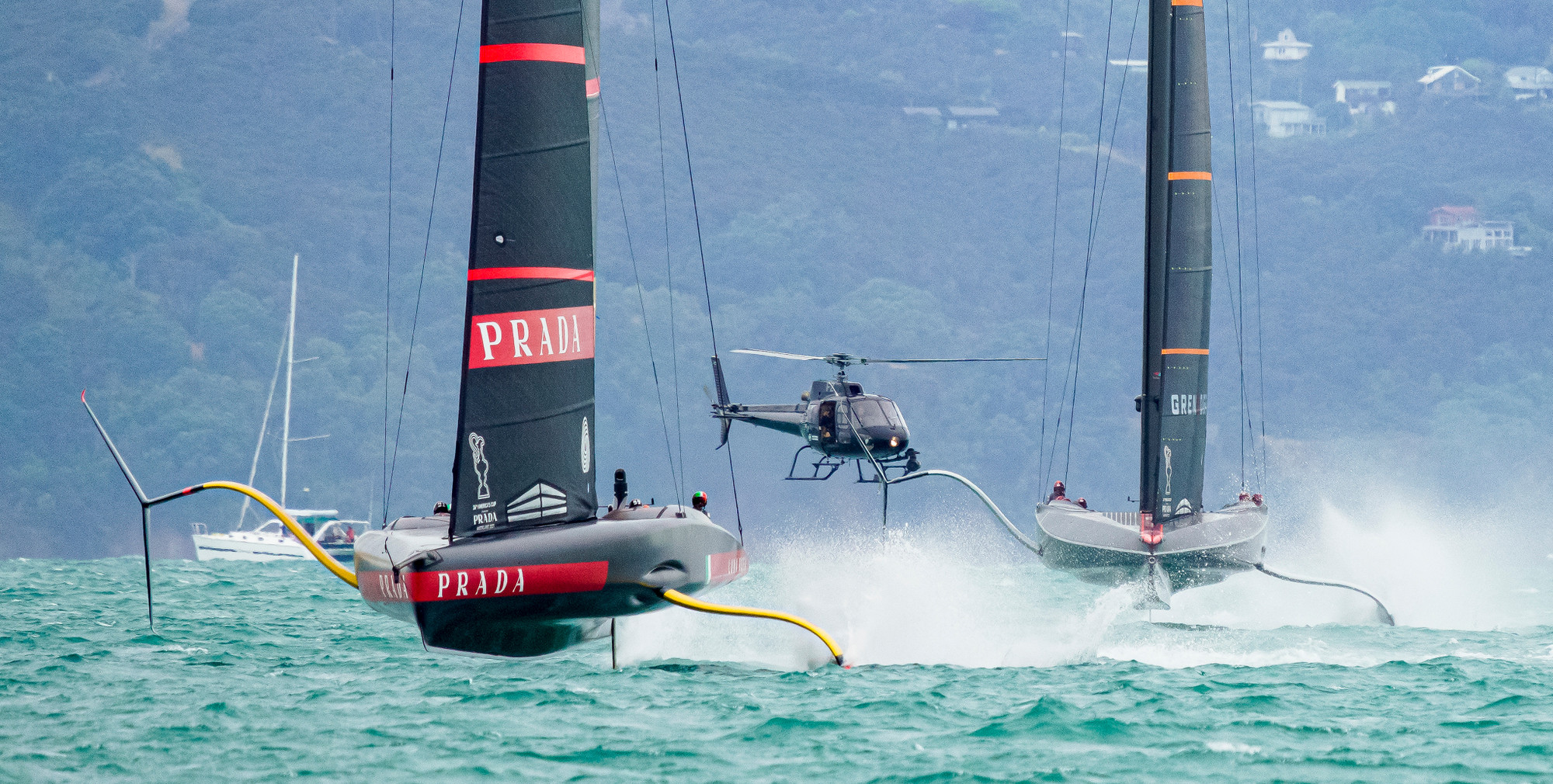
AC75 flying monohulls
Class AC75 boats
The America's Cup boats have undergone dizzying development. In the space of just a few years, they have gone from being traditional monohulls to flying monohulls. A flying monohull stands out for its foils. These movable appendixes are controlled by a hydraulic system and positioned on the sides of the hull. In creating lift, they allow the boat to literally rise up out of the water, leaving only the rudder and the tips of one or both foils immersed.
The physical principle underlying this phenomenon is the same that applies to the flight of airplanes. Once a certain speed is reached, and similarly to what happens to an airplane with the air, the force perpendicular to the direction of motion pushes the body upwards and allows it to rise during navigation. Essentially, the foil immersed in the water behaves like a wing does in the air.

Drawing of AC75's foil
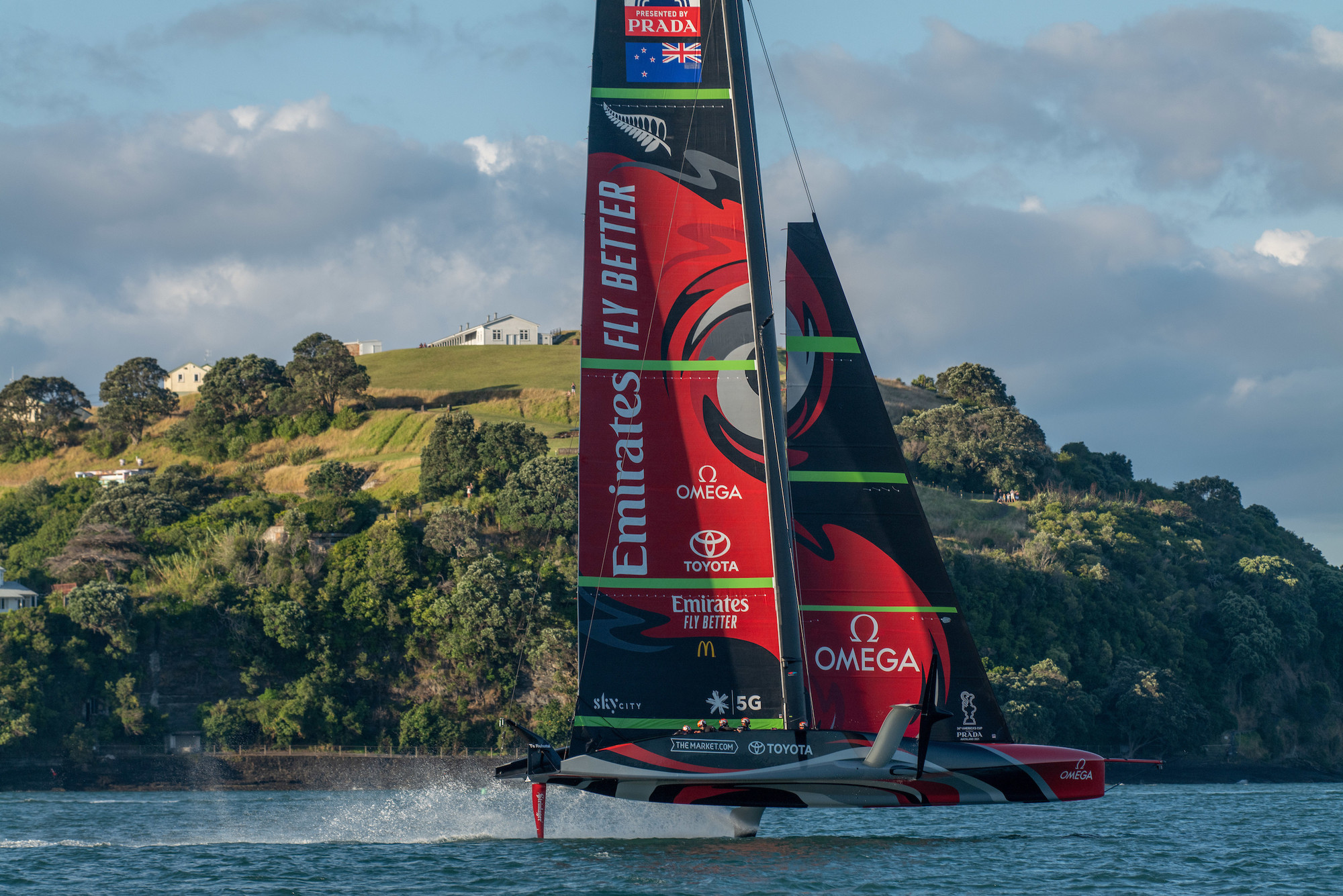
Emirates Team New Zealand's yacht flying on water
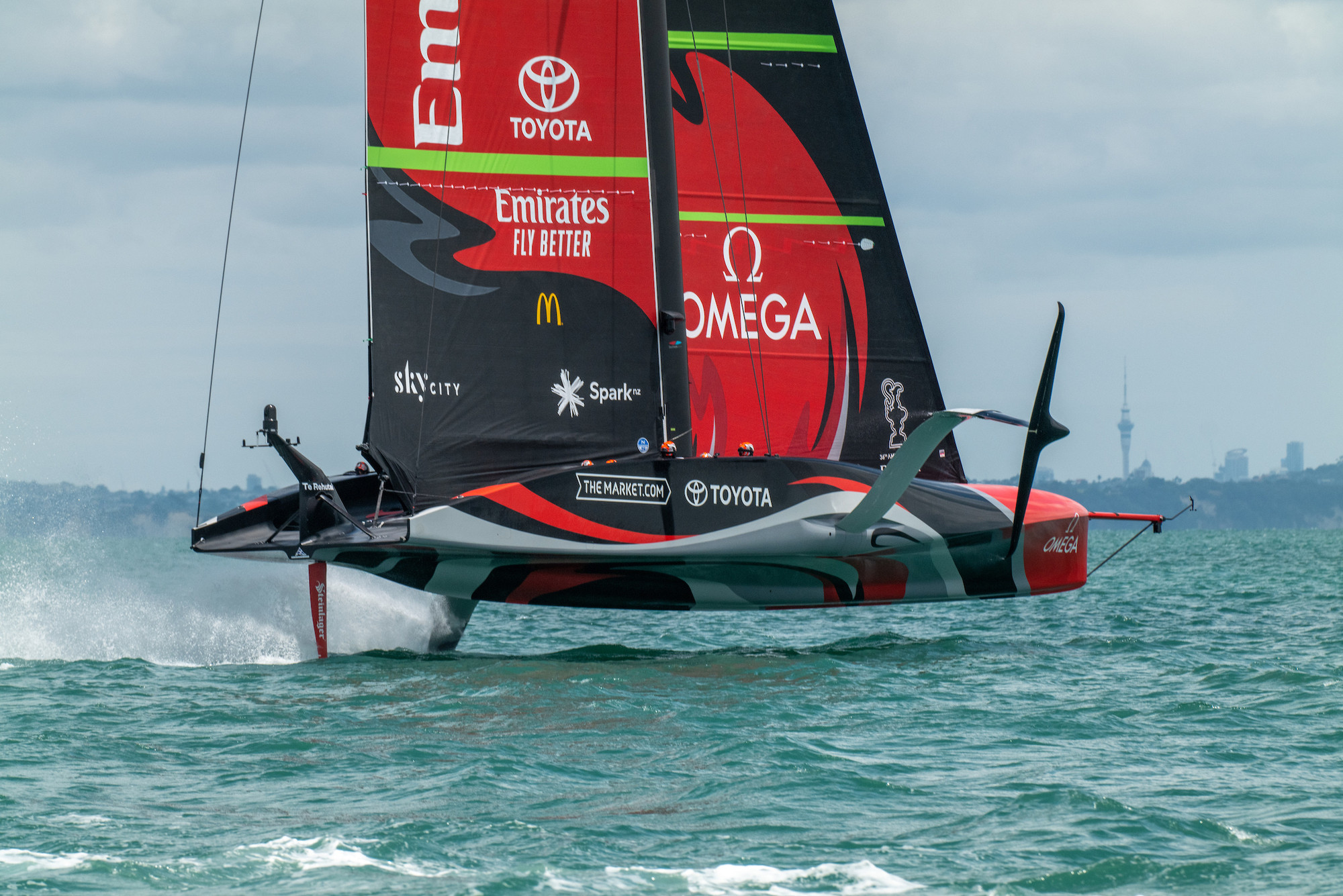
Emirates Team New Zealand's yacht flying on water
Why raise the hull out of the water? Because doing so drastically reduces friction and significantly benefits speed. Top speeds are now around 50 knots, or almost 100 kilometers per hour. Boats have evolved to the point that the hulls are designed according to the laws of aerodynamics, rather than those of hydrodynamics, since they remain immersed only when stationary and when maneuvering at reduced speed.
The forces at play
AC75 class boats are 75 feet long (just under 23 meters), weigh 6.5 tons and have a total sail surface area of more than 200 square meters. It is precisely these numbers, and a crew of eleven sailors, that allow them to reach the aforementioned speeds and create the forces that now see sailing classified as an extreme sport in every respect.
The sudden deceleration in case of nose diving
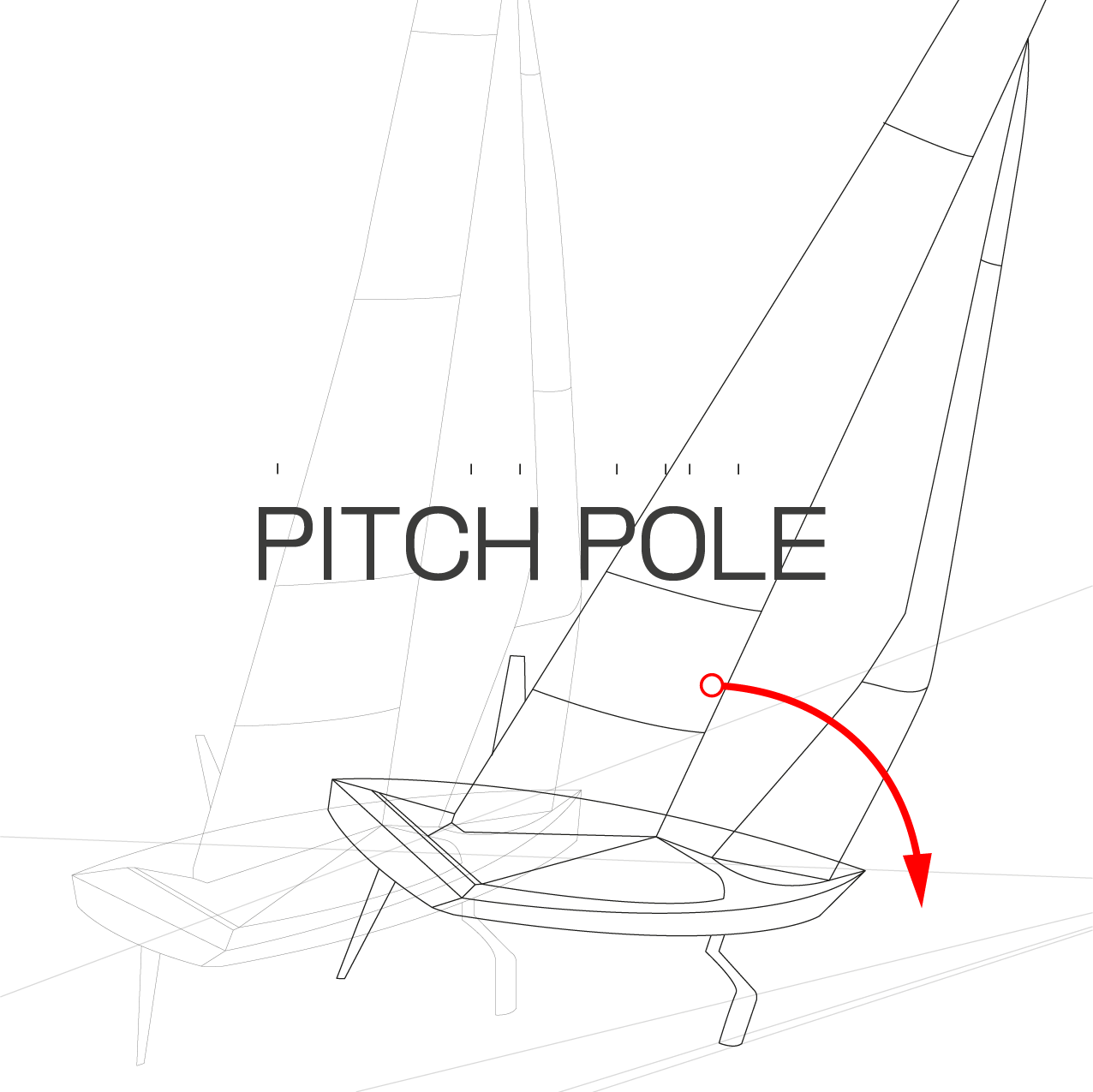
Pitch pole, or nose diving
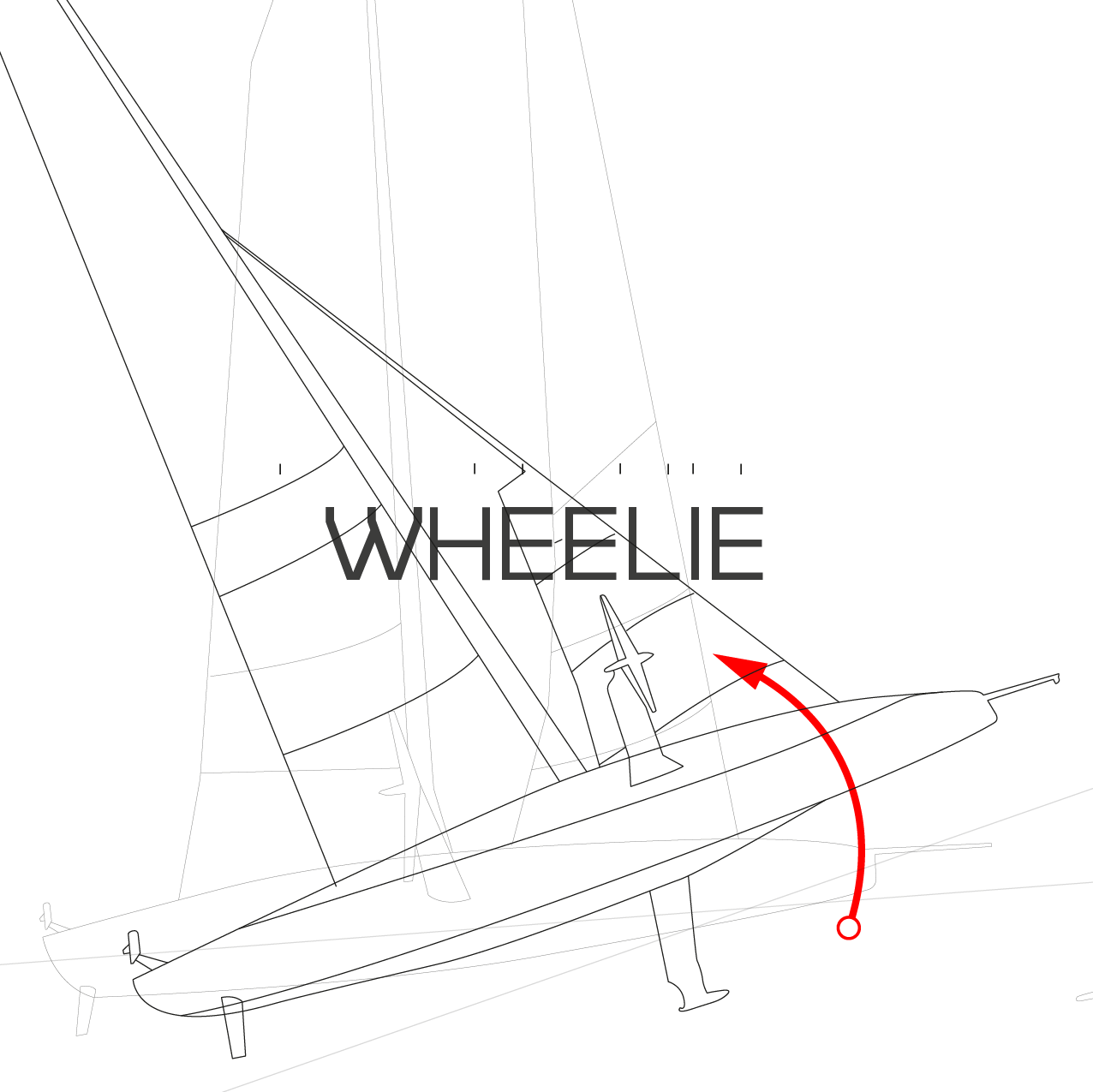
Wheelie
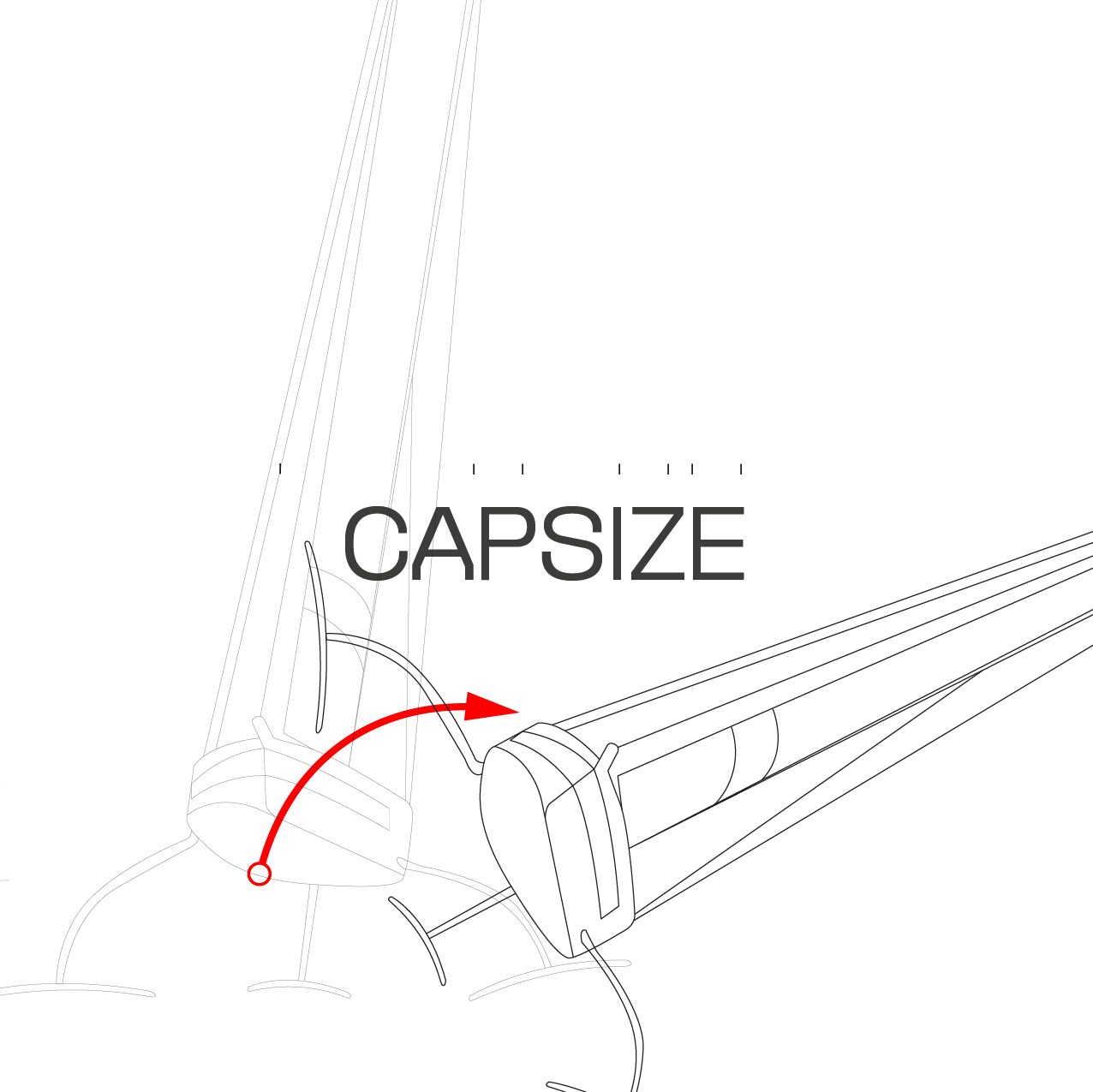
The most classical accident, the capsize
The lateral G-force to which teams are subjected on board reaches 1.5G and, in these extreme situations, any setback can have catastrophic consequences. During the initial stages of the PRADA Cup, the preliminary competition that decides who will be the challenger in the America's Cup, various accidents occurred, one of which caused considerable damage to a boat.
During the round robins, Patriot, American Magic’s monohull, capsized, which caused a leak in the hull and forced the US team to retire. Back in the semifinal race against Luna Rossa Prada Pirelli, Patriot was unable to qualify for the final phase. Other classic accidents to which these boats are prone are the so-called wheelie and the nose-dive, which occurs when the bow sticks into the water and causes a sudden deceleration. Emirates Team New Zealand experienced this during a test race against Ineos Team UK.
var options = { clientId: "dainese", xcontentId: "05412baa-d9d9-46a8-92b4-76dfbb2996ad", sessId: "tbdyoh" }; var player = THRONContentExperience("kjomd", options);
With respect to the flying catamarans of the 35th edition, the flying monohulls of the 36th America's Cup presented by PRADA mark a clear departure from the past and boast increasingly impressive performance. But increased performance also means more risk for the crews. Hence the need for greater on-board safety, as Dainese supports both teams vying for the world’s oldest sporting trophy with its protective technology.