

Why invest in a motorcycle airbag in 2026? A closer look at the benefits
Many riders ask themselves: Is it worth buying a motorcycle airbag? The answer essentially comes down to the numbers. A Level 2 airbag system cuts the force transmitted to your back by about 70% compared to a Level 2 back protector. And since a modern system now costs about as much as a good helmet, the protection-to-price ratio comes down firmly on the airbag’s side.
Do you really need a motorcycle airbag?
When it comes to safety, we tend to associate risk with high speeds or long trips. In reality, many crashes happen in everyday situations: the commute to work, urban traffic, and the roads you ride every day.
Speeds are often low, but the dynamics are unpredictable: dangerous intersections, ignored right-of-way, and sudden braking. These are situations where reaction time is minimal and protection plays a decisive role. That’s why you always need a motorcycle airbag in the city.
Is a motorcycle airbag useful at low speeds too?
Contrary to common perception, as mentioned, the need to wear an airbag isn’t tied to reaching high speeds. A motorcycle airbag is built to handle sudden deceleration: Even at just 12–19 mph, an impact against a fixed obstacle generates force peaks the human body can’t absorb without injury.
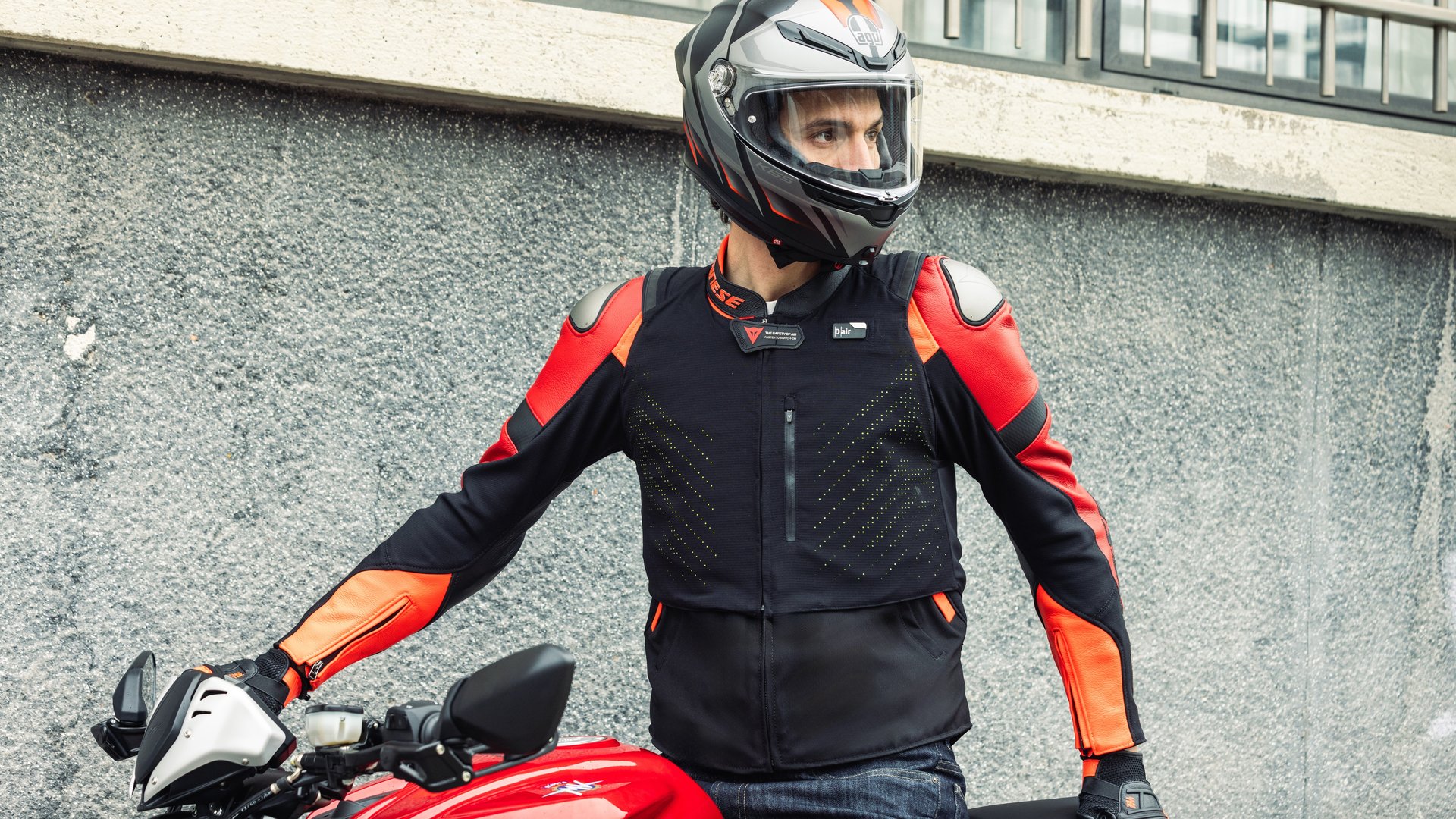
Powered by its algorithm, the D-air® system detects the dynamics leading to a crash and inflates the airbag in milliseconds. This response time is especially critical in the city, where the distance between the rider and the obstacle (a car cutting across or an open door) is often reduced to just a few feet.
Scientifically, the airbag drastically reduces the forces transmitted to the protected areas of the body, delivering protection that homologation tests certify as several orders of magnitude greater than traditional Level 2 protectors. To be specific, against a 50J impact, a Level 2 back protector can transmit up to 9 kN, while a Level 2 airbag stays at 2.5.
Motorcycle airbag vs back protector: what’s the difference?
Traditional protectors like the back protector work on specific areas of the body and remain a fundamental piece of gear.
The airbag, though, introduces a broader level of protection:
- Covers the back, collarbones, and chest
- Absorbs impacts far more effectively than a traditional protector
- Inflates only when needed and stays imperceptible the rest of the time
It’s not a replacement but an evolution: A system that expands and completes what already exists.
In any case, if you wanted to wear a Dainese D-air® airbag together with the back protector, so you stay protected even after the system has deployed, there’s nothing wrong with that.


From the racetrack to daily life: a technical and cultural evolution
The motorcycle airbag was born in the world of racing, where the pursuit of safety has always been ahead of its time. Introduced by Dainese in 2007 and now mandatory in the World Championship, within just a few years it went from elite technology to a practical solution for street use too.
Like every innovation in protection, the airbag is going through an early phase of adoption, much like what the full-face helmet, the back protector, and other protective gear we now take for granted went through in the past. But compared to a few years ago, the context has changed: Today’s systems are lighter, more discreet, easier to use, and above all more affordable.
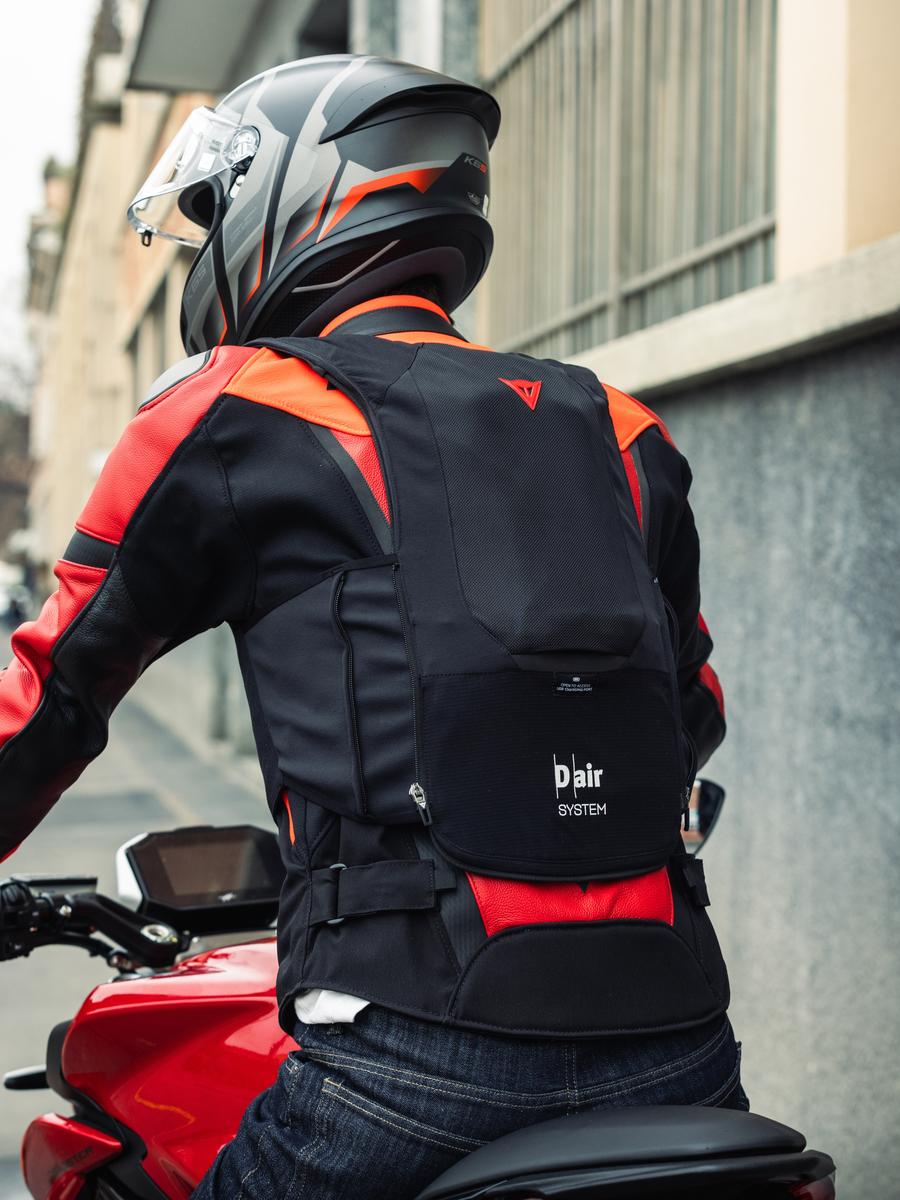
Technological progress has made these devices compatible with everyday riding: Standalone vests with no connection to the motorcycle, rechargeable like a smartphone, and wearable over or under any jacket; at the end of the ride, they can be folded and stored in any backpack, bag, top case, or the scooter’s under-seat storage. Practicality has become the key factor.
What was once designed for the racetrack is now fully integrated into everyday mobility. It doesn’t require changing your habits, and it adapts to every kind of use, from commuting to long trips.
More than just a technical innovation, the airbag represents a cultural shift: The shift from ‘specialist’ protection to an increasingly common standard.

But what exactly is a motorcycle airbag?
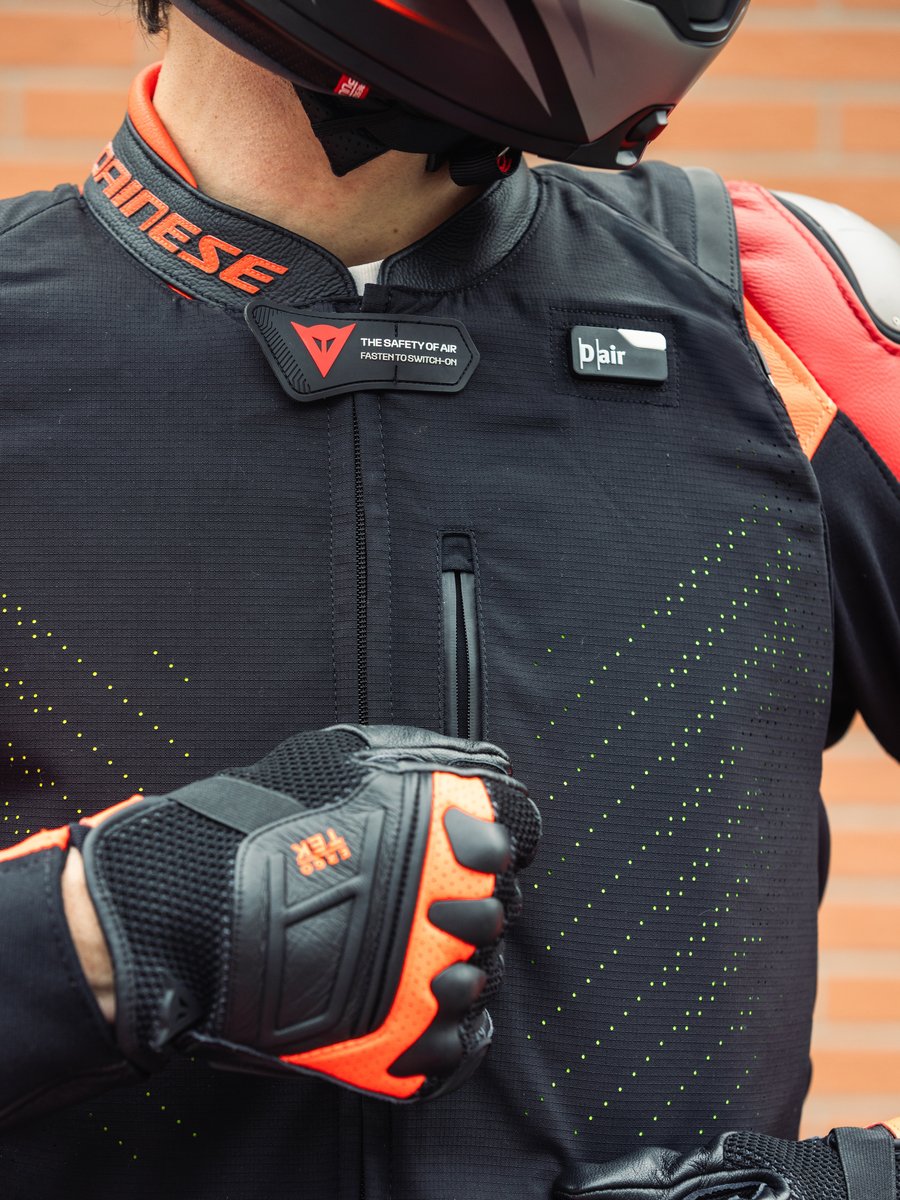
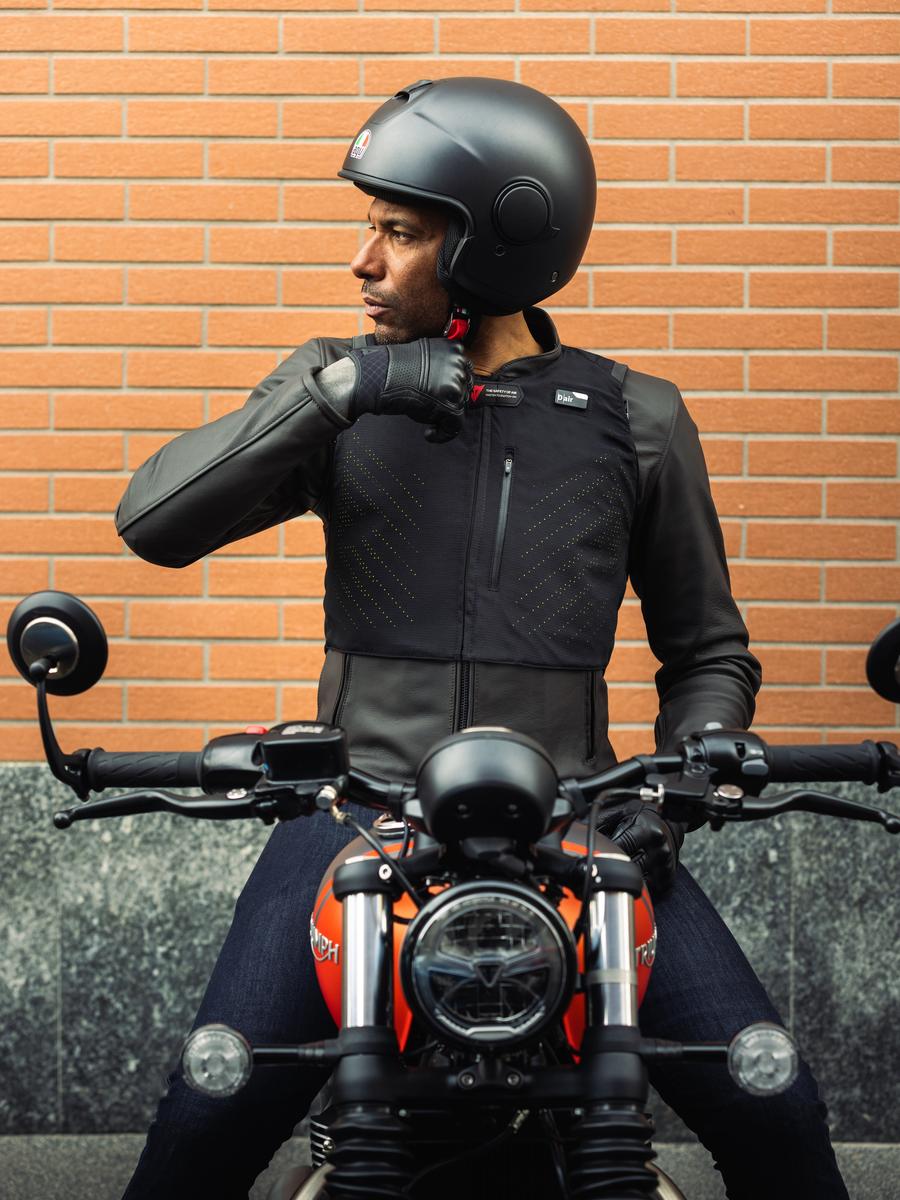
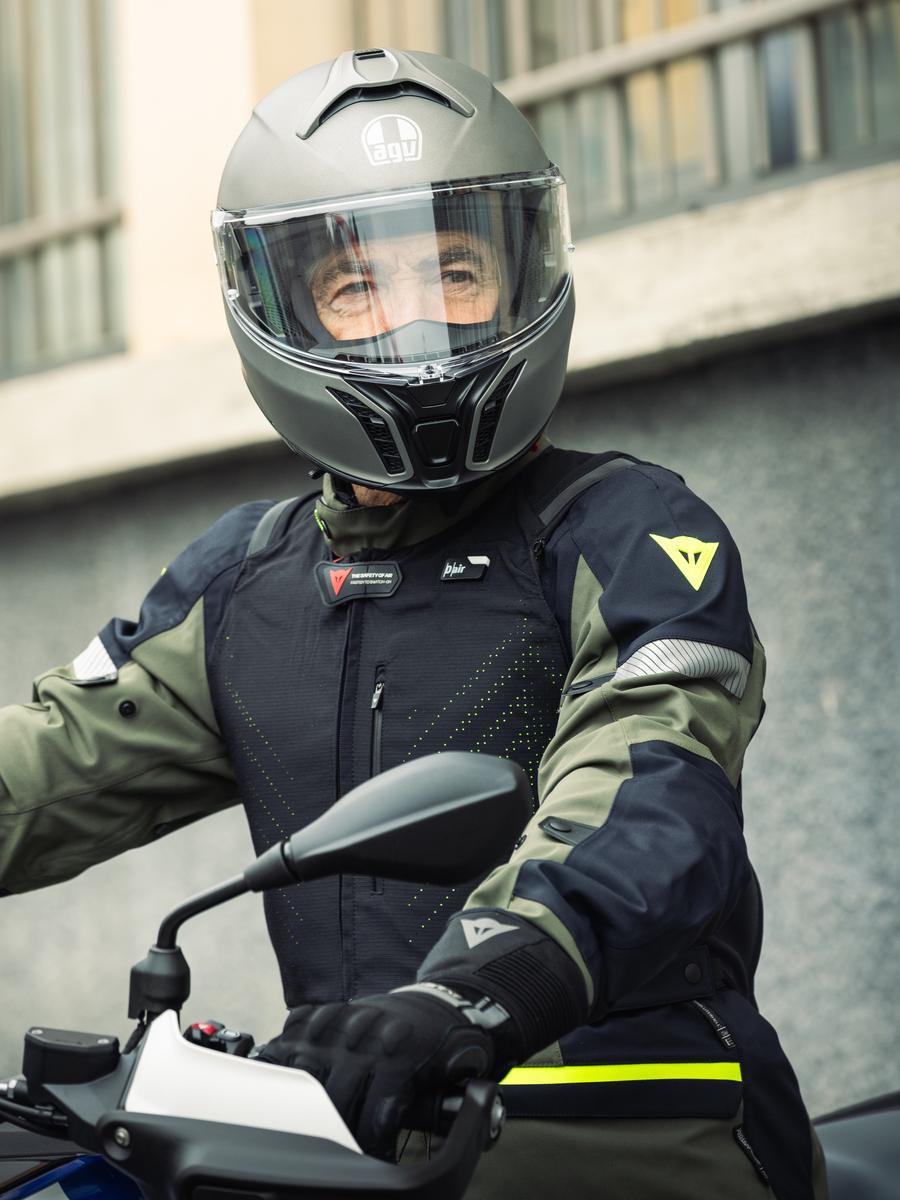
Before we wrap up, let’s explain what it is and how a motorcycle airbag works. A motorcycle airbag system is a certified protector made up of essentially two elements: The control unit and the airbag itself. The control unit is the electronic component that, through an algorithm fed by sensor data, decides when to inflate the airbag by sending a signal to the gas generator.
The airbag is the part that actually covers and protects the affected areas. In the case of Dainese D-air®, the inflated airbag is about 2 inches thick and protects far more effectively than a rigid protector. That’s not all. When deflated it’s barely noticeable, almost as if it’s only there when you need it.
There are differences between street and track motorcycle airbags, mainly linked to activation modes and airbag shape, but for all the specifics on how the Dainese D-air® airbag works, see our complete guide.
The protection of today and tomorrow
The culture of protection evolves over time, alongside technology and riders’ habits.
The motorcycle airbag represents one of the most recent steps on this path: A solution that, once typical of the racetrack, is finding more and more space in everyday use. It’s no longer a choice linked to specific contexts: It’s protection that always makes sense, every time you ride.