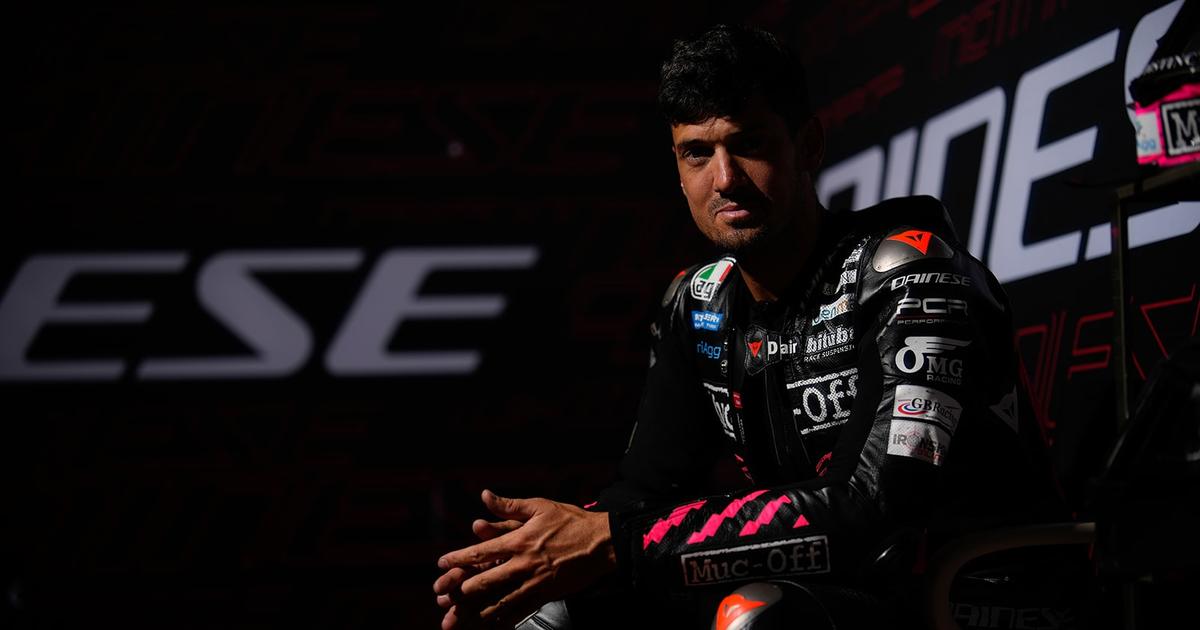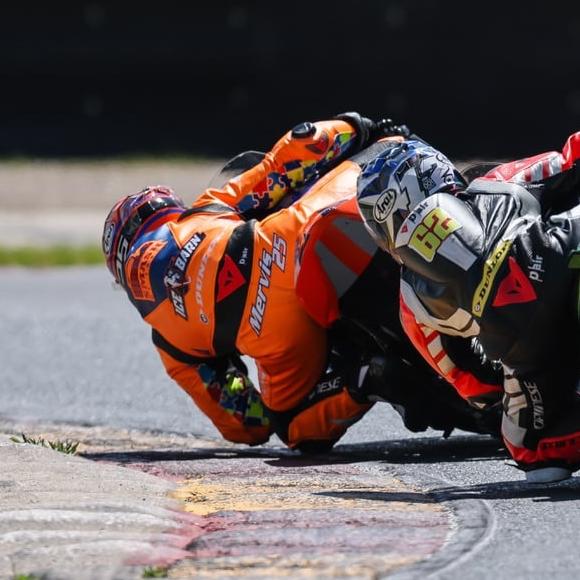


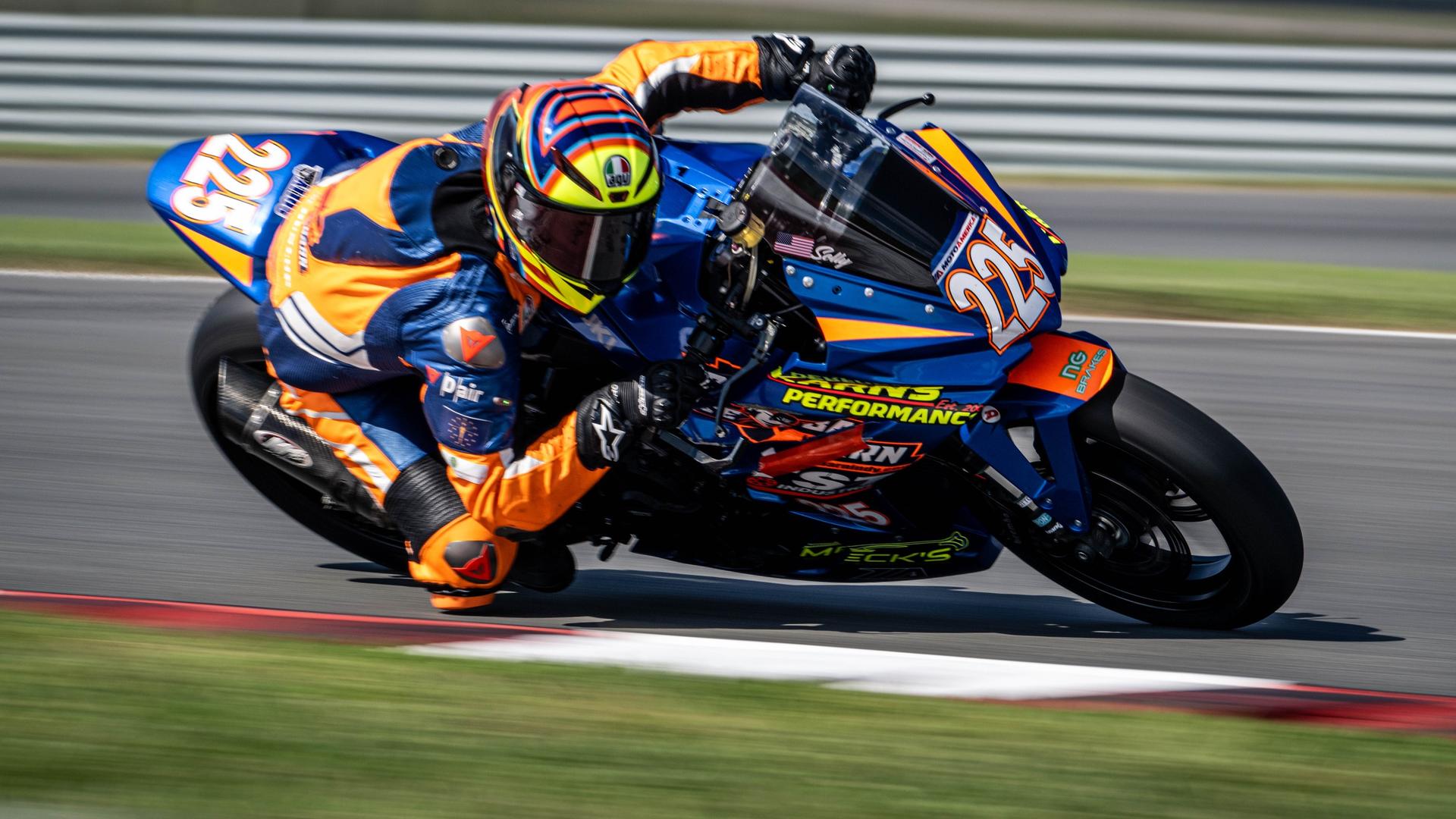
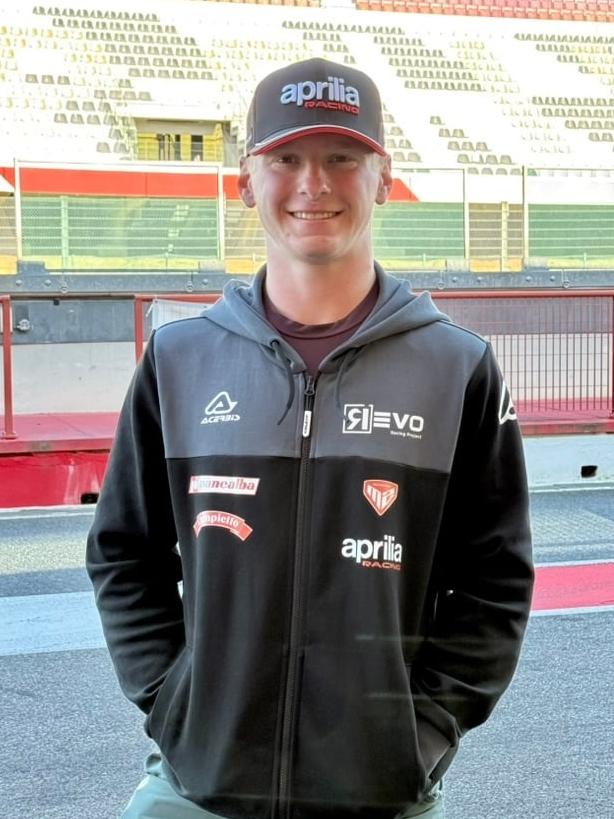
When Solomon Mervis, a 21-year-old from Indiana, started riding motorbikes during COVID in 2020, the racing world didn’t have a clue who he was. Within a few years, however, he went from riding a Honda XR 80 in his yard to competing in the MotoAmerica Twins Cup and Aprilia RS 660 Trophy in Europe. A journey as rapid as it is unusual from the track, university and his daily sacrifices.
Taking advantage of his European trip, we chatted with him about racing, safety, and the journey that took him from his first experiences in flat track to international track competitions in just a few years.
Solomon has also spoken openly about ADHD and autism, topics he proudly shows his support for on his motorcycle, via messages designed to raise awareness. And instead of considering them a limitation, he sees them as a fundamental part of his identity and even as an advantage in his ability to focus totally on what he loves to do: bike racing.
First of all, how did bikes come into your life? Do you remember the exact moment when something clicked?
I actually have a very different story to many others about how bikes came into my life. I didn’t grow up around motorbikes. I didn’t follow the sport, I didn't even know about MotoGP. I knew something about MotoAmerica and similar races, but then, during COVID, my dad bought me a dirt bike because we were stuck at home and there was nothing to do.
He bought a Honda XR 80 to fix up. He put got it working again, and I started riding around in the yard. At one point I said: “Hey, I want to race.”
My father looked at me and said: “Race what?”
And I replied: “Bikes!”
So we dived in without really knowing what we were getting into. We considered motocross, enduro… but then we discovered track racing and flat track and I fell in love with it. My parents weren’t big fans of the track because of the speed involved. They preferred flat track , especially my dad, because he could see me all the way around the oval. He gets very nervous when he can’t see me.
But yes, it all started when I got on a motorbike for the first time and then, a little later, when I went kart racing. Suddenly it was like: “Okay, this is my life now.”
Who has influenced you the most, on and off the track?
Off the track, even before bikes, I would say my wrestling coach. He had such a big influence on the person I am today. He taught me the value of hard work. You can't just dream about something: you have to work and take action if you really want to get it .
Then, in the world of racing, the two people who have influenced me the most are Danny Walker and Jason Pridmore . The first time I started riding seriously was at Danny Walker's American Supercamp. There I really learned how to ride properly. Then I took another leap in quality when I met JP and started working with him and today with Felix Rodriguez . I have been very fortunate to have these people on my side.
But I also look up to my father and mother a lot. They are the ones who made me the person I am.
What is the most important lesson racing has taught you so far?
Honestly: never give up. I already knew this partly from wrestling. I wrestled in middle school and high school, and that taught me about hard work, but racing really taught me to never give up. It has been a journey. Sometimes you experience incredible moments, other times you hit rock bottom, and it's hard.
But the biggest lesson is this: never give up.
What do you feel you still need to learn to take the next step?
Honestly, I feel like I still have a lot of experience to gain . That's the main thing. I need to do more laps, more races, more starts, more hard-fought final laps, more battles. That’s what I need to do to get where I want to be.
I think it will come with time, but I also need to improve my overall speed a bit. But I know I can do the work necessary and I know I have the skills to do it. It's just a matter of time and continuing to believe.
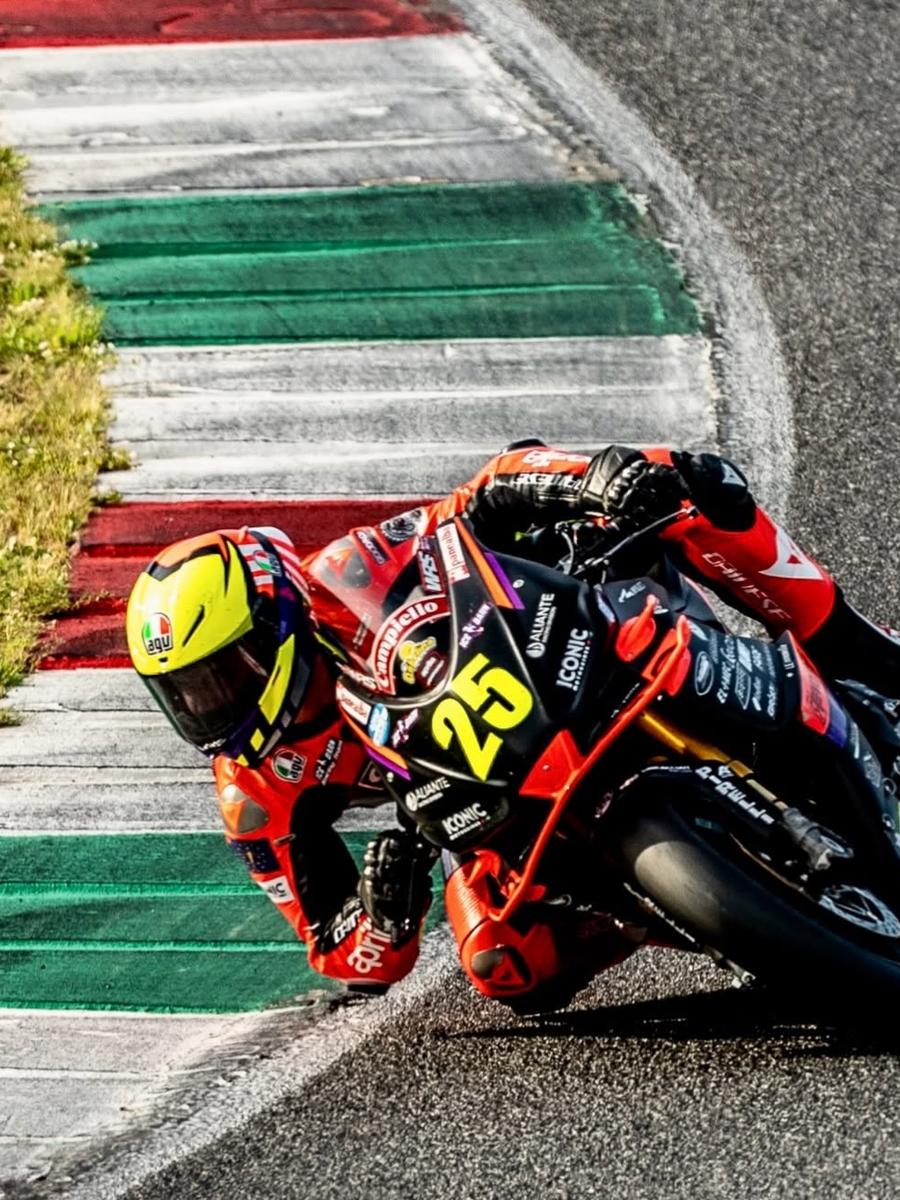
What’s next in your mind? What is your vision?
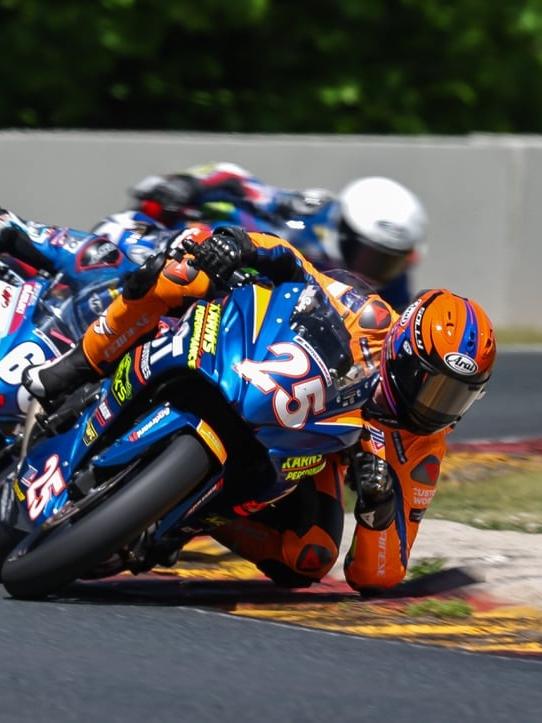
Now, in the short term, especially for this season, the main goal is to become a consistent top-5 rider in the Twins Cup at MotoAmerica. That’s my big goal. We know where I am now, we know where I can get to, and I know where I belong in the rankings. So it’s just about taking small steps and learning every time I step onto the track.
Where do you see yourself in five years?
I honestly don’t know. I’m studying for a degree in mechanical engineering and racing at the same time, so a lot will depend on where life takes me: whether I will work, race or both. I don’t know yet.
What did you have to give up to pursue this career?
I sacrificed a lot socially. I had to give up time with friends and a normal life. I can’t be as involved in school life as I’d like—clubs, societies, things like that—because there’s simply no time. I’m busy with school, lessons, studying and then competitions.
As you said, you also study engineering. How do you manage to balance all this with racing?
Honestly, it’s very complicated. Somehow I manage to do it all, but sometimes it’s really hard. The hardest part is that I can’t ride as much as I’d like because I can’t leave school to go train in places like Florida, California, or Arizona. But somehow I’m making it all work.
You’ve spoken openly about ADHD and being on the autism spectrum. How do these characteristics influence you as a rider and as a person?
Many people associate ADHD and autism with something negative, but for me they have almost been a superpower. They allow me to be incredibly focused on racing, improving and doing well both on the track and in school.
Honestly, without being autistic I would not be anywhere near as strong as I am today. In my personal experience, this means that when my mind gets stuck something, it’s hard to stop thinking about it. And with racing this has been a huge advantage, because I can never get them out of my mind. That’s all I think about and all I want to do.


You display autism awareness messages on your bike. What message do you want to convey?
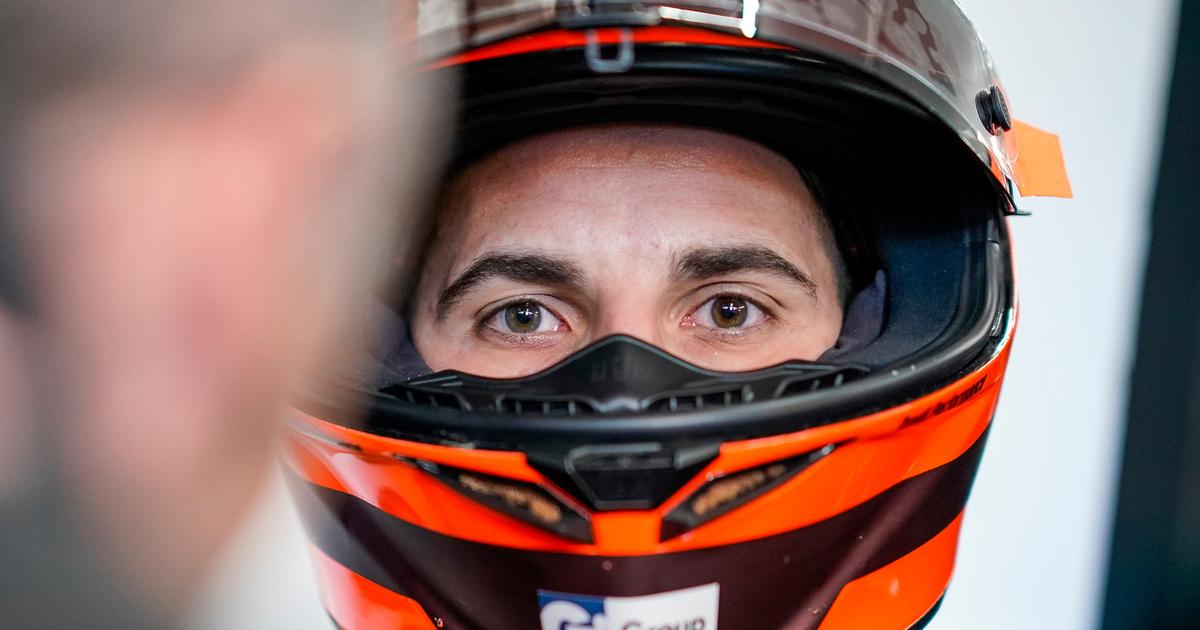
I want people to understand that when we all lower the visor on the starting grid, I am no different from anyone else. And even though I am different in some ways, I am proud to be different. I am proud of who I am and the progress I have made.
What is the thing you think people understand least about ADHD or autism, especially in a high-performance environment like racing?
One misunderstanding is the idea that autism automatically limits a person. For some people it definitely creates different challenges, but for me it is not something that limits me.
It’s something I’ve had to work on, especially from a social perspective. Sometimes people misunderstand what I say or misinterpret my intentions. My mind is racing and I’m constantly thinking about so many things at once. Sometimes I lose my train of thought or jump from one topic to another. But in my head everything is connected, even if it doesn’t like it from the outside. It’s something I’ve worked on a lot, but it’s also part of who I am. I wouldn’t be complete without every part of me, including my autistic part.
Let’s change the subject and talk about equipment and safety in motorcycle racing. You’ve been with Dainese for a few years now: What are your favorite Dainese-AGV products that you use on the track and why?
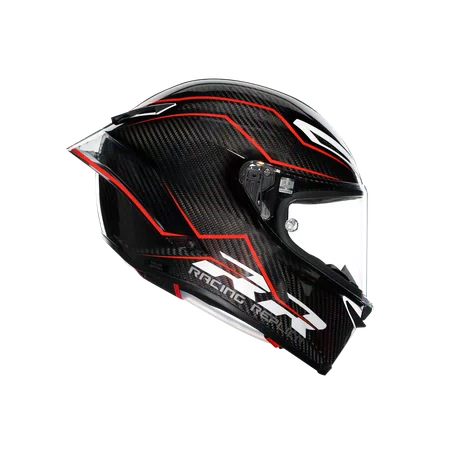
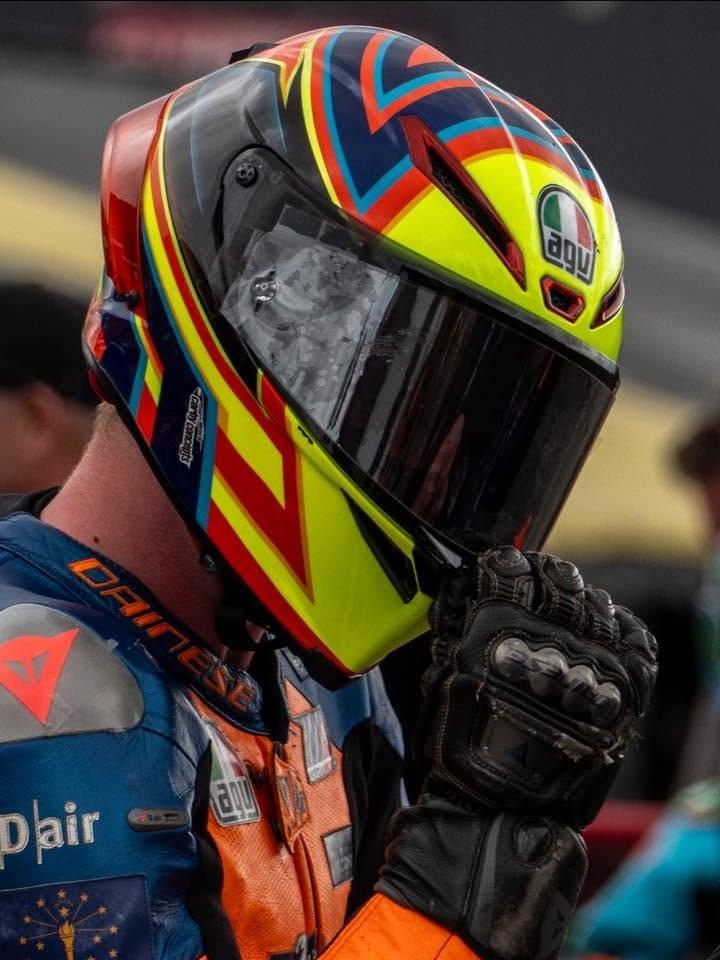
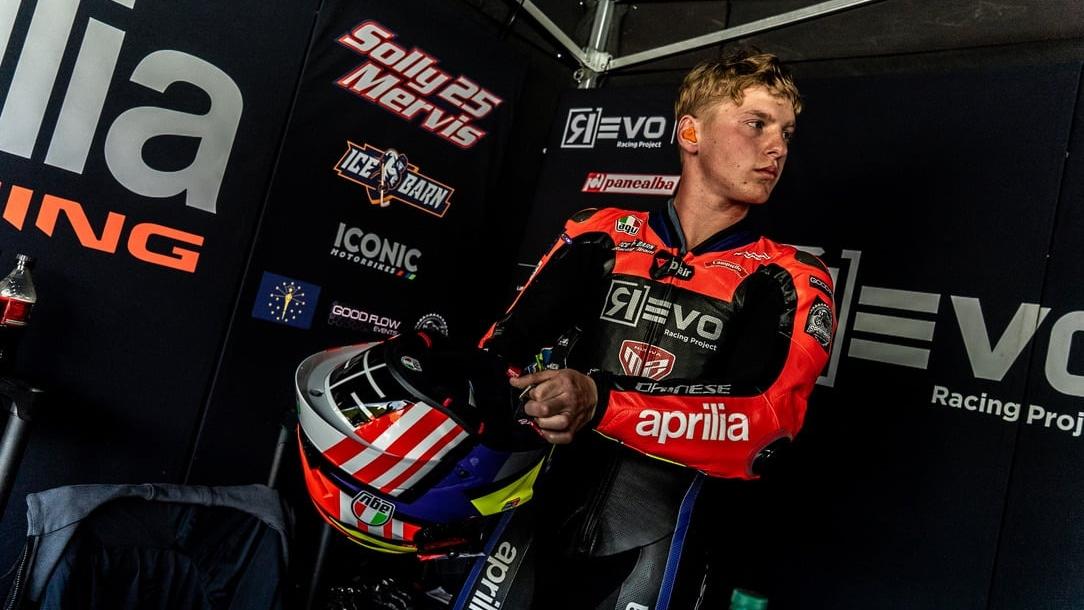
Honestly, the AGV Pista GP RR helmet and the D-air® suit. I’ve been using this gear pretty much since I started racing. I’ve had some pretty nasty crashes wearing Dainese gear, and the fact that I’ve always gotten back up without serious injury is something I’m incredibly grateful for. It gives me a sense of security and the confidence to push close to the limit because I know I have impeccable protection if something happens.
The equipment is simply amazing. It’s the best.
What do you think of the IN suit and boot combination? What do you think are the real positives?
Honestly, with the IN-boot configuration, the feeling is different, but in a positive way. Aesthetically, too, I think it looks really good, but most importantly the foot feels more protected.
Last September I broke my ankle, and I honestly think if I had been wearing another boot, it could have been a lot worse. The doctors told me that I could return to riding without surgery. With other boots it probably wouldn’t have gone so well. In fact, in another accident two years ago, my own motorcycle literally ran over my ankle and foot and I was completely unhurt.
Many professional motorcyclists say that once you get used to the airbag, you can't go back. What do you think?
For me there is no going back. I will never ride on the track again without an airbag.
Are you ever afraid on the bike? And if so, how do you handle it?
Tough question. I wouldn't call it fear. I would say more nervousness or excitement. Maybe when I try something new, when I open the throttle earlier or when I push it to the edge in terms of grip. You know you're playing with fire, but it's also what makes this sport so exciting. More than fear, it's the awareness of being on the edge.
What motivates you most: proving something to yourself or to others?
To myself. I've never been motivated by wanting to prove something to others.
Sure, part of me wants to show that I deserve to be here, but most of all, I want to prove to myself that I can do it. Ultimately, when you're on the track, it's all up to you.
Last question. If you could change one thing about the racing world, what would it be?
I would honestly lower the barriers to enter this sport in the United States . I wish more people could experience it, because it changed my life.
I've met so many people through racing. I have friends all over the United States and abroad too—friends in Italy, Spain, everywhere
I think everyone deserves a chance to experience this world . It's a very difficult sport to get into, and I'm very lucky to have had the support of my parents. Without them I wouldn't be anywhere near where I am today. I feel really lucky and wish more people could experience this.