

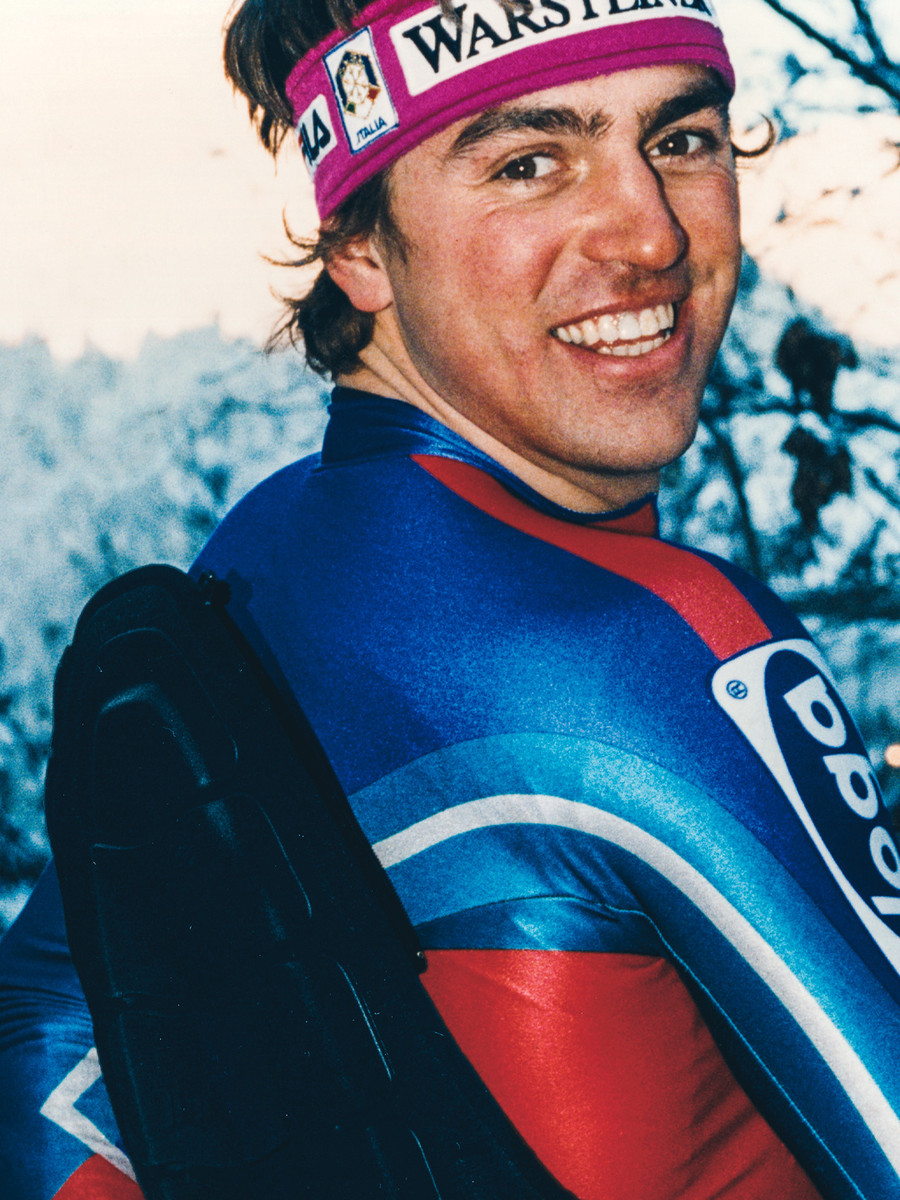
Kristian Ghedina is one of the top Italian downhill skiers of all time, with 13 World Cup victories, including one in the Super G, and three world championship medals. For more than a decade, he approached skiing as a continuous challenge to his limits, turning every piste into an extreme test. As such, when it comes to memorable descents, his point of view carries a different weight.
To ask a World Cup skier which slopes have stayed with him is to enter a world of major descents, challenging vertical walls and passages where speed must be managed with absolute precision. Not "picture-postcard" pistes, but rather those that put technique, the ability to read the terrain and cool headedness to the test.
Born and raised in Cortina d'Ampezzo, Ghedina has included pistes both in Europe and North America in his selection, despite not always achieving outstanding results in the latter location. A sign that it is not necessary to win or to make it to the podium in order to recognize the greatness or prestige of a slope. Of these slopes, all of which are benchmarks in the world of alpine skiing, a home slope had to make the cut. This is his list.
Olimpia delle Tofane, Cortina d'Ampezzo
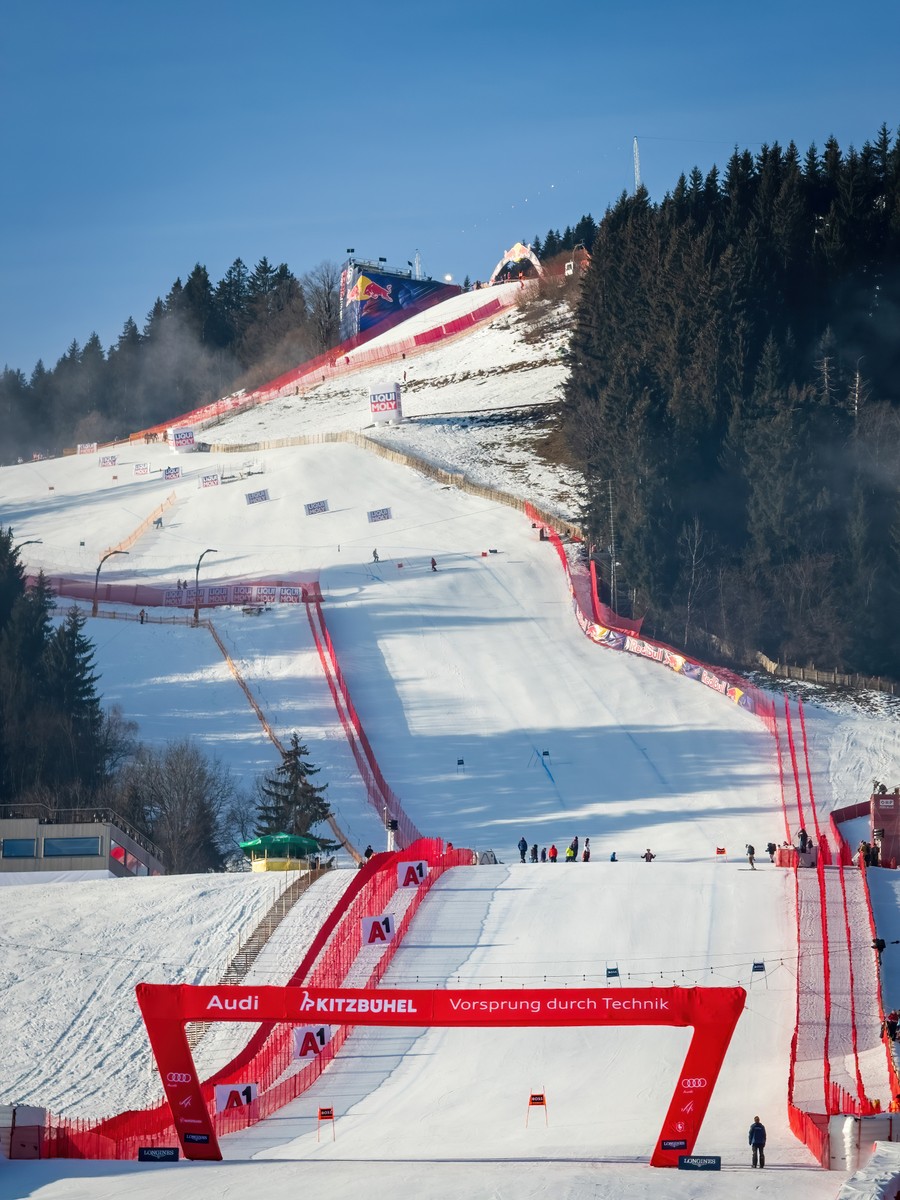
Streif, Kitzbühel
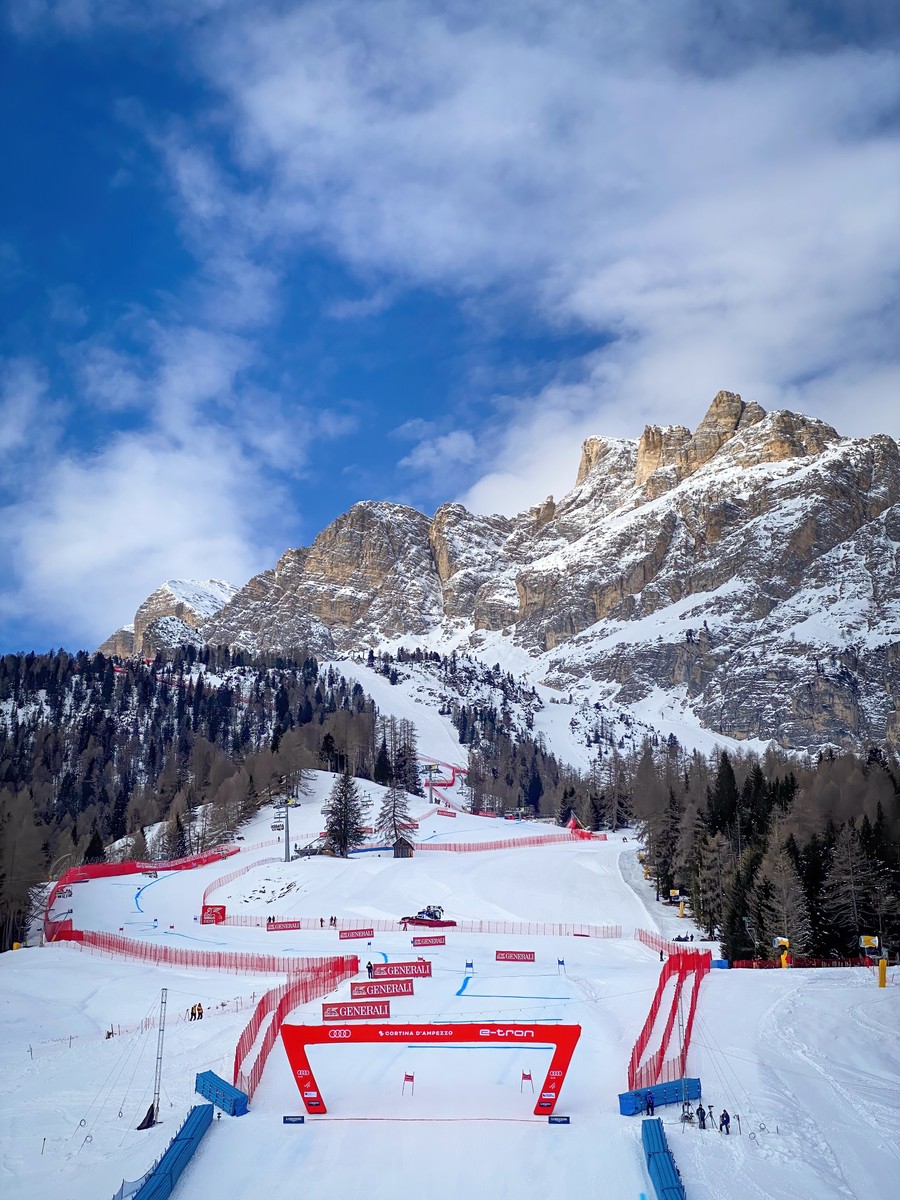
Cortina d'Ampezzo, Italy – Olimpia delle Tofane
A historic slope in the Ampezzo ski area, the Olympia delle Tofane has been a regular venue for the Women's World Cup for many years, but it remains one of the most comprehensive and technical downhillruns ever. Its 760 meters of elevation drop over 2.2 km, with gradients of up to 65%, make it a piste to be interpreted rather than suffered.
It is also the home track of Ghedina, who won his first World Cup race here on February 3, 1990. “The sun exposure ensures optimal visibility, which is fundamental for a downhill skier. The passage between the rocks, the “Schuss Tofana”, where skiers reach 150 km/h, is an iconic sight: I like to call it the women’s Kitzbühel.”
Kitzbühel, Austria – Streif
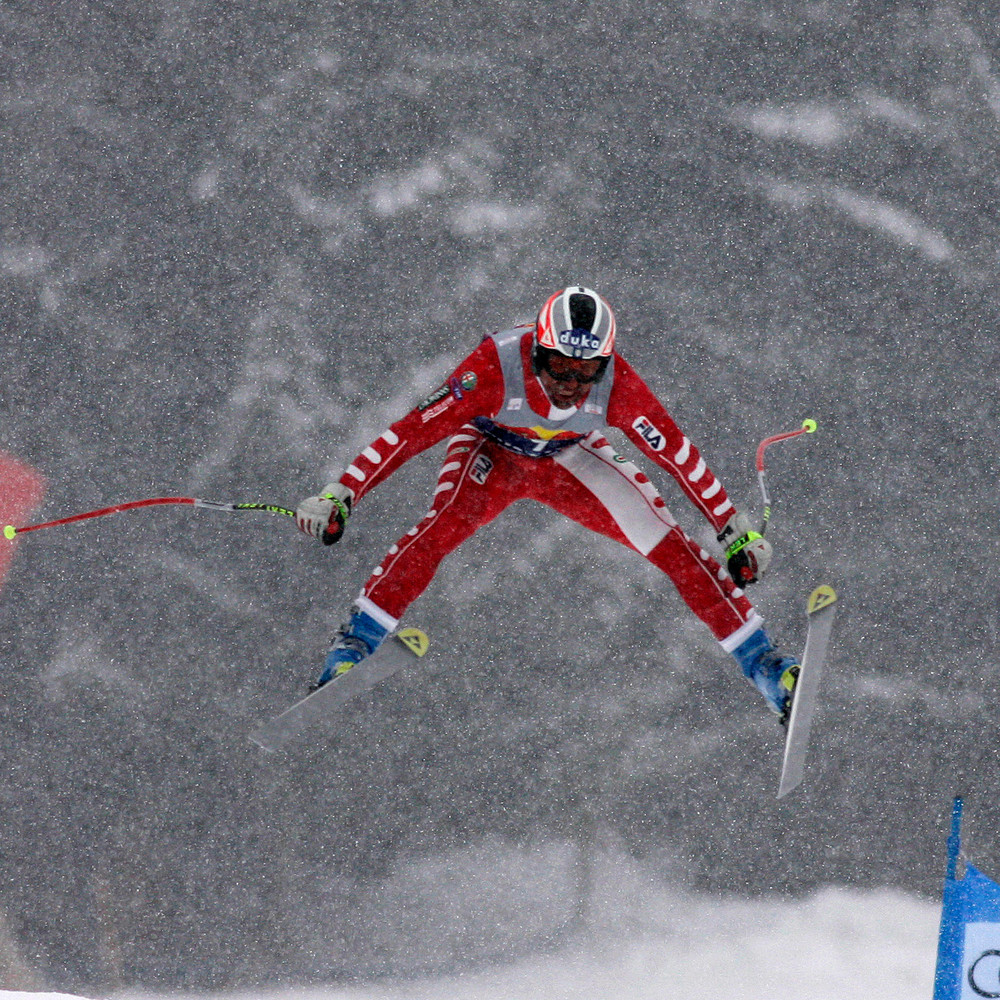
The Streif is a truly iconic downhill slope, the absolute benchmark for difficulty and sheer spectacle; Ghedina calls it "the slope of slopes, the Monte Carlo of skiing," comparing it to Formula 1. With 860 meters of elevation drop, 3.3 kilometers of length and sections with gradients of up to 85 percent, it allows no margin for error, starting with the extremely difficult initial jump of the Mausefalle, no less than 30 meters in the air.
\“In my opinion, however, the most critical section is the Steilhang, with its sudden steepness followed by a right turn with a downward slope, probably the most difficult passage in the entire World Cup.”\Here, in 2004, his split on the final jump at over 130 km/h became a core image in the history of skiing, despite a race that saw him end in sixth place.


Wengen, Switzerland - Lauberhorn
This is the longest World Cup Downhill slope, with a length of 4.4 km, taking athletes around 2 and a half minutes to complete: its reputation as an extremely challenging slope is similar to that of Kitzbühel'sStreif. The elevation drop is significant, over 1,000 meters, and the maximum gradient reaches 90%.
“I set a record here in 1997 at an average speed of 106 km/h that remained unbeaten for years, right until 2025, when it was slashed by around 2 seconds”. Meanwhile, the absolute speed record belongs to Frenchman Johan Clarey and is 161.9 km/h, reached at the end of the Haneggschuss section, the fastest in the entire White Circus.
Whistler, Canada – Dave Murray Downhill
On the snowy slopes of Whistler, one of the iconic North American ski resorts as well as a world mecca of outdoor sports, Ghedina achieved one of his most significant victories. It was February 1995, and the race was held under complicated conditions, with dense fog and reduced visibility.
An ideal environment for him to hone his terrain reading skills and his instincts in the race. On this occasion, he managed to take the lead, ahead of an opponent of the caliber of Lasse Kjus. “Whistler's Dave Murray Downhill, named after the famed Canadian skier of the 1970s and 1980s, is the second-longest slope in the world, with more than 1,000 meters of elevation drop, many jumps and flowing sections in the final stretch, often with wet snow, particularly suited to my strengths”, Ghedina recalls.
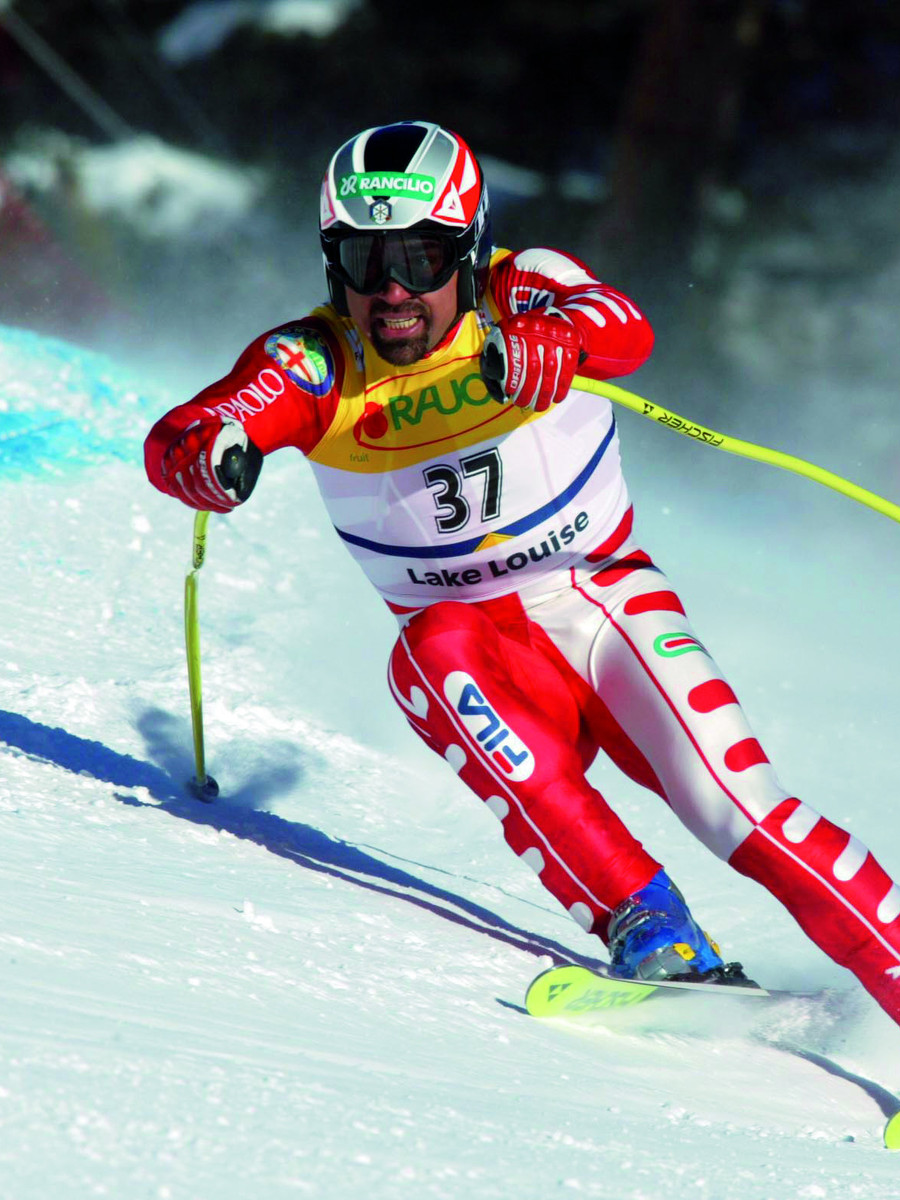
Lake Louise, Canada – Men’s Olympic Downhill
Lake Louise is a technical piste, largely immersed in the forest, and often used as an early season run. “Despite the presence of some great jumps and technically interesting sections, it is not a track that has brought me great satisfaction in terms of results; the best was sixth place in the 1999 Super G.”
It remains a significant track for its 3.1 km length, combined with an elevation drop of 828 meters. The men's World Cup race was held here in 1991 before a hiatus, and an eventual return in 1999.