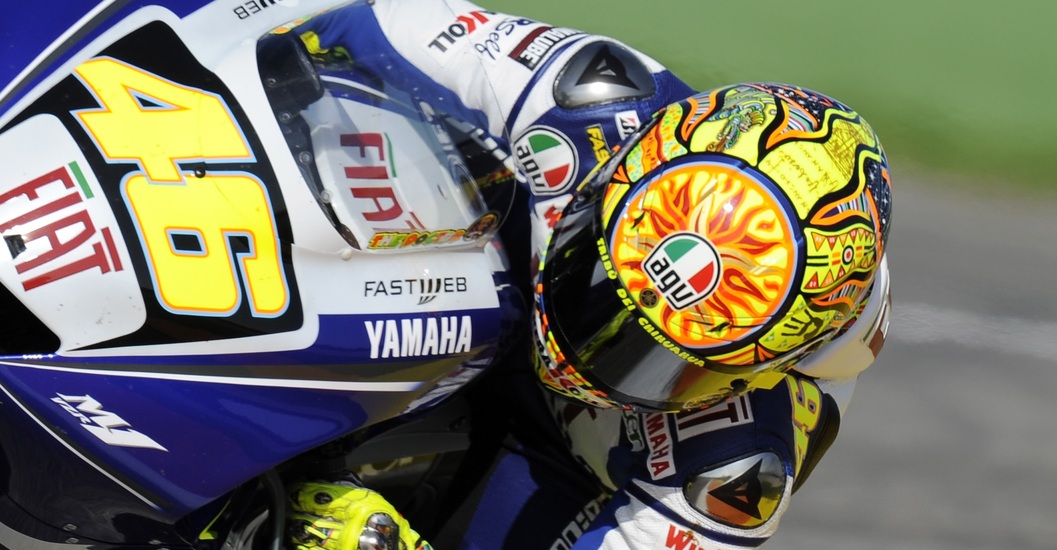


More than any professional rider before him, Valentino Rossi has treated the shells of all his helmets as a blank canvas, each race a chance to celebrate wins and titles or give unique expression to emotions. Since Valentino Rossi’s world championship debut in 1996, many AGV models have taken a turn on the champion’s head, increasingly advanced and with graphics that have always been new. Number 46 has raced with many graphics.
Let’s take a look at the history of Vale’s helmets from the beginning up to the present day.
AGV Q3 Pro (96-98)
This is the first helmet of the Rossi era, the Doctor’s first unforgettable Soleluna (sun and moon) graphics. The AGV Q3 Pro (Professional) is developed from the previous Q3, which in turn was developed from the Quasar, developed together with Wayne Rainey. It introduces teardrop-shaped air vents on the front and an extractor at the top. The shell is a combination of carbon fiber, aramid fiber and fiberglass. This helmet accompanies Valentino to his first successes in 1996 and to his first world title in 1997. In addition to the first of the many Soleluna versions, we recall the special Suzuka 1997 graphics.
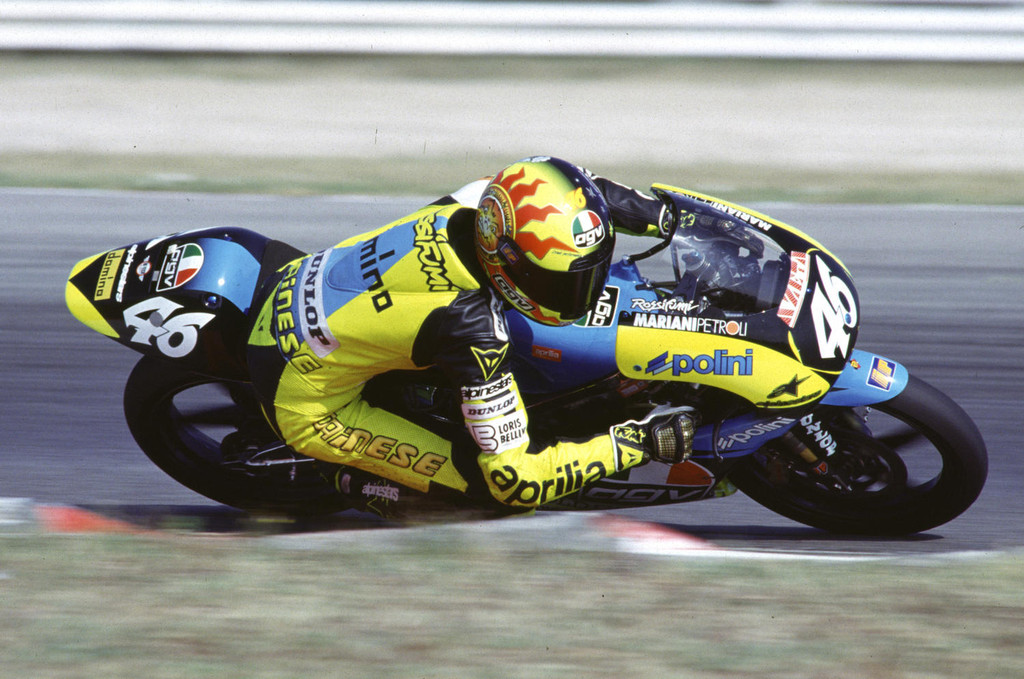
1996
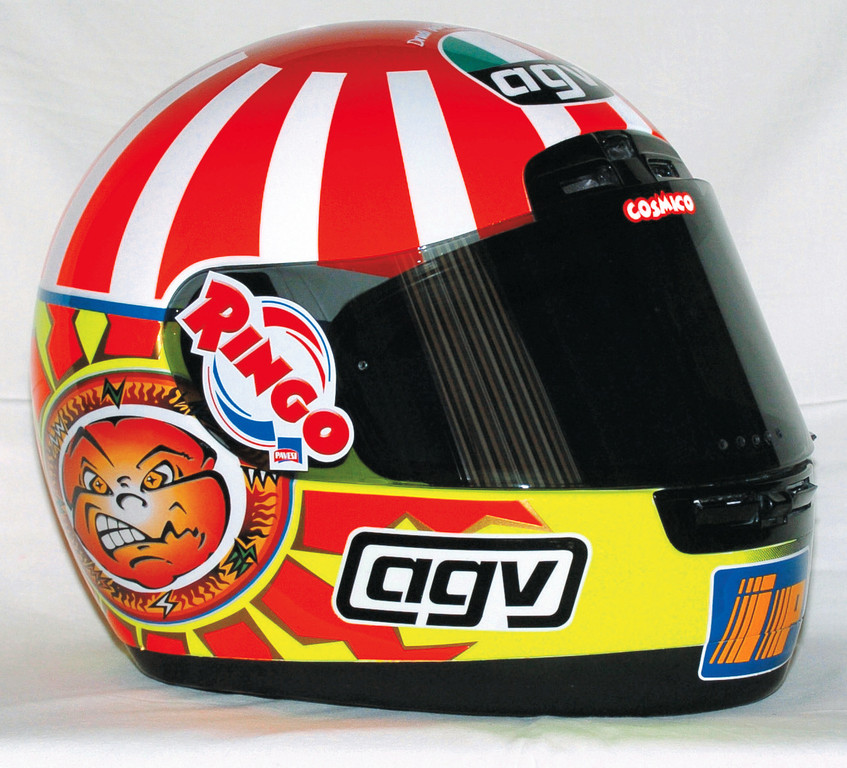
Suzuka 1997
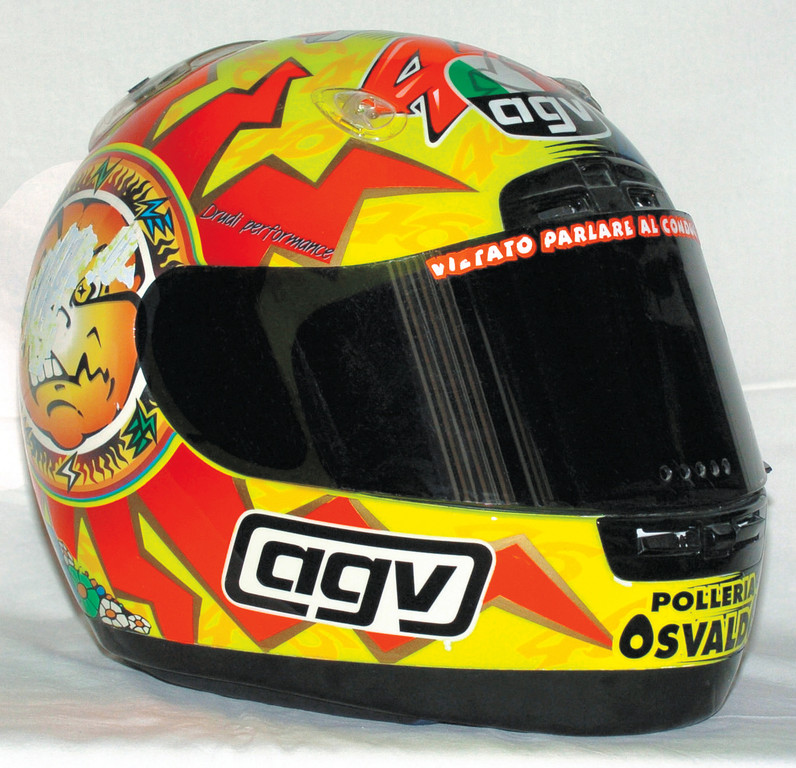
1998
AGV X-Vent (98-02)
The 250 debut, the second world title, the transition to the premier 500 class and then MotoGP™ are the milestones that Valentino races past wearing the AGV X-Vent, developed from the previous Q3. The new helmet is made of composite fibers, carbon and fiberglass, distinguished immediately through the presence of the large air vent on top of the shell and the two ventilation channels running to the back of it.
Among the many special designs on Valentino’s X-Vents are Imola ’98, the helmet for the second world title in 1999, the unlucky Mugello ’01, Mugello ’02 and the Rio 2002 rainbow, for the fourth world championship title.
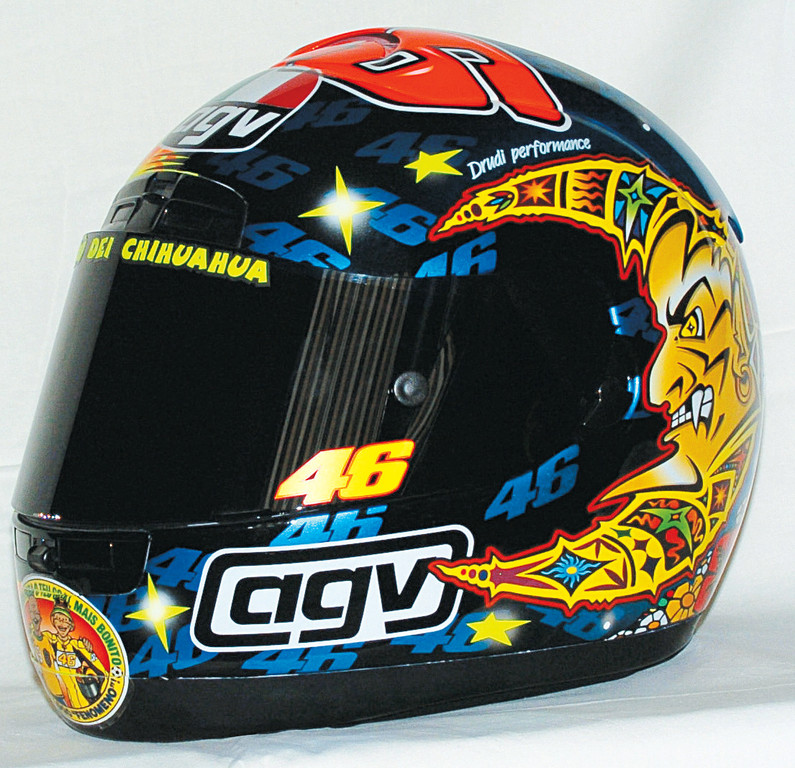
1998
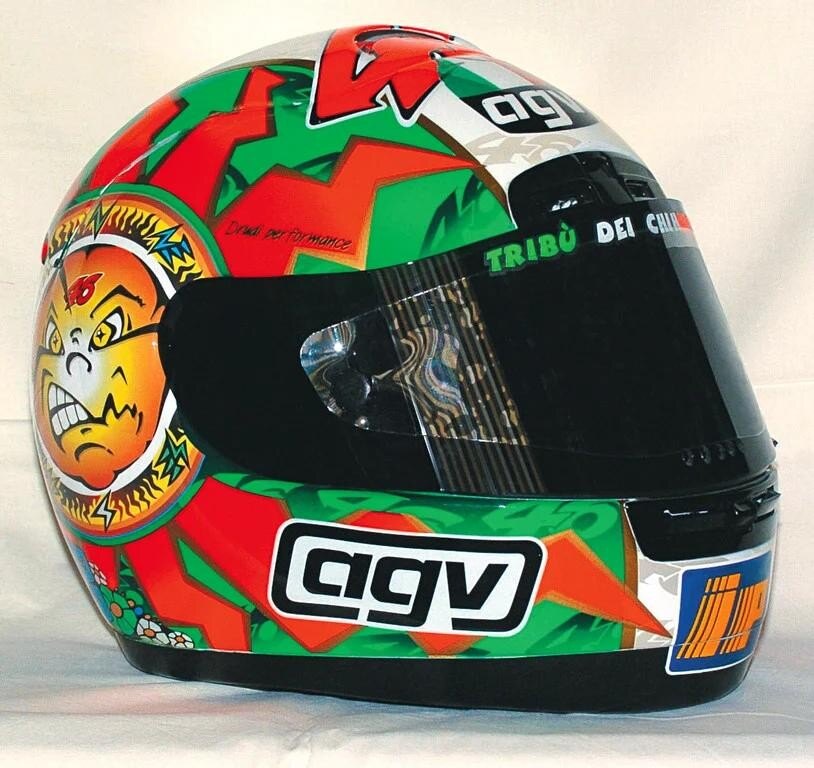
Imola 1998
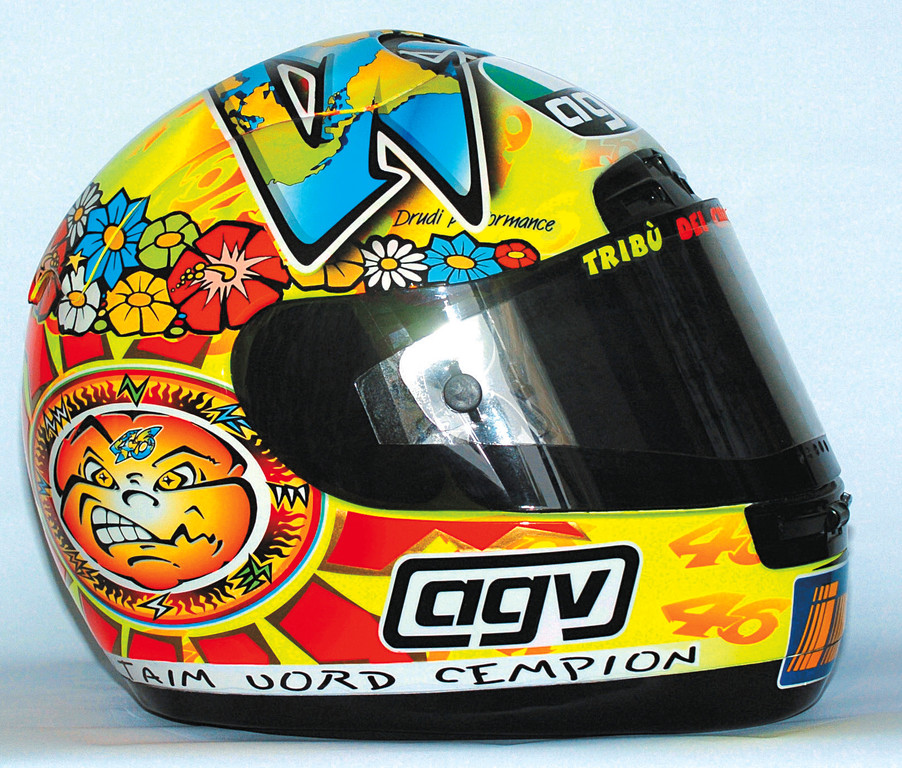
Rio de Janeiro 1999
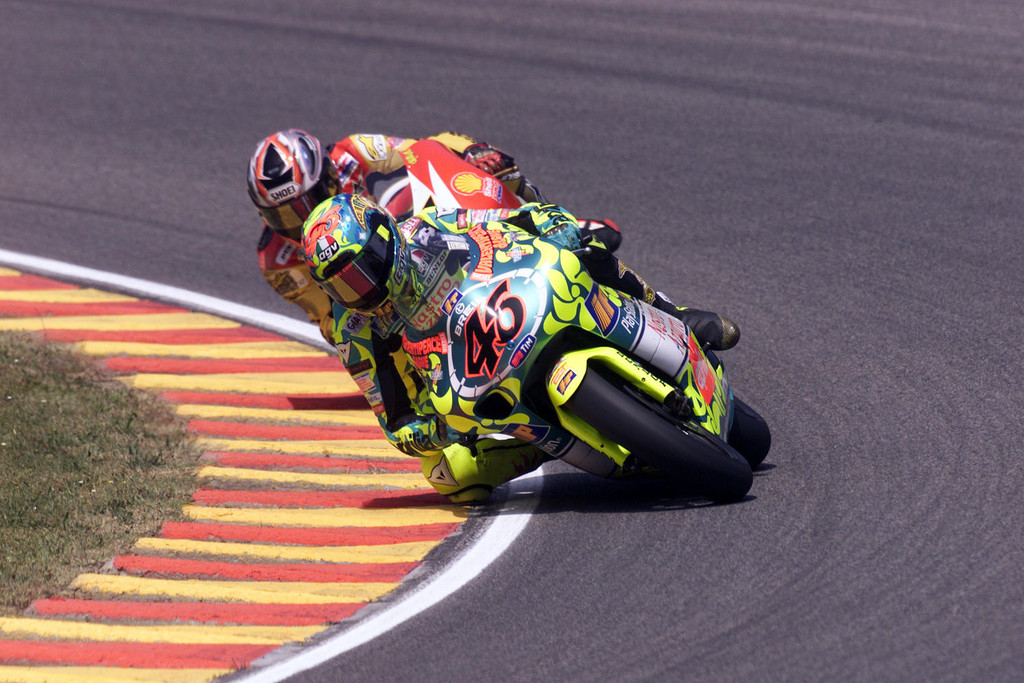
Mugello 1999
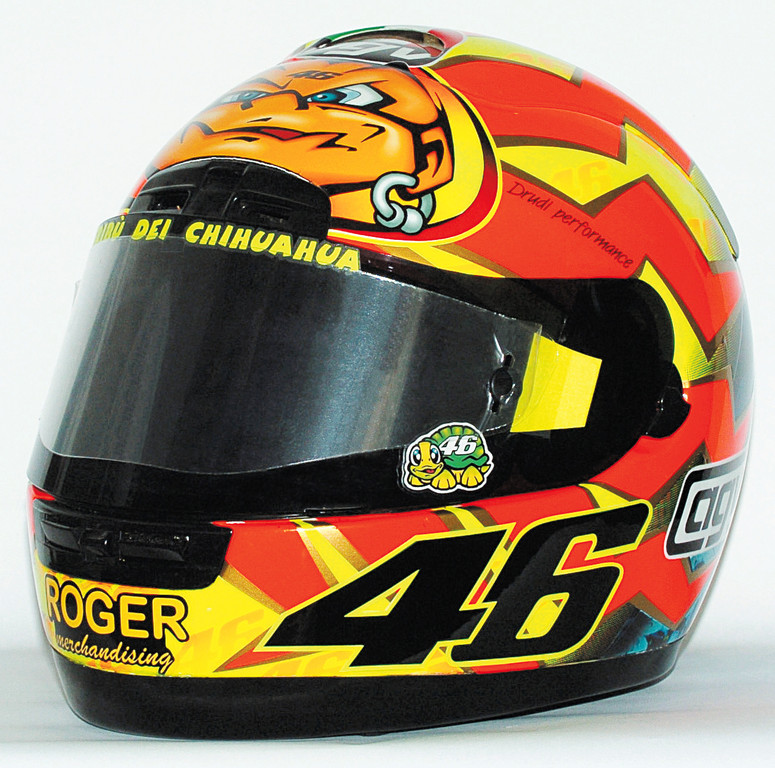
2001
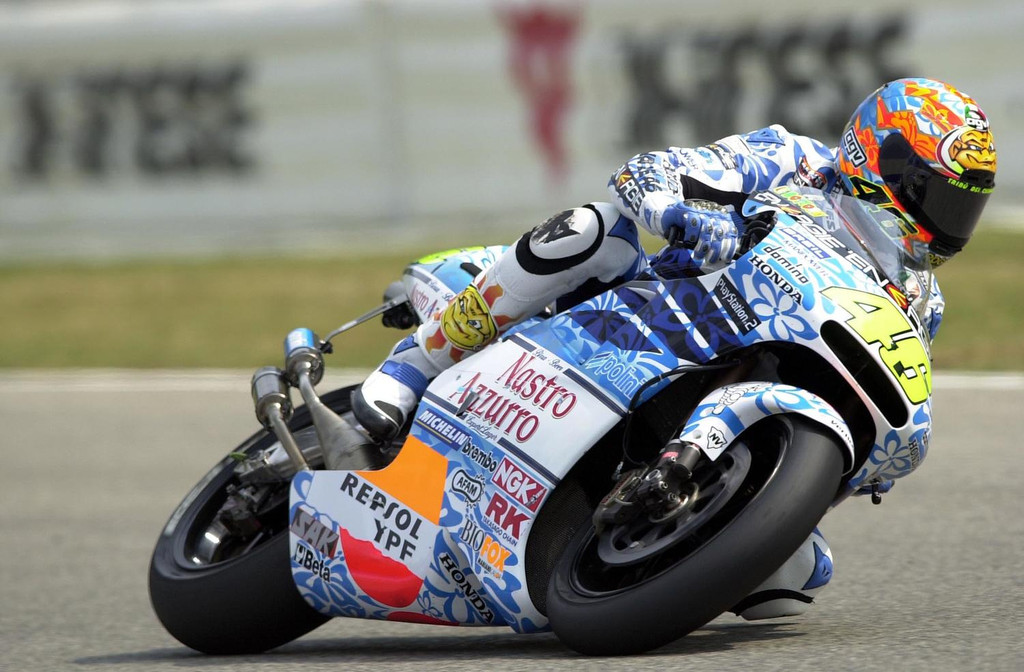
Mugello 2001
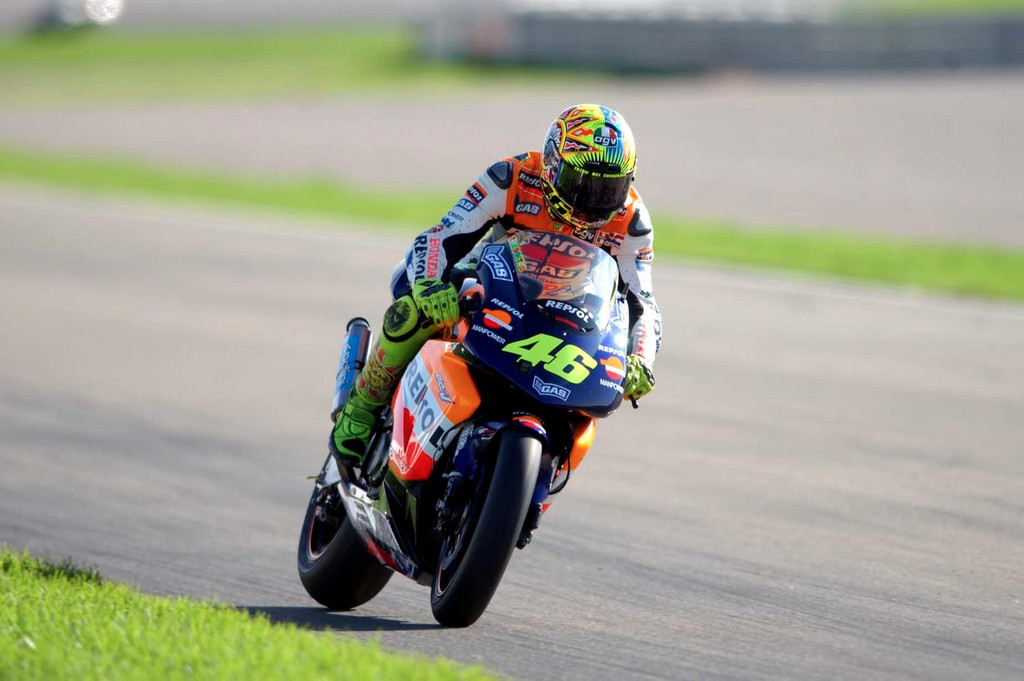
2002
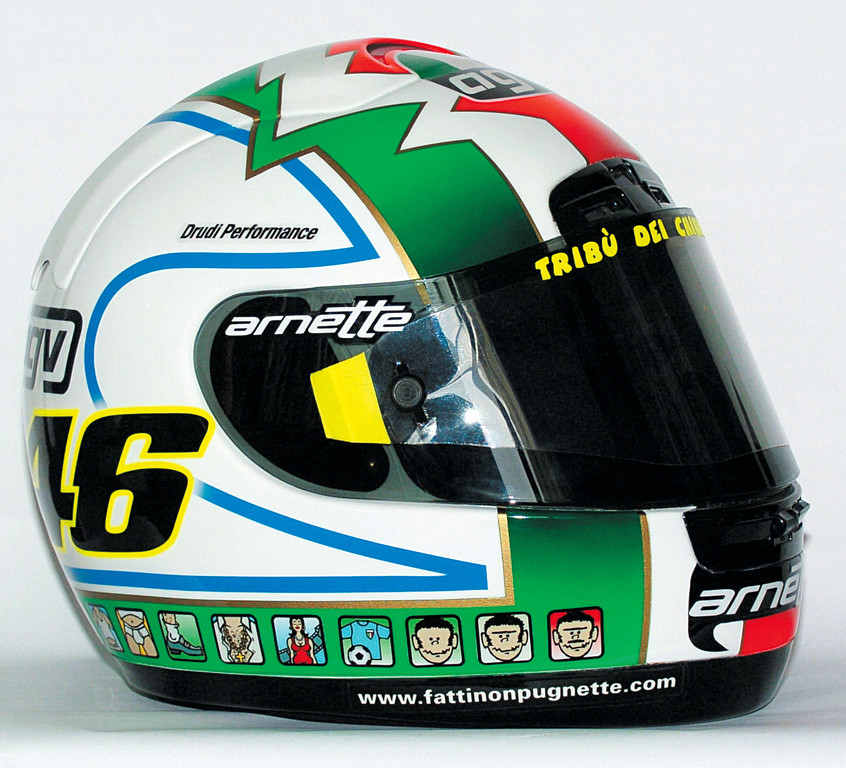
Mugello 2002
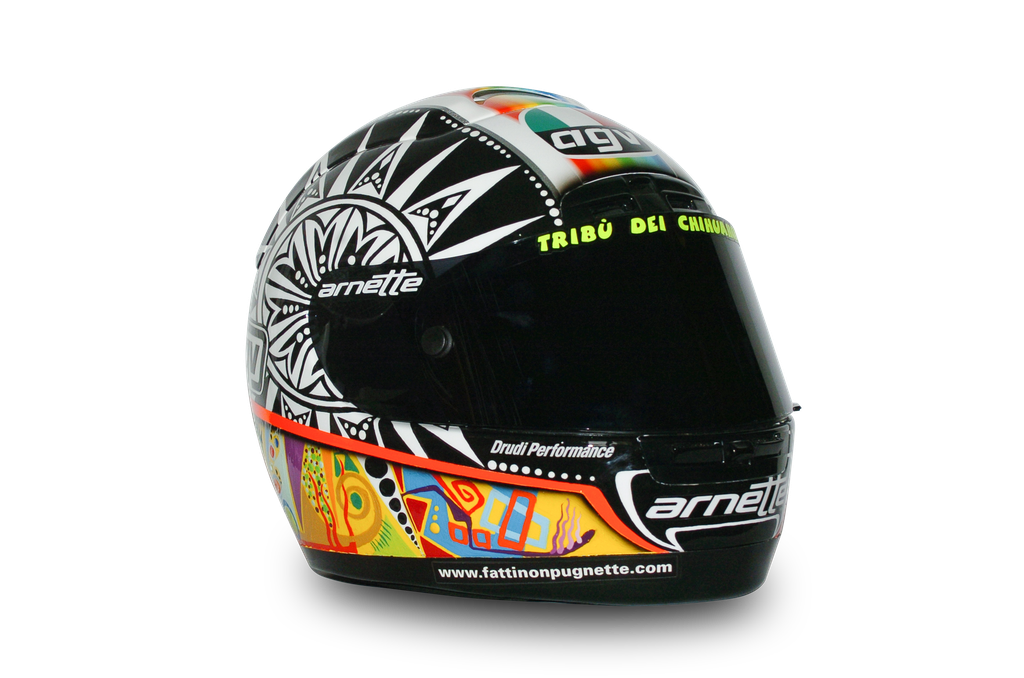
Rio de Janeiro 2002
AGV Ti-Tech (03-07)
The AGV Ti-Tech is a completely new helmet that accompanies Rossi in the seasons that see him dominate the world championship completely, lastly with Honda and at first with Yamaha, between 2003 and 2005. Made of a composite material – aramid fiber and carbon – it introduces the first metal air vents (titanium), to ensure the utmost safety even at the openings on the shell. The visor features the XQRS (Extra Quick Release System) for quick, tool-free visor replacement.
Its unforgettable graphics include the floral ones for Valencia ’03, the ‘wooden’ helmet for Mugello ‘04, Che spettacolo (What a show) for the sixth title the same year, then the celebrations at Laguna Seca and Valencia 2005 and the seventh title at Sepang, also in 2005.
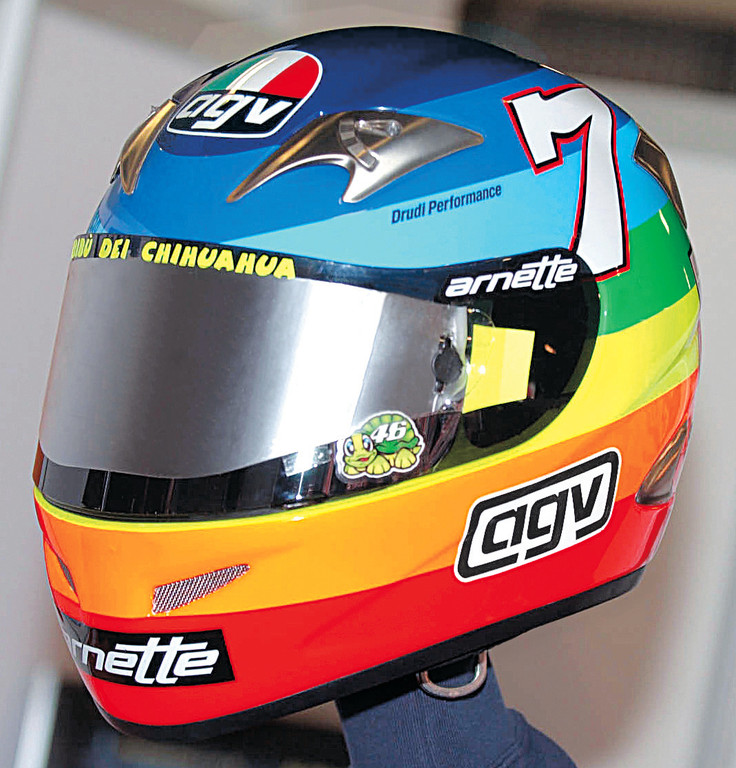
Winter Test 2003
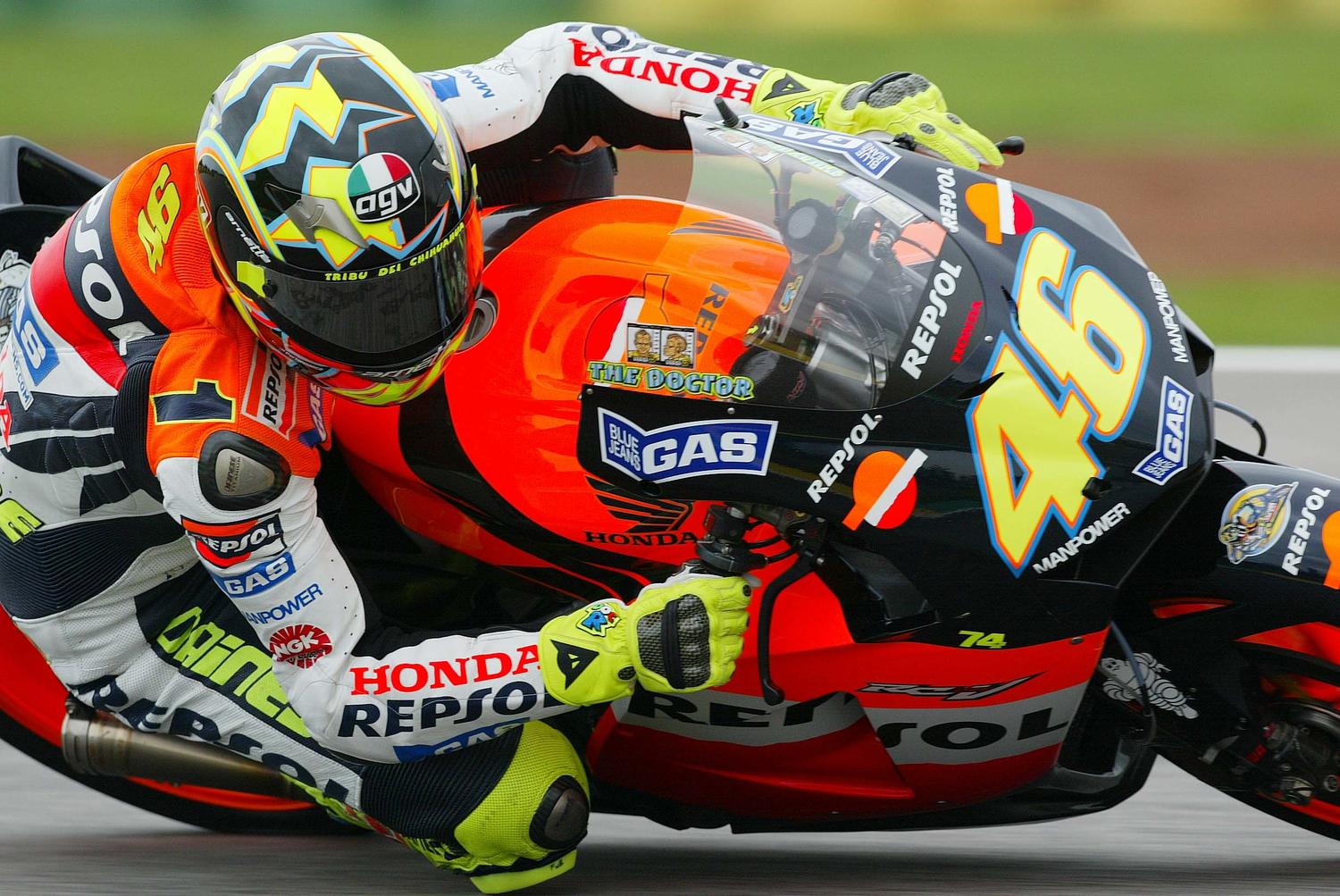
2003
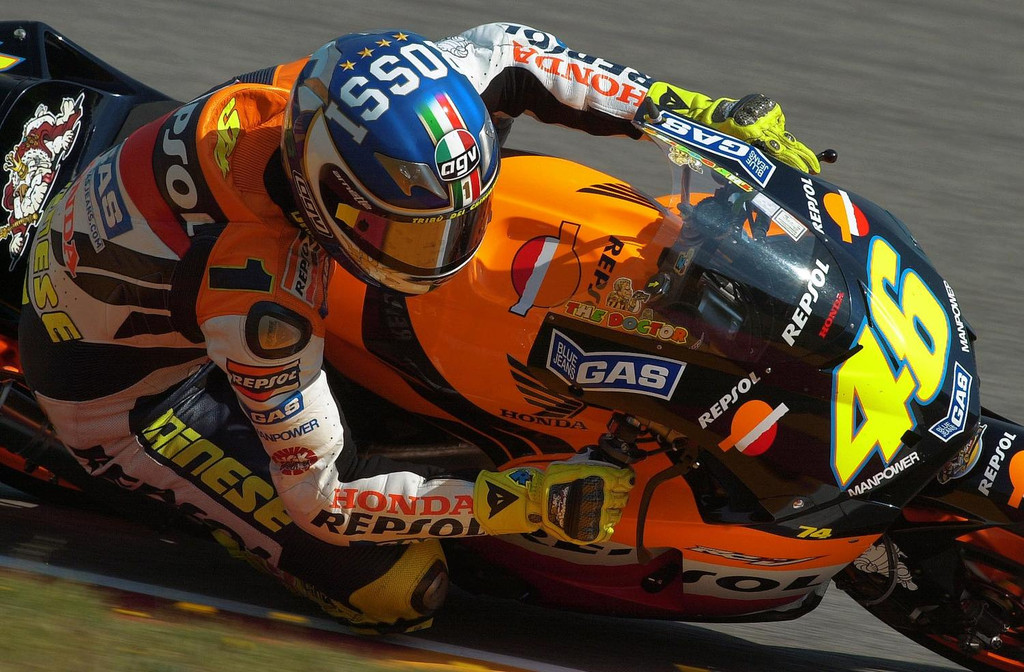
Mugello 2003
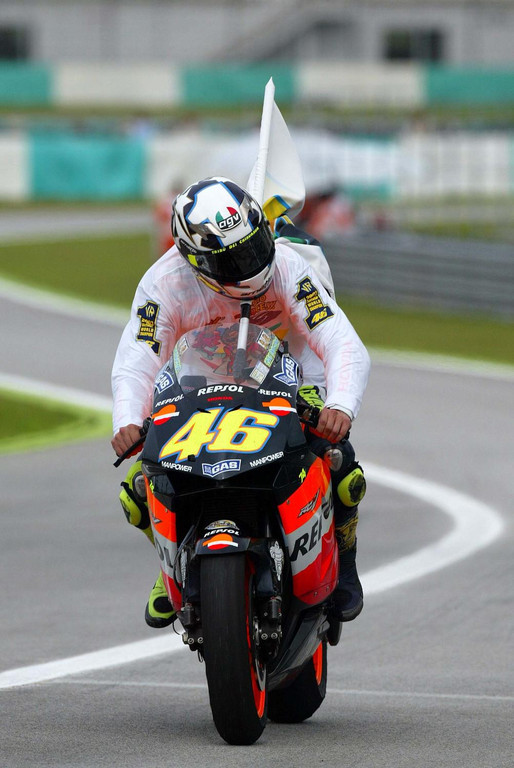
Sepang 2003
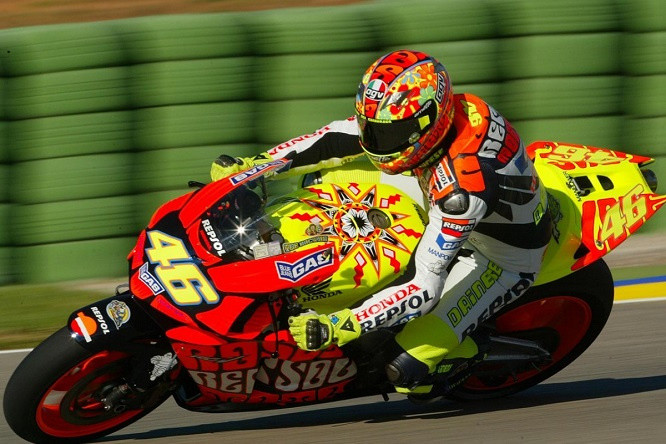
Valencia 2003
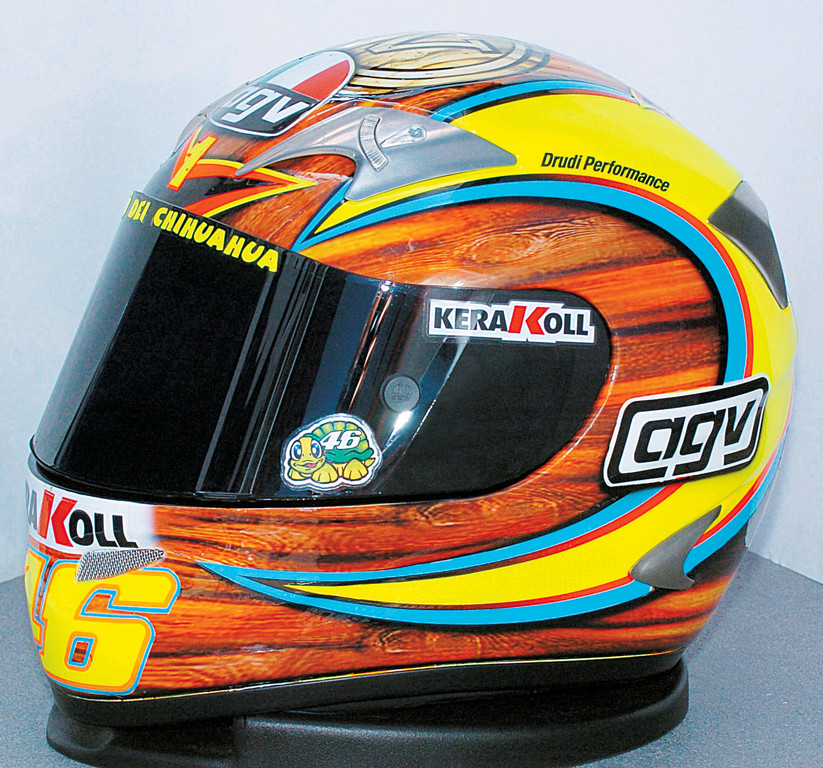
Mugello 2004
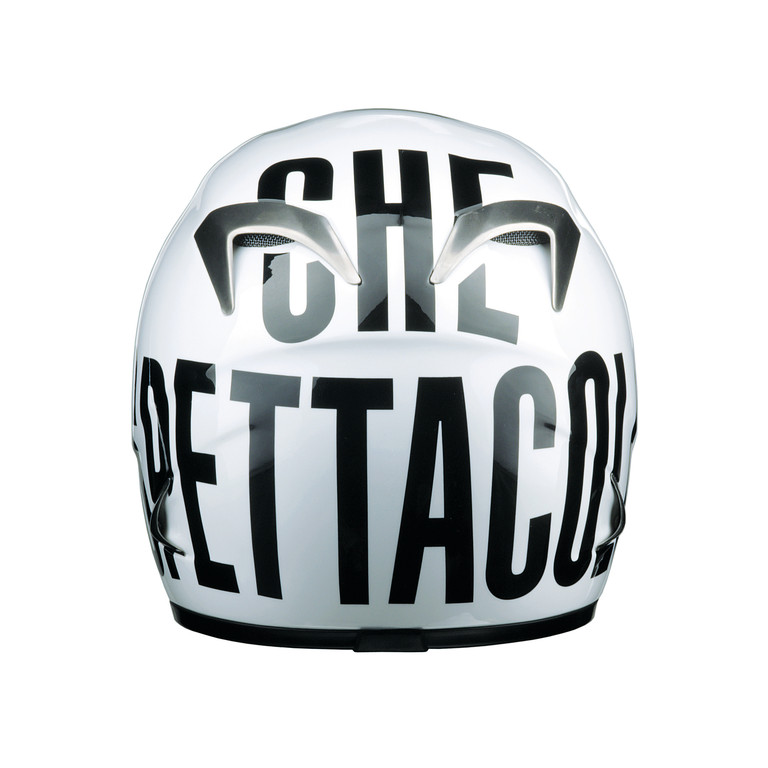
Phillip Island 2004
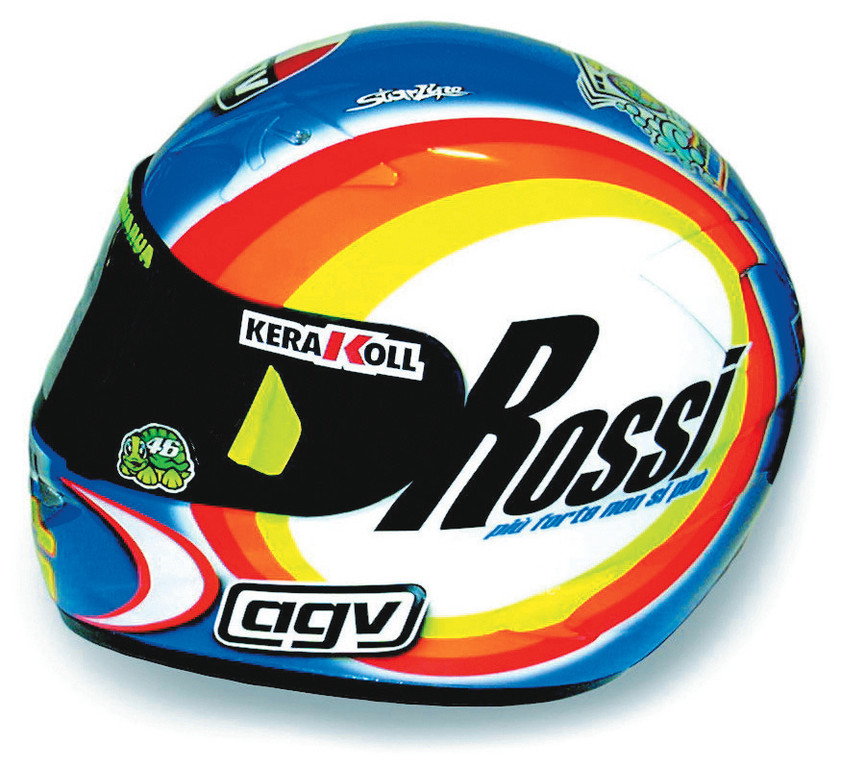
Winter Test Sepang 2004
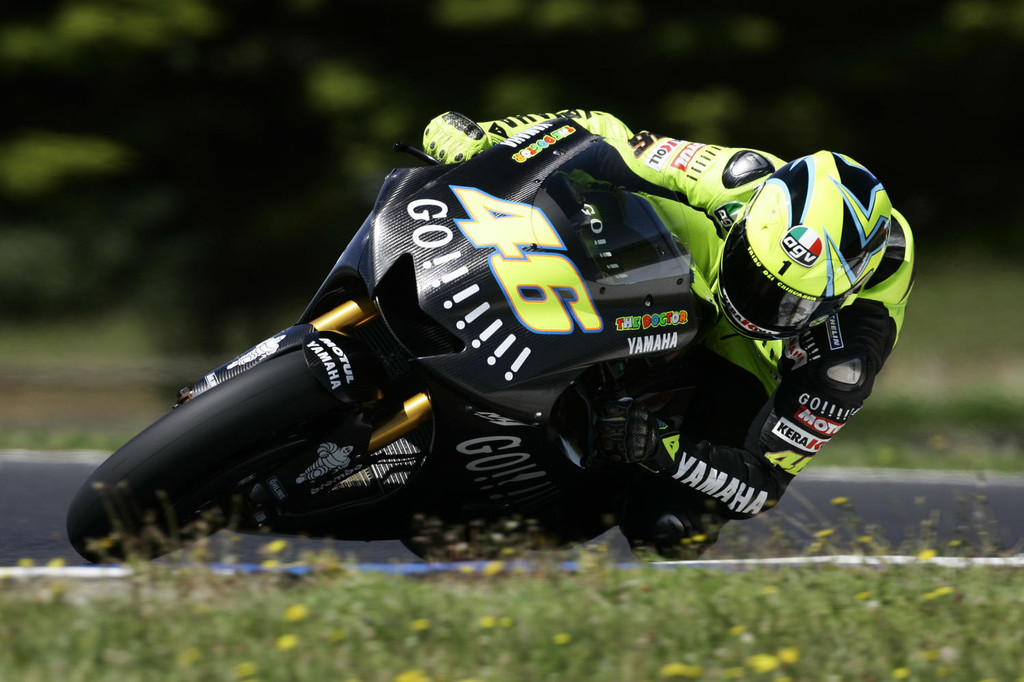
Winter Test 2005
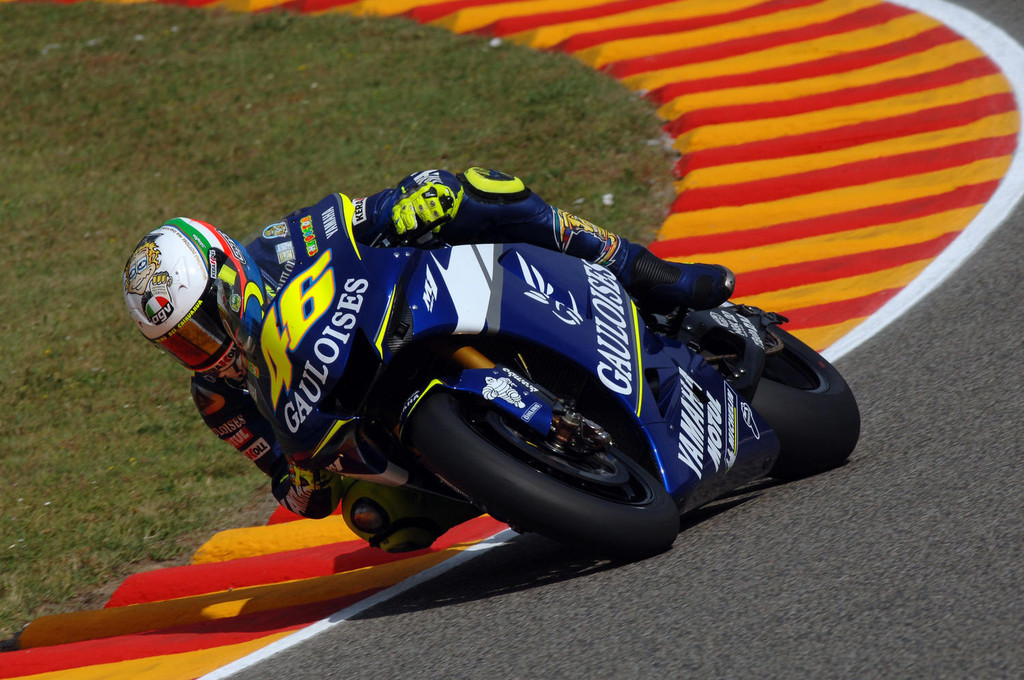
Mugello 2005
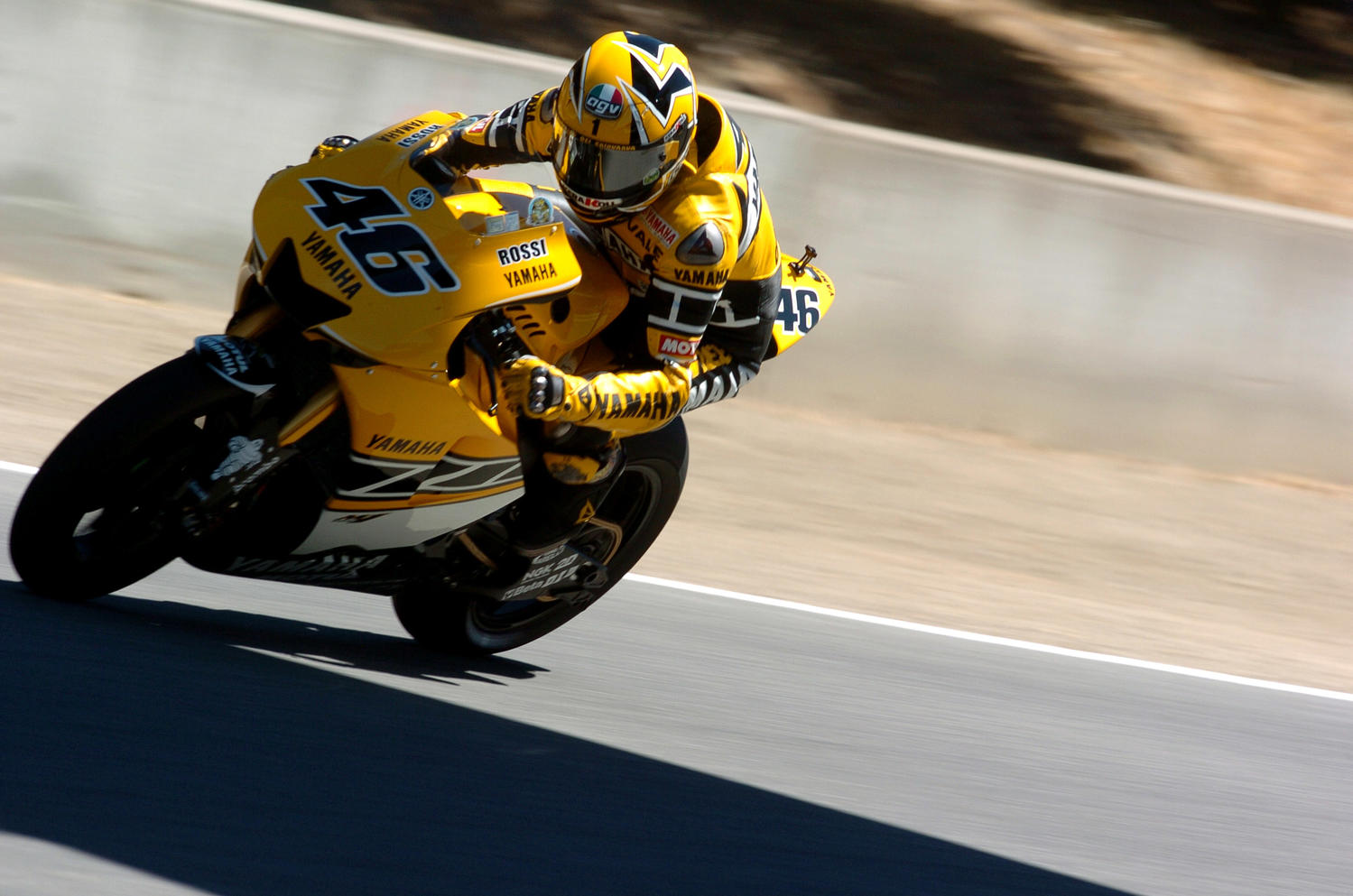
Laguna Seca 2005

World Title 2005
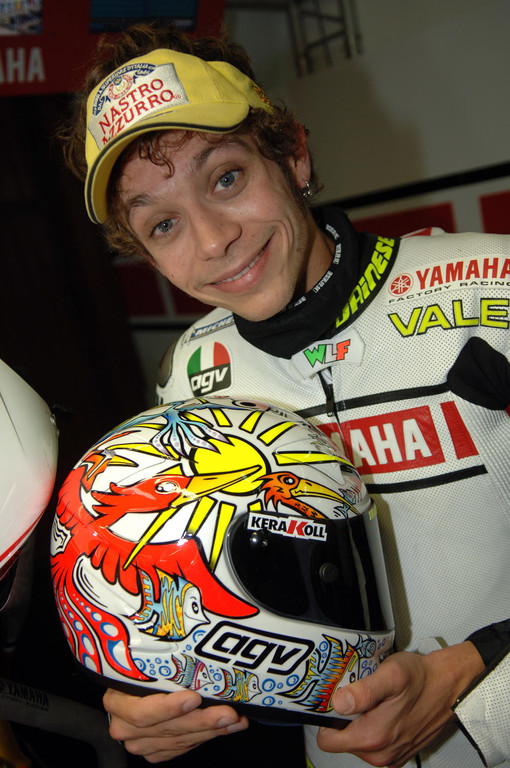
Valencia 2005
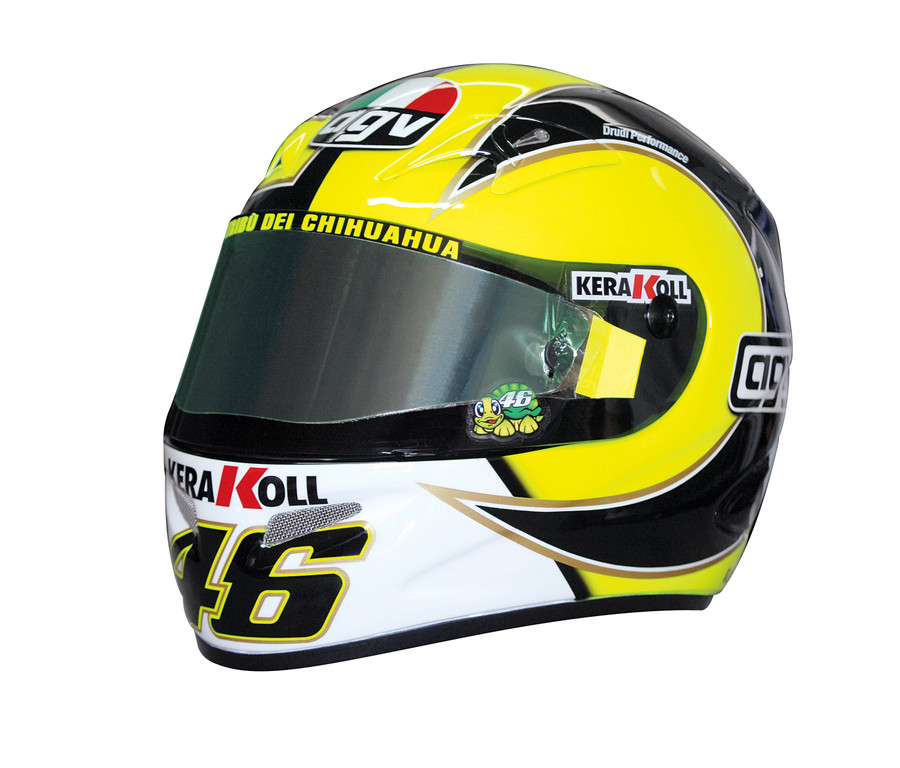
2006
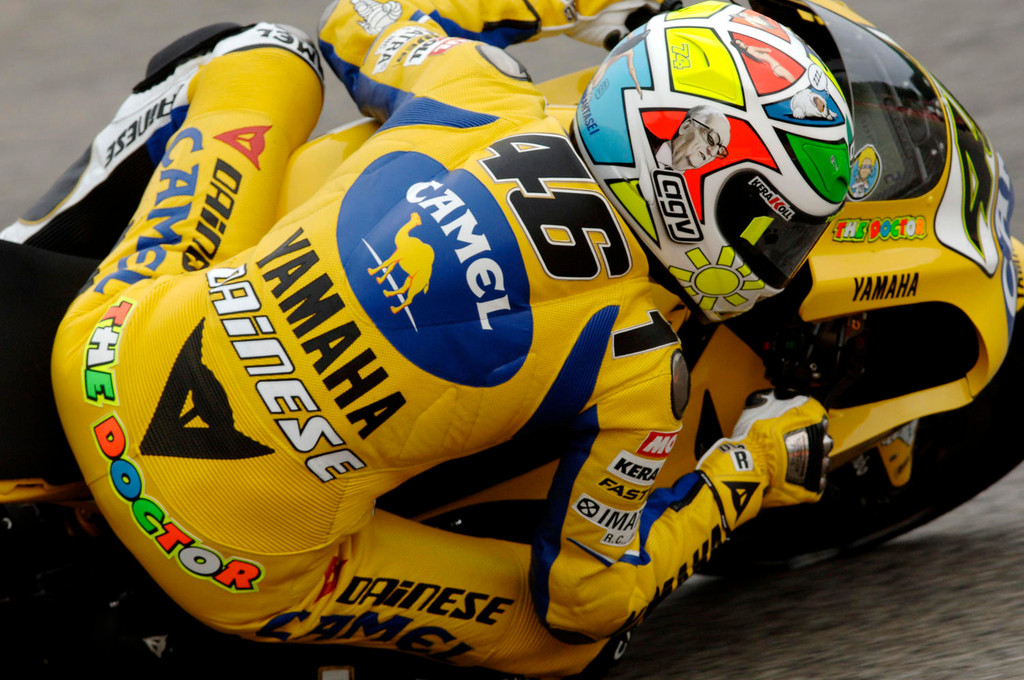
Mugello 2006
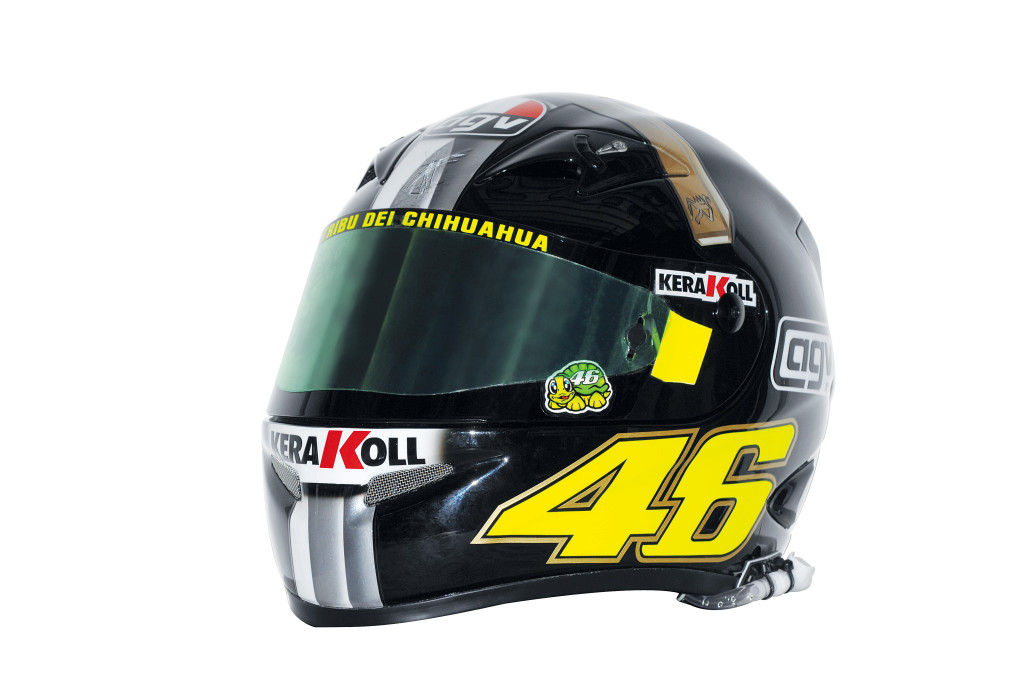
Winter Test 2007
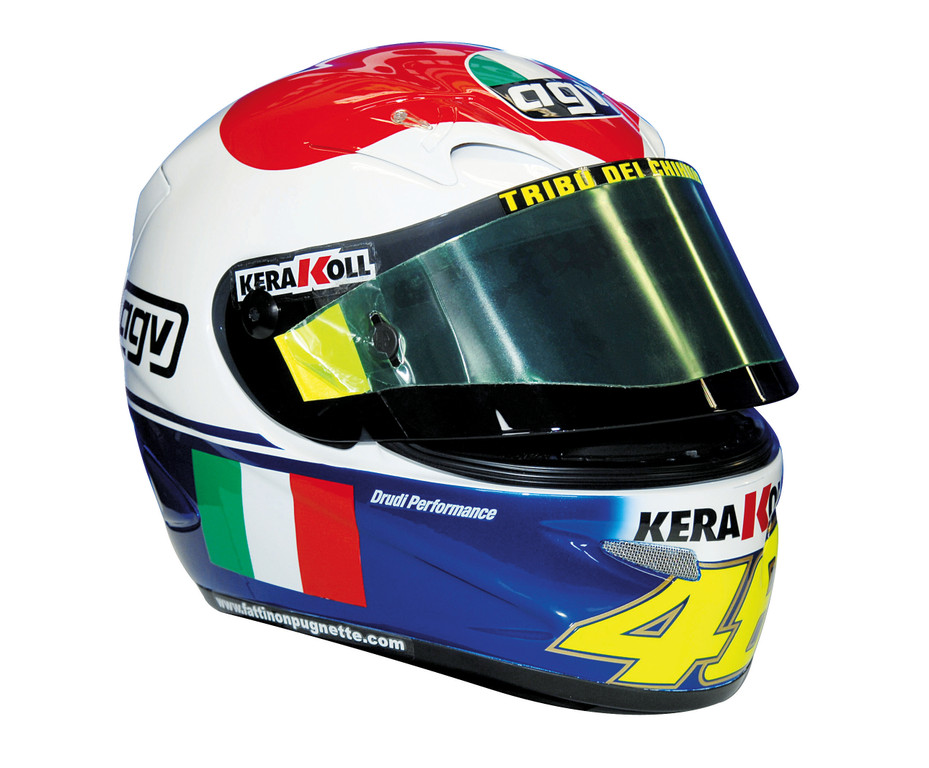
Mugello 2007
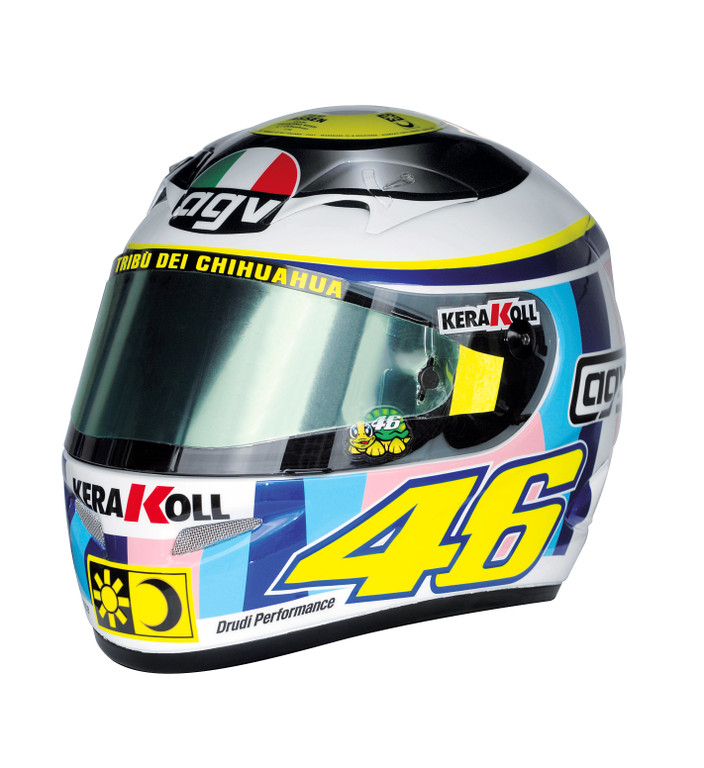
Assen 2007
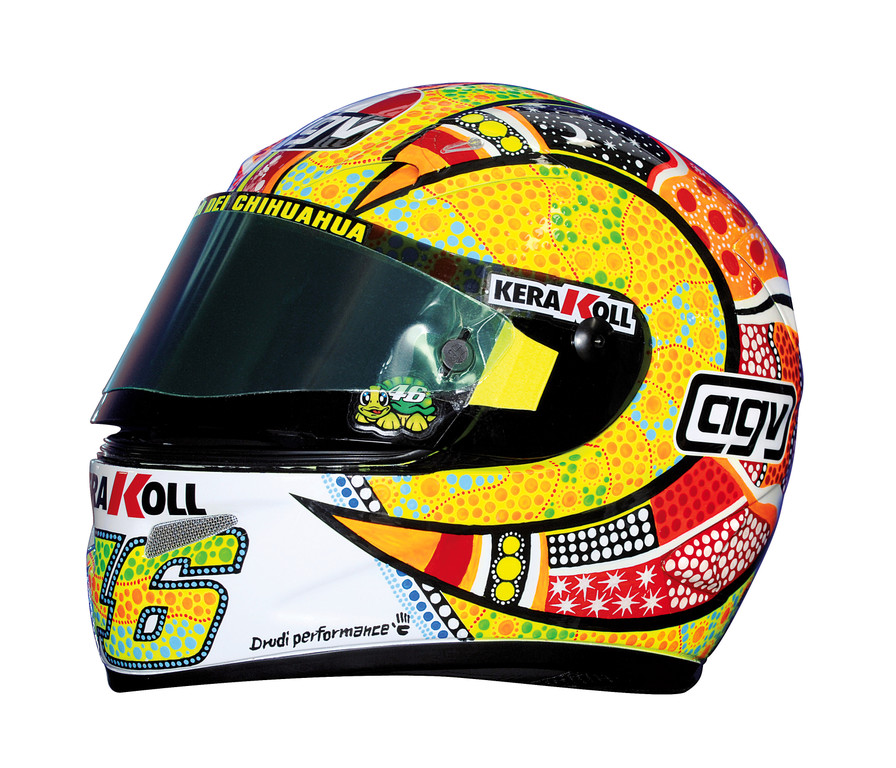
Phillip Island 2007
AGV GP-Tech (08-11)
The GP-Tech arrives in 2008, the year in which Valentino regains the MotoGP™ title. Once again, the design is completely new, compared to the previous helmet. The SSL (Super Super Light) shell is made of fiberglass, carbon and aramid fiber with an elongated shape at the rear to enhance stability at high speeds when not tucked in. The air vents are built into the profile of the shell itself as well as EPS with differentiated densities. GP-Tech inherits the old Ti-Tech’s XQRS, the tool-free Extra Quick Release System for the visor.
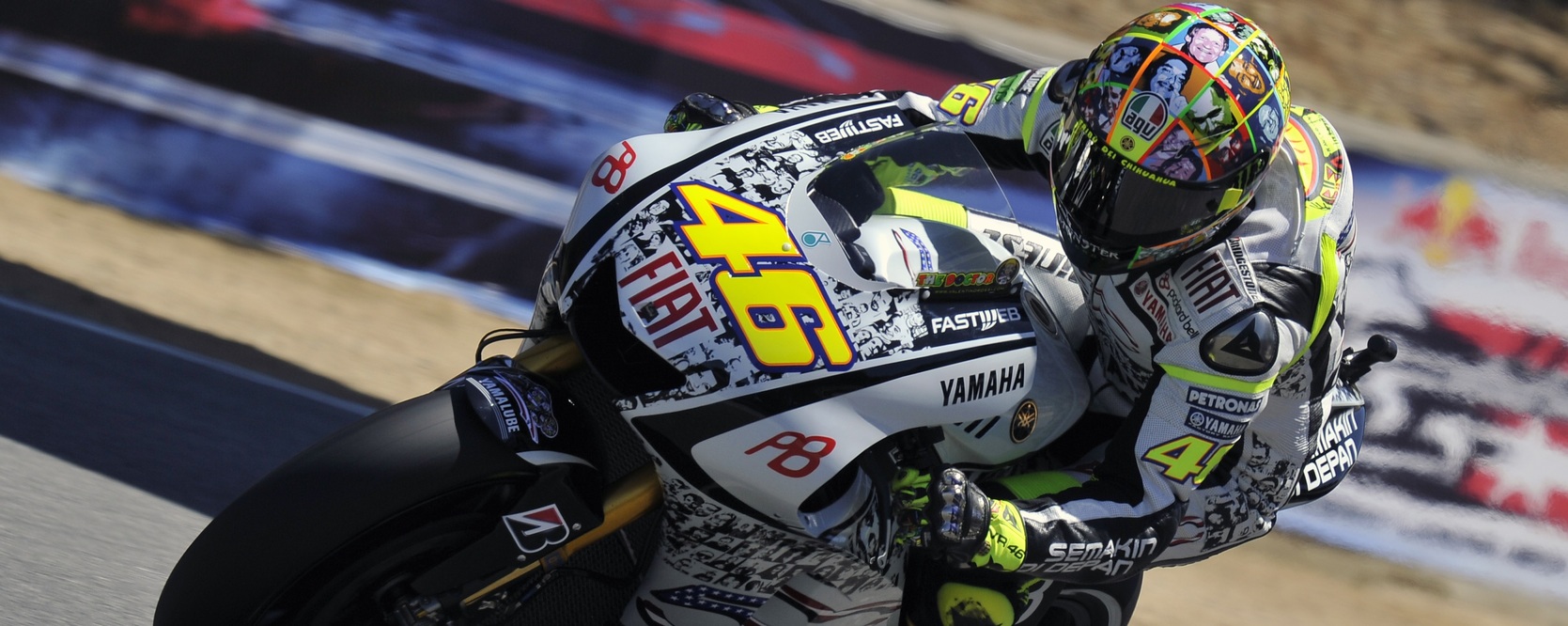
The style of the graphics is also new, starting with the innovative version of the Soleluna. Among the most iconic and memorable are the helmet with Vale’s face for Mugello 2008, the chicken with the golden egg for the ninth world championship in Sepang in 2009, the Faces graphics for Laguna Seca 2010 and the first helmets of the Ducati era, including the tribute to Marco Simoncelli for Valencia 2011.
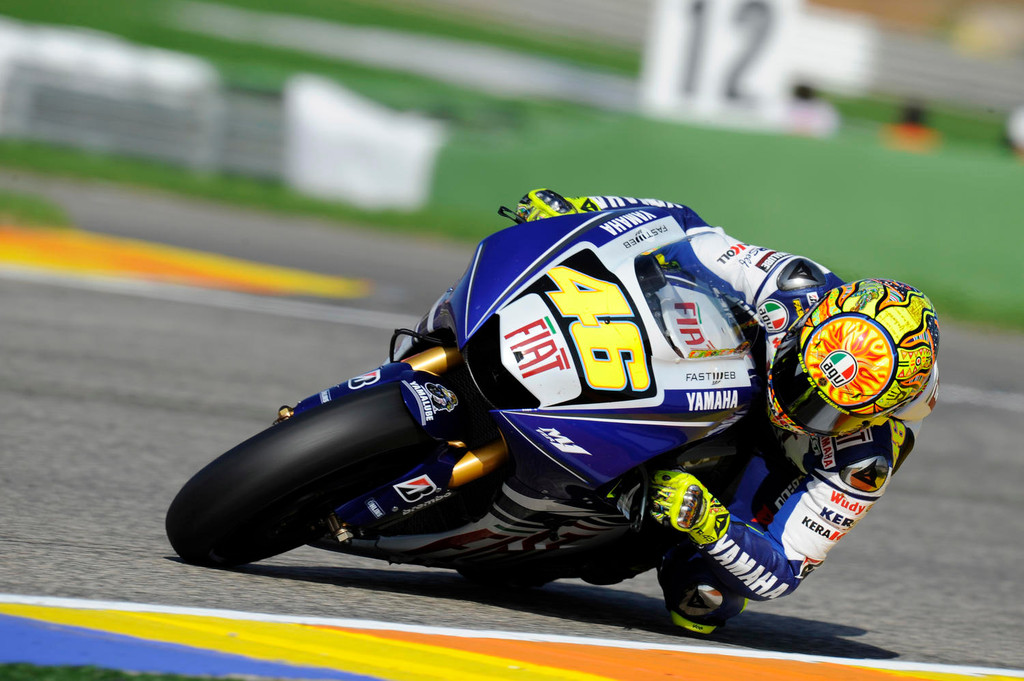
2008
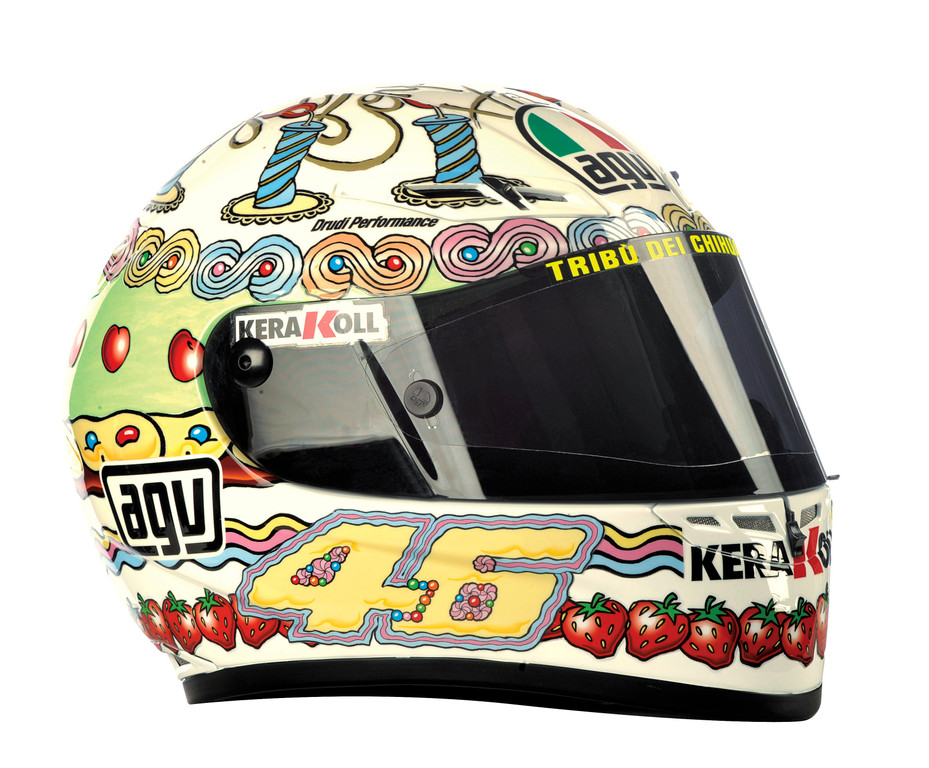
Jerez 2008
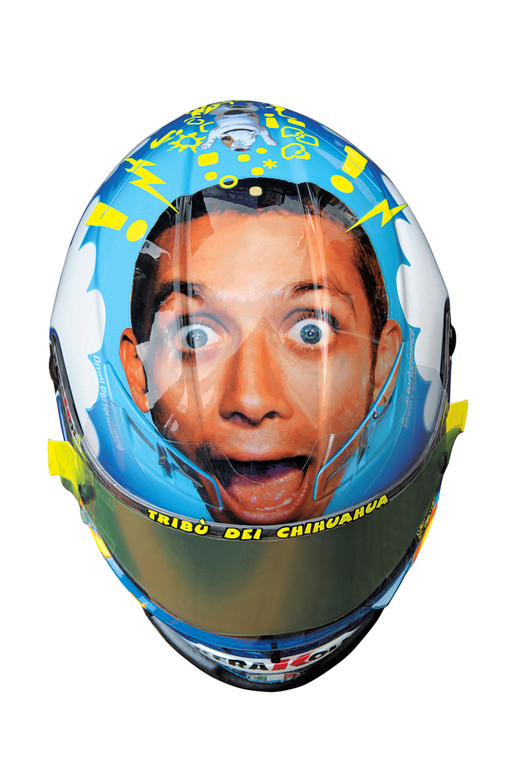
Mugello 2008
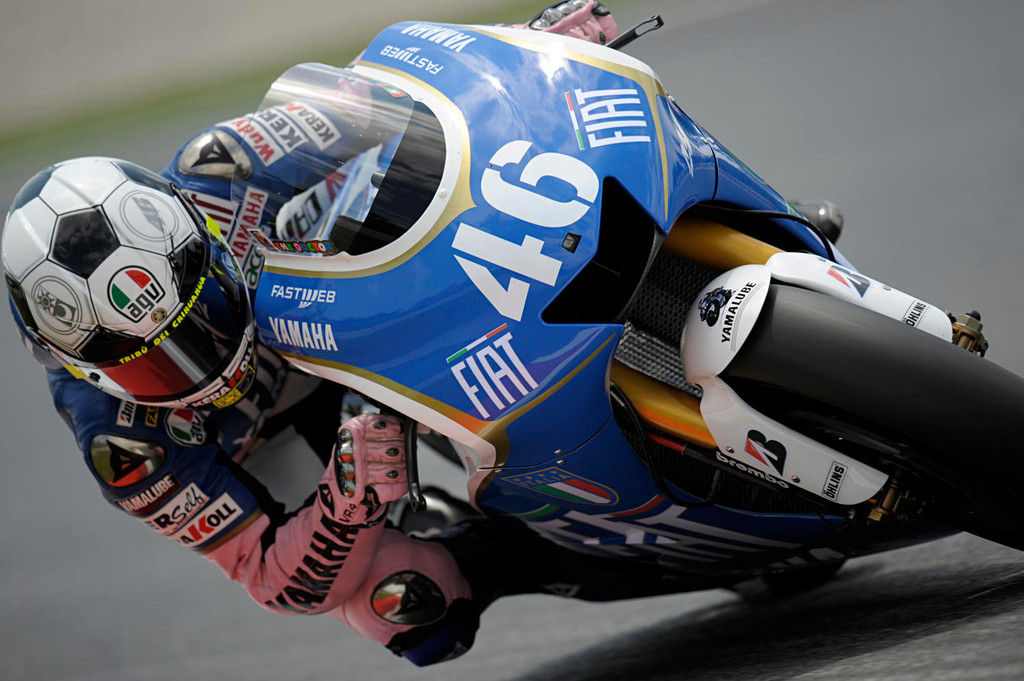
Catalunya 2008
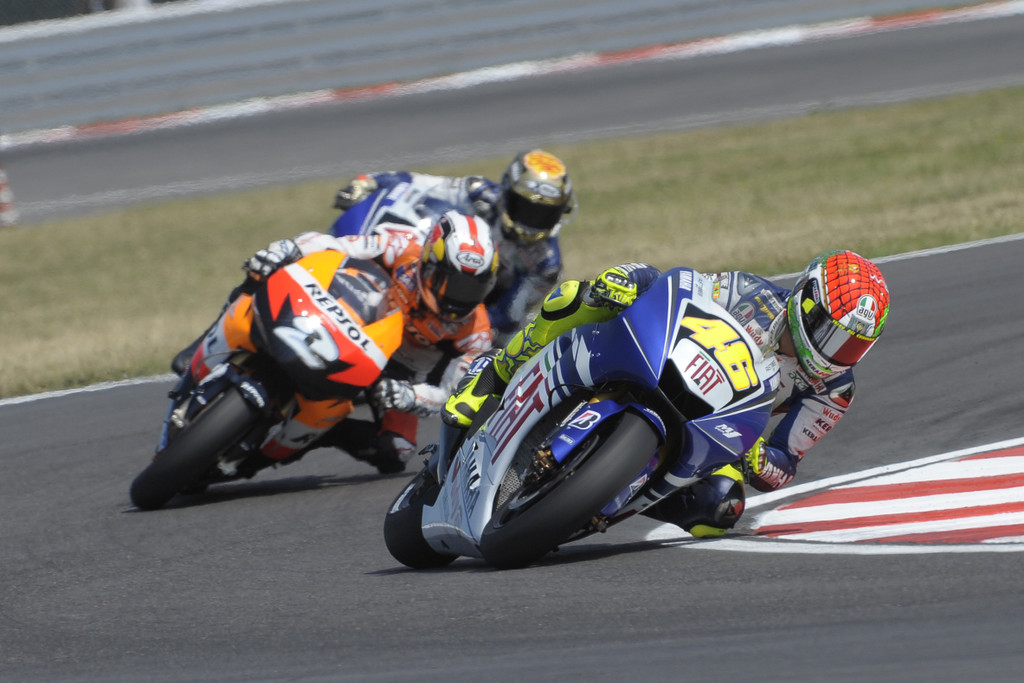
Misano 2008
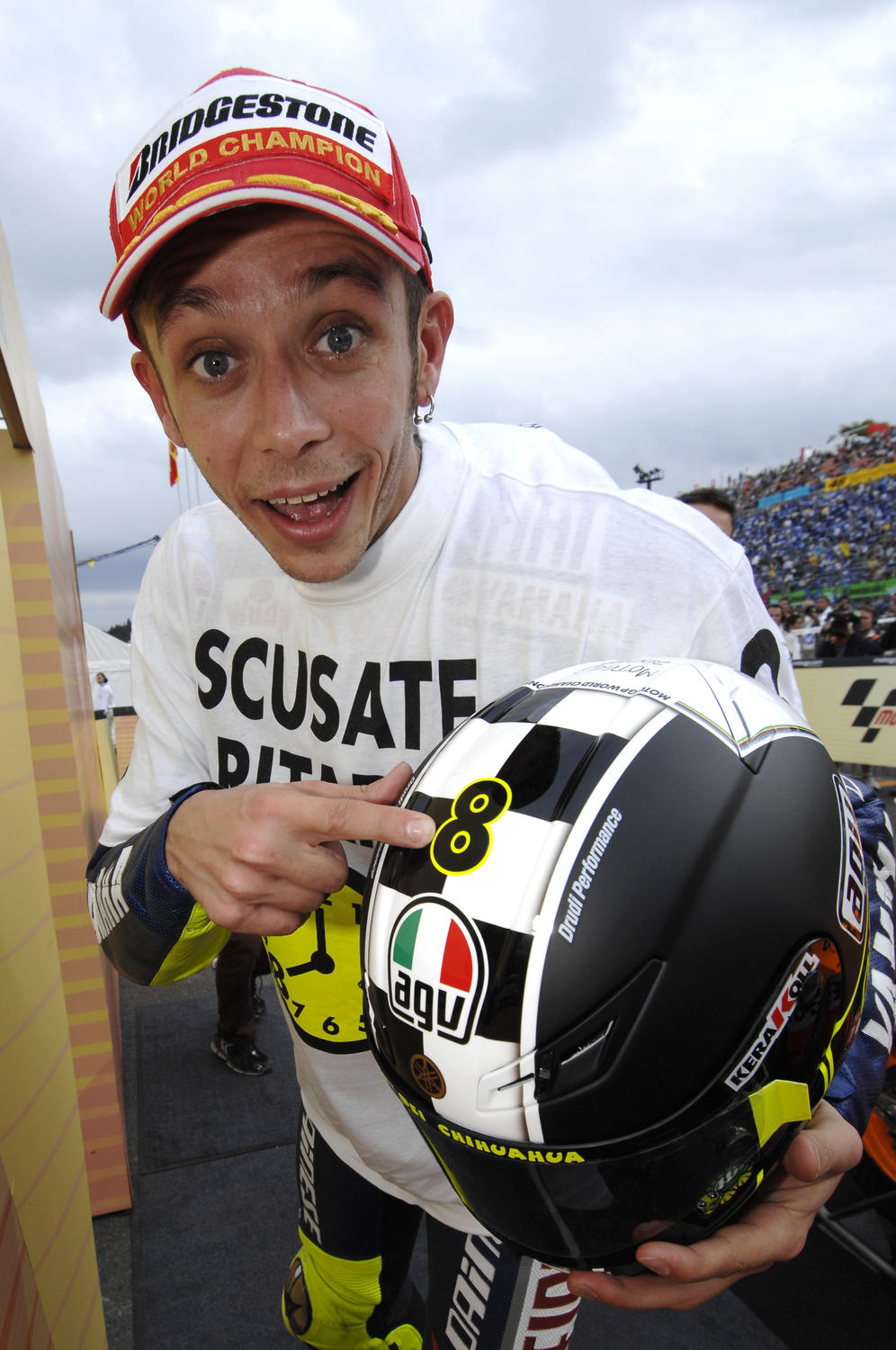
Motegi 2008
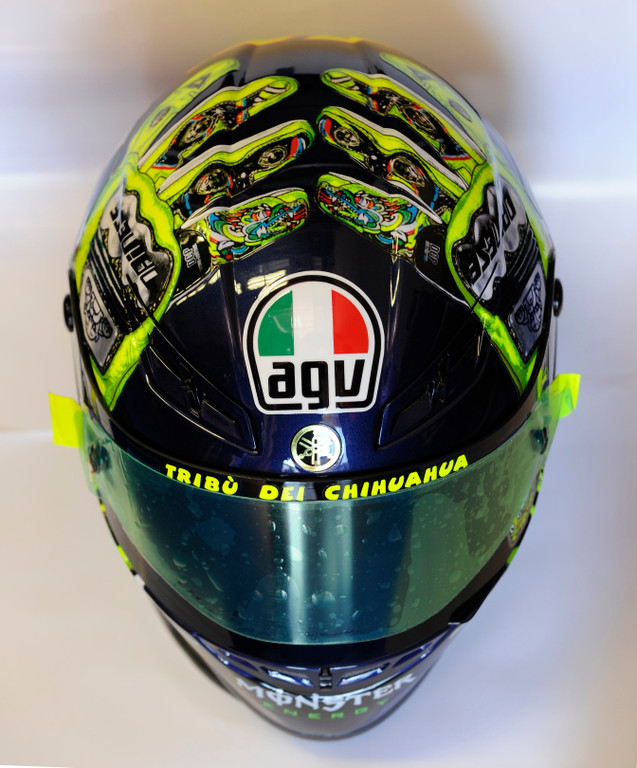
Mugello 2009
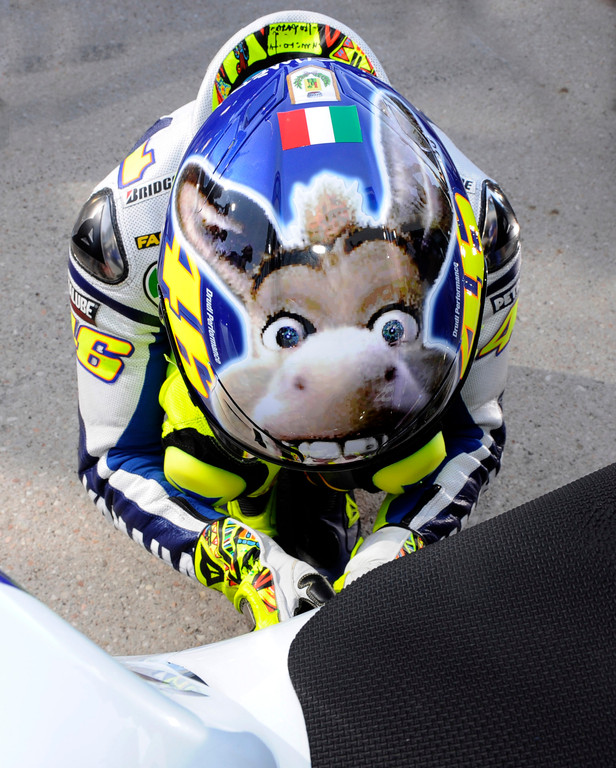
Misano 2009
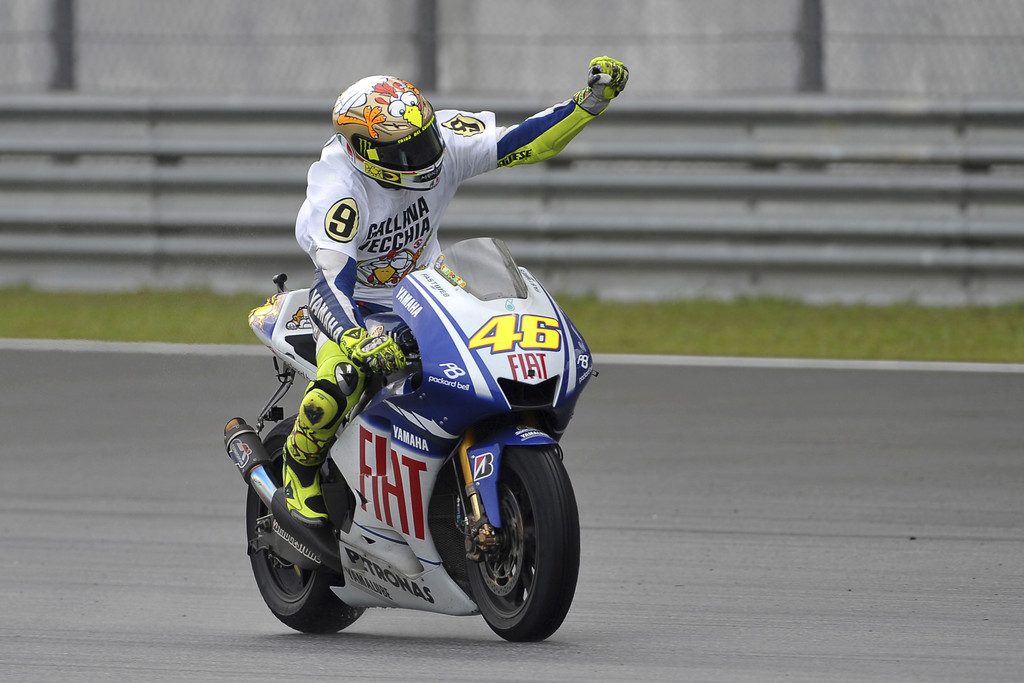
Sepang 2009
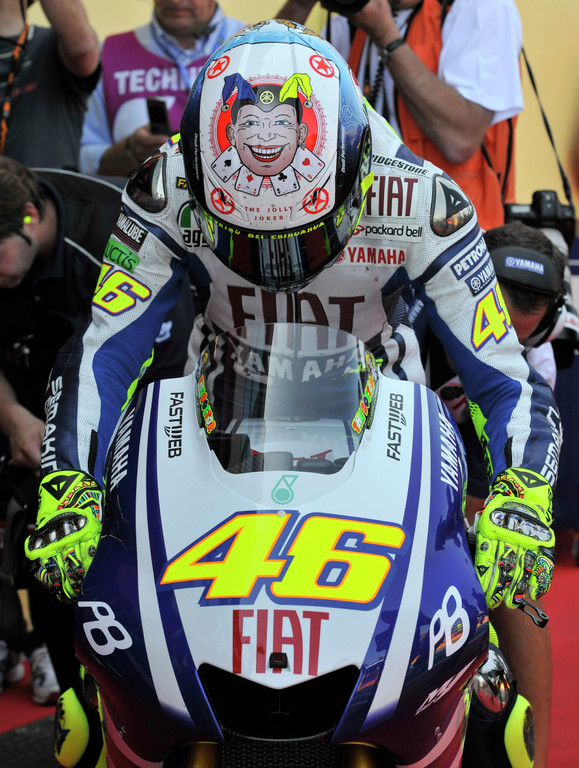
Mugello 2010
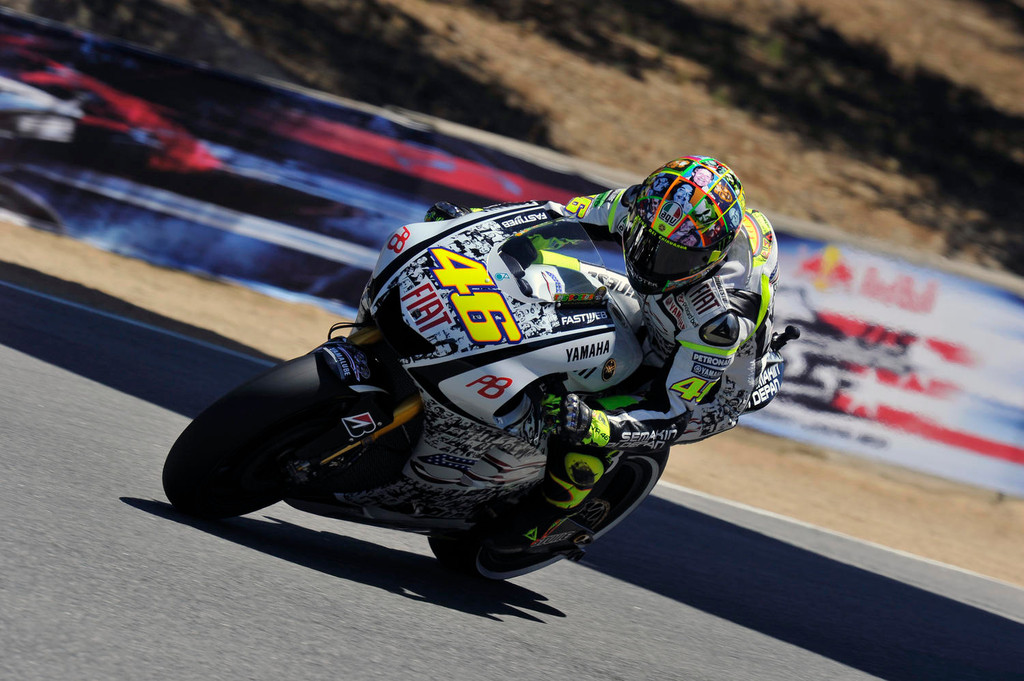
Laguna Seca 2010
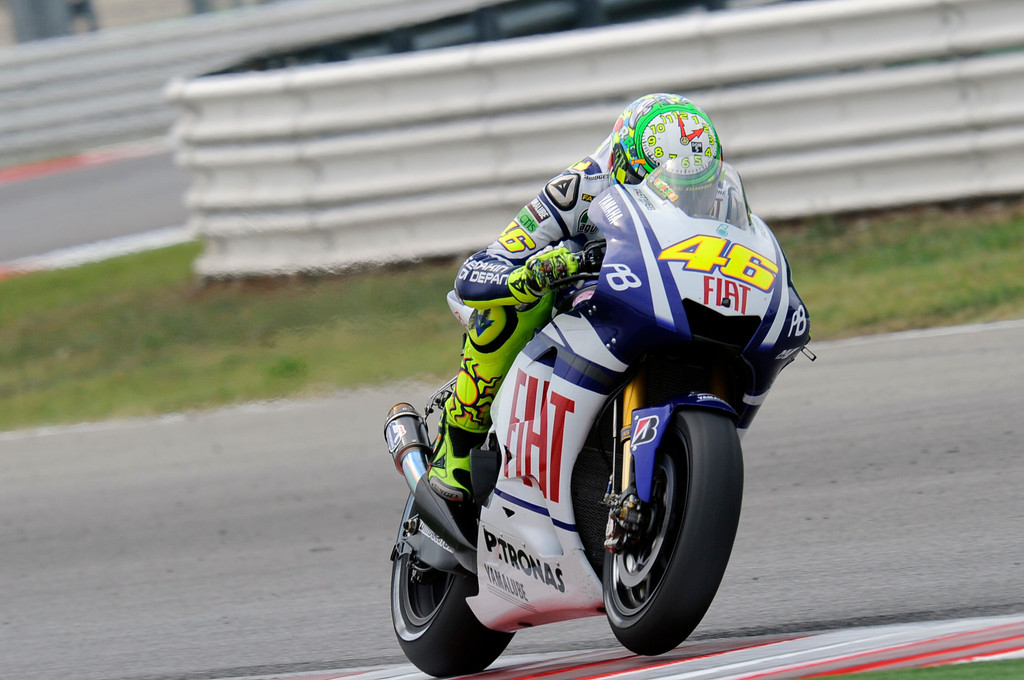
Misano 2010
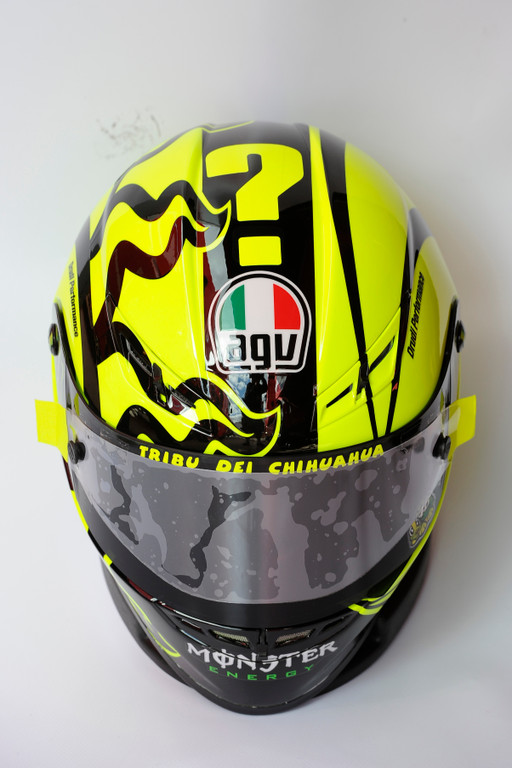
Winter Test 2011
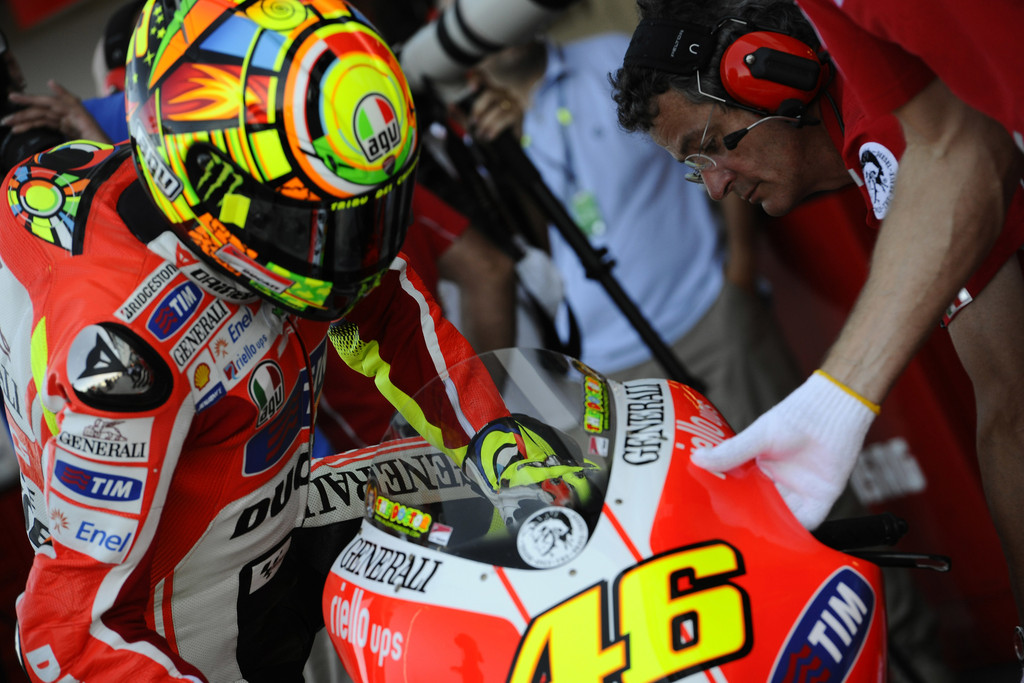
2011
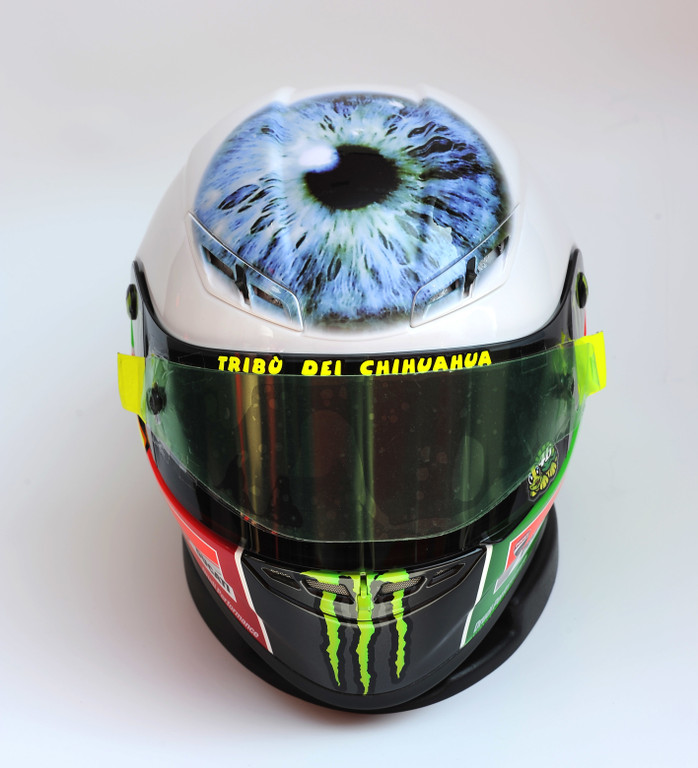
Mugello 2011
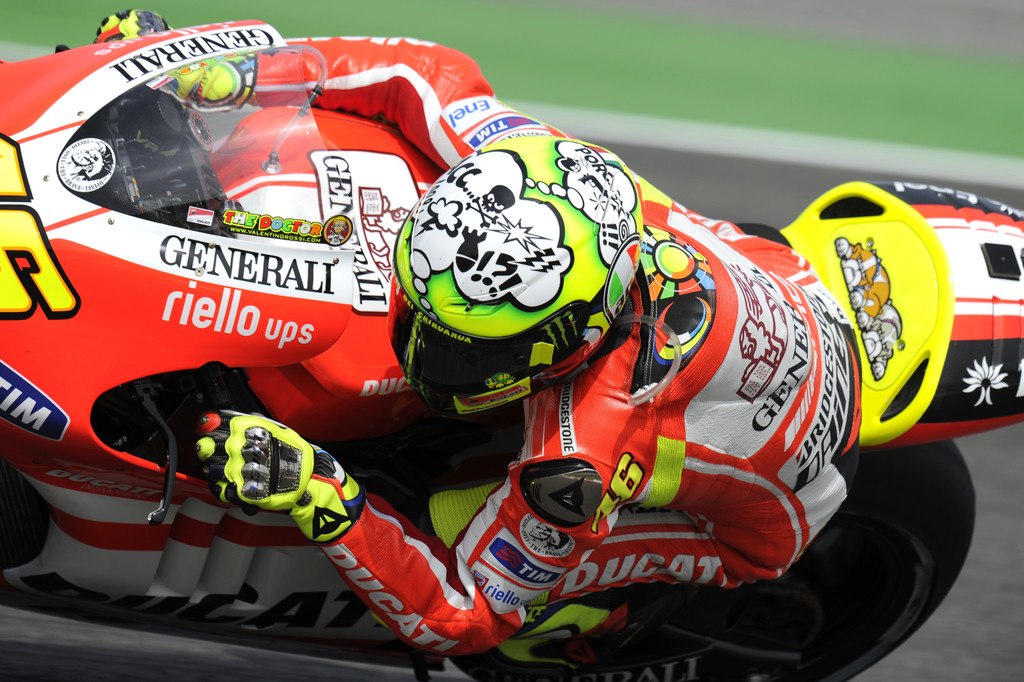
Misano 2011
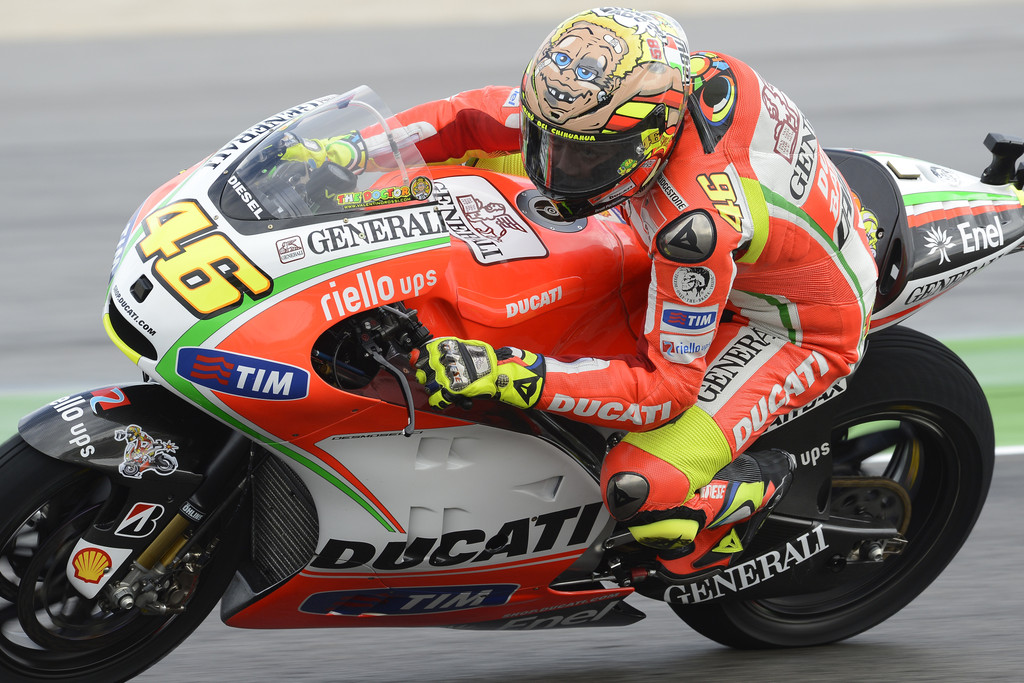
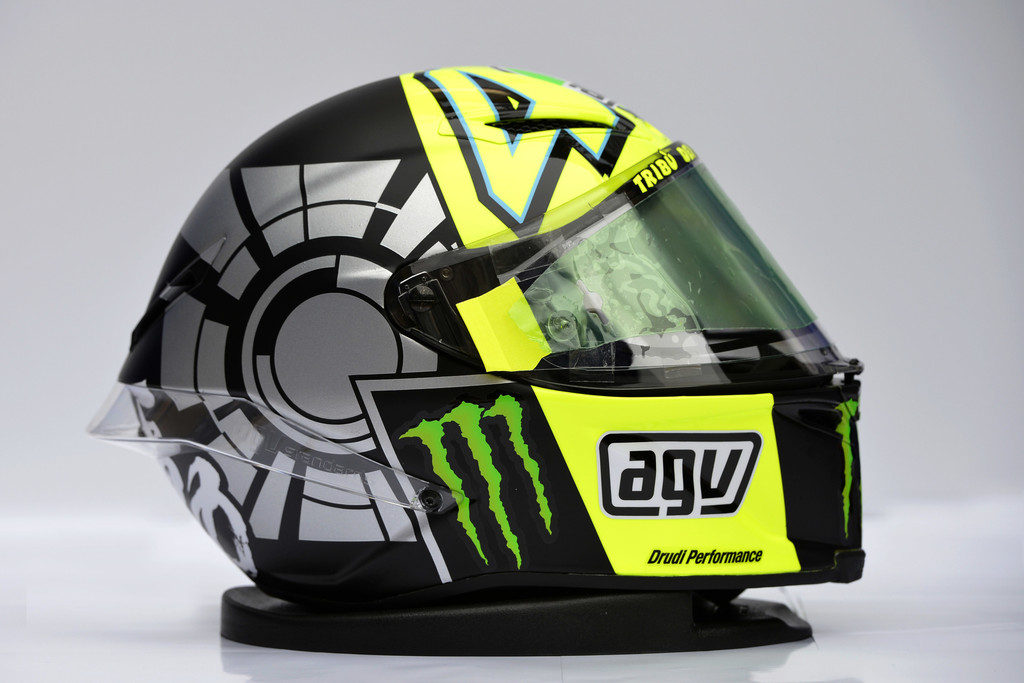
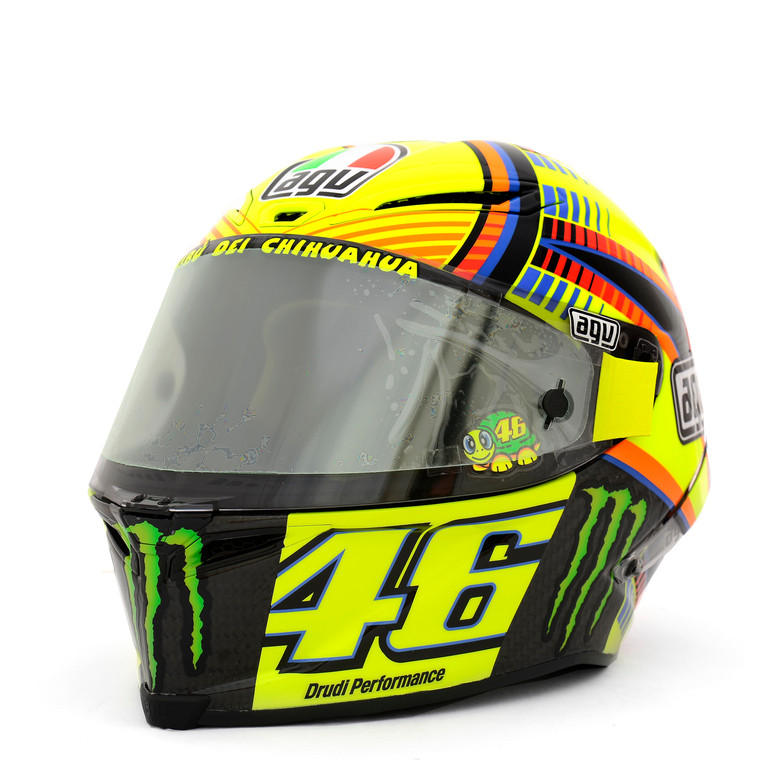
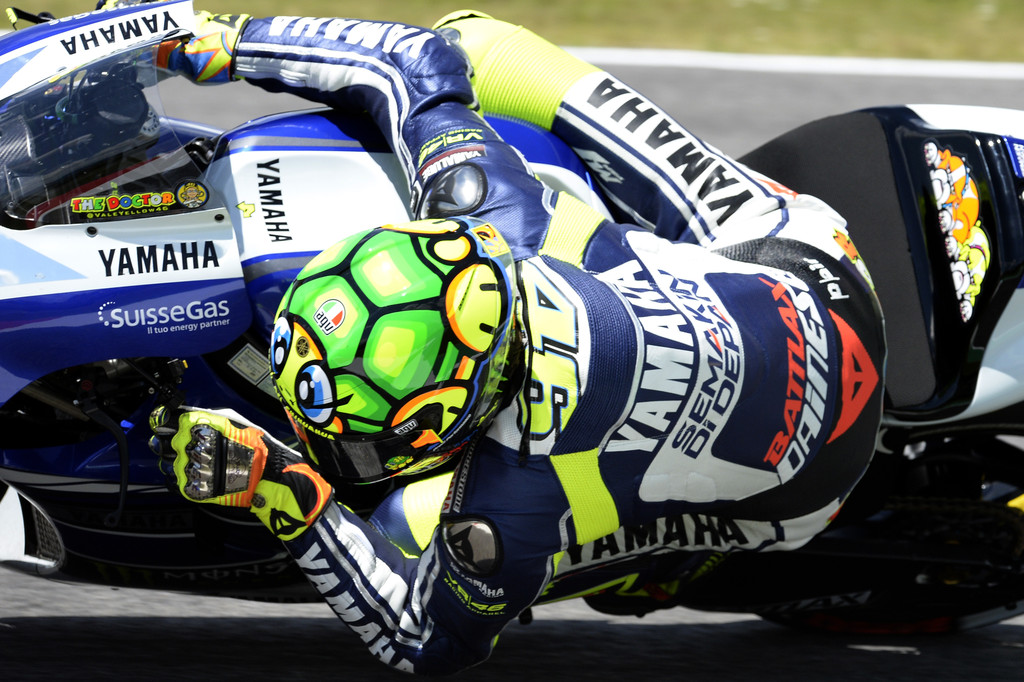
AGV Pista GP (12-15)
The first version of the revolutionary AGV Pista GP arrives in 2012, a groundbreaking helmet that introduces new concepts of protection and aerodynamic performance. The shell is made entirely of carbon fiber, with shape developed in the wind tunnel and rear spoiler introduced for better integration between the bike’s fairing and the hump on the suit.
It’s on Vale’s head for the Sepang winter tests with carbon black graphics, then takes on the Doctor’s colors, updated in 2013. The Wish helmet for Misano 2013 is unforgettable, again in memory of his friend Simoncelli, as well as Misano ci dà una mano (Misano gives us a hand) the following year, which makes its way to the top of the podium, again on the home circuit.
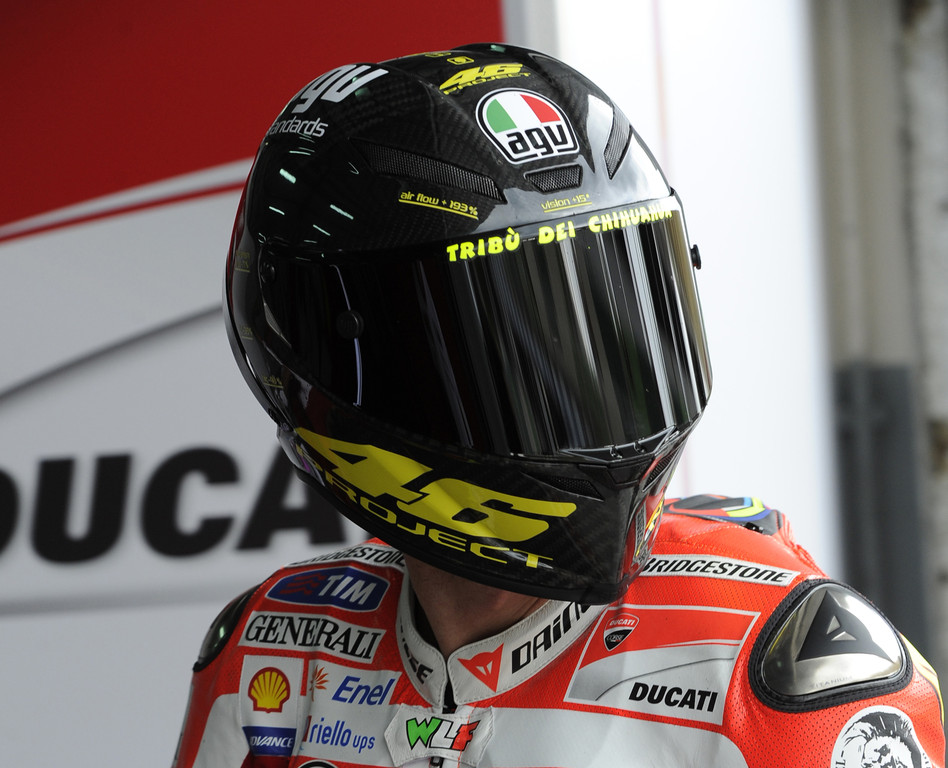
Winter Test 2012
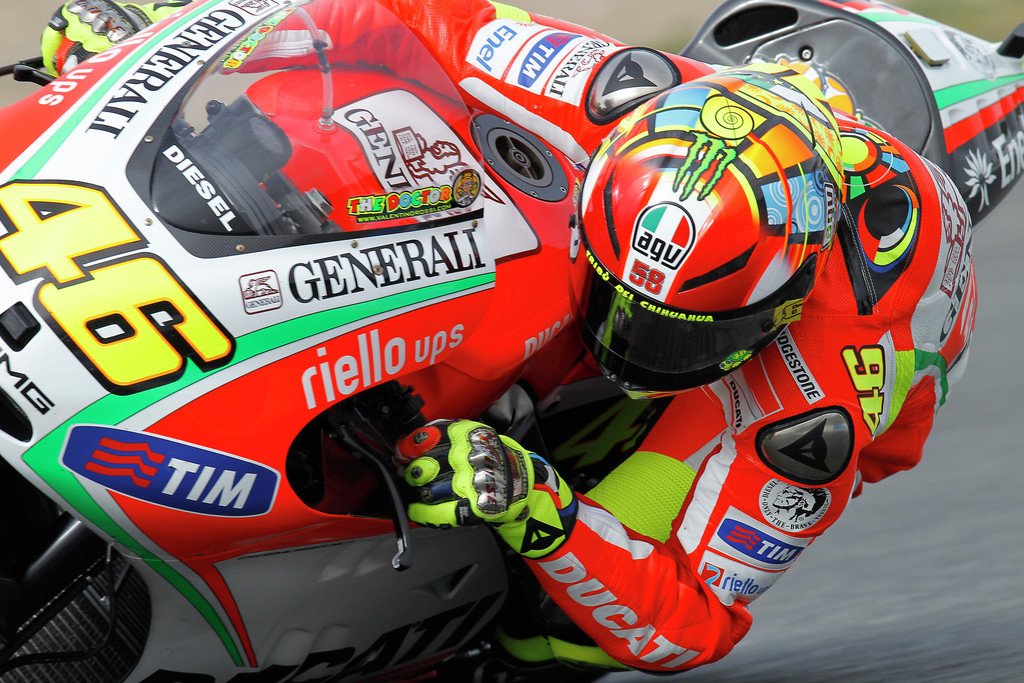
Simoncelli Tribute
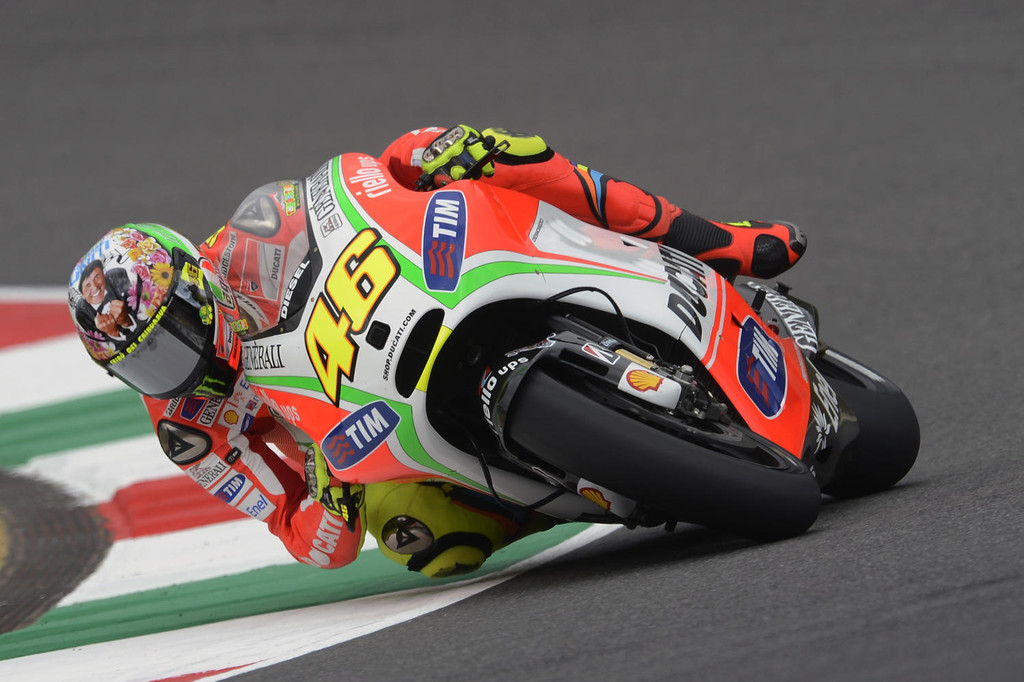
Mugello 2012
Misano 2012
Winter Test 2013
2013
Mugello 2013
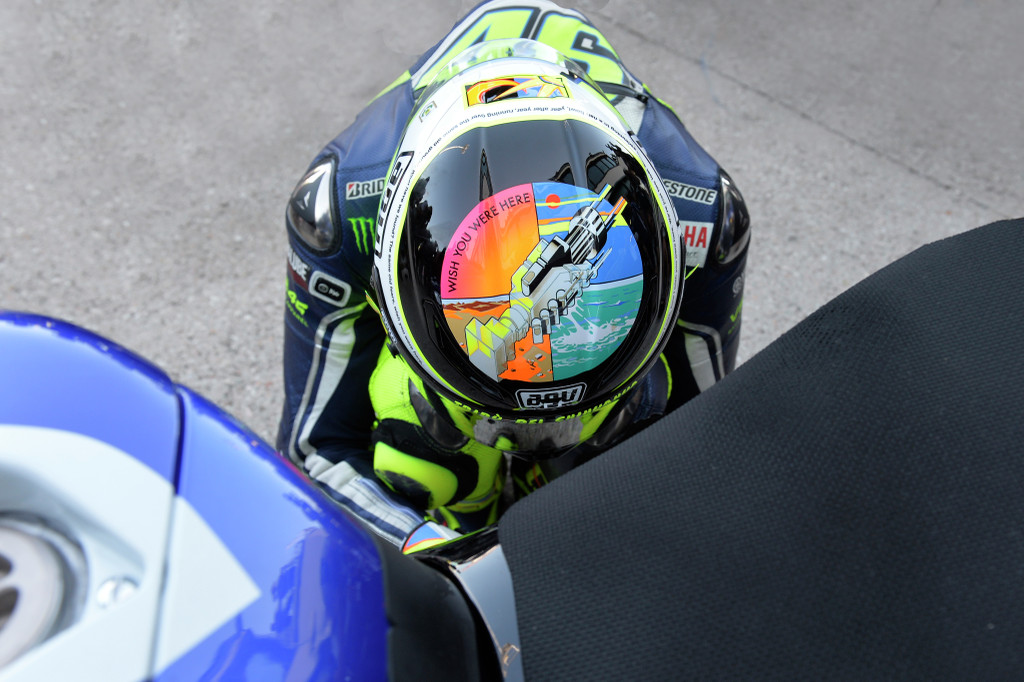
Misano 2013

Winter Test 2014
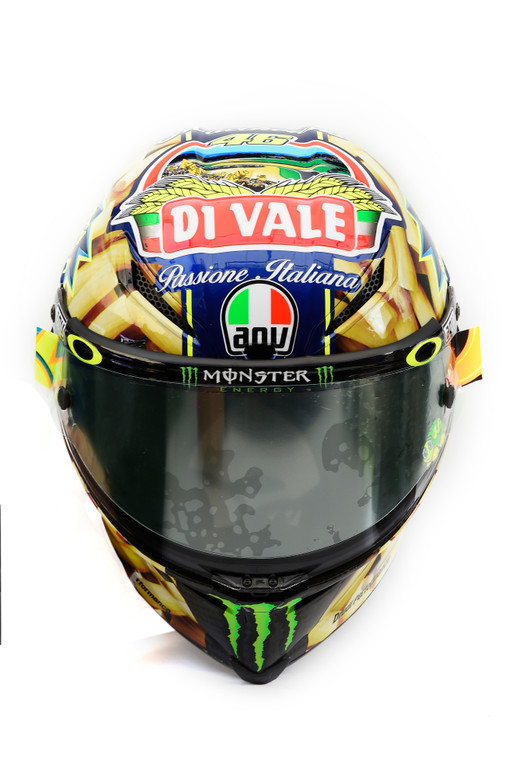
Mugello 2014
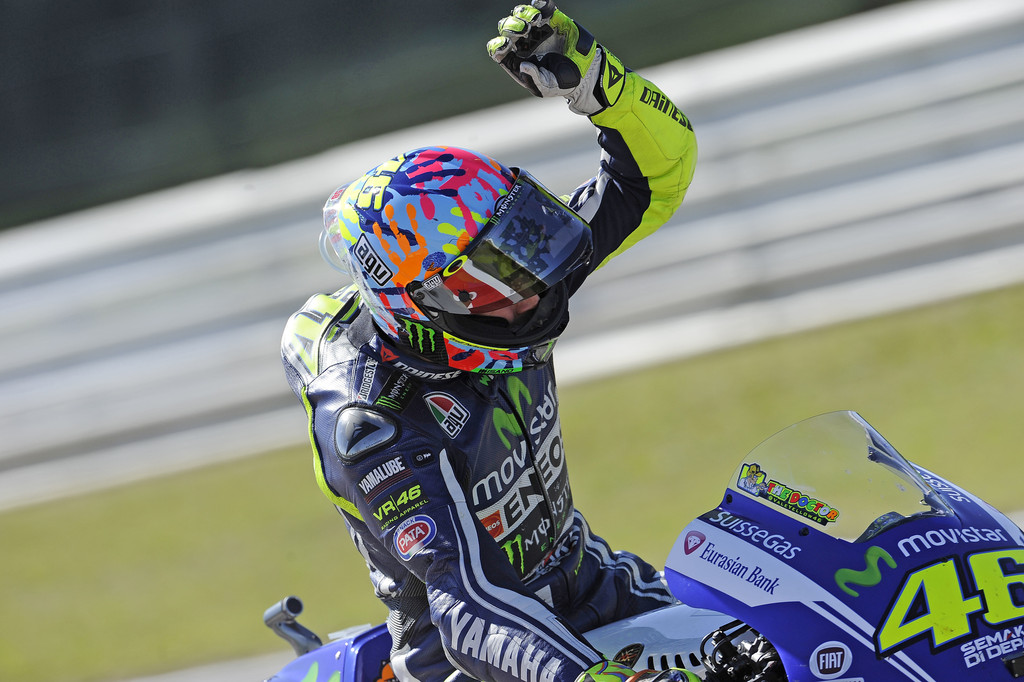
Misano 2014
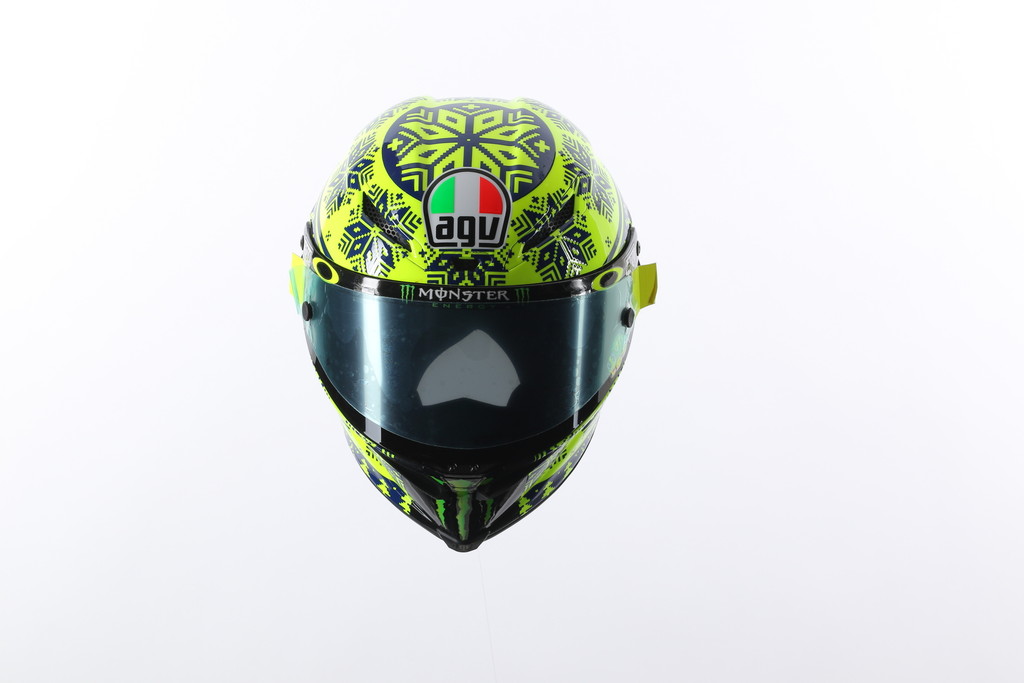
Winter Test 2015
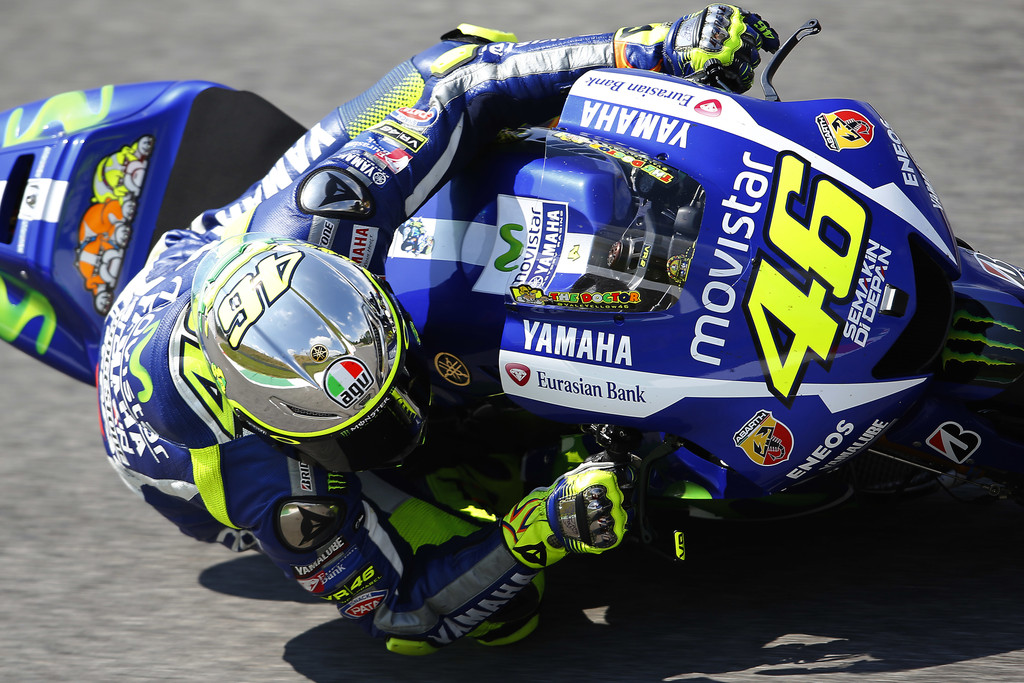
Mugello 2015
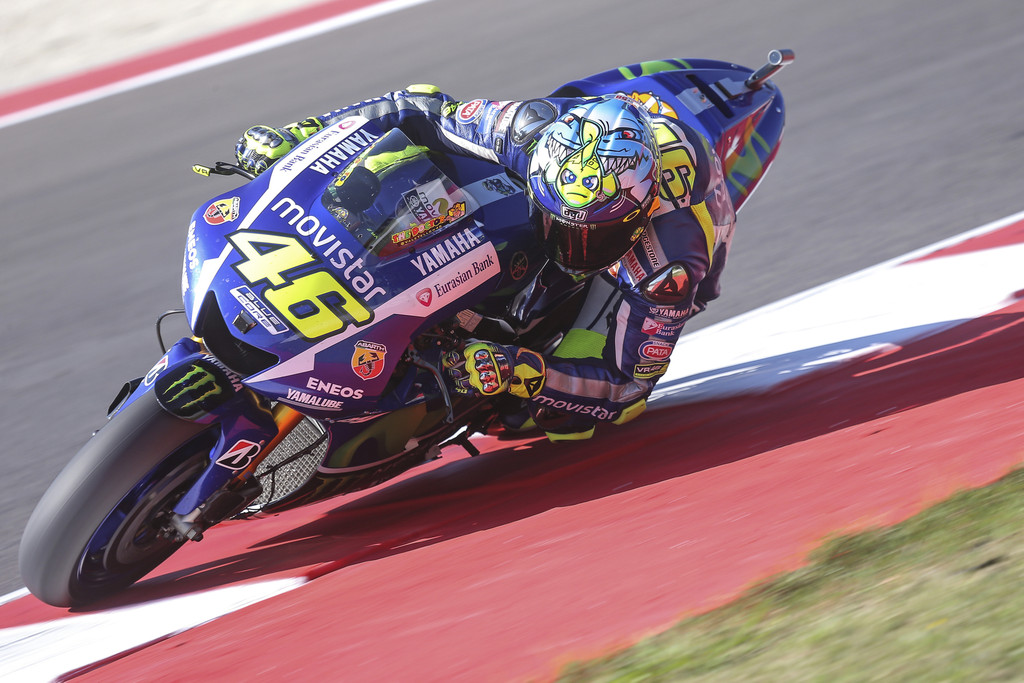
Misano 2015
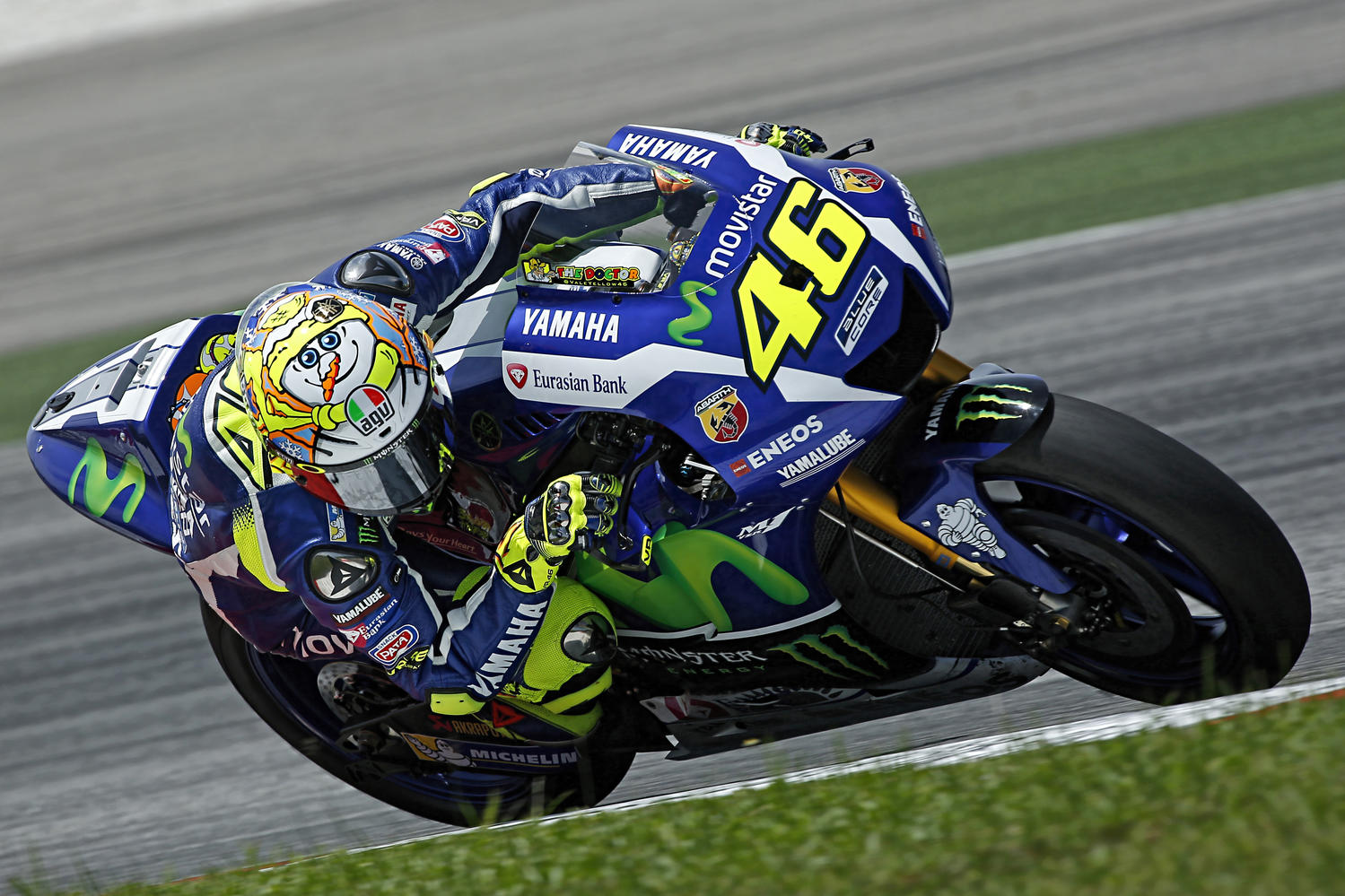
Winter Test 2016
AGV Pista GP R (16-17)
The new Pista GP R version arrives in 2016 and comes with a few tweaks to improve aerodynamic performance. The Biplano spoiler stands out above all the rest, more advanced and complex than the previous solution. It improves the aerodynamic penetration coefficient even more. Two ducts also make an appearance on the chinguard air vents, so that the air is channeled better inside the helmet in racing position.
Among the most distinctive color schemes are the new Soleluna 2016, Mugiallo, Mugello 2016 and Sweet home Misano from the same year.
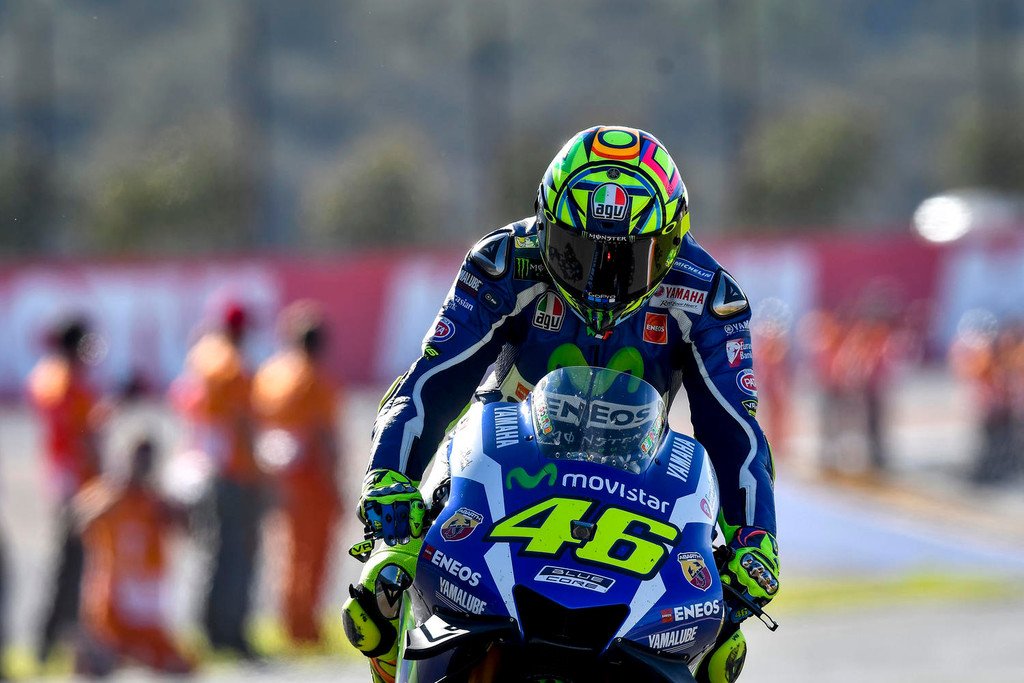
2016
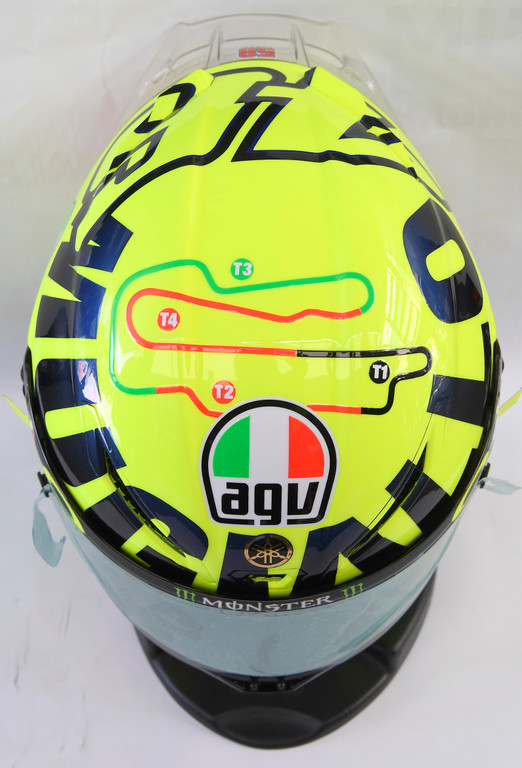
Mugello 2016
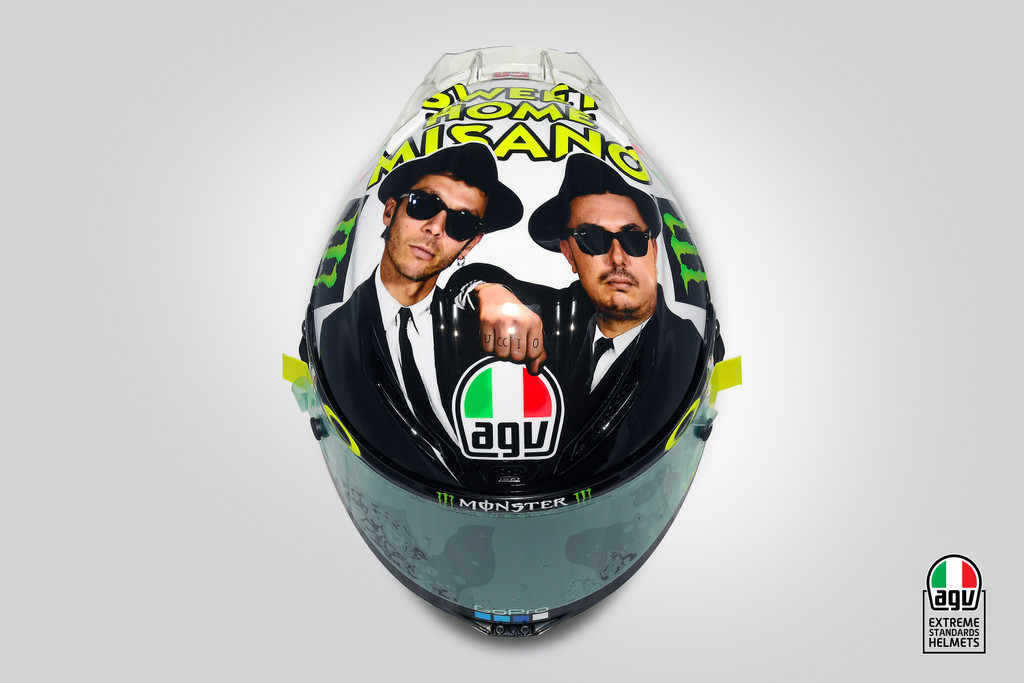
Misano 2016
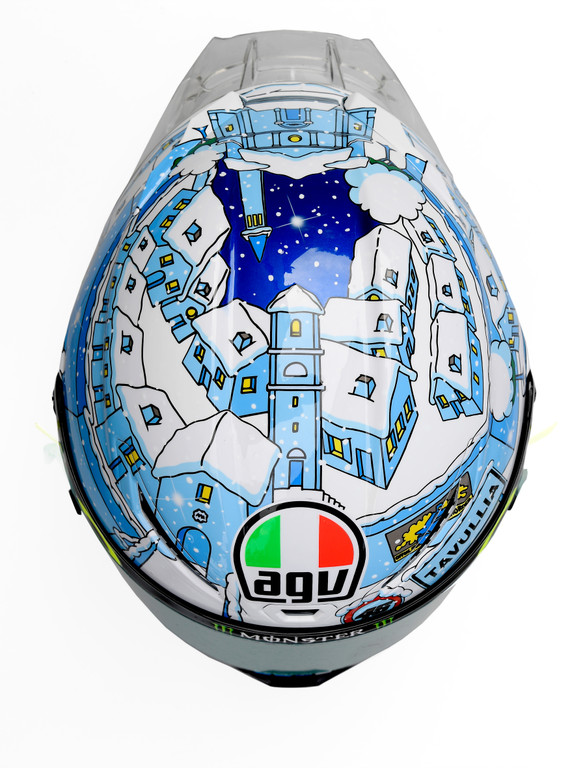
Winter Test 2017
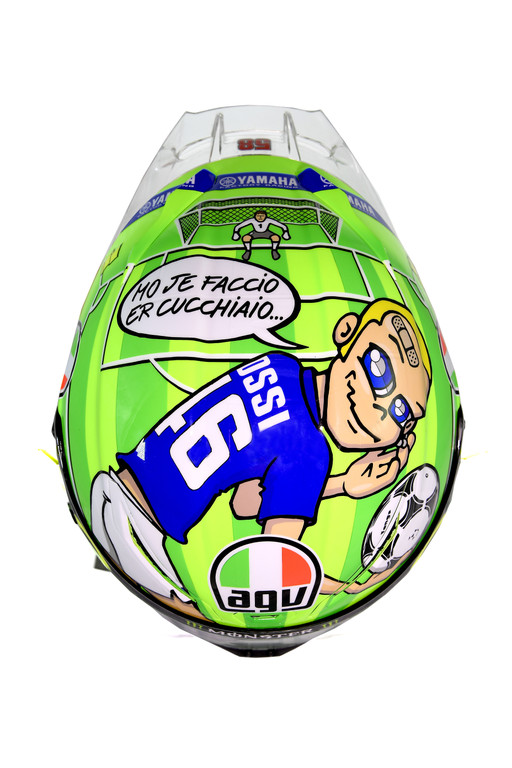
Mugello 2017
AGV Pista GP RR (18-21)
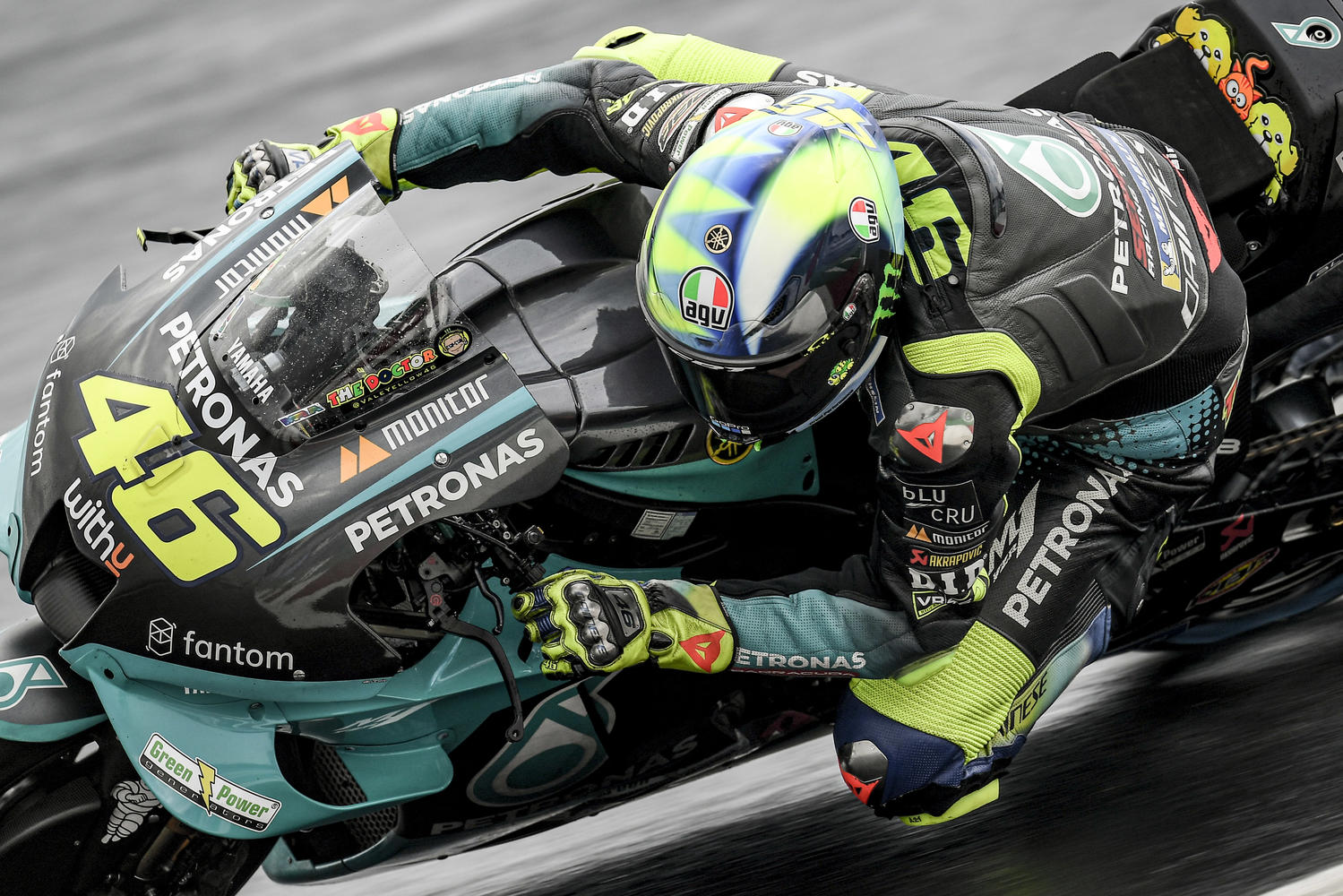
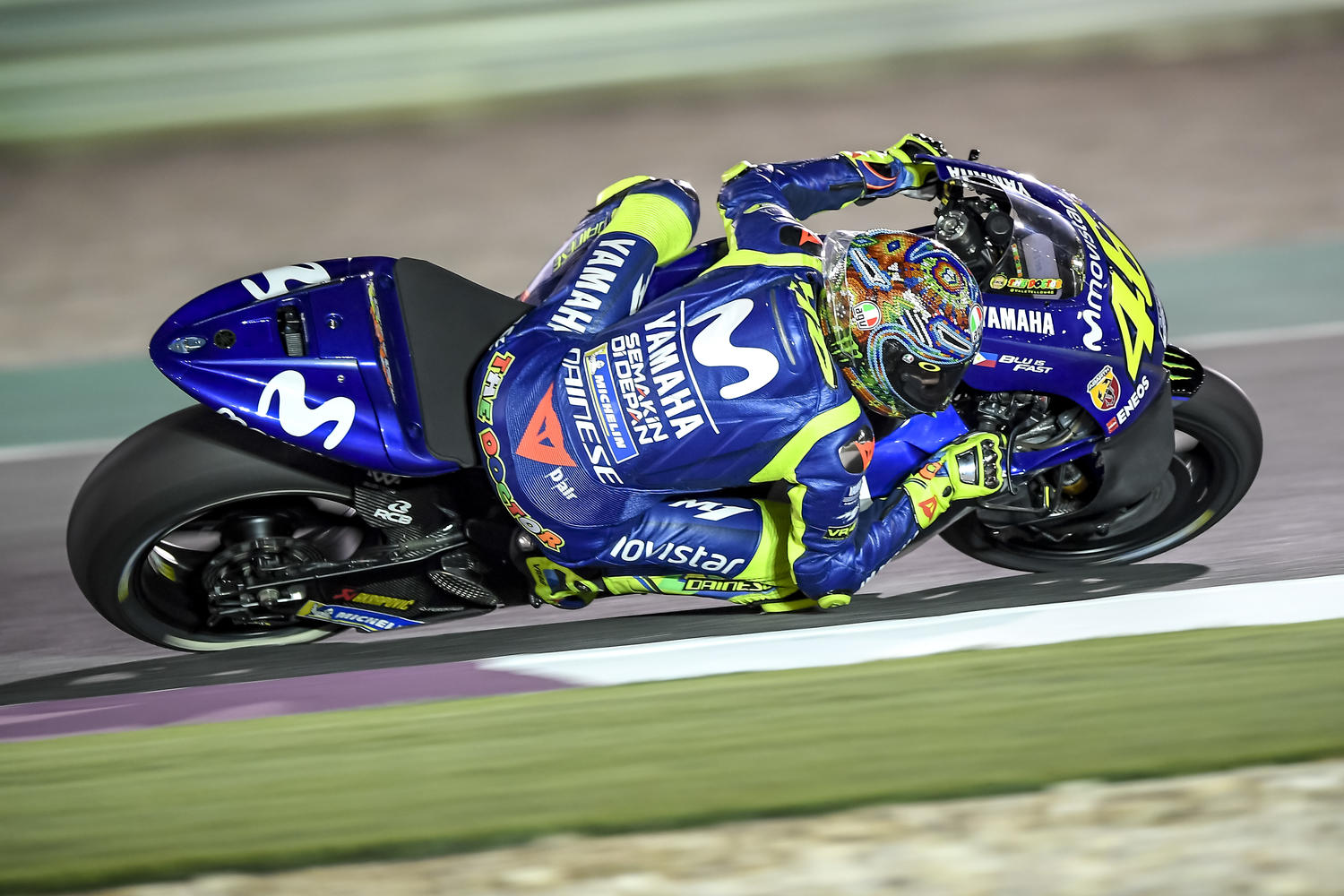
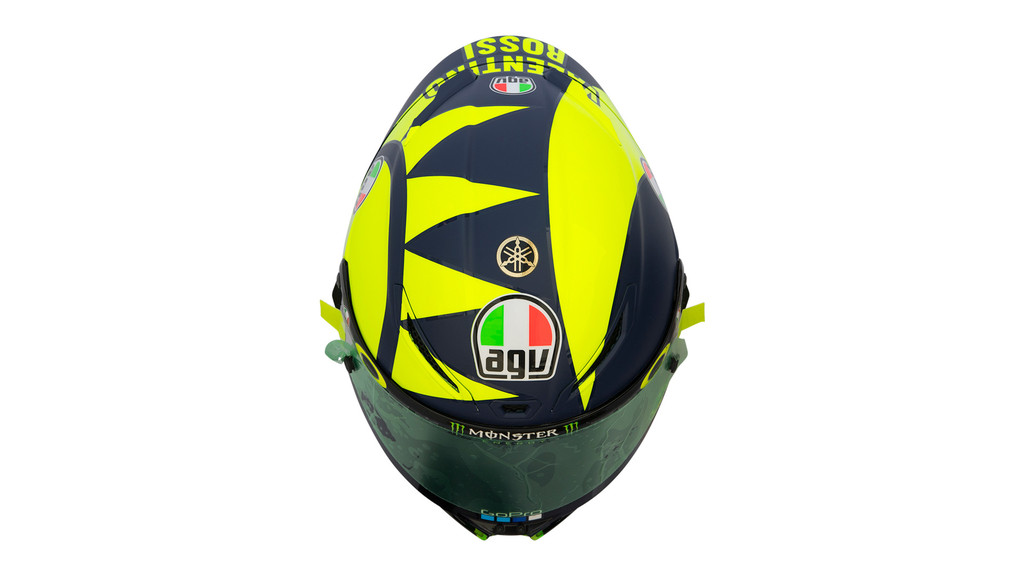
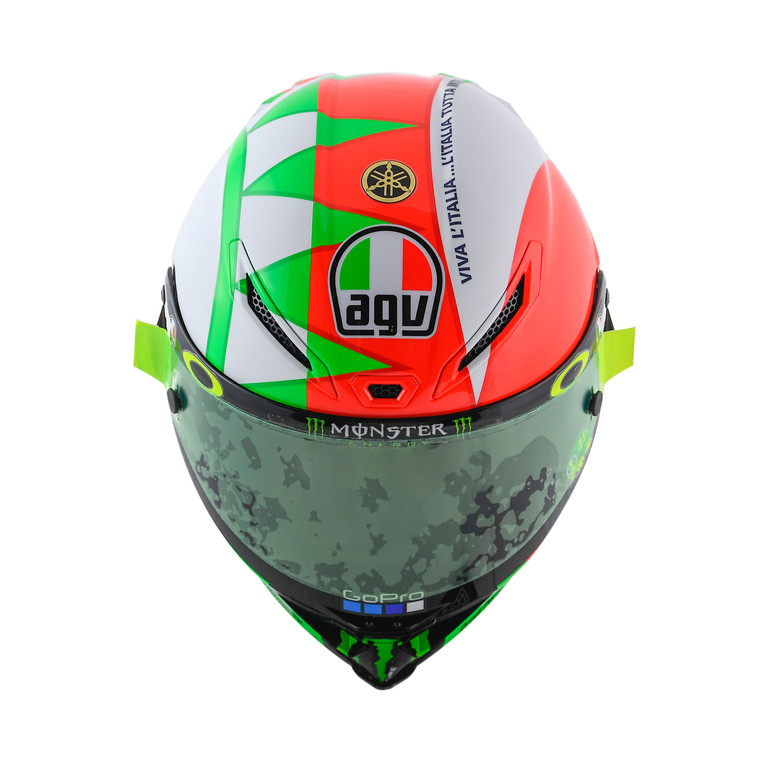
The latest and most advanced version, Pista GP RR, arrives in 2018. It is distinguished by further aerodynamic fine-tuning for improved air penetration. The new Pro Spoiler replaces the Biplano, for a further increase in the performance and stability of the helmet at high speeds. FIM homologation becomes mandatory for MotoGP™ in 2019. The standard version of the Pista GP RR already complies with this new safety standard, without the need for racing modifications. Titanium double-D fastening system and 360° Adaptive Fit customizable crown are also introduced.
The new Soleluna 2018 graphics arrive next, then the Italian tricolor graphics for the Mugello 2018 and 2019 GPs, the really colorful Winter Test 2019, in 2021 the last version of the helmet for the season, then the helmet with a pink bow, to greet the imminent arrival of Valentino’s firstborn daughter.
Winter Test 2018
2018
Mugello 2018
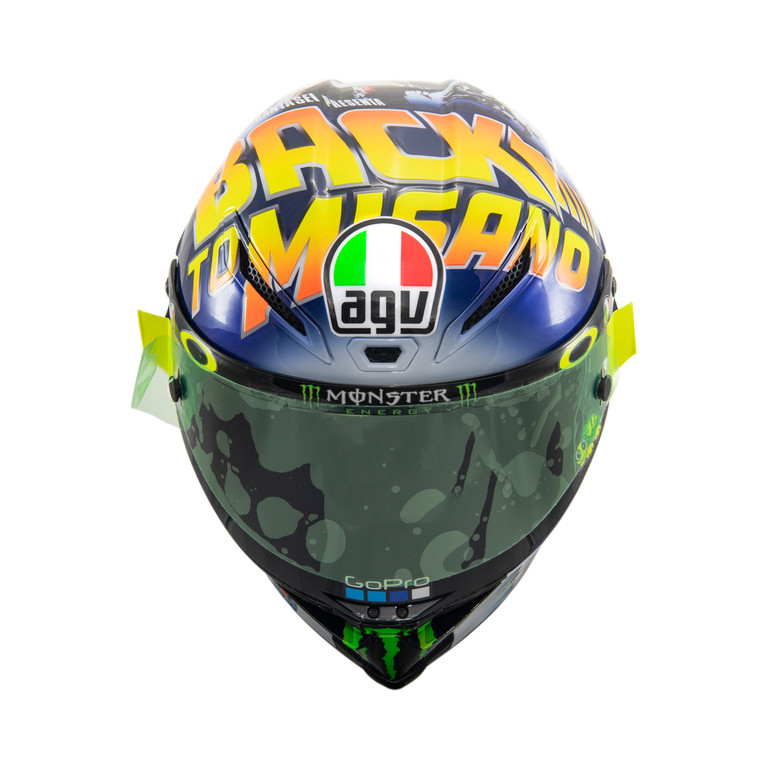
Misano 2018
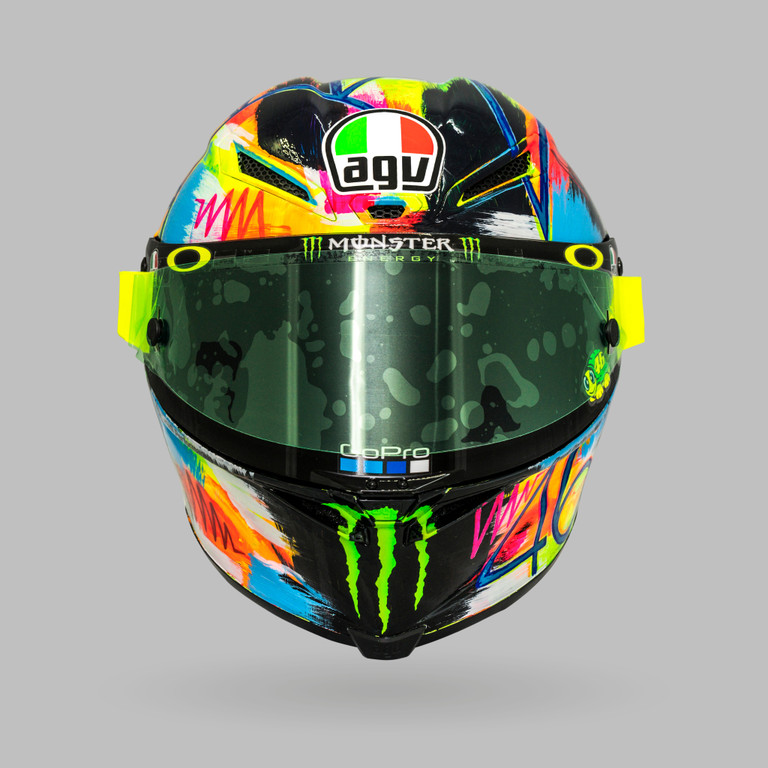
Winter Test 2019
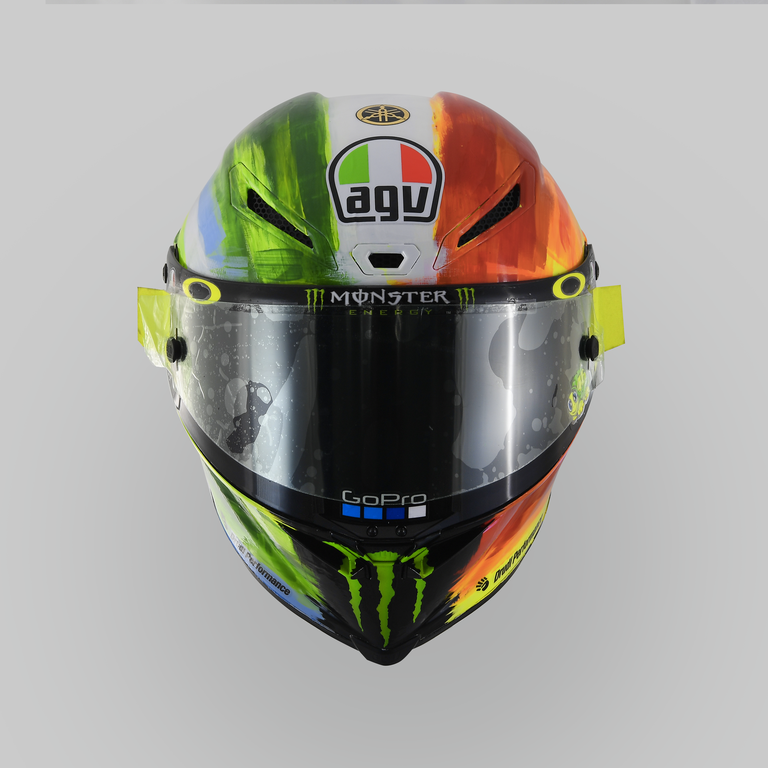
Mugello 2019
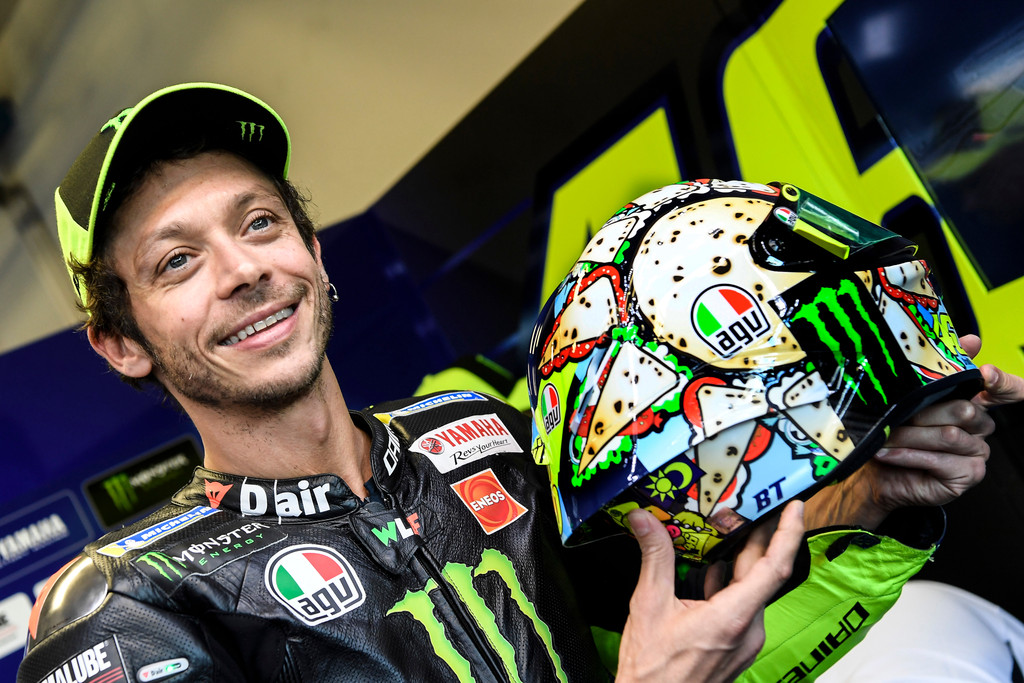
Misano 2019
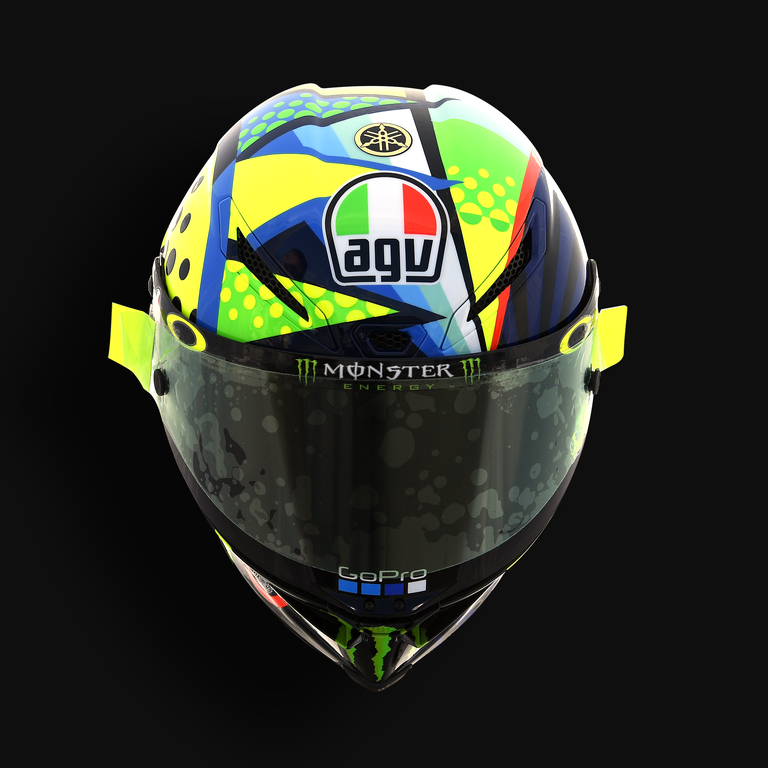
Winter Test 2020
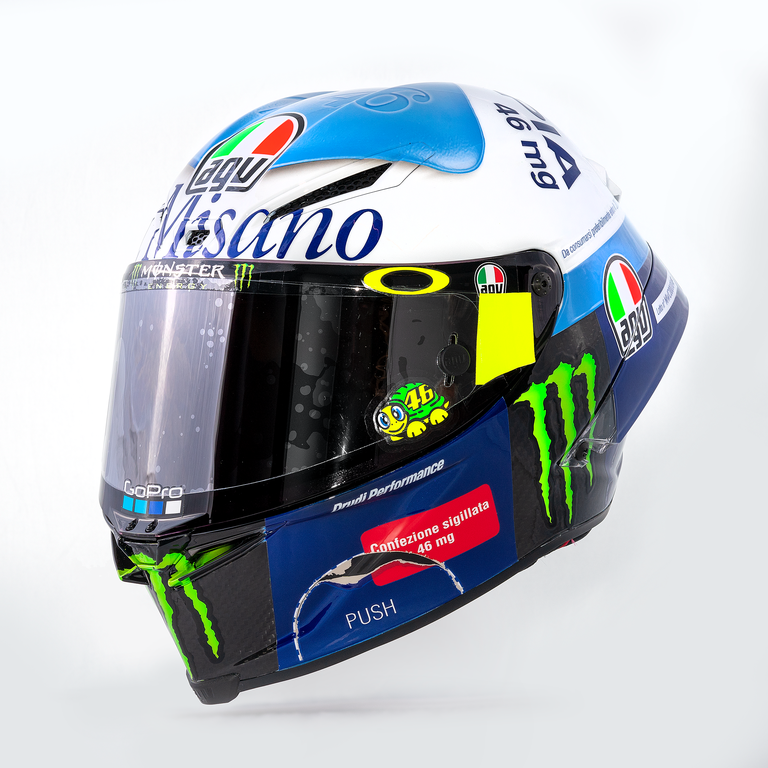
Misano 2020
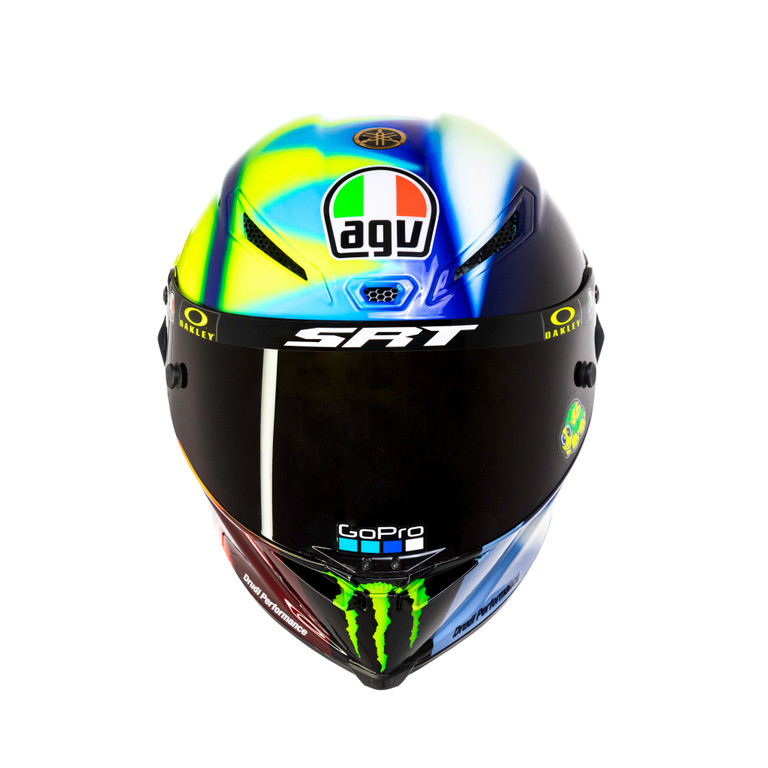
2021
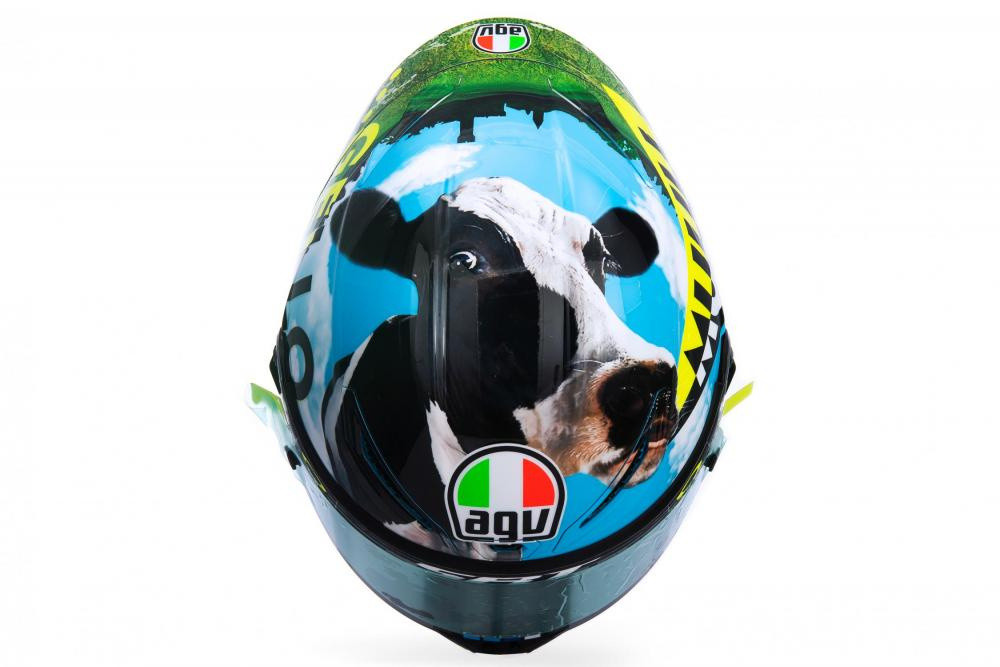
Mugello 2021
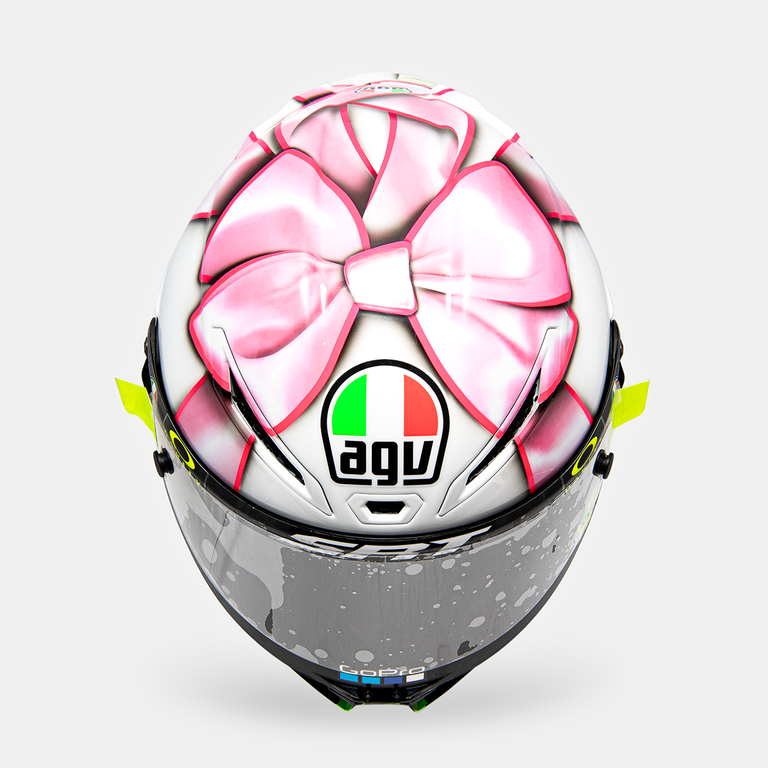
Misano 1 2021
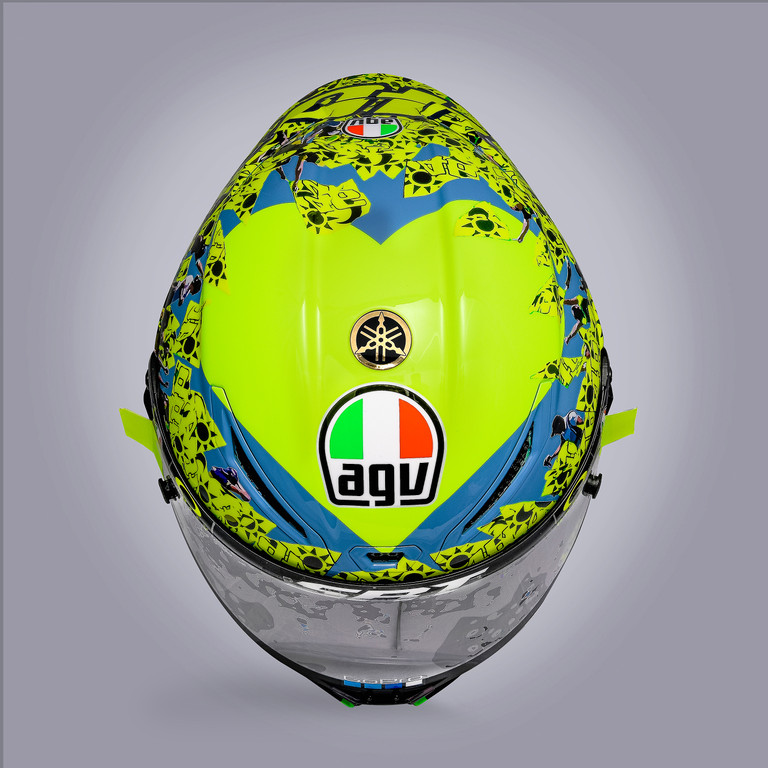
Misano 2 2021
Over twenty-six seasons there have been almost 100 different color schemes on the various AGV shells that have spanned the years. This visual language has developed together with the champion and sets him apart from every professional rider of the past, and maybe the present and the future.
Che spettacolo. Thank you, Vale.