

Skiing is a dynamic sport, and enjoying it safely takes physical fitness, good technique, and the right equipment. Alongside choosing your skis, boots, and clothing, it is just as important to know how to choose ski protection, which is essential for tackling every run with the right confidence. Above all, you need to protect the most vulnerable parts of the body, namely the head and the back. A ski helmet and a back protector are therefore the two pieces of safety gear to start with, and both come with different features and technologies to suit each skier's needs.
How to choose a ski helmet: Materials and a comfortable fit
A helmet is the first piece of protection to put on when you ski: Your choice should depend first on how you ski, and then on features such as materials, fit, ventilation, and safety systems. Since 2025, Italy has also made ski helmets mandatory for all skiers, regardless of age. In other European countries, such as Austria and Poland, the requirement applies only to minors, and the age limits differ.
One of the key differences between models is the shell material. Helmets in carbon fiber and composite fibers are generally geared toward sportier, competitive use: They offer high mechanical strength and help keep weight down. The more versatile models, designed for spending full days on the slopes, use polycarbonate shells instead, sometimes combined with a high-resistance thermoplastic resin structure in the most exposed areas, to strike a balance between protection and light weight.
The fastening system also adds to ease of use. You can choose between a traditional buckle and a micrometric closure like those on motorcycle helmets, which can be operated quickly even while wearing gloves. Other key factors to consider are helmet ventilation and the helmet's internal construction, both of which contribute to comfort for as long as you ski. In more advanced systems, air flows through dedicated channels, helping heat and moisture escape. Padding must always be breathable and comfortable to prevent issues, even after many hours of use.
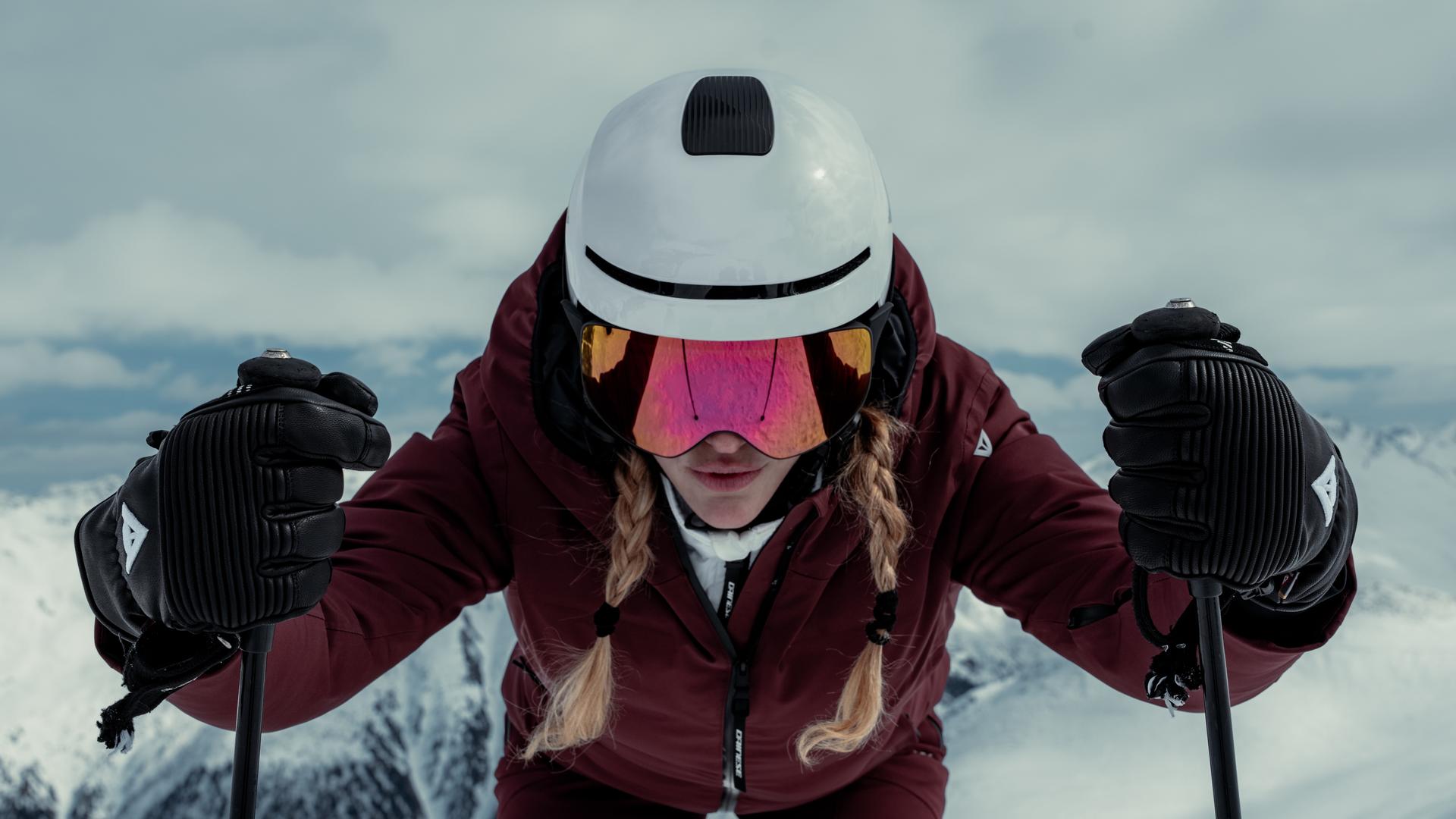
Airo MIPS
One last, particularly important factor is a precise fit. Some models feature a rear dial that lets you adjust the circumference to fit the helmet to your head, while models designed more for racing may have no adjustment at all. It is therefore essential to try on the helmet after determining the correct size and before buying it.
Ski helmet laws, technologies, and homologations
In Italy, ski helmets have been mandatory for all skiers since 2025, regardless of age. In other European countries, such as Austria and Poland, the requirement applies only to minors, with age limits that vary from country to country. That is why choosing the perfect helmet means considering a range of factors and technologies.
One of the most advanced technologies in ski helmets, MIPS (Multi-directional Impact Protection System), was designed to help manage oblique impacts. In an angled impact, a sliding internal insert lets the head and shell move slightly relative to each other, dissipating some of the energy and reducing the rotational acceleration transmitted to the head.
Homologations also deserve close attention. One of the most widely used standards is the European CE EN 1077 standard, available in two versions: Type A, which provides full coverage, and Type B, which leaves the ears uncovered. There is also the American ASTM F2040 certification, as well as FIS RH 2013 homologation, which is required for racing.
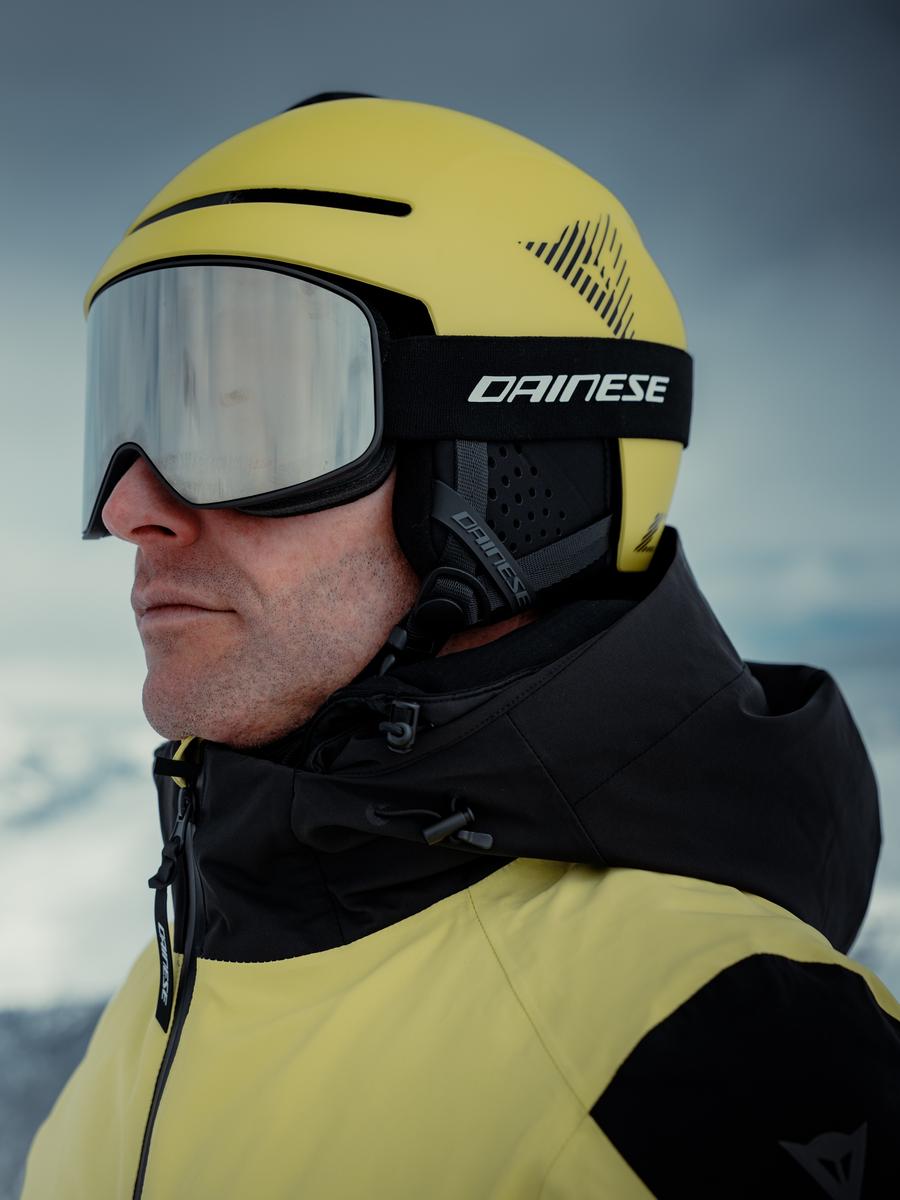
Airo MIPS
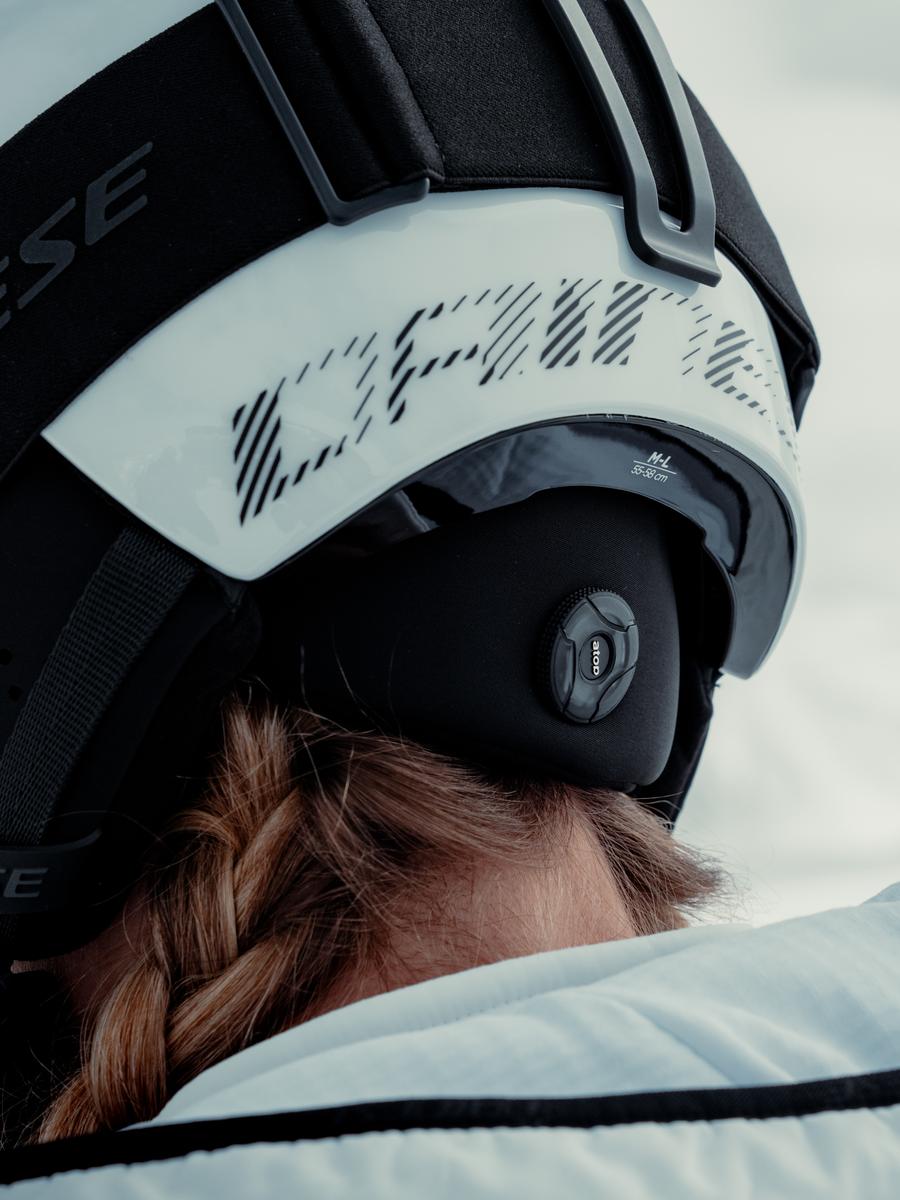
Airo MIPS
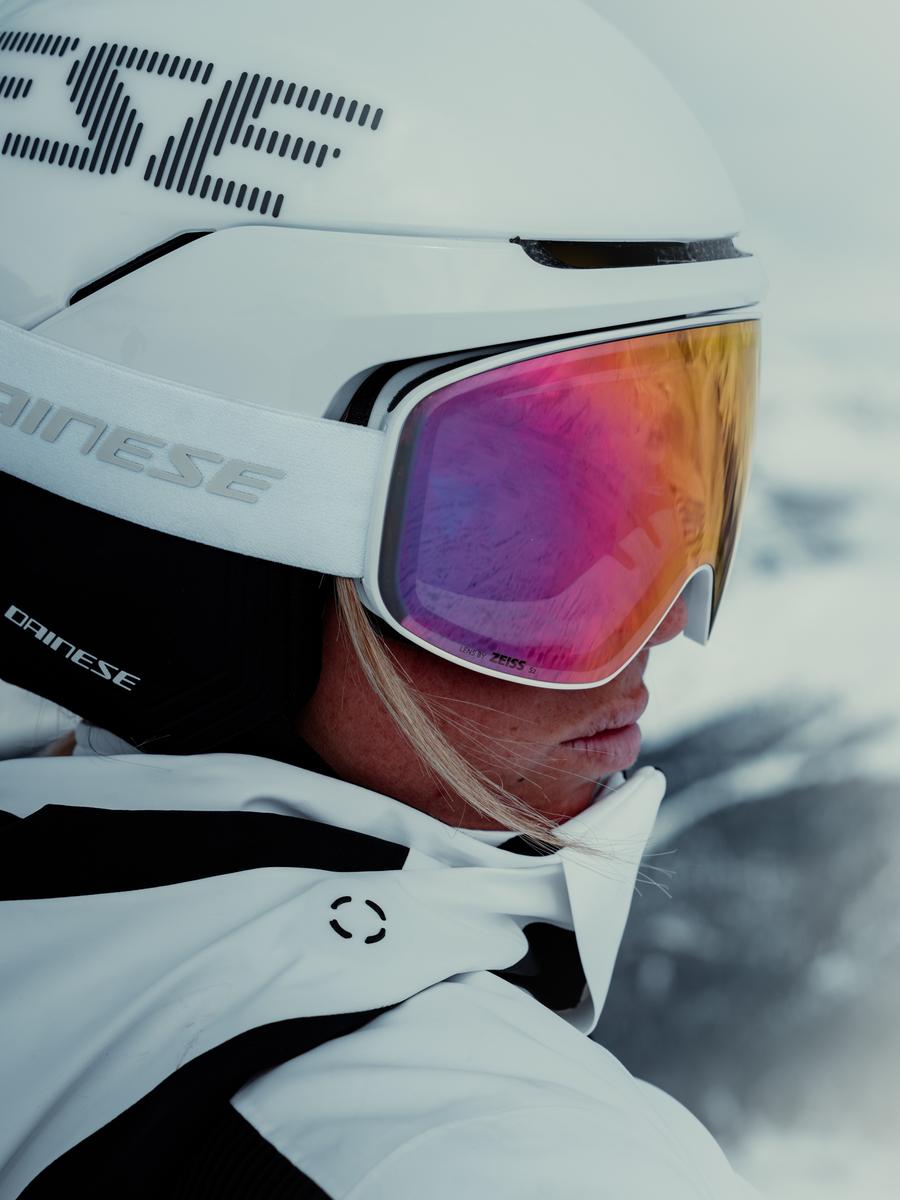
Nucleo MIPS
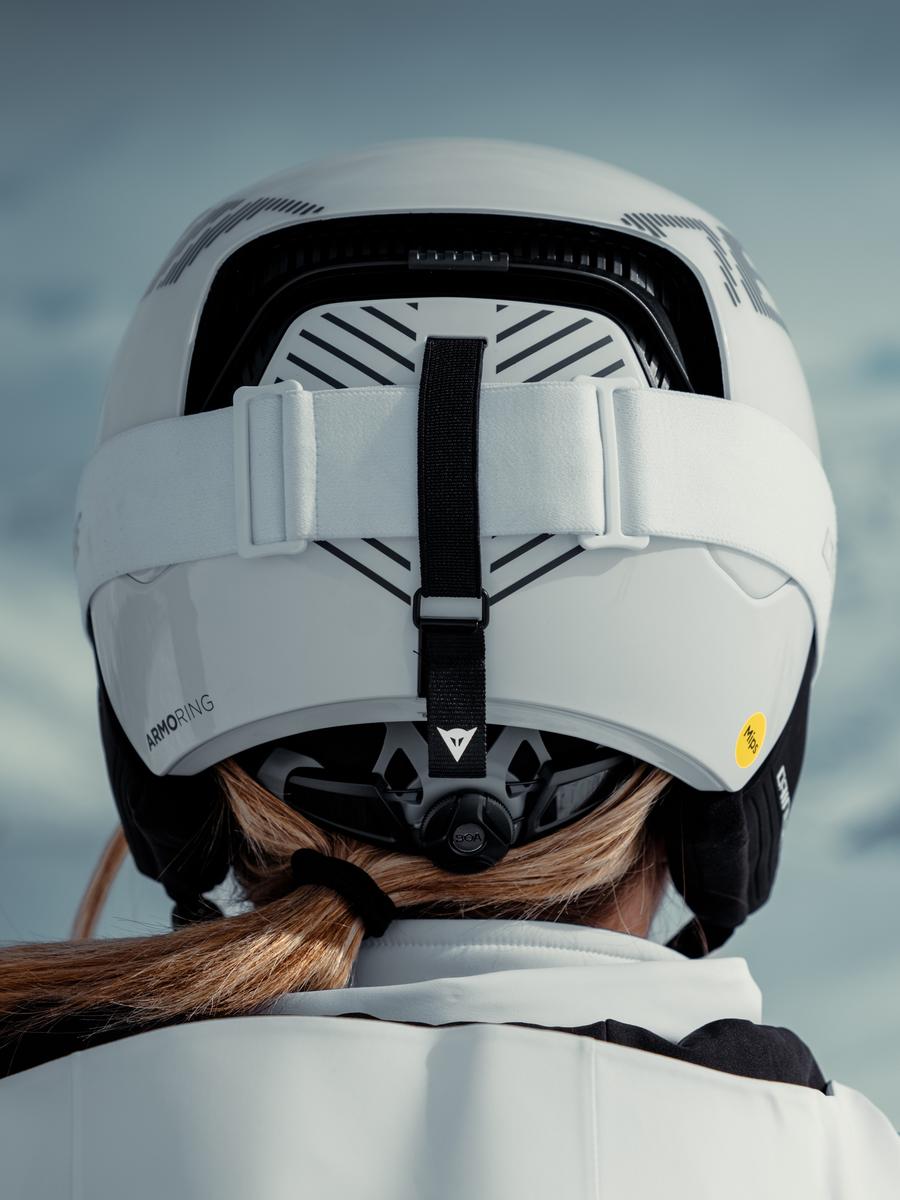
Nucleo MIPS
Ski helmet with goggles or an integrated visor: Which should you choose?
The helmet should be paired with ski goggles that provide a wide field of vision, make bumps and irregularities in the snow easy to read, and protect your eyes in bright light. The two need to be compatible and fit together properly to keep you comfortable on the slopes.
Another option is helmets with integrated visors, which combine both functions in a single product. The visor raises and lowers easily, even with gloves on, and offers a wide field of vision. This solution is especially practical for skiers who wear prescription glasses, since the space under the visor lets them wear their glasses comfortably.
Dainese ski helmets: A wide range of models for every need
In the Dainese range, R001 Carbon is the most race-oriented option: It is the helmet worn by World Cup skiers and features a full carbon fiber shell. R001 Fiber shares essentially the same features but uses a composite fiber shell, which makes it slightly heavier but more affordable, while remaining homologated for racing.
For recreational skiers who want a solid, high-quality helmet, Nucleo MIPS features the MIPS system and a high-resistance thermoplastic resin ring that protects the most exposed areas of the head. Airo MIPS, on the other hand, is a lighter option, also equipped with MIPS and a carefully engineered ventilation system. Nucleo Visor MIPS rounds out the lineup, building on Nucleo's features with a practical integrated visor.
For detailed tips on how to choose a Dainese ski helmet, check out our dedicated guide.


How to choose a ski back protector: From fit to certifications
Along with the helmet, a back protector is one of the most important pieces of protection for alpine skiers. Originally developed for motorcycling and later adapted to other sports, the back protector has evolved over the years to meet the specific needs of skiing, with designs that prioritize light weight, flexibility, and freedom of movement.
The first thing to consider when choosing a ski back protector is its certification level. The European standard EN 1621-2 defines two levels of protection, Level 1 and Level 2, with Level 2 offering a greater ability to limit the force transmitted to the back in an impact. In tests carried out at an impact energy of 50 joules, a Level 1 protector must transmit an average force of no more than 18 kN, while for Level 2 the limit drops to 9 kN. The peak values recorded in individual impacts also differ, at 24 kN and 12 kN respectively. Both are valid choices: A Level 2 back protector puts safety first, while a Level 1 protector prioritizes light weight and freedom of movement.
Back protectors designed for recreational skiing are generally made from soft, flexible materials that follow the movements of the torso without restricting them. Some use flexible polymer structures, while others use technical foams with high impact absorption, such as Crash Absorb®.
Another important factor is ventilation. Back protectors often feature perforated structures or open designs that improve airflow and help dissipate heat and moisture during physical activity.
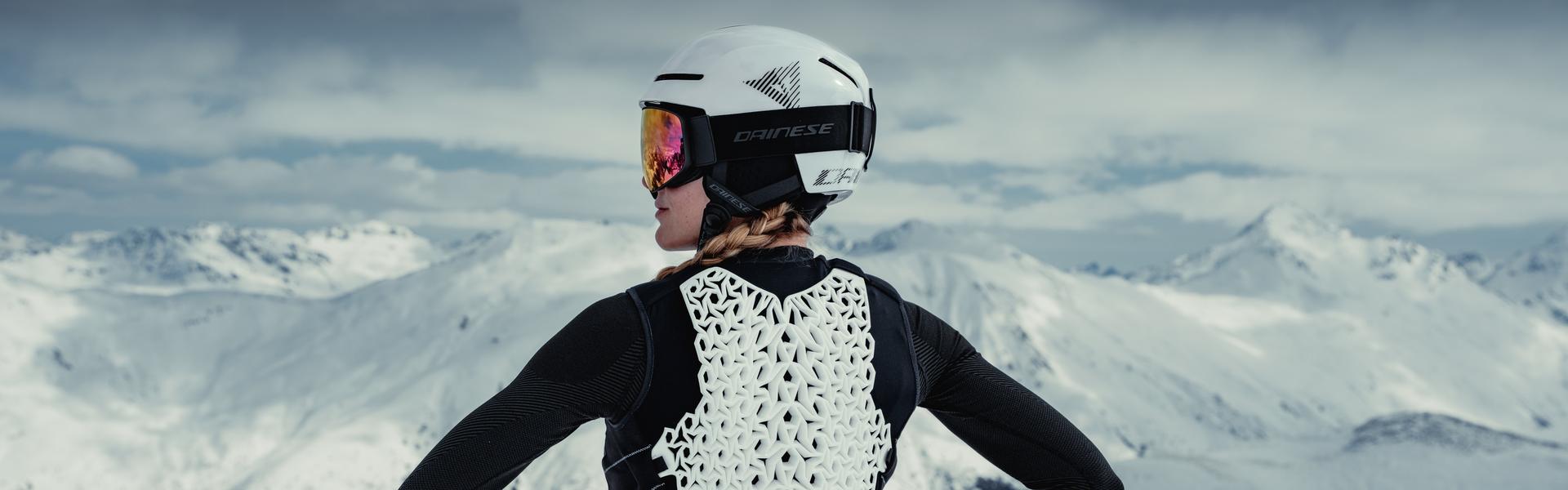
Fit also affects the comfort and stability of the protector. More traditional models use shoulder straps and an adjustable lumbar band, while others integrate the protector into a snug vest that wraps around the torso. The vest design keeps the back protector more stable and closer to the back, limiting shifting as you move. Some vest models also extend coverage to the lower back and hips. Finally, there are ski jackets designed to hold a back protector in a dedicated pocket.
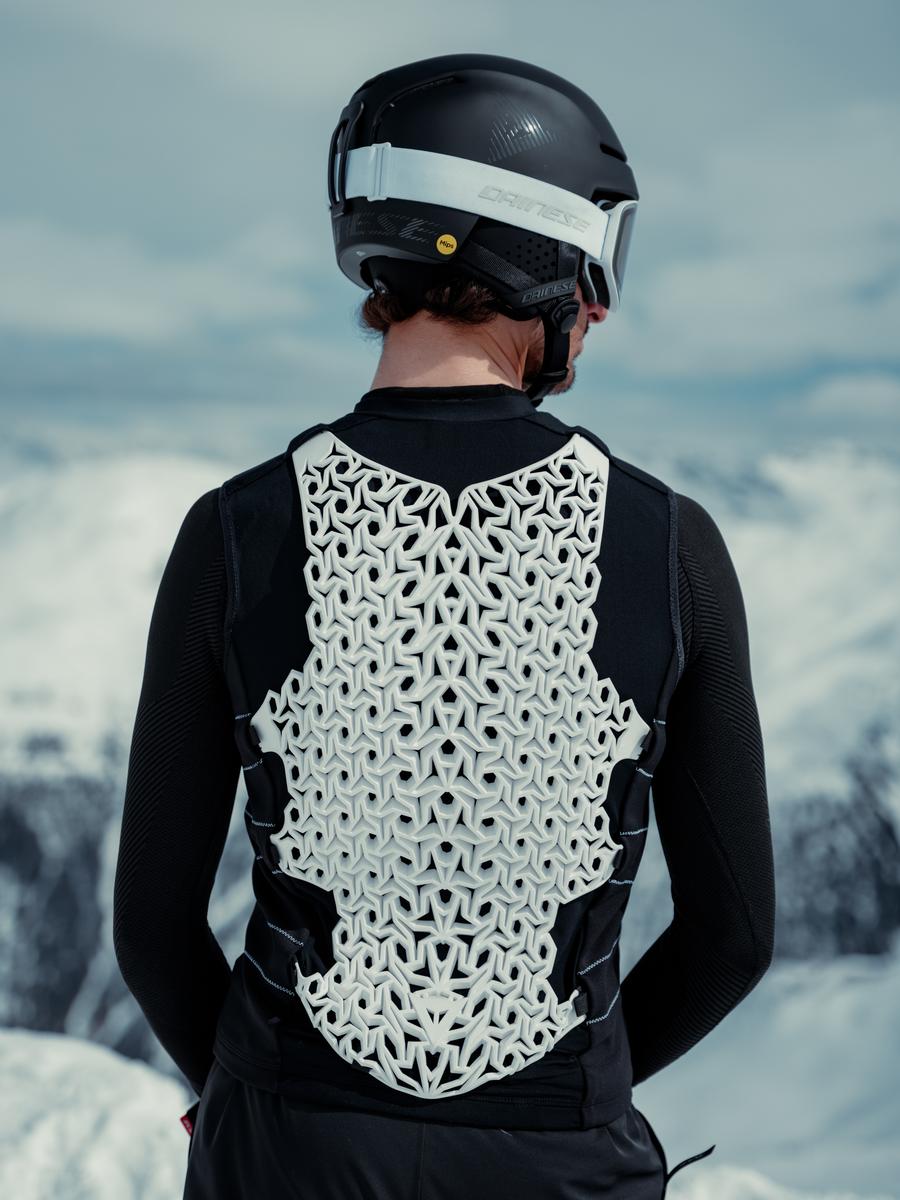
Exogon Vest
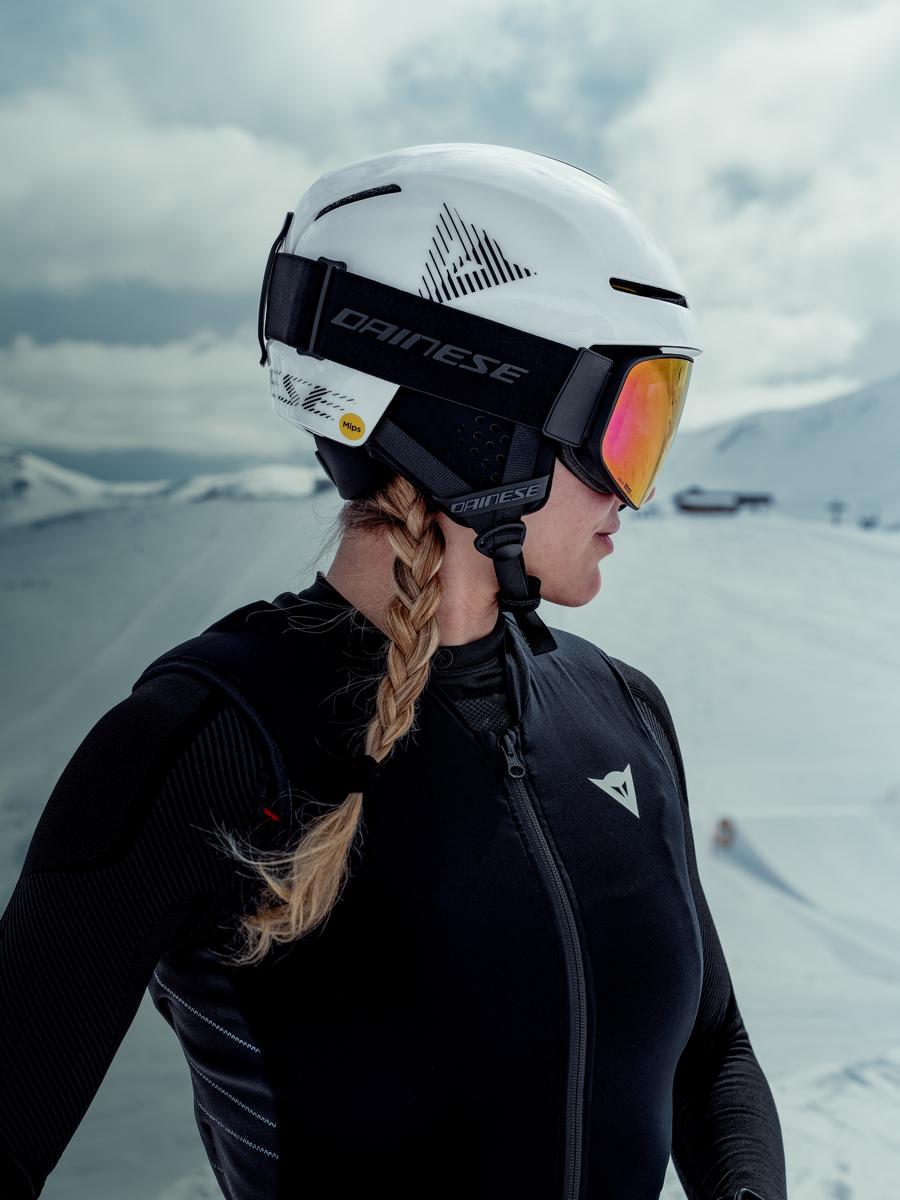
Exogon Vest
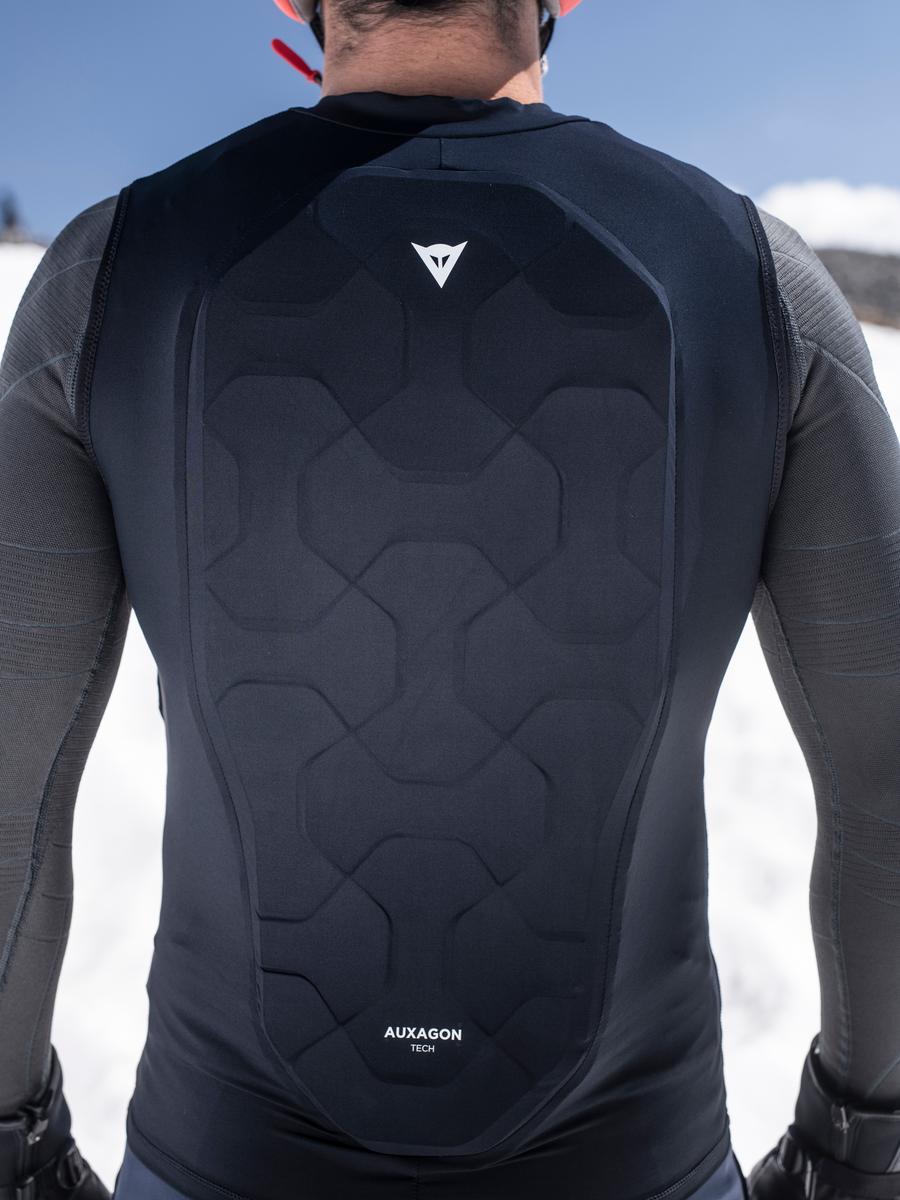
Auxagon Vest
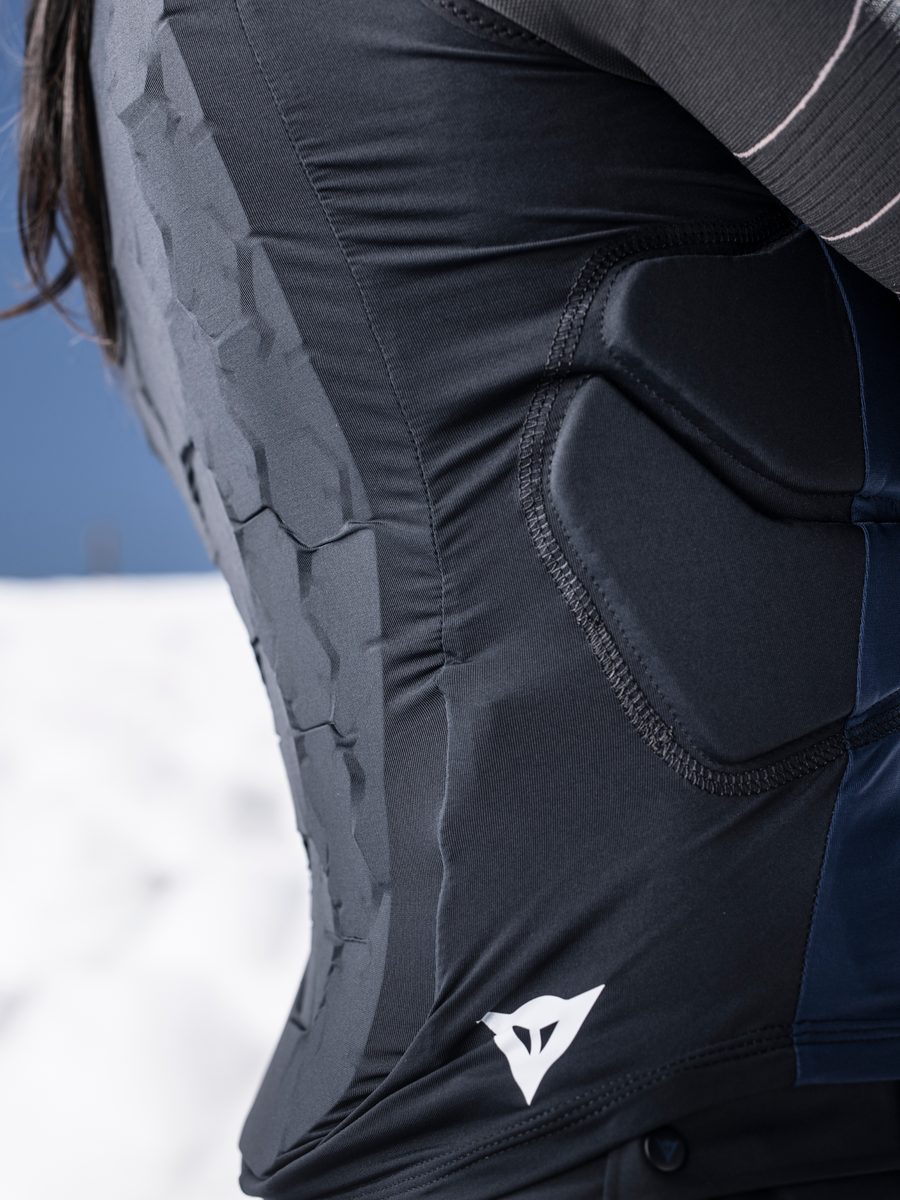
Flexagon 2 Vest
Dainese ski back protecors for every skier
The Dainese range includes Level 1 and Level 2 models to meet every need. The Level 2 models are Exogon Vest and Flexagon 2, both available as vests and made from soft material. Exogon Vest uses a flexible, highly perforated Pro-Shape auxetic structure that contracts and expands with the body's movements. Its snug, flexible construction also allows protection to extend to the lower back and hips. Flexagon 2, on the other hand, is made of overlapping layers of Crash Absorb® Memory Retention Foam, with hexagonal elements that flex and slide against one another along every axis of movement, improving impact absorption and freedom of movement.
Auxagon is Dainese's thinner, lighter Level 1 back protector. Its structure uses auxetic geometries that change their response to stress: When compressed, they stiffen and reinforce the area of impact. Auxagon is available in both vest and shoulder-strap versions, in different lengths to suit the skier's height.
For a more complete overview of Dainese ski back protectors, see our in-depth guide.
Ski racing protection: From airbags to arm guards and shin guards
In addition to a helmet and back protector, there are protectors designed specifically for the needs of athletes who race through the gates in competitive events. These protectors are built to withstand impacts and abrasion against the gates in slalom and giant slalom, or to protect skiers racing at extremely high speeds in super-G and downhill.
In the latter case, the most advanced protection is Dainese D-air® Ski 2 Evo, an electronic airbag system developed for athletes in the speed events. Integrated with a Level 2 Wave hard shell back protector, it uses a control unit equipped with an accelerometer, gyroscope, and GPS to analyze the skier's movements and recognize the dynamics of a fall. When it detects a potentially dangerous situation, it deploys the airbag, which covers the most exposed areas of the upper body, including the chest, shoulders, and collarbones. When deflated, it is virtually imperceptible and does not restrict the athlete's movements.
To learn more about D-air® Ski 2 Evo technology, read our dedicated guide.
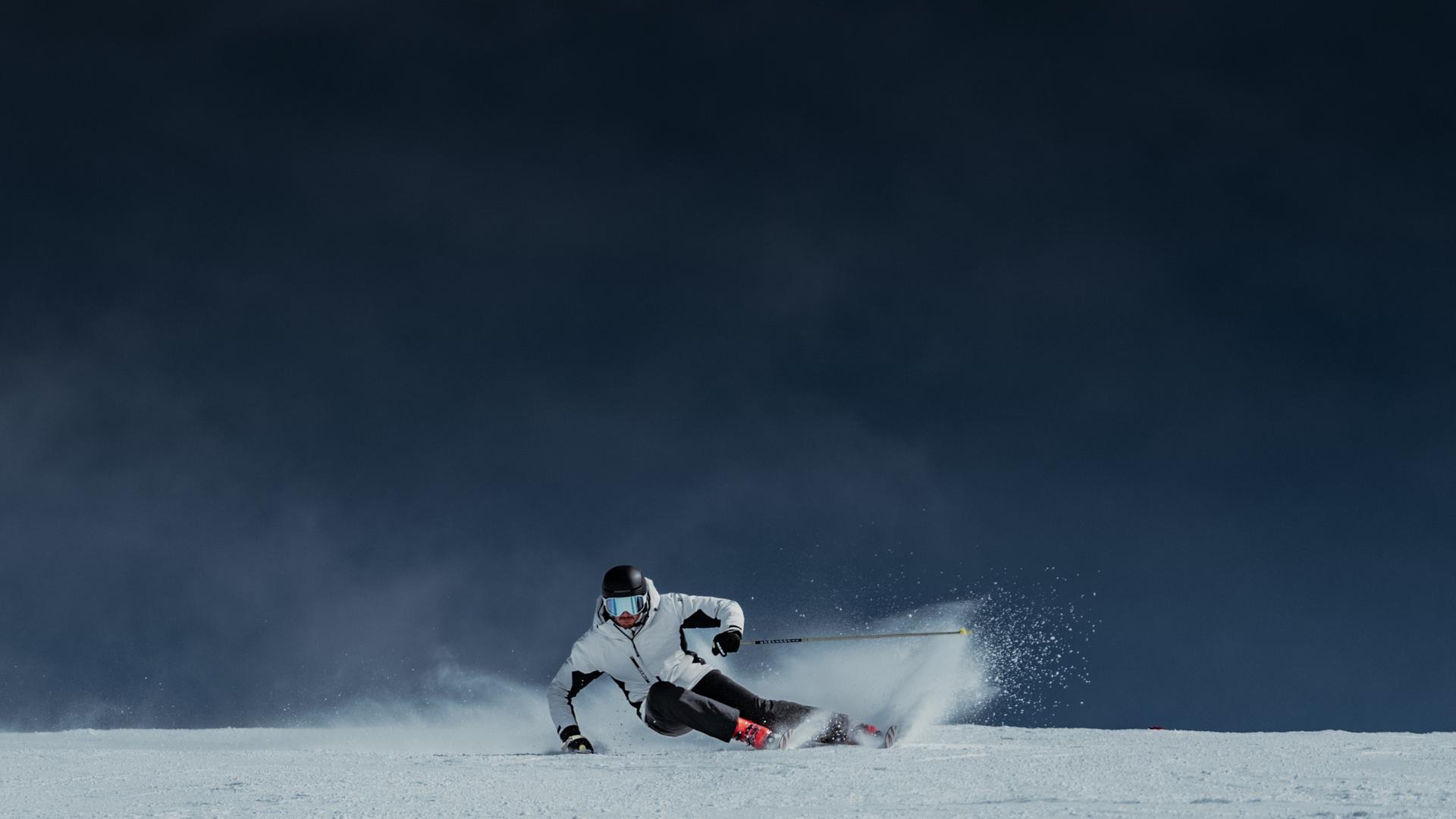
Other race-specific protection includes arm guards and shin guards, designed to protect against impacts with the gate poles and often made from rigid, lightweight materials such as carbon fiber. The Slalom Jacket features protectors built into the torso and arms to shield the athlete from gate contact during race runs.
A ski helmet and back protector are therefore the two pieces of protection to start with for safe skiing. Your choice should take into account your build, how intensely you ski, and your skiing style, without overlooking fit and comfort. Besides protecting you, a helmet must fit correctly and provide adequate ventilation, while a back protector should sit snugly against your back without restricting your movement.
In short, even when you ski for fun, choosing protection that suits your needs is important for enjoying your day on the snow with peace of mind.