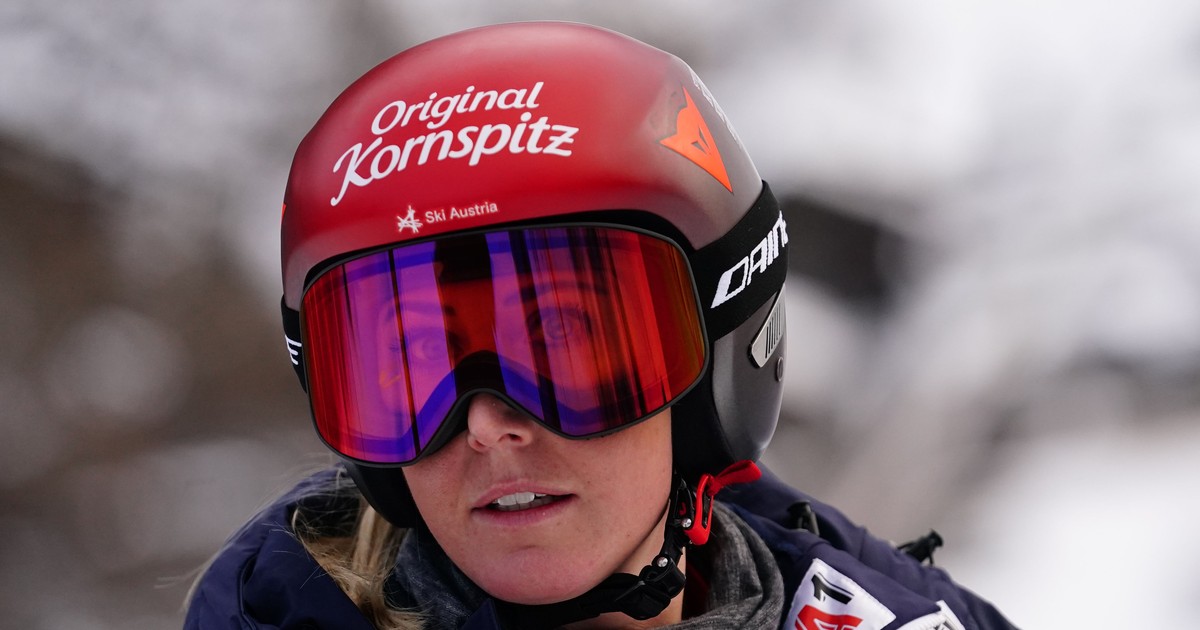
Sofia Goggia, born in Bergamo in 1992, is a leading figure in alpine skiing today, both within Italy and at international level. A four-time winner of the Downhill World Cup, Olympic downhill champion at the 2018 Pyeongchang Games, and a consistent contender in the speed disciplines, Sofia has built her career on the work she puts in daily, as well as an exceptional ability to bounce back from even the most challenging moments.
Having grown up on skis ever since she was a young child, Goggia always had a very clear idea of what she wanted to become. She has pursued this goal without compromise, turning each decision into a part of her sporting and personal journey. Over time, alongside the results, a mature vision of skiing has emerged: Sofia is aware of the importance of management of her mental state and her emotions, as well as the importance of teamwork, and is aware of the risks associated with a sport that takes place in extreme conditions.
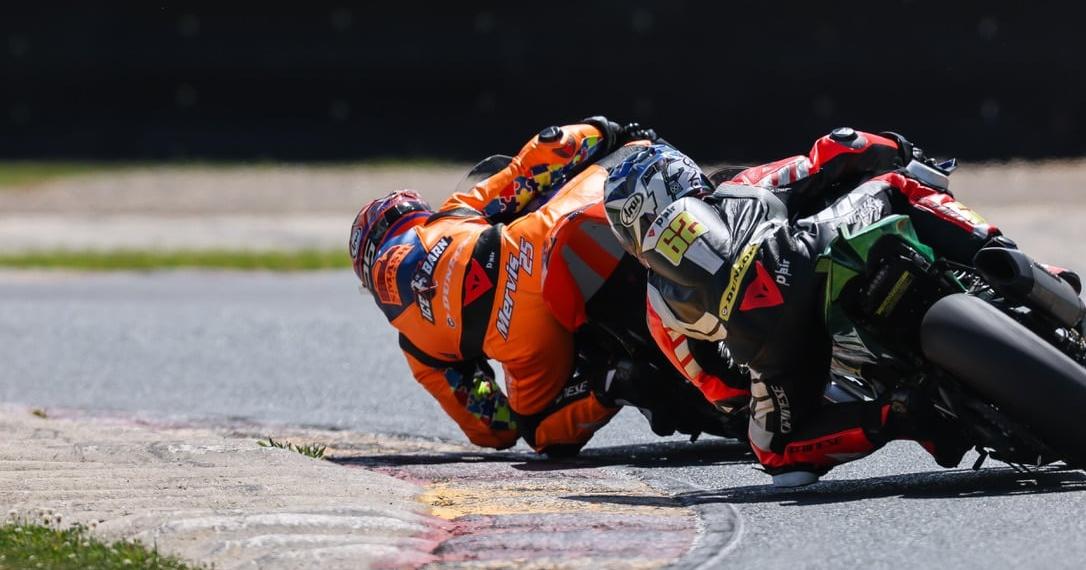
In this interview, Goggia talks about her relationship with skiing, starting from the beginning, before addressing the physical and mental preparation that precedes a race, and exploring the themes of safety and protection; areas in which she has played a key role, as a tester of the Dainese D-air® Ski airbag since 2018. What emerges is a portrait of a focused athlete and a champion who continues to strive for improvement as much as victory, and who approaches every race with the goal of expressing herself to the fullest.
Sofia, at what age did you start skiing and when did you realize that skiing was what you wanted to do with your life?
“I started skiing at the age of 4 in Foppolo, in the province of Bergamo, and already as a child, when people asked me what I wanted to be when I grew up, I would answer ‘a ski champion’.”
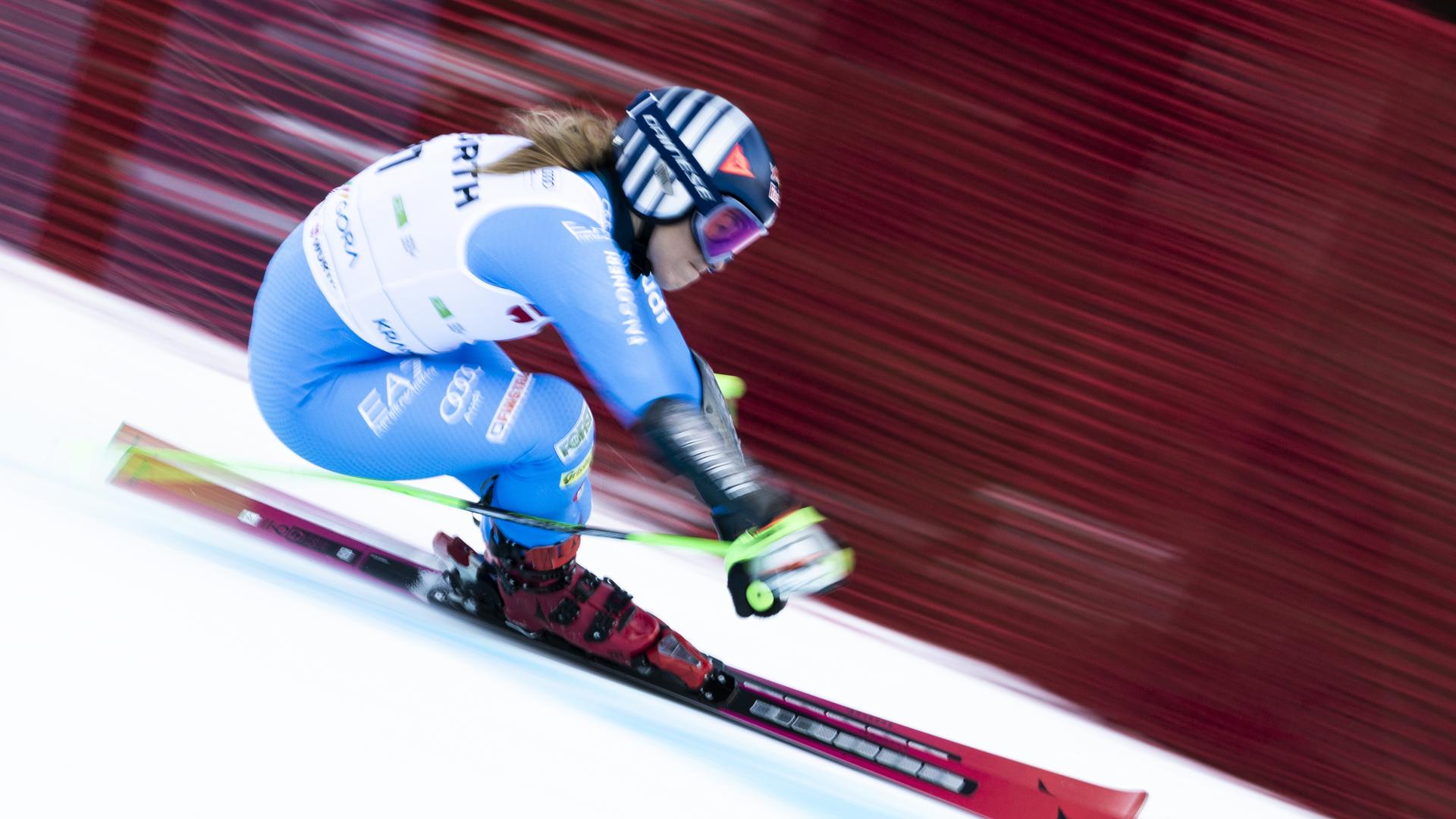
Was there a specific moment when you realized you were truly good enough to compete at the highest levels?
“It’s something I’ve always believed in, and as a child I was already a strong skier. Shortly after, I joined the national team and from there the goal has always been to race in the World Cup. So it was a natural evolution, a process of maturation, you could say... there was no specific moment.”
What was the biggest sacrifice you have had to accept to get to where you are today?
“I’ll be honest, I don’t like to talk about sacrifices; instead, I prefer to talk about the choices I have made based on what I felt inside me at that moment. I honestly feel like I haven’t given up anything in my life.”
Now let’s talk a little about Sofia Goggia’s preparation and training, both physical and mental - an aspect that is more important than ever in any sport, but especially in a highly technical discipline like alpine skiing. How do you prepare before a race, to ensure that you start in the best possible condition?
“From a mental and emotional perspective, I try to connect with the right emotions, staying focused on what I know I have to do in the race in terms of physical movements, but also with regard to lines and strategies, which we studied during the reconnaissance phase. On a physical level, however, I simply try to do a good warm-up before lining up at the starting gate.”
In your opinion, how important is putting in the work day after day compared to natural talent?
“You can have a lot of talent, but without consistent hard work, you’ll be a shooting star at best. If you put in the effort every day, and you also have talent, you create the conditions to achieve lasting success and be an athlete with staying power, staying at the top.”


How important is experience compared to physical fitness, especially in difficult situations?
“I believe that experience is what allows you to manage every phase of the race in the best possible way; it is fundamental and sometimes it helps you to have more clarity when you need it. Physical fitness also counts, of course, but in my opinion, the way you manage the mental side of things is more important.”
How do you deal with days when you’re just not feeling right?
“I try to accept myself for who I am, I stay even more alert, and I try to give my best without going too far - that’s all.”
What motivates you most today: victory or the path to improvement, even in races that don’t end as you’d like?
“Both things have the same weight for me. The races where I don’t manage to express my full ability always have an effect, and indeed can be painful, but that’s the point at which I start again, give my utmost. Ultimately, I think you learn more from defeats than from victories.”
An aspect that is often underestimated by those who watch an individual sport like skiing from the outside is teamwork, because there’s always a team around the athlete. How important is it to you?
“For me, it’s essential that all the people who work with alongside you are looking in the same direction. We also need a team of people with whom we can have social exchanges off the piste too, to create the best possible environment.”
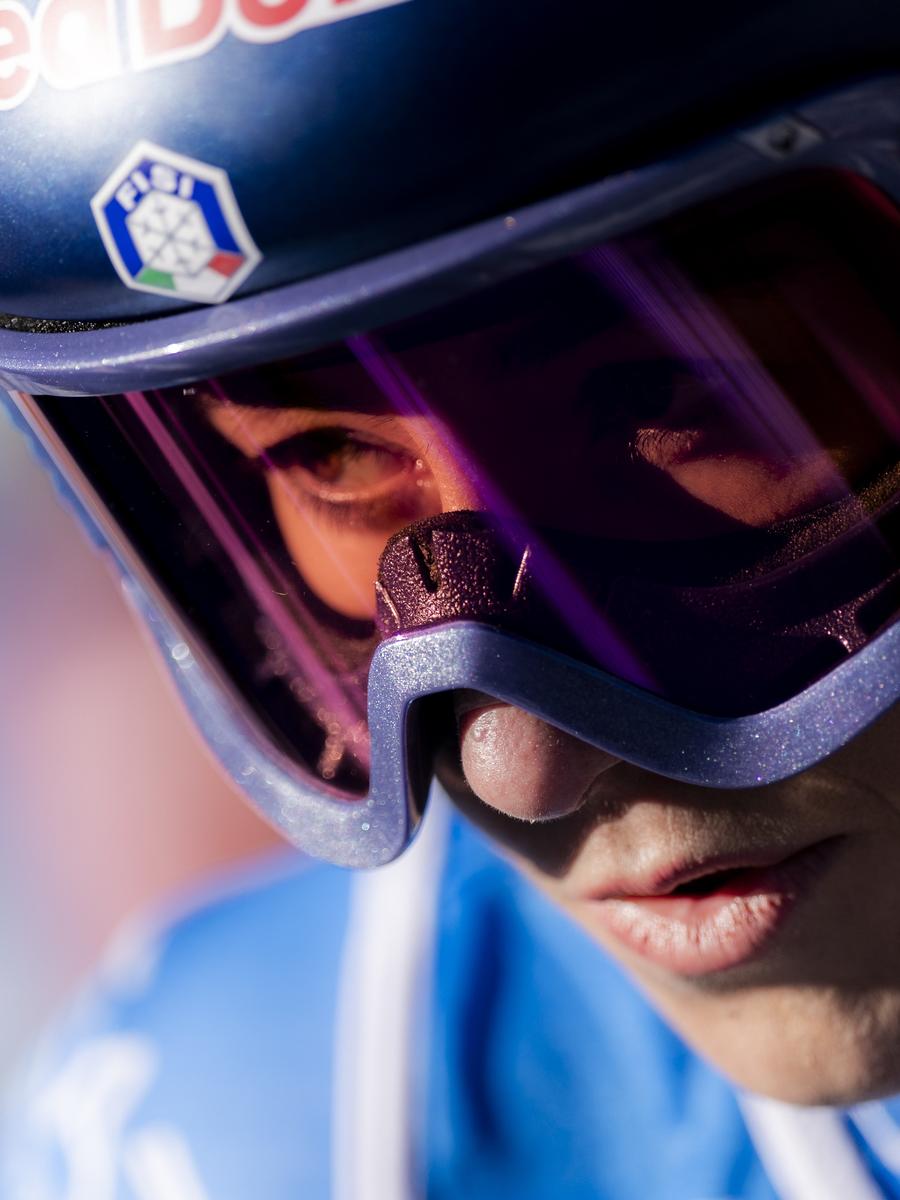
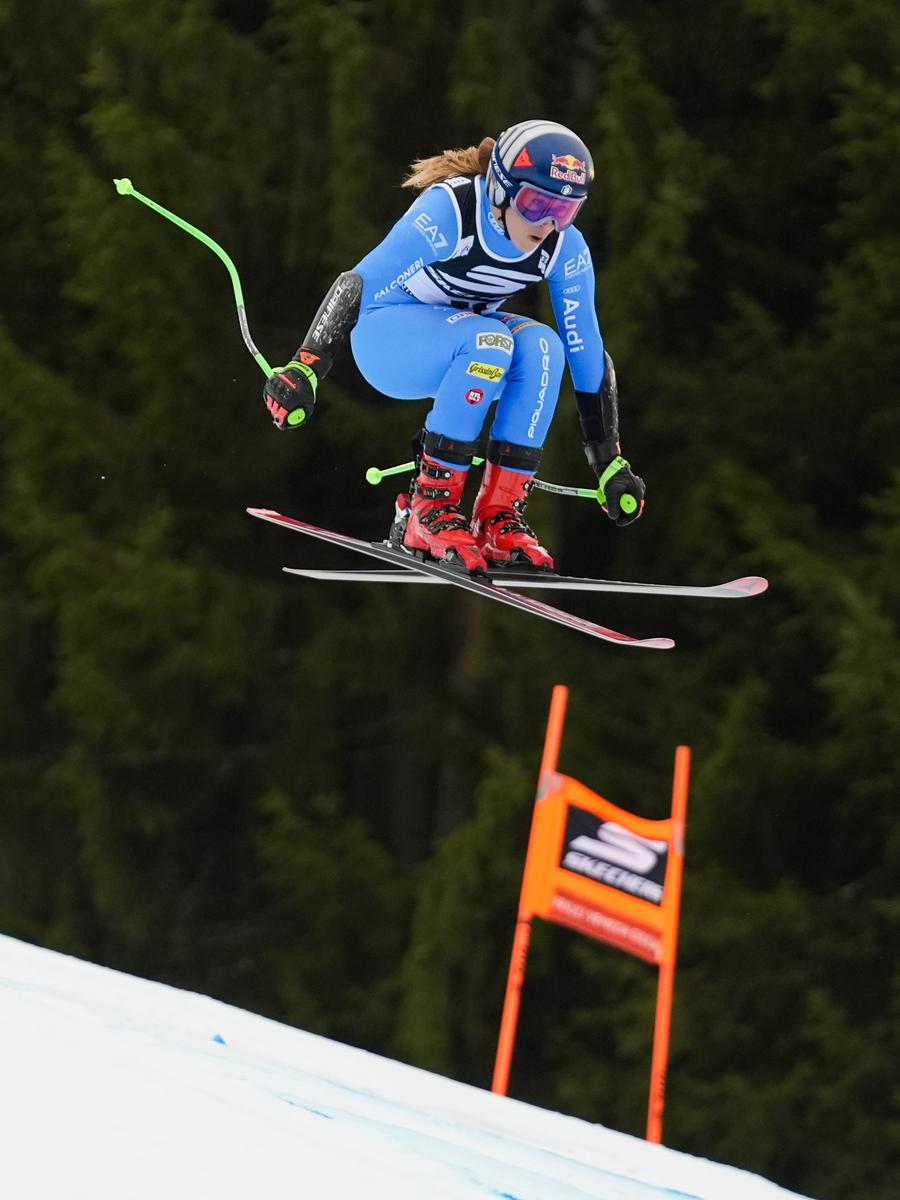
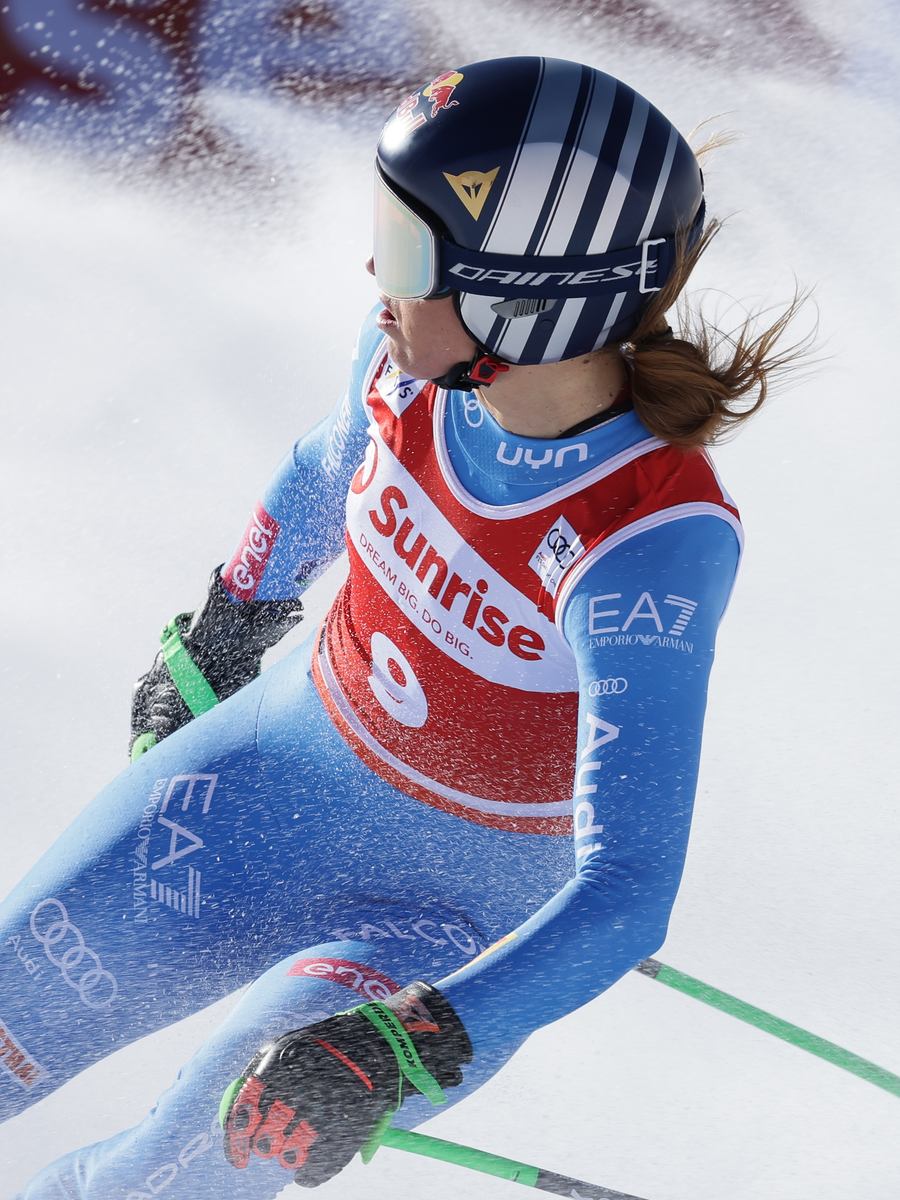
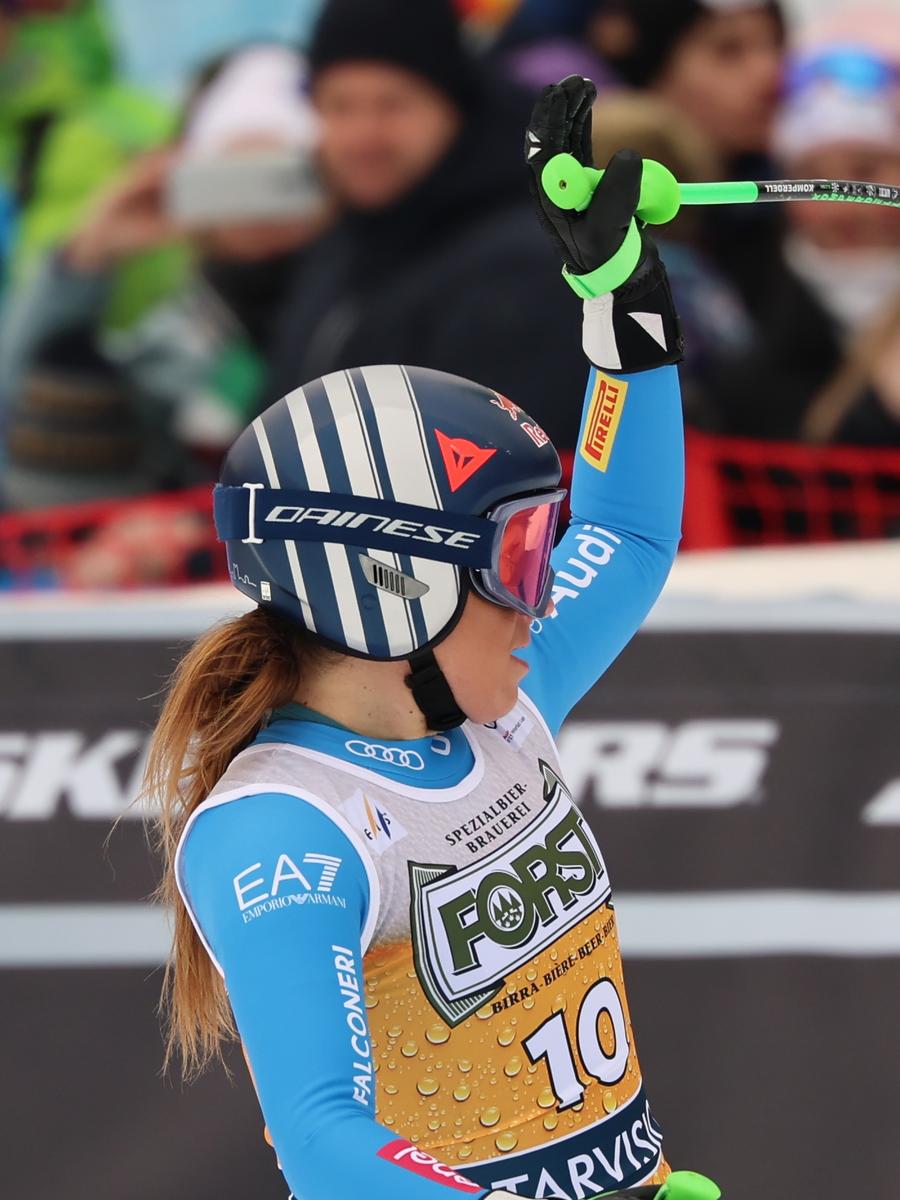
When you ski at very high speeds, how much room is there for instinct and how much for conscious control?
“During a race you think very little; you have to study the piste and the strategy beforehand, during the reconnaissance. Instinct is what you need to be fast.”
Now let’s move on to a few questions about the safety issue, which is central to us at Dainese. What is your opinion with regard to the level that alpine ski protection has reached today?
“First of all, I have to say that the mandatory introduction of the ski airbag - and indeed, I was one of the very first testers of the women’s version, back in 2018 - was a significant step forward. I believe that Dainese, partly as a result of the experience gained in the field of motorcycling, is light years ahead of the competition. When I’m wearing my clothing and my protection, I feel safe.
This year, the cut-resistant suit has also become mandatory, which is also a great improvement. Skis are as sharp as knives, and it’s essential to protect yourself from those too. To improve it even further, we also need to think about covering the exposed area of the body, namely the neck.”
Is there any aspect of safety in alpine skiing that, in your opinion, still doesn’t receive enough attention, from athletes or organizers?
“I’d focus more on the organizers, who do everything they can to reduce our speed, but at the same time design courses with more curves, sometimes creating angles that force us to endure pressures and forces that are even more difficult to manage physically. Sometimes, we race in conditions that aren’t entirely safe, especially when it snows heavily and only the main line down the piste is cleared.”
If you could speak to the Sofia Goggia of a few years ago, what advice would you give her?
“I would tell her to believe in herself more.”