

If you ride a naked bike or a sportbike on the road, choosing a helmet that matches it stylistically comes naturally. But if you plan to use it every day, for commuting, for longer transfers, or for a weekend ride out of town, you need a helmet that is sporty but offers usability and versatility features that are very specific.
A sport road helmet has to cover what matters in everyday use, including a high level of protection, stability at a range of speeds, a wide field of view, effective ventilation, a fit that stays comfortable after hours in the saddle, and all-round practicality.
So which features should you actually look for?
Safety: Homologation Is Just the Baseline
The first and most fundamental feature to assess when choosing a helmet is, of course, its ability to protect your head. Homologation is the first requirement, so with a helmet meant for road use it pays to check that it meets the safety standards in force, which in Europe means ECE 22.06, a standard we covered in depth in our dedicated article.
But homologation is only the starting point. A helmet's protective performance rests on a long series of design choices, such as the material and structure of the shell and the shape of the EPS, the inner layer that absorbs the energy of an impact.
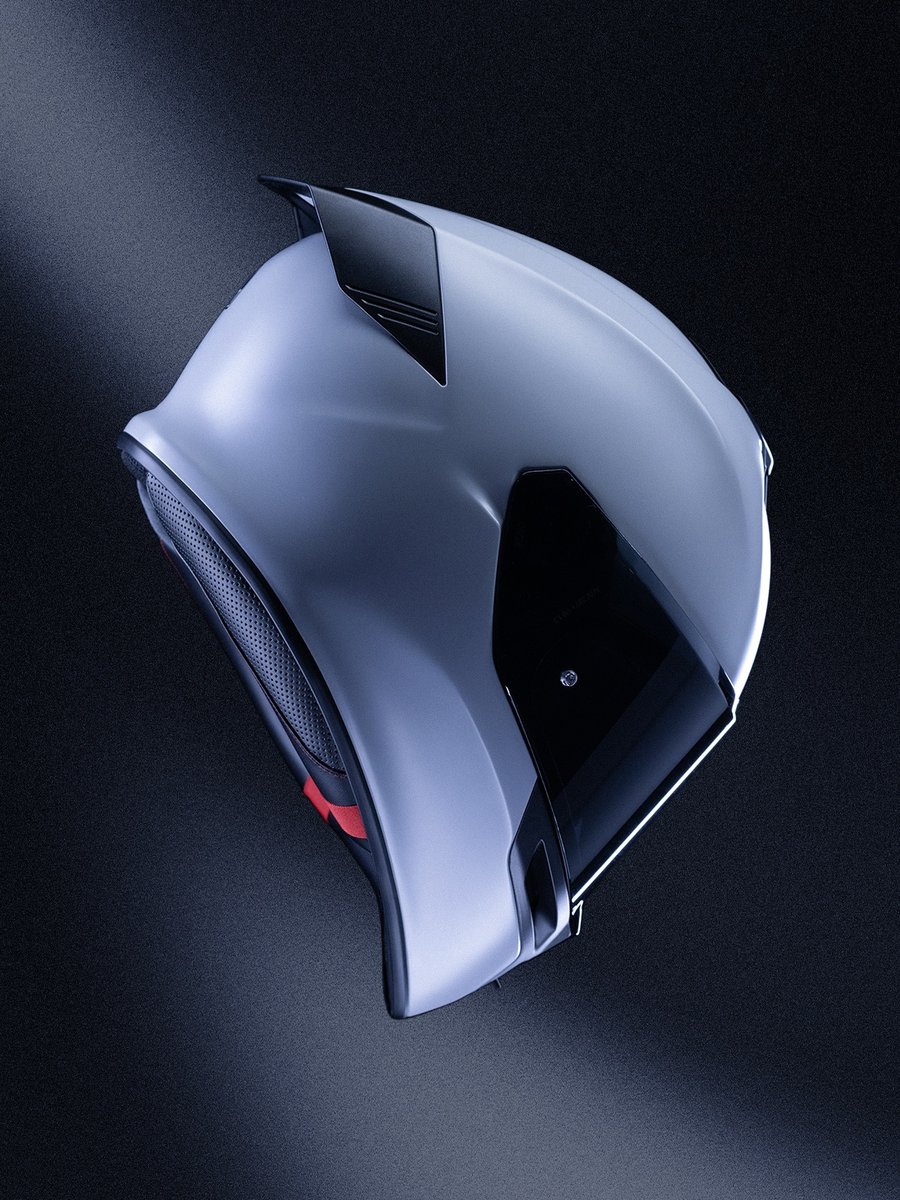
A multi-density EPS, for example, lets designers build the inner structure around the different protection needs of each area of the head. The shape of the lower side section of the shell can also be engineered to limit the consequences of an impact in an area as vulnerable as the collarbone. That is the principle behind the collarbone-protection profile AGV uses.
More Shell Sizes Make for a More Compact Helmet
Safety is not the only thing shell design affects, though. It also drives the overall weight of the helmet and how bulky it is.
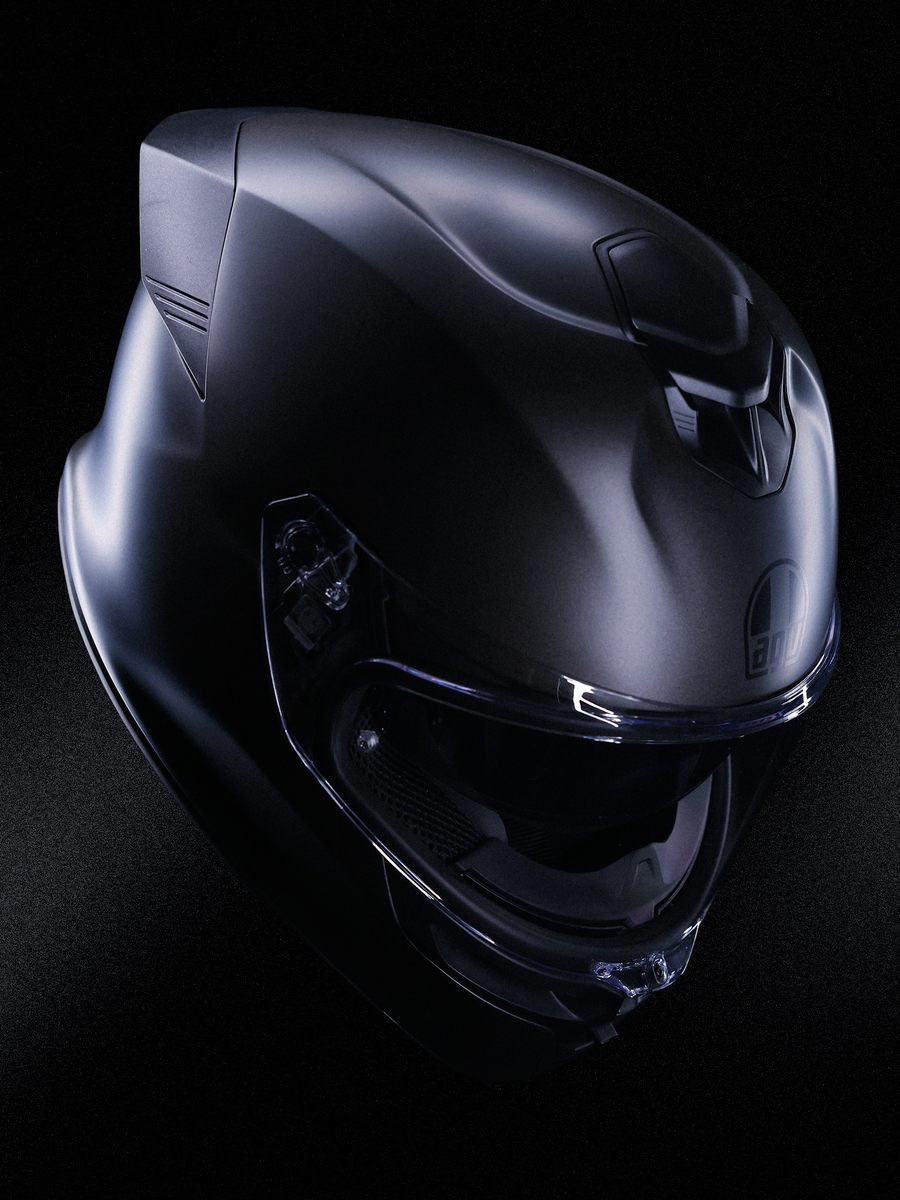
Specifically, it is worth looking for helmets built in several shell sizes, so the outer structure is perfectly proportioned to the rider's actual head size.
A helmet made with a single shell size, by contrast, has to fit heads of very different dimensions. The result is an outer shell that is larger than it needs to be in the smaller sizes, which adds both bulk and weight.
Efficient Aerodynamics Matter on the Road Too
When people talk about sport helmets, aerodynamics usually brings to mind very high speeds and track riding. But even on the road at moderate speeds, the helmet sits in a constant stream of air. A properly designed profile manages that flow and keeps your head stable, limiting the movements that turn into neck fatigue over, say, a long stretch of highway. In a sport road helmet, aerodynamic development also helps cut wind noise and turbulence, for a quieter ride.
A Wide Field of Vision Is Essential on the Road
On the road, seeing clearly what is happening around you matters enormously, since you are tracking vehicles, intersections, obstacles, and movement that can appear at the very edge of your field of vision.
That is why, when choosing a full-face sport helmet for road riding, it is worth paying attention to the visibility the visor offers. A wide field of vision gives you a fuller read of your surroundings and makes scanning the road feel natural, without constantly turning your head. It is the thinking behind AGV's Ultravision technology, which extends the horizontal field of vision to 190°.


Then there is fogging, which shows up as soon as the temperature drops or the air turns damp. A Pinlock lens fitted to the inside of the visor keeps your view clear when conditions encourage condensation, while the micro-opening system holds the visor slightly open but locked in place, letting more air circulate.
A built-in sun visor is another useful feature if you ride every day, because it lets you adapt quickly to changing light without swapping visors or reaching for sunglasses.
Ventilation Has to Work at Every Speed
A sport road helmet has to handle very different conditions. In city traffic speeds are low and there is little airflow to work with, while on a highway transfer the air hitting the helmet increases considerably.
Plain air vents are not enough. The system has to be designed to channel the flow through the helmet effectively, drawing in cool air and pushing out warm, humid air, while still letting you close the openings when the temperature drops. Airflow design can also draw on CFD (computational fluid dynamics) simulations, which model how the fluid, in this case air, behaves and allow ventilation to be optimized on screen.
The Fit Has to Stay Comfortable for Hours
A full-face sport helmet for road riding has to be comfortable to wear, especially on a ride that lasts a full day or more. So try the helmet on before you buy it and, if you can, keep it on for several minutes to check for pressure points that would become irritating over time.
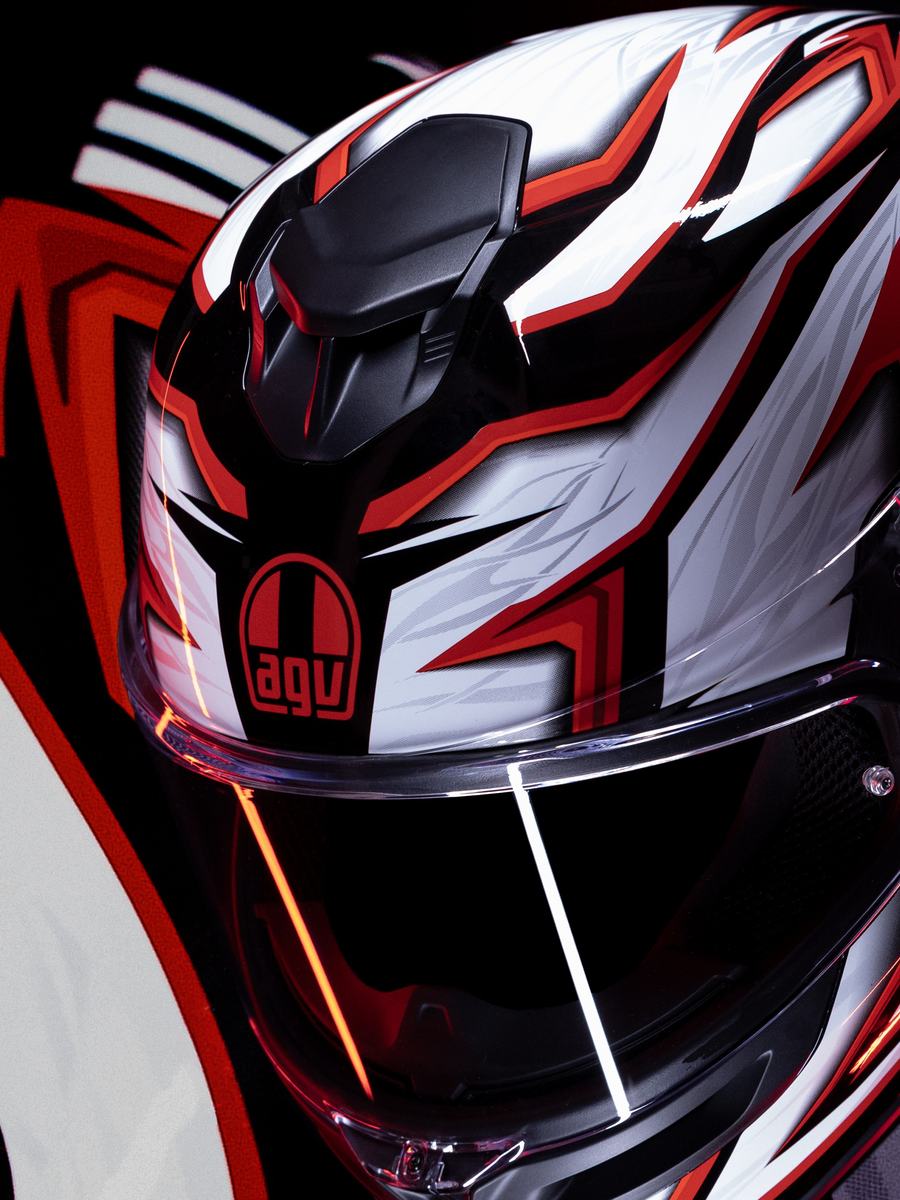
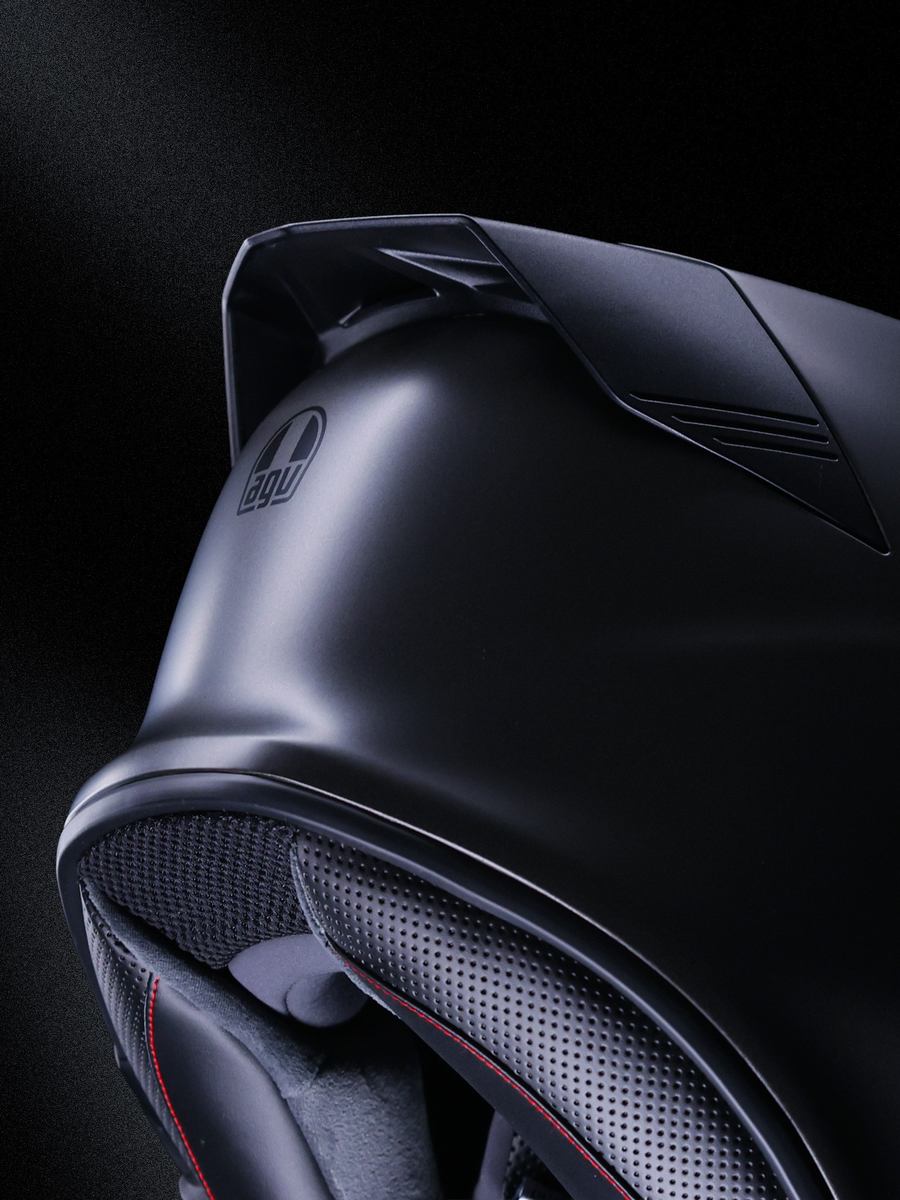
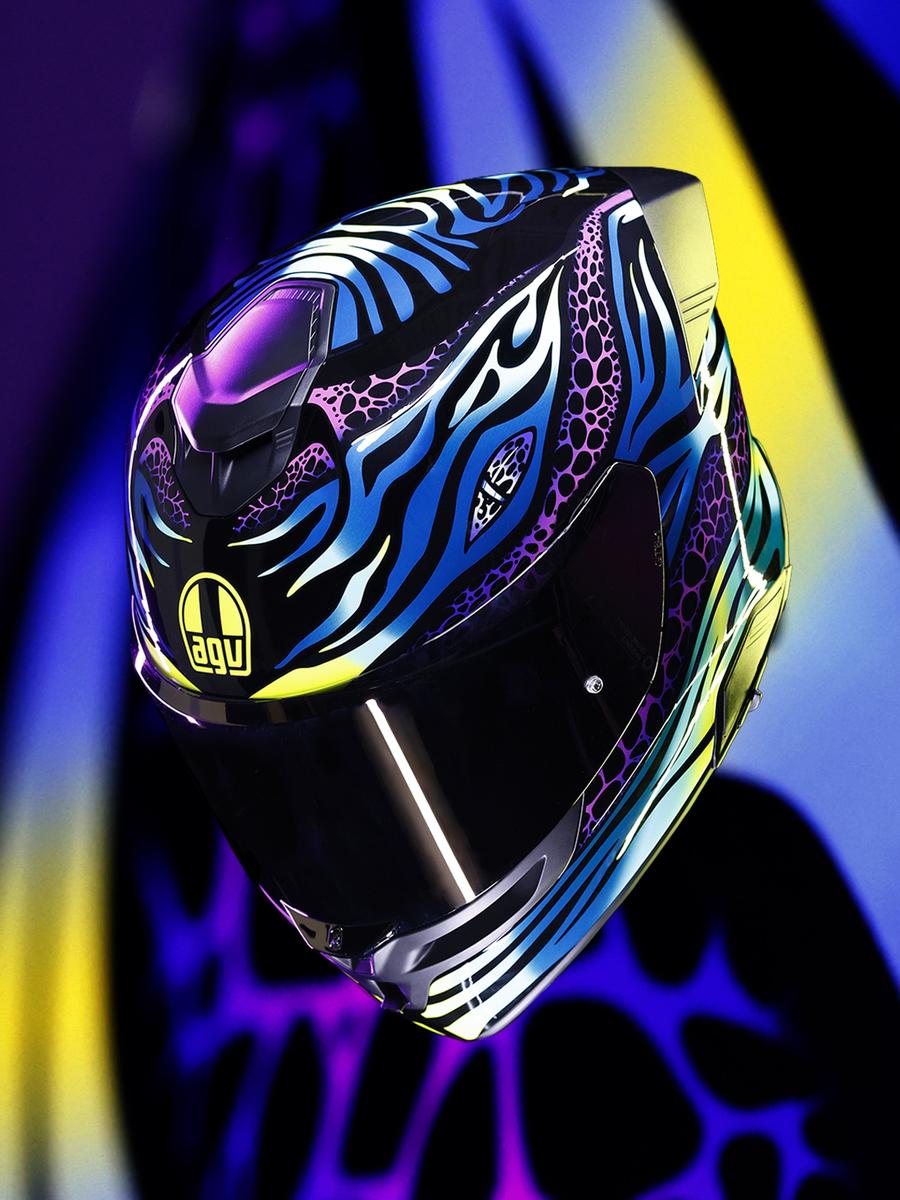
Materials play an important part as well. In AGV liners, for example, Shalimar and Ritmo fabrics are used according to the needs of each contact area, while DrySpeed technology speeds up sweat absorption.
Being able to remove and wash the liner is particularly important in a helmet you use often. Sweat, dust, and moisture build up with use, and easy access to the padding keeps hygiene and comfort where they should be for longer.
Practicality in a Sport Road Helmet
It is often the less conspicuous details that show how far a helmet was designed with everyday use in mind.
Features such as the option to fit an intercom, an anti-fog system, a sun visor, removable and washable liners, and eyewear compatibility do not make a helmet more 'sporty' in the strict sense, but they do make it far more versatile.
Sporty and Versatile Can Coexist
Choosing a sport helmet for road use, then, is not simply a matter of looking for an aggressive shape or equipment built for high speeds. The real difference lies in the balance between features that have to work together, namely protection, aerodynamics, visibility, ventilation, and comfort.
It is this balance, more than looks alone, that makes a sport helmet genuinely suited to the road, not a product built for an extreme situation, but a helmet that is there for the rider every time they get on the bike.