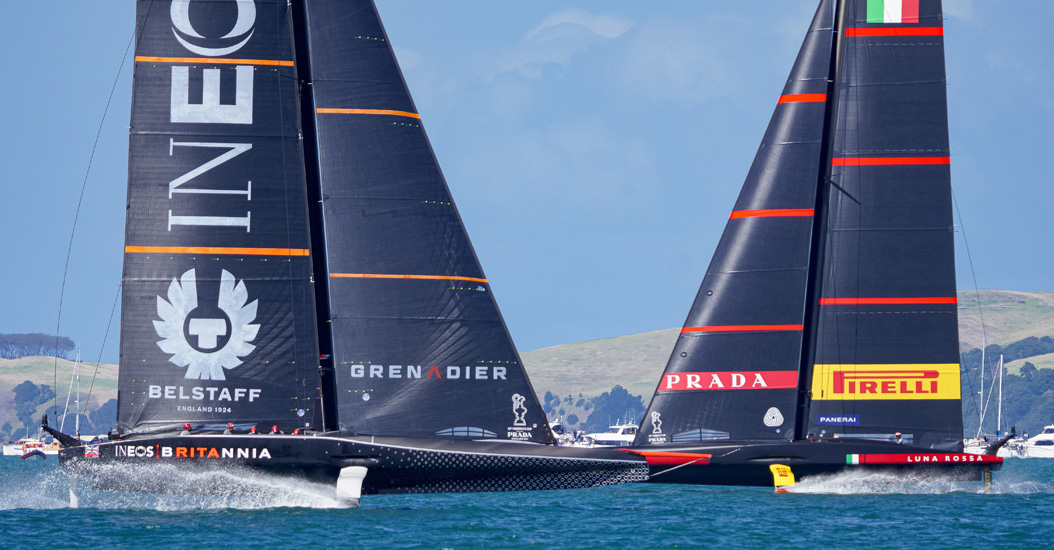
La 36e America's Cup sponsorisée par PRADA est prête à prendre le départ en Nouvelle-Zélande, au large d'Auckland. Luna Rossa Prada Pirelli et Emirates Team New Zealand, respectivement challenger et defender, se rencontreront du 6 au 15 mars dans une série de régates qui permettront de déterminer le voilier et l'équipage les plus rapides de tous les océans. Les deux équipes portent le Sea\-Guard de Dainese, un gilet de protection développé spécifiquement pour les régates. D’ailleurs, pourquoi ces athlètes doivent-ils se protéger ?
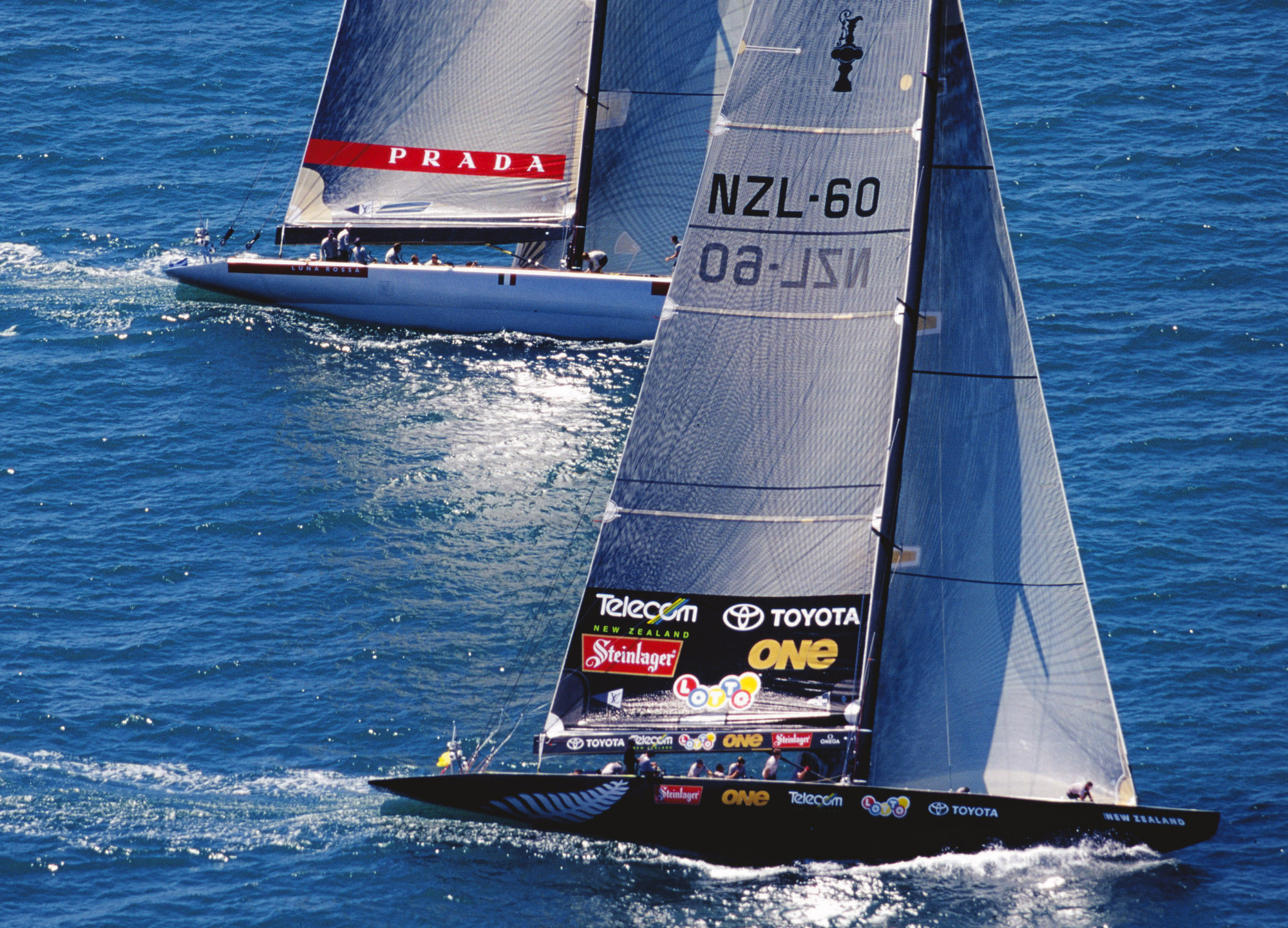
Luna Rossa et Team New Zeland en 2000. © Studio Borlenghi
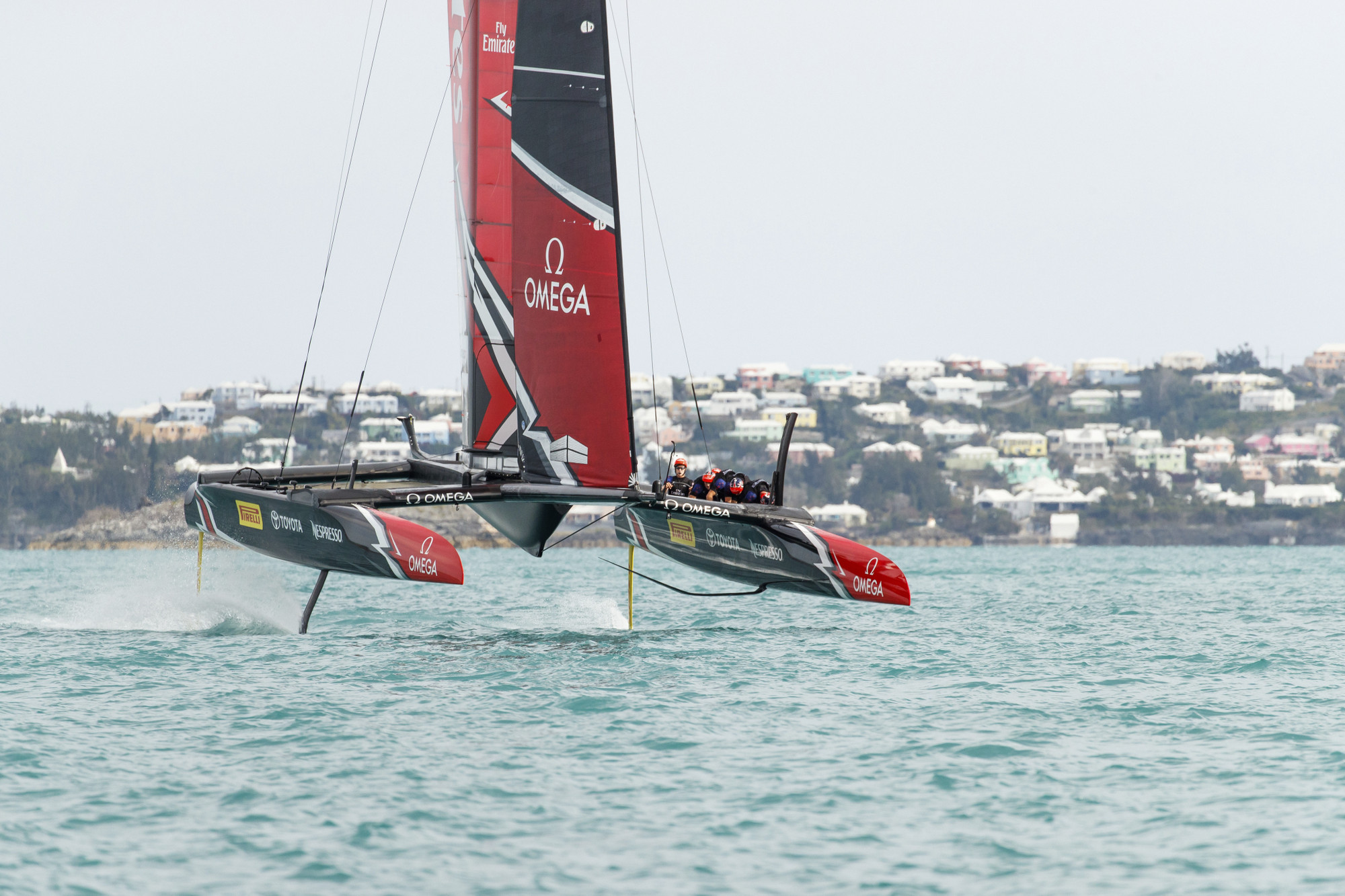
Emirates Team New Zealand en 2017
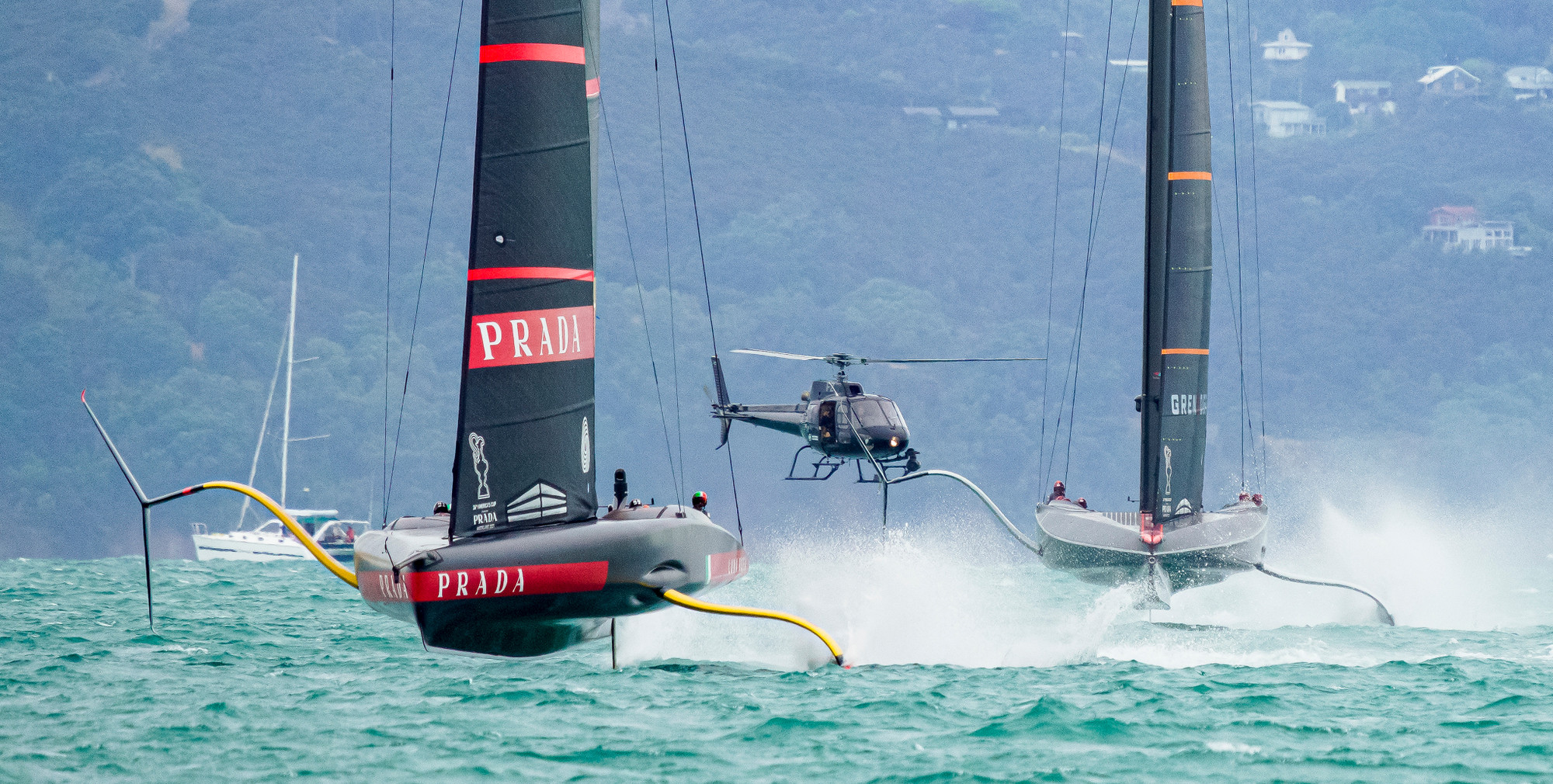
Les monocoques volants de la 36e America's Cup
Les voiliers de la classe AC75
Les bateaux de la Coupe de l'America ont connu une évolution conceptuelle spectaculaire, qui a transformé les monocoques traditionnels en véritables monocoques volants, et ce, en quelques années seulement. Un monocoque volant a la particularité d'être équipé de foils, des ailes mobiles commandées par un système hydraulique et positionnées sur les côtés de la coque. En créant de la portance, elles permettent au bateau de se lever et de sortir littéralement de l'eau, en laissant immergées uniquement les parties terminales de l’un ou des deux foils ainsi que du safran.
Le principe physique qui sous-tend ce phénomène est le même que celui du vol d’un avion. Lorsqu'une certaine vitesse est atteinte, comme c'est le cas pour un avion avec l'air, la force perpendiculaire à la direction du mouvement pousse le corps vers le haut et lui permet de s'élever pendant la navigation. En somme, le foil immergé dans l'eau se comporte de la même façon qu’une aile dans l'air.

Luna Rossa et Team New Zeland en 2000. © Studio Borlenghi
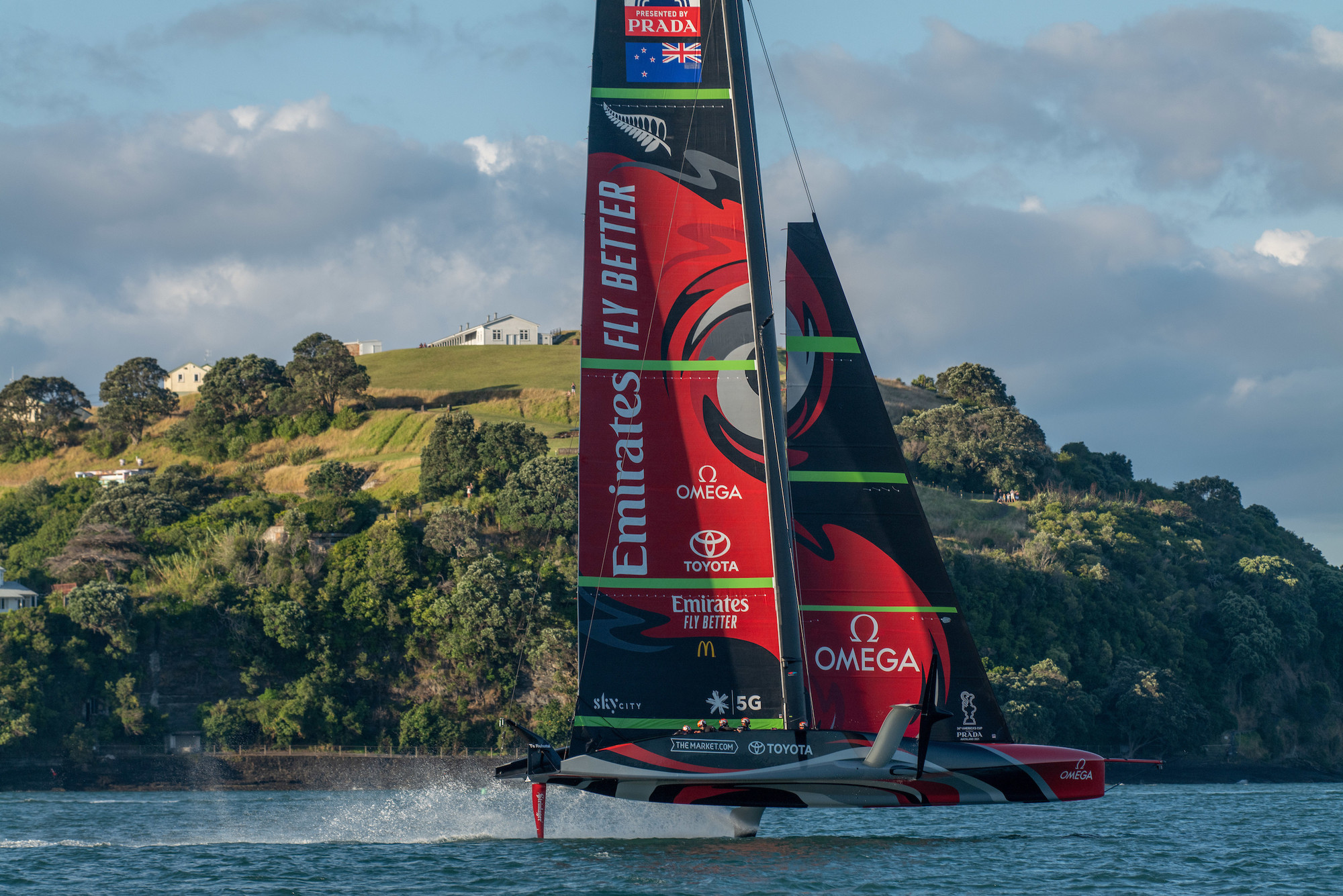
Emirates Team New Zealand en 2017
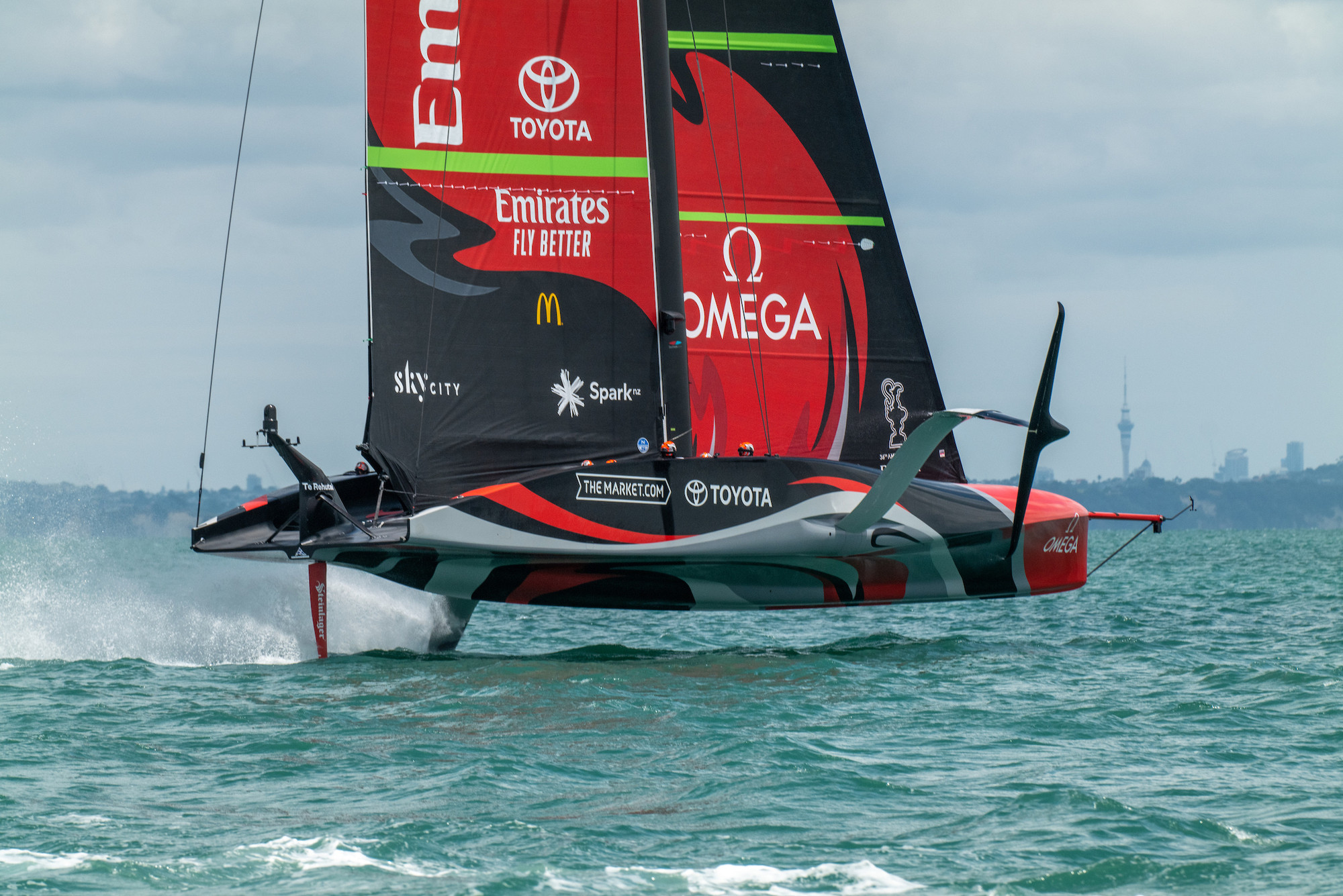
Les monocoques volants de la 36e America's Cup
Why raise the hull out of the water? Because doing so drastically reduces friction and significantly benefits speed. Top speeds are now around 50 knots, or almost 100 kilometers per hour. Boats have evolved to the point that the hulls are designed according to the laws of aerodynamics, rather than those of hydrodynamics, since they remain immersed only when stationary and when maneuvering at reduced speed.
The forces at play
AC75 class boats are 75 feet long (just under 23 meters), weigh 6.5 tons and have a total sail surface area of more than 200 square meters. It is precisely these numbers, and a crew of eleven sailors, that allow them to reach the aforementioned speeds and create the forces that now see sailing classified as an extreme sport in every respect.
Luna Rossa et Team New Zeland en 2000. © Studio Borlenghi
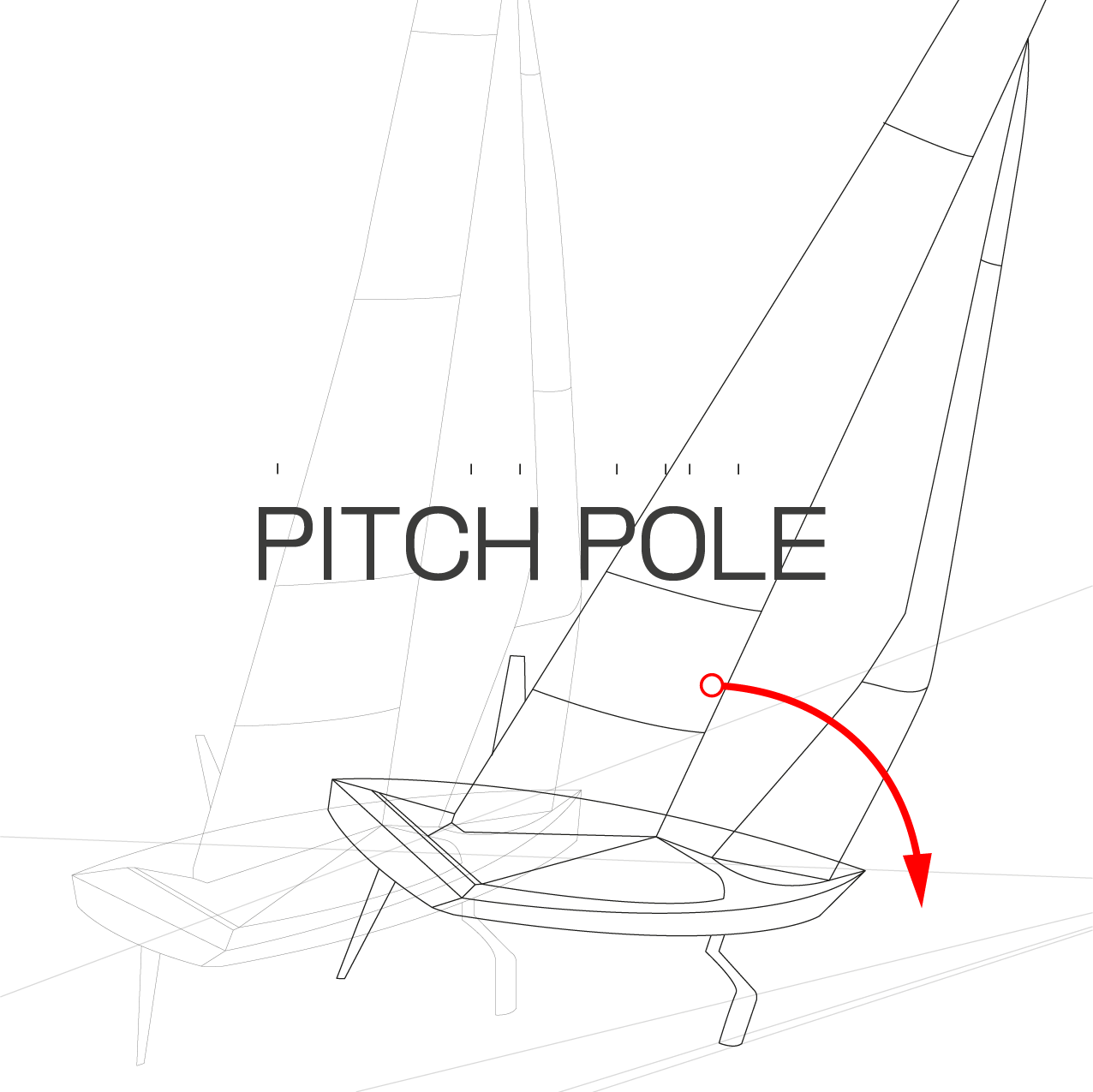
Emirates Team New Zealand en 2017
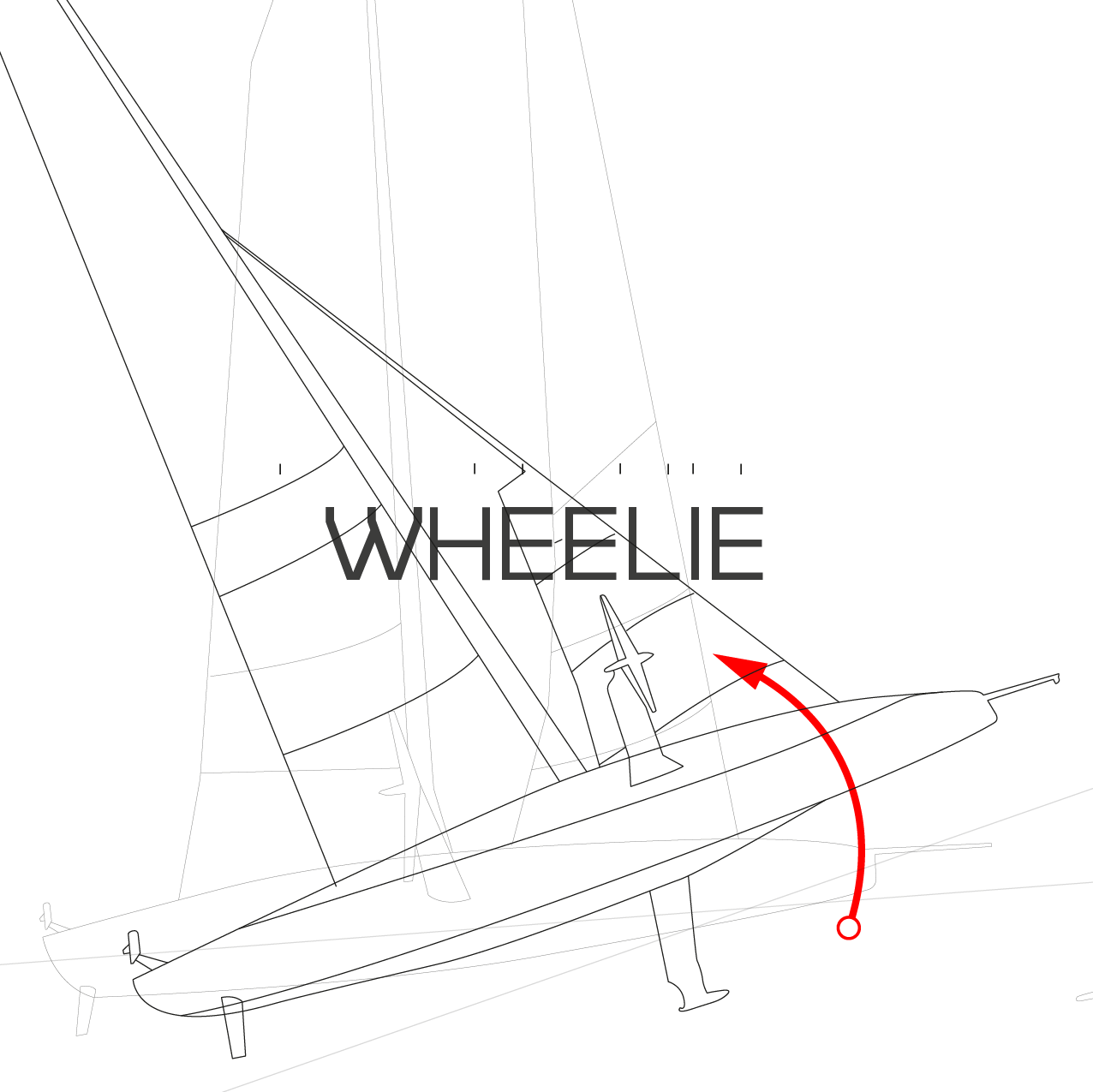
Les monocoques volants de la 36e America's Cup
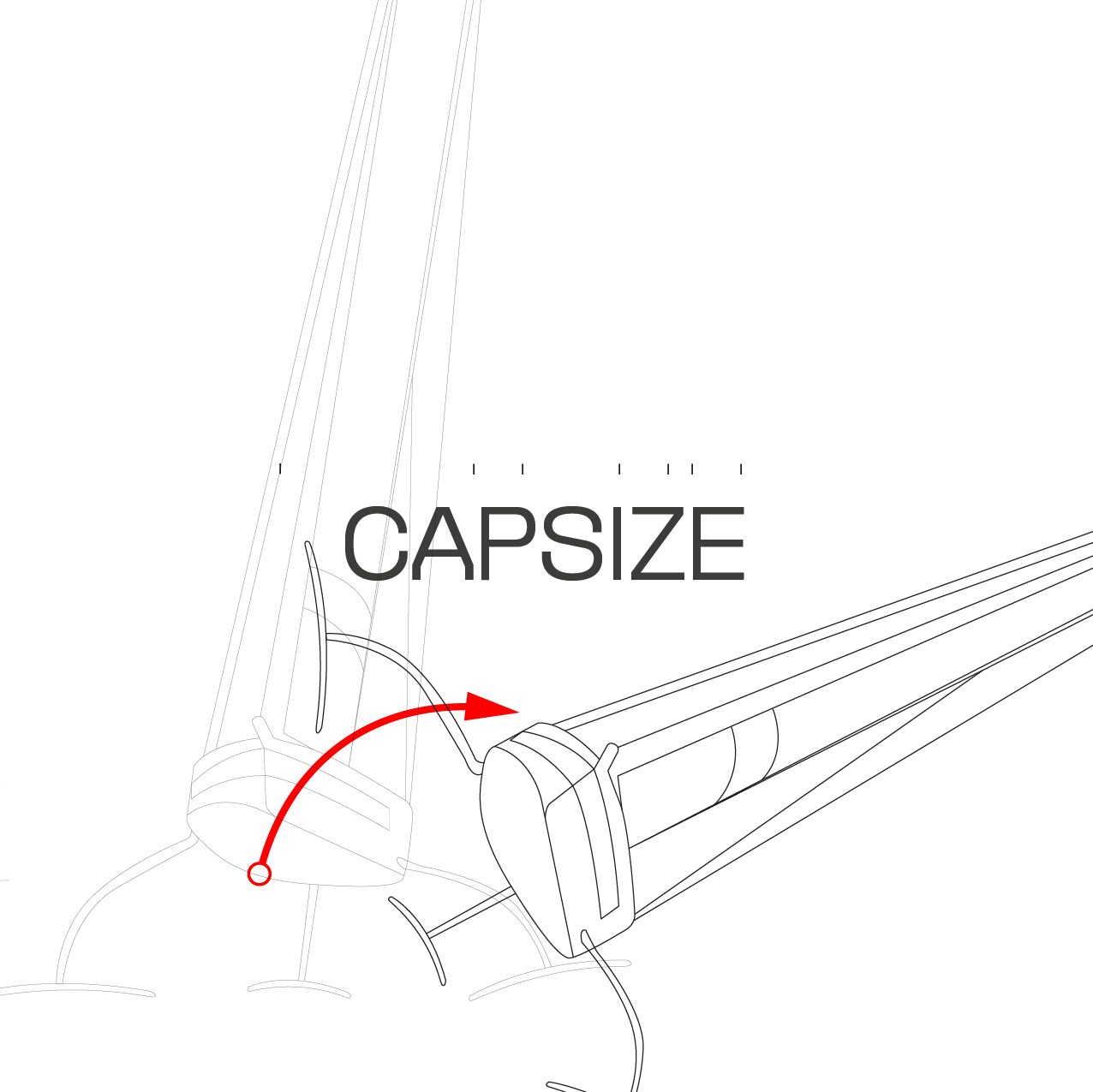
The most classical accident, the capsize
The lateral G-force to which teams are subjected on board reaches 1.5G and, in these extreme situations, any setback can have catastrophic consequences. During the initial stages of the PRADA Cup, the preliminary competition that decides who will be the challenger in the America's Cup, various accidents occurred, one of which caused considerable damage to a boat.
During the round robins, Patriot, American Magic’s monohull, capsized, which caused a leak in the hull and forced the US team to retire. Back in the semifinal race against Luna Rossa Prada Pirelli, Patriot was unable to qualify for the final phase. Other classic accidents to which these boats are prone are the so-called wheelie and the nose-dive, which occurs when the bow sticks into the water and causes a sudden deceleration. Emirates Team New Zealand experienced this during a test race against Ineos Team UK.
var options = { clientId: "dainese", xcontentId: "05412baa-d9d9-46a8-92b4-76dfbb2996ad", sessId: "tbdyoh" }; var player = THRONContentExperience("kjomd", options);
With respect to the flying catamarans of the 35th edition, the flying monohulls of the 36th America's Cup presented by PRADA mark a clear departure from the past and boast increasingly impressive performance. But increased performance also means more risk for the crews. Hence the need for greater on-board safety, as Dainese supports both teams vying for the world’s oldest sporting trophy with its protective technology.