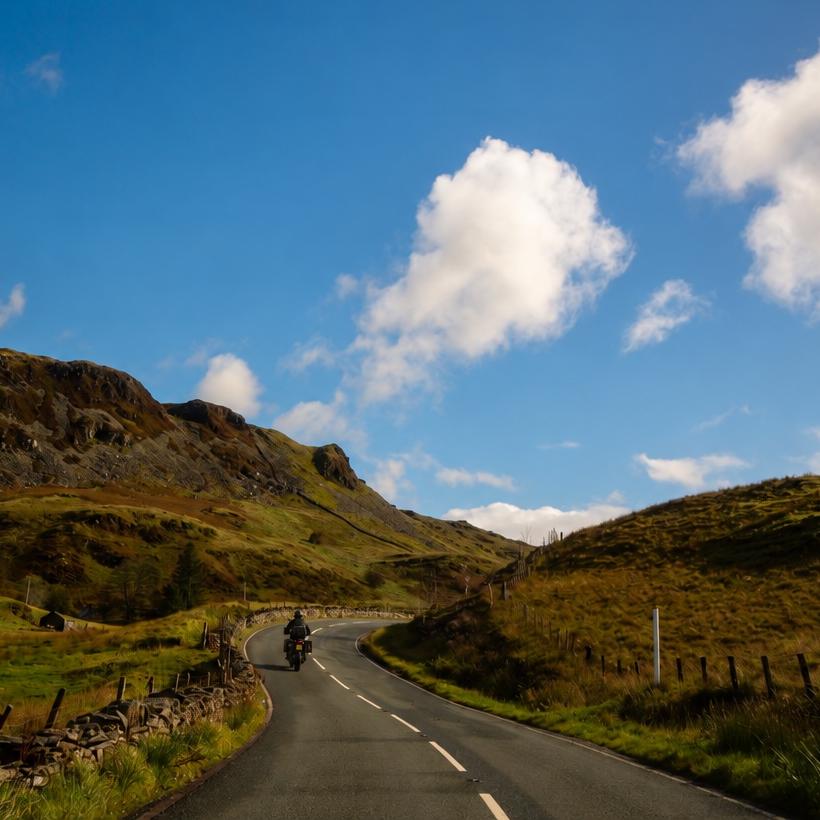


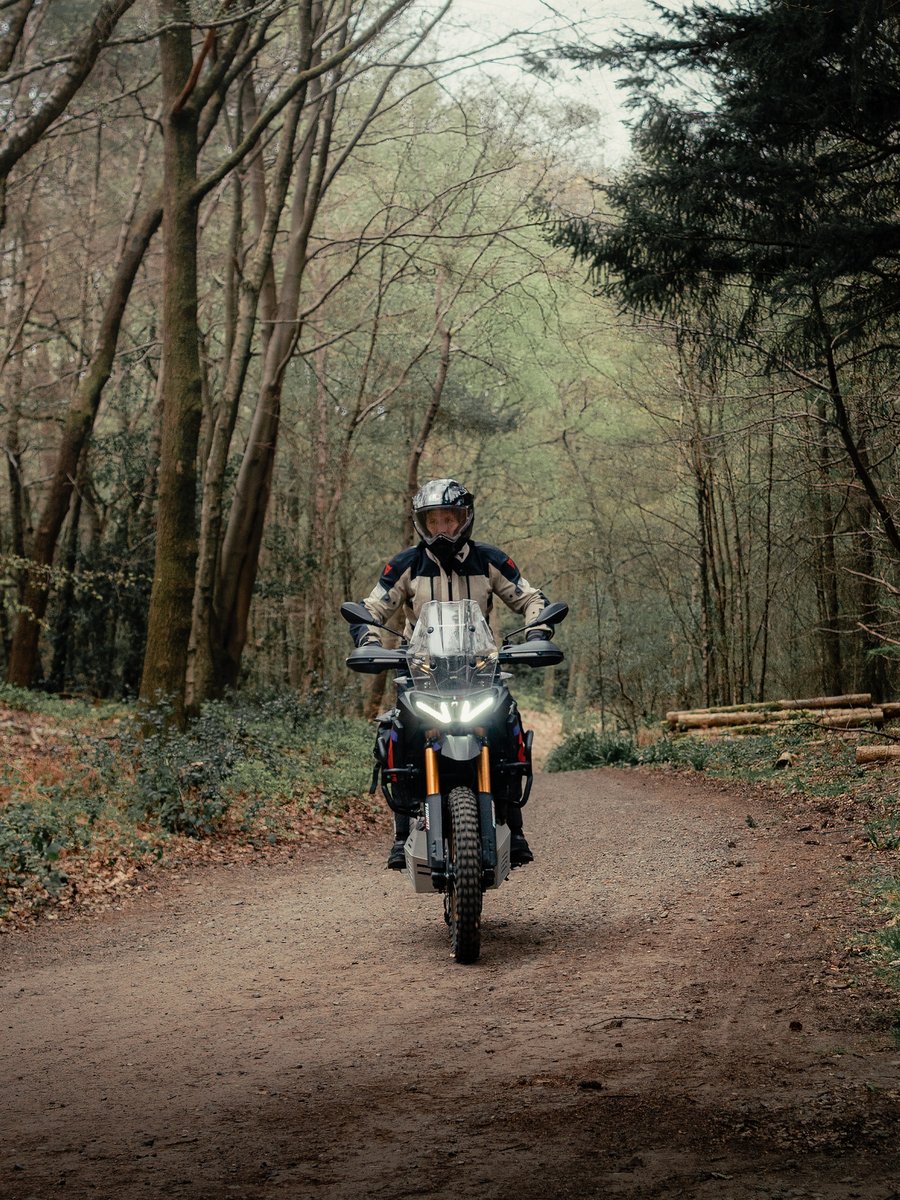
The original idea was simple. I would leave London behind for a few days and ride across Wales on back roads, mountain passes, and dirt roads, avoiding the main routes as much as possible. Riding an Aprilia Tuareg 660 Rally, I planned the trip in two distinct parts from the start. The first two days would be spent training at the Sweet Lamb Adventure Bike Academy, followed by a stretch of solo exploration in the Welsh mountains.
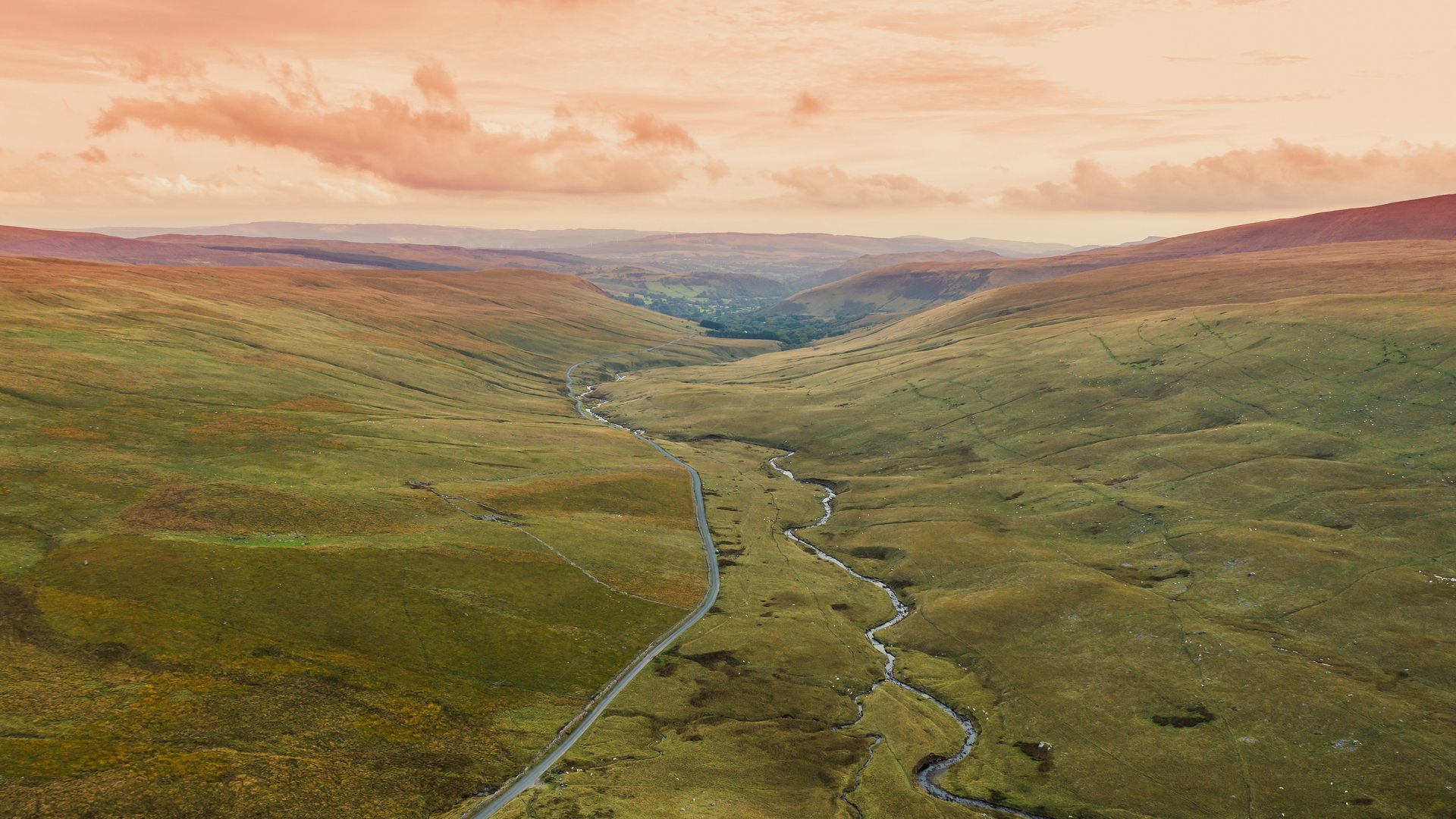
Even the forecast seemed to confirm that everything would go according to plan. Sunshine and mild temperatures were forecast for the whole trip, and for the first few days Wales looked exactly as I had pictured it, with narrow country roads winding through green valleys, rolling hills crisscrossed by dry-stone walls, and long stretches of almost perfectly still countryside where the weather seemed to offer a welcome, almost unexpected break.
The first day's weather was mixed, with a few brief showers and sudden breaks of sunshine, while the second brought almost perfect conditions, with clear skies and surprisingly warm temperatures for early April. The real journey was set to begin on the third day, once training was over and I had gotten comfortable on my new Aprilia.
That was precisely when the picture changed completely.
Weather changes everything
Overnight, the weather took a sudden turn for the worse. The open views of the Welsh uplands gave way to a bank of low, dense clouds, swept rapidly across the mountainsides by the wind. Even on the approach to the passes, it was clear that the situation was changing much faster than expected. The rain grew steadily heavier, and the wind picked up as the road climbed.
At first things seemed manageable, but mile after mile my margin of comfort kept shrinking. On some exposed sections, where the road ran between open valleys and wind-battered slopes, just holding a clean line took total concentration and every bit of my experience. In the mountains, crosswind gusts completely change how riding feels. They hit without warning, push the bike sideways, and force you to correct your line constantly.
The most critical moment came about halfway across the first mountain pass. One gust, stronger than the rest, pushed the bike toward the edge of the road, enough to make me feel how quickly things could get even worse. On the way down, a second gust shoved the bike toward the opposite lane just as traffic was approaching from the other direction. What had been ‘complicated’ had now officially become ‘dangerous’.
At that point, it was clear that the trip could not go on.


Stopping is the hardest decision
Once back down in the valley, I put off the decision to scrap the entire plan for a few hours, in the vain hope that conditions would improve. Sitting in a small roadside café, watching the wind and rain lash the windows harder and harder, I realized that waiting would change nothing. If anything, I could see that the forecast for the next few days called for steadily worsening conditions. Continuing toward the mountains would have meant needlessly exposing myself to an increasingly risky and miserable situation.
In hindsight, the only real alternative would probably have been to turn around sooner, while I was still climbing. In a place like Wales, however, especially in the mountains near the coast, the weather can change extremely fast. Conditions that seem favorable in the valleys can change completely within a few miles, and vice versa, but not this time. The bad weather was not going to let up.
When turning back is the right call
This motorcycle trip in Wales did not fundamentally change my approach to trip planning. Having ridden in very different environments, from the desert in summer to mountain passes in rain, fog, and cold, I know that unpredictable conditions are often part of the journey itself. What really makes the difference, and what saved me this time, is the ability to recognize when to stop.
Prepare for the conditions, not just the route
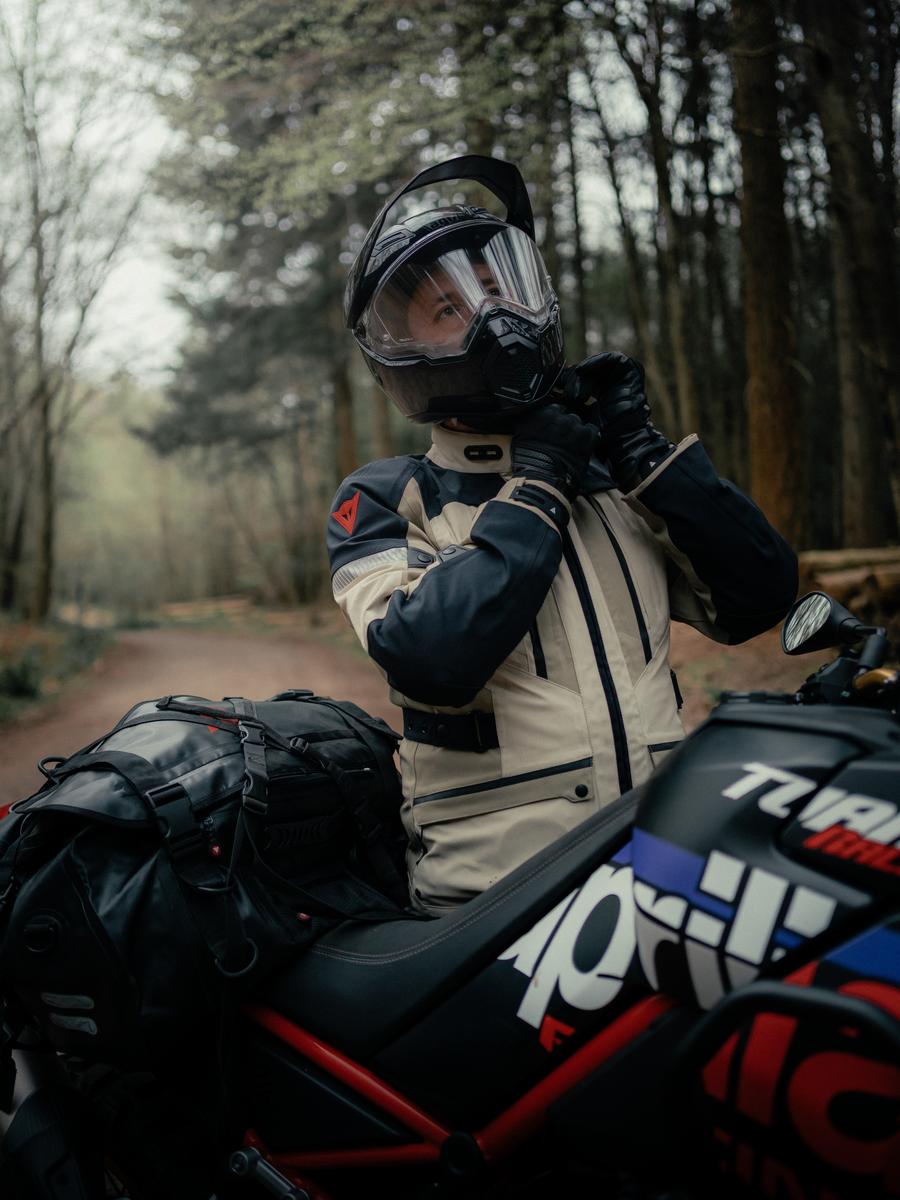
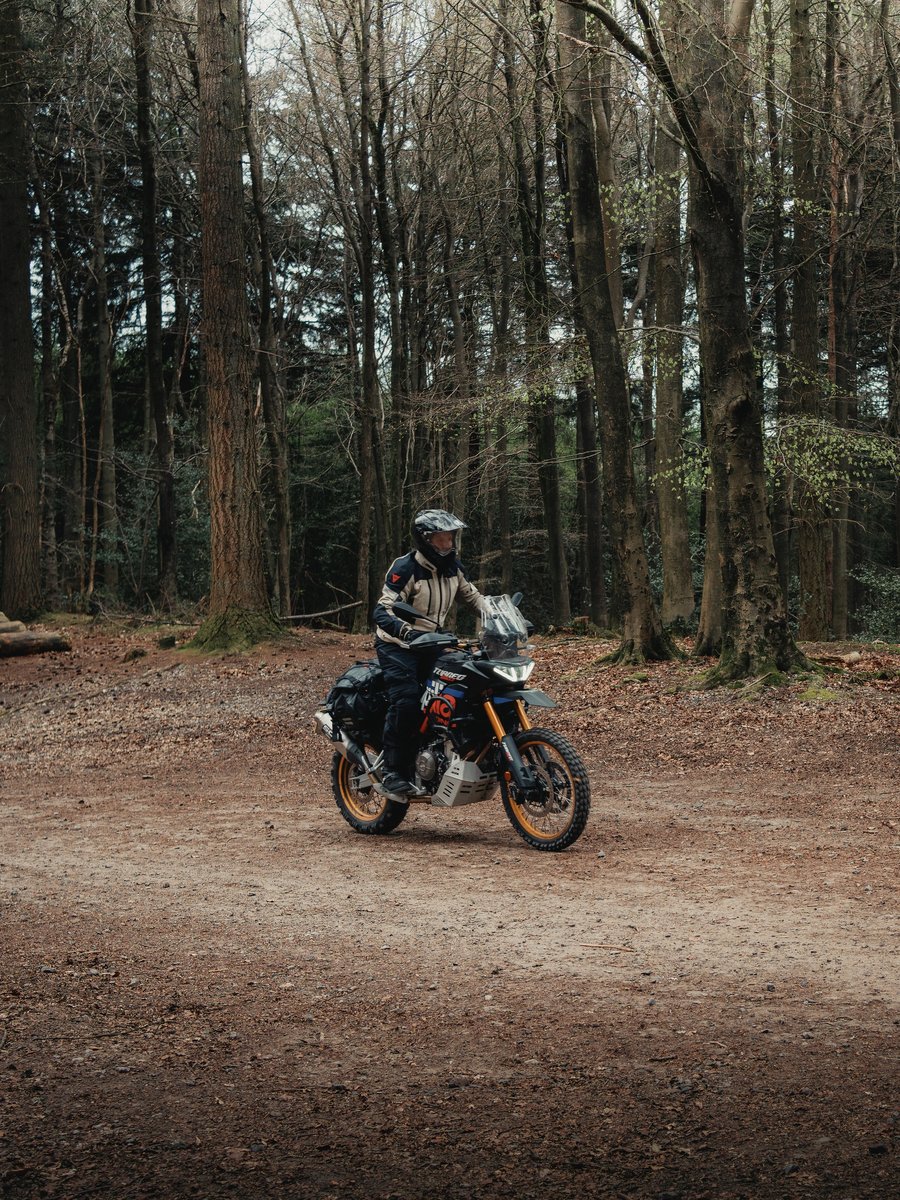
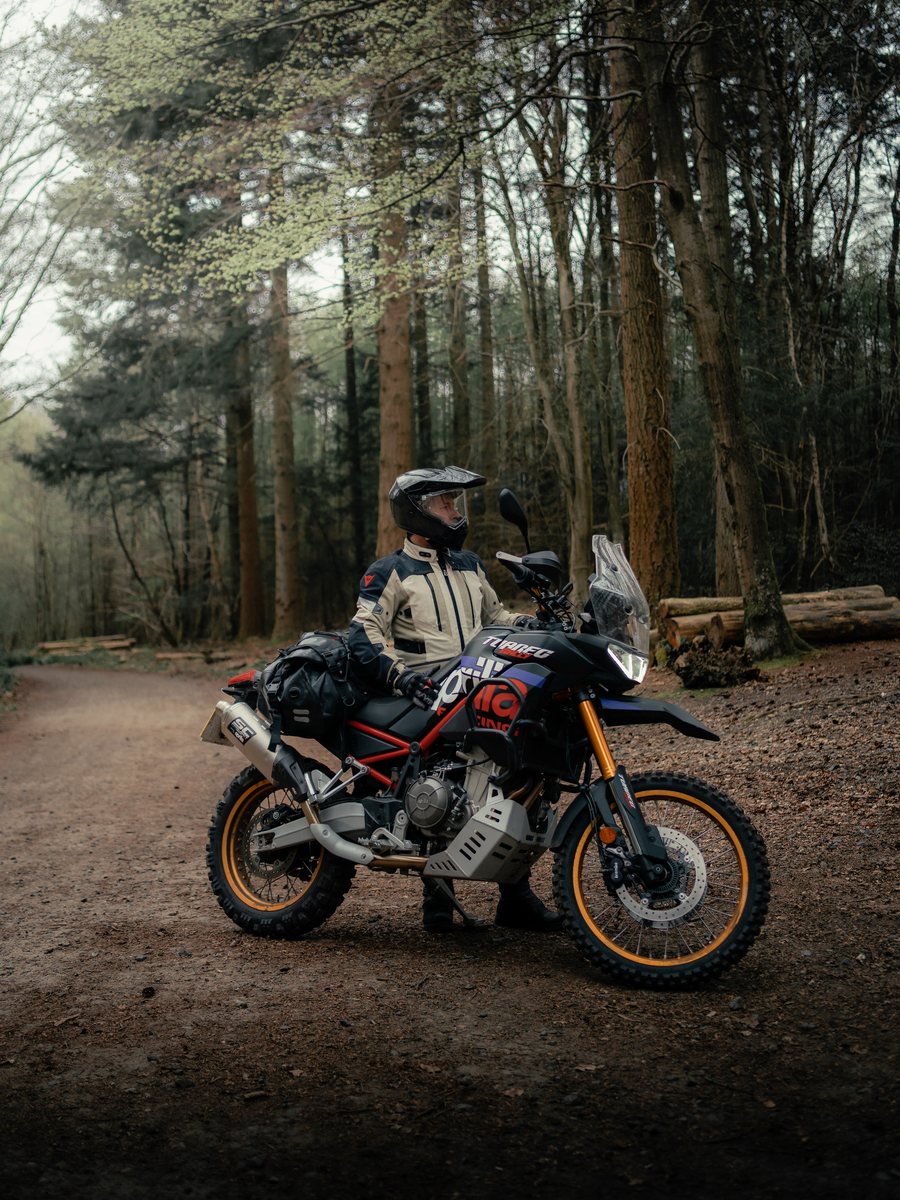
In conditions like these, beyond being truly comfortable on the bike you are riding, your gear inevitably plays an important role too. For a motorcycle trip through Wales in early April, you need gear that can handle changing conditions, especially given how quickly temperature and weather shift at altitude. On this trip, I wore the Dainese Mangen jacket and pants for the first time, and they handled these swings particularly well, offering protection from the rain, good ventilation when it got warmer, and effective insulation when temperatures dropped sharply.
Of course, no gear can change outside conditions or eliminate risk entirely. What it can do is keep additional problems, like being wet and cold, from piling onto an already difficult situation, so you stay clear-headed even when conditions change fast. This is worth keeping in mind too. Riding with frozen hands or feet is not just unpleasant but also unsafe, because it dulls your concentration and slows your reactions. That is why preparing and dressing properly for the conditions you are likely to meet is not just a matter of comfort.
Not every trip ends as planned
In the end, very little remained of my original plan to tour Wales by motorcycle. With strong winds, constant rain, and increasingly unstable conditions, it would have made no sense to continue the trip or to create the content I had planned.
Not every trip follows the route you pictured when you set out. Sometimes the smartest decision is not to push on at all costs but to recognize when to stop and save the rest for another time.