

Whether it’s skiing with friends or a club race, we all need to protect our hands. Everyone needs to protect themselves, from champions to beginners – against the wind, cold, ice and above all collisions and abrasion. Depending on the level of skiing and the activity, however, your needs may vary, so the ideal type of ski glove might be different, too. Curious to find out how to choose ski gloves?
What should you consider when choosing a ski glove?
When choosing a ski glove, our requirements boil down to three key factors:
- Heat
- Practicality
- Protection
On the one hand, there’s the need to cover yourself against the cold. Finding yourself with frozen hands after a short time is an experience we’ve all been through sooner or later, and we know it’s not at all pleasant. It’s even worse in bad weather, when being exposed to snow or rain for hours actually transfers the cold and moisture to us, irreparably ruining the day.
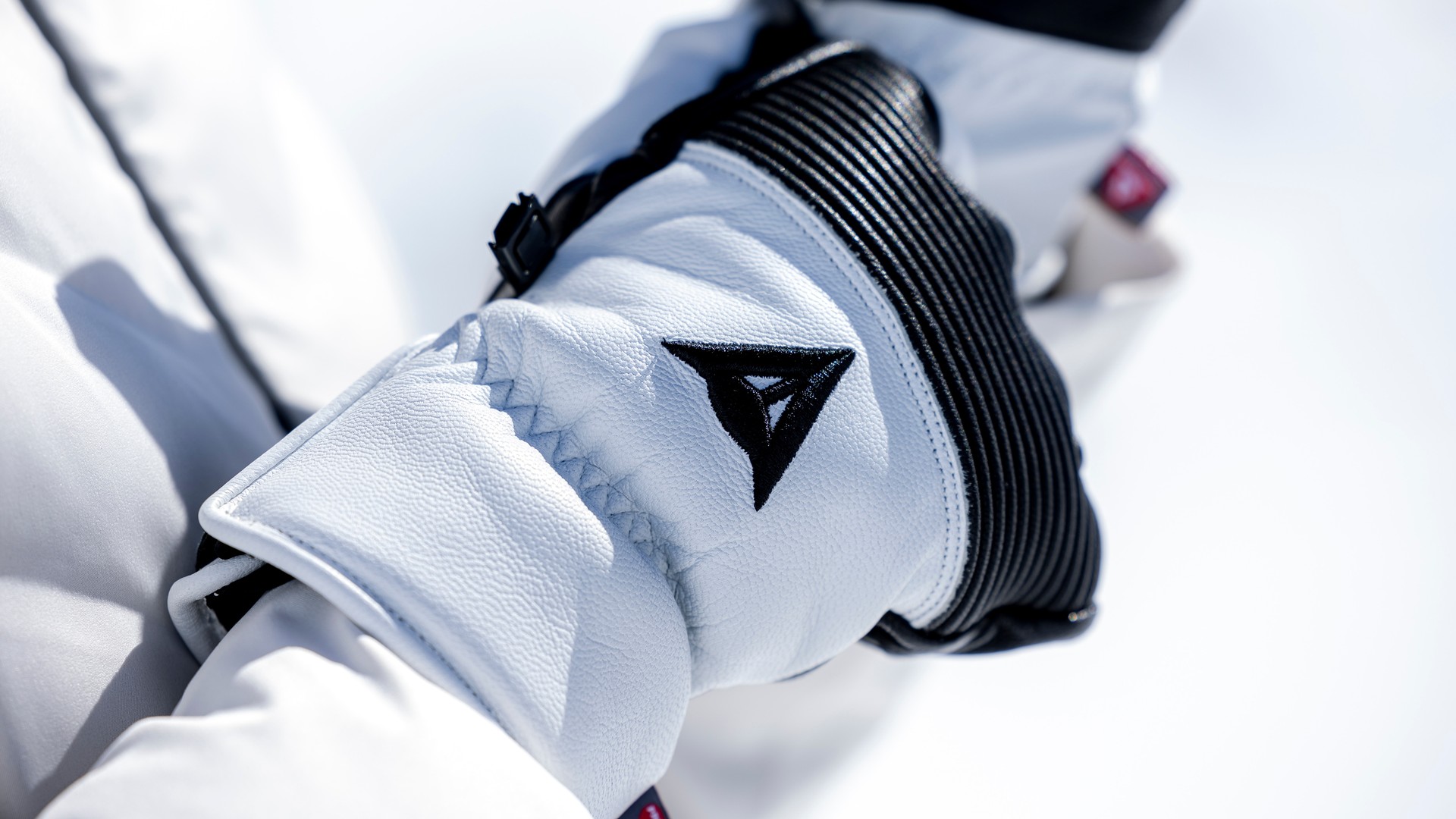
Dainese Leather Gloves
That’s why we need to pay attention to our choice of gloves, no less than to all our other articles of clothing. So there are different models of ski gloves that meet different heat needs, depending not only on the weather but also on our personal perception of the cold.
From that perspective, mitten models are the warmest, because they let your fingers stay in contact and keep each other warm. Speaking of which, be careful also to choose the right glove size. They mustn’t be too tight, or they’ll decrease circulation, increasing the sensation of cold. At the same time, they mustn’t be too large so as not to get in the way of moving.
On the other hand, there’s also a need for practicality – fingerless gloves like mittens are impractical when you have to do things like opening backpacks, using a cell phone or carrying skis and poles. That’s where a five-fingered glove is definitely more helpful.
As the level of skiing and speed increases, the need for protection increases, too. It means that more experienced skiers will need to look for a model developed from that perspective, with integrated rigid plates and the use of particularly resistant materials.


Choose a protective glove no matter what your level
When it comes to choosing ski gloves, at Dainese we follow a philosophy that’s simple but can’t be taken for granted – whether you’re approaching the world of skiing for the first time or facing yet another slalom race makes no difference – the needs will change, so the model of glove will too, but not the level of research and care that we put into designing them.
In general, even the most advanced and protective gloves lend themselves to less demanding skiing, leaving aside slightly greater bulk and stiffness. The reverse isn’t true, however, because professionals need more structured and protective gloves for safety when they hit the poles of the gates.
Versatile ski gloves
As we said, those approaching the sport have a particular need to feel at ease, wearing gloves that are comfortable in terms of heat but practical and versatile at the same time. On the outside, this type of glove is made using a combination of leather or water resistant fabric and stretch fabric, with reinforcements on the palm and fingers to protect against collisions and resist abrasion against the grips of the poles.
They use a synthetic insulating layer; one of the reference materials is Primaloft®, to protect against the coldest temperatures (Primaloft® is a synthetic alternative to down, but is more compact, water-repellent and maintains its insulating properties even when wet; it also dries much faster).
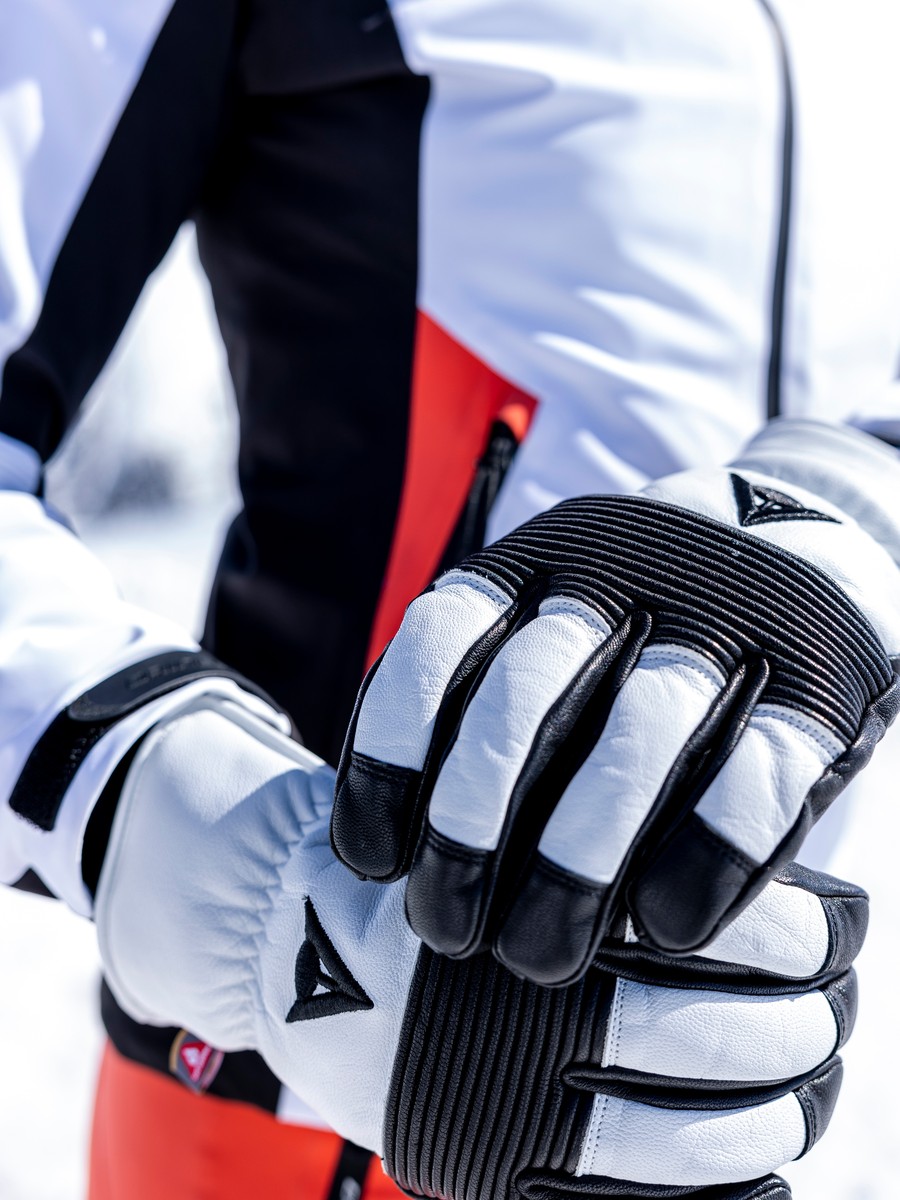
Dainese Leather Gloves
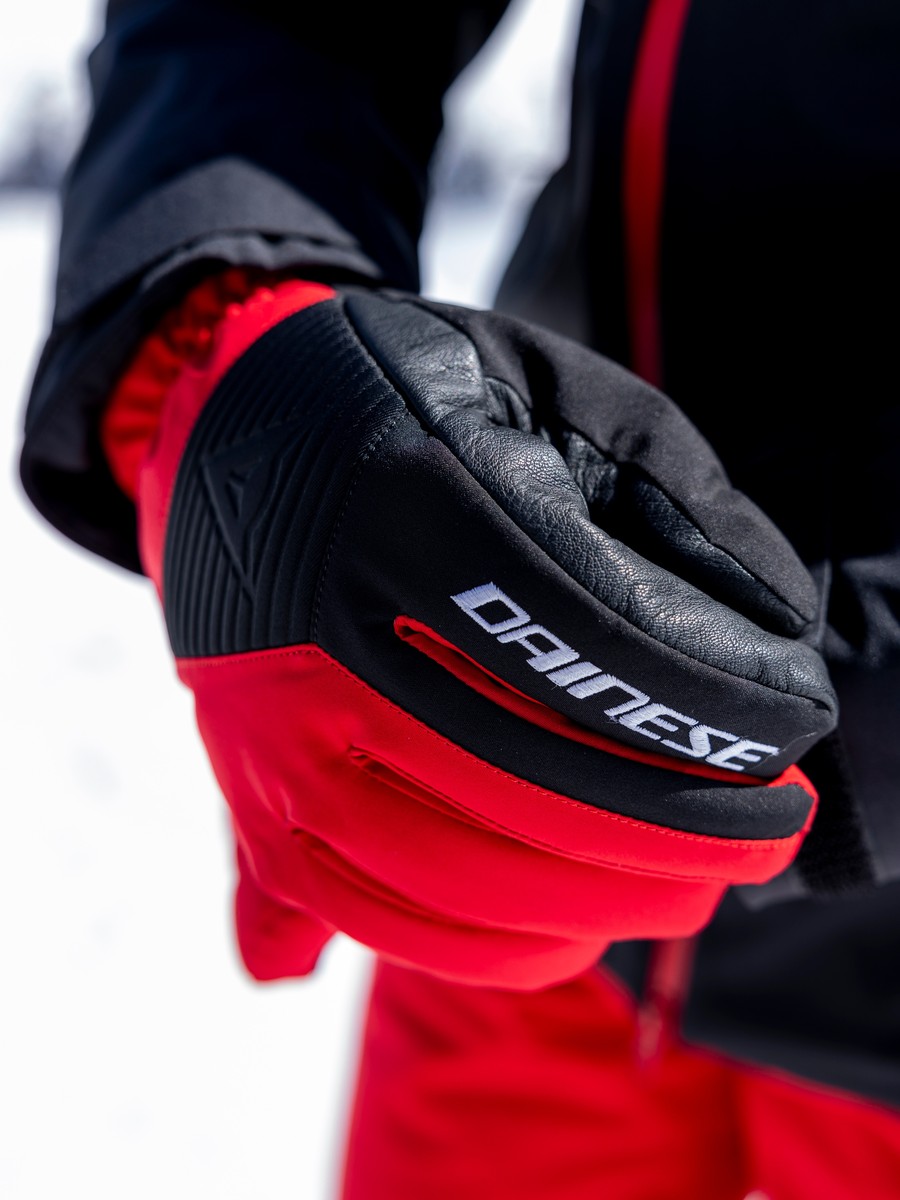
Dainese Sport Gloves
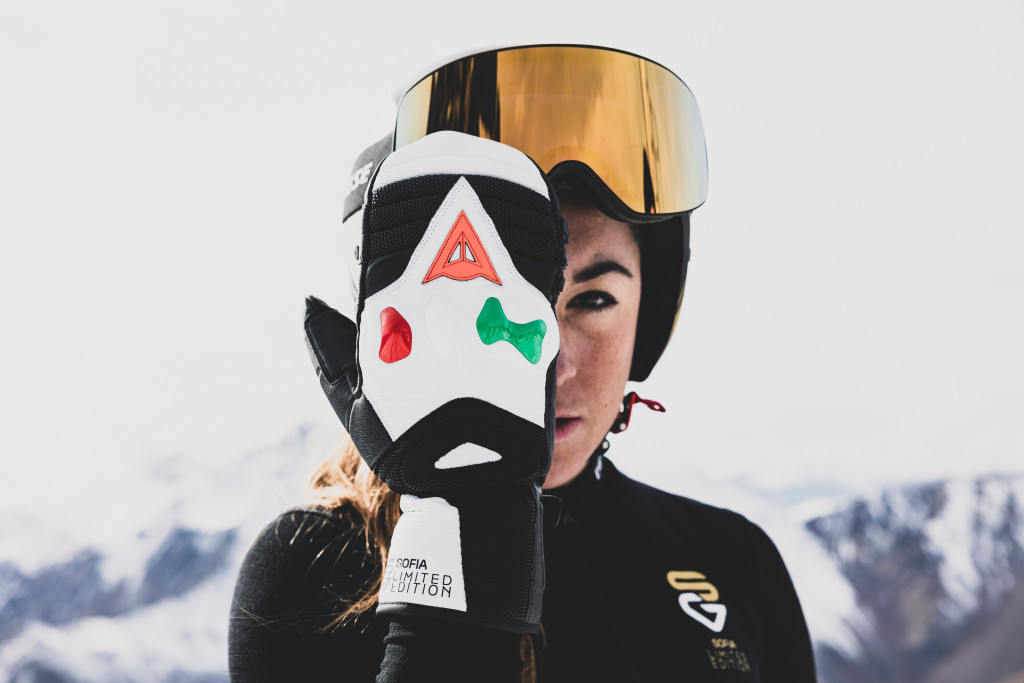
Dainese Ergotek Pro Mitten Sofia Goggia
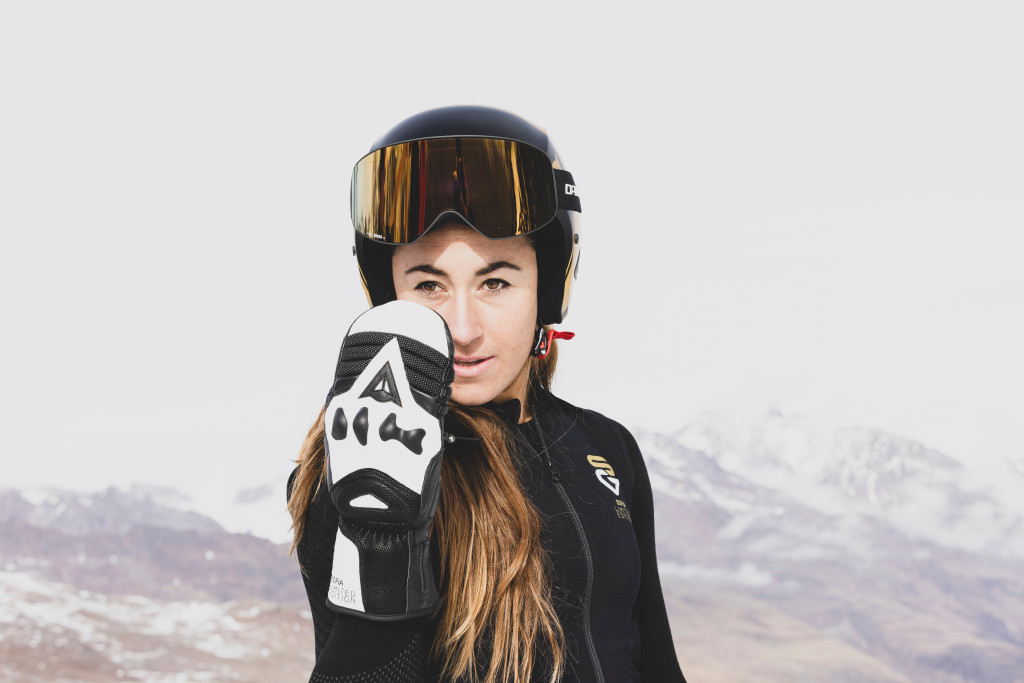
Dainese Ergotek Pro Mitten Sofia Goggia
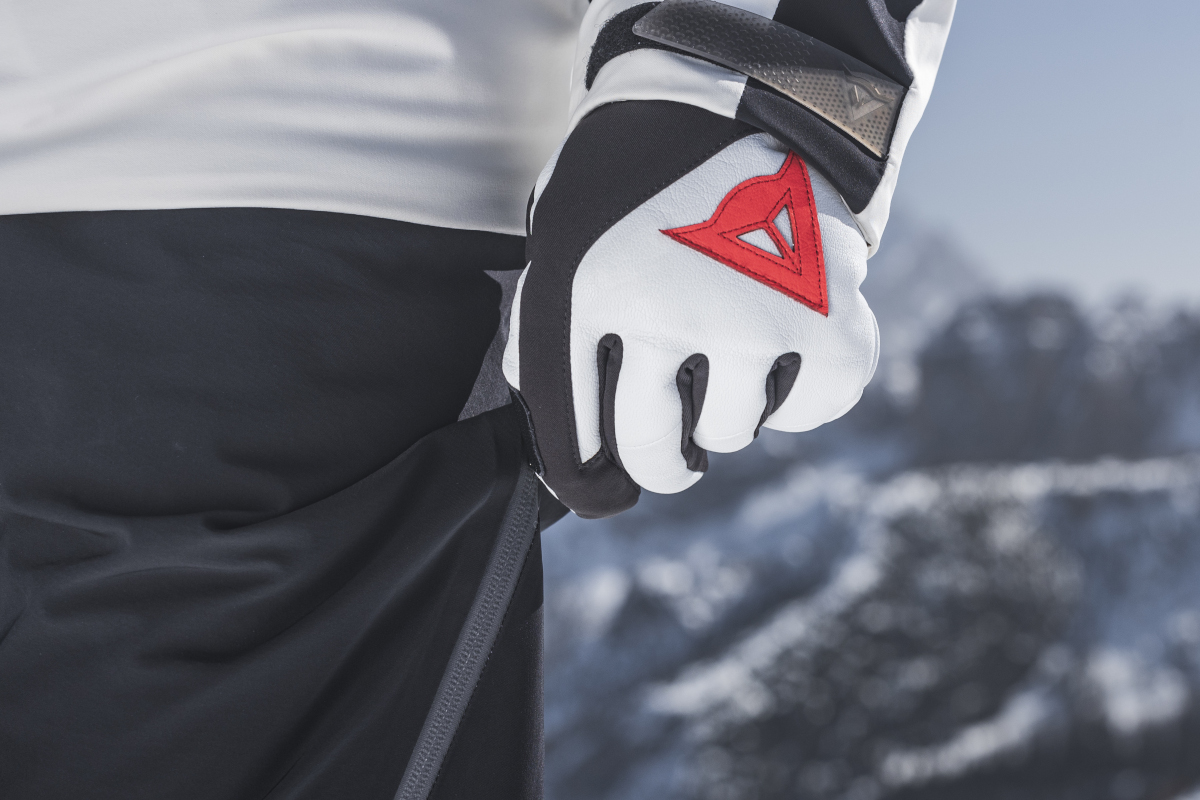
Dainese HP Gloves Sport
It’s better to opt for a short-cut glove, a solution that allows great practicality, offering little interference with the cuff of the jacket, while on the wrist it’s a good idea to have a strap or Velcro system to adjust the fit when the gloves are on.
Leather ski gloves
Those who want more support can choose a more high-tech glove, entirely made of leather with synthetic thermal lining, incorporating stretch panels as well as other reinforcing inserts on the palm of the hand.
Ski gloves inspired by racing
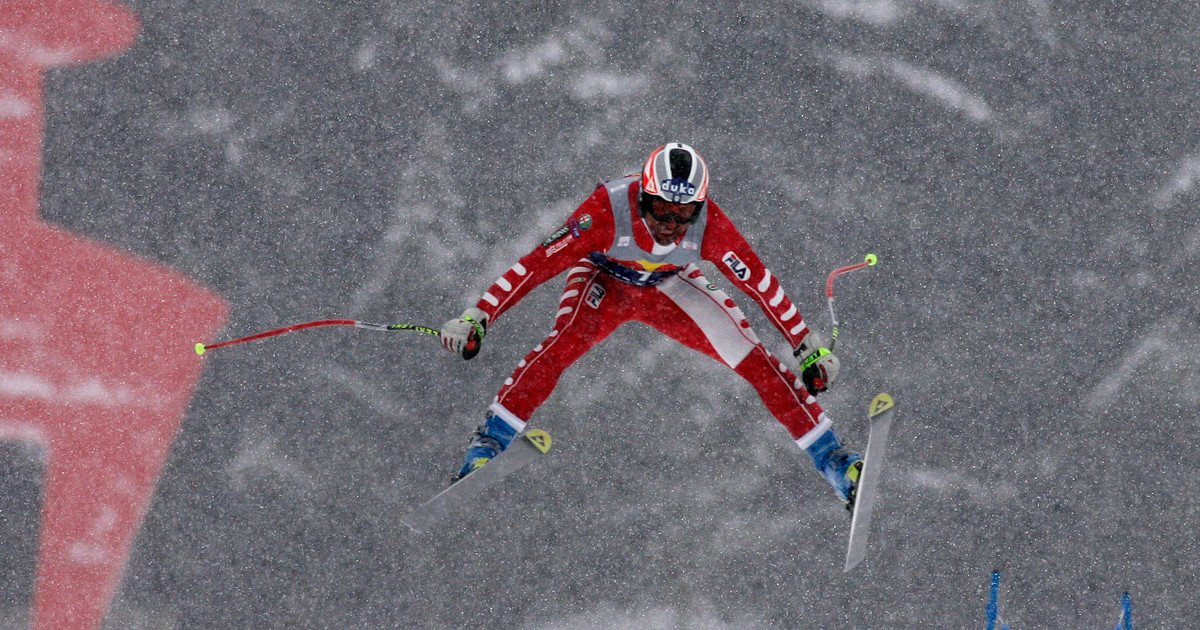
You might not think it, but ski glove protectors aren’t only designed to protect you against falls. Gloves with protectors are traditionally derived from races, and the main purpose of the rigid plates there is actually to protect from impact against the poles of the gates, in slalom, giant slalom, or other races. You do need to protect yourself against the ground as well as the pole, but above all when your hands brush against it, for support at the moment of maximum lean.
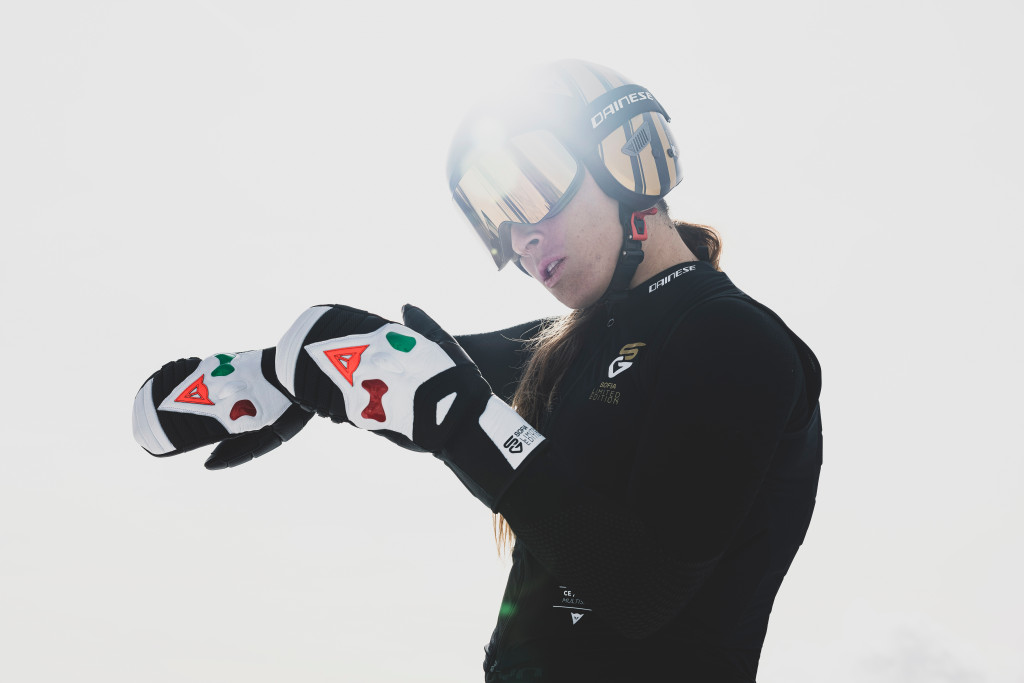
Dainese Ergotek Pro Mitten Sofia Goggia
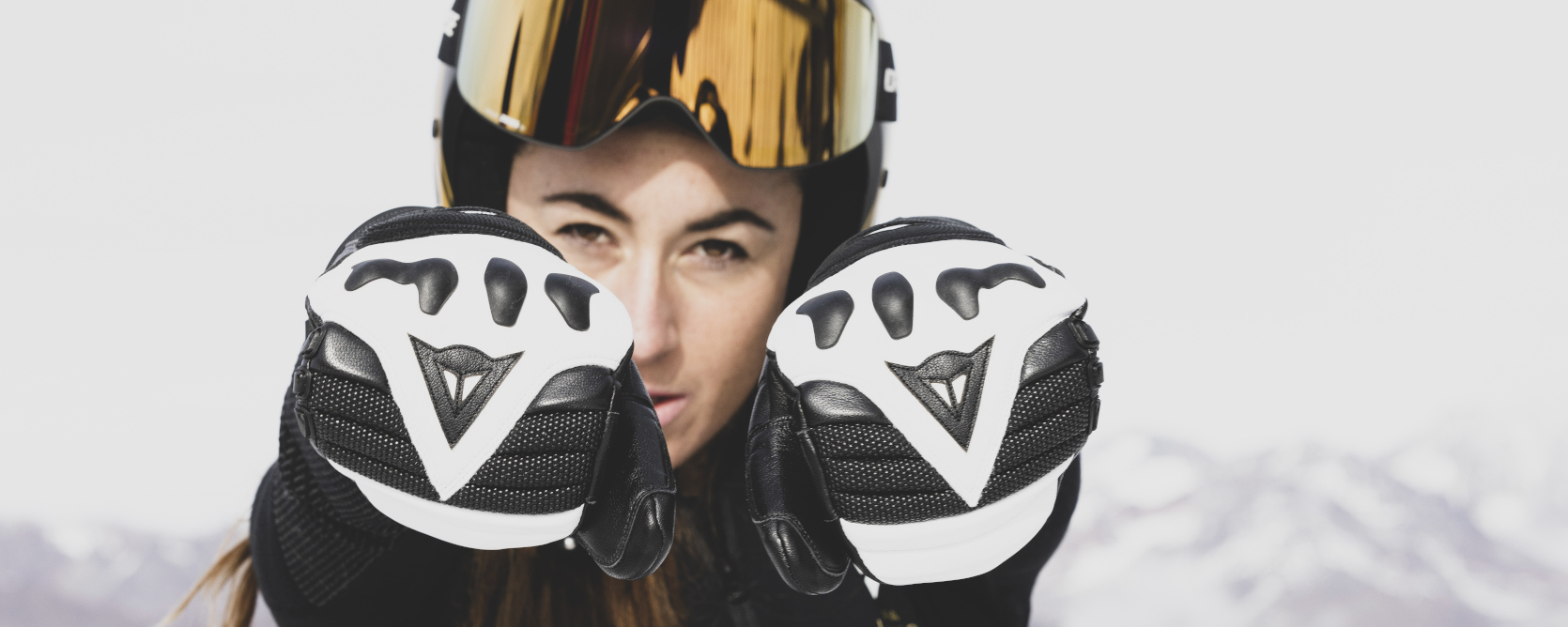
The main characteristic of racing gloves is that they usually incorporate advanced protective knuckles but above all positioned on the outside, to reduce friction as much as possible and aid sliding when your gloved fist brushes against the snow, in the action just explained above. The perfect example is the Ergotek knuckles, external hardshell protective gear in composite material, resulting from studies conducted on professional MotoGP™ riders’ gloves and designed to guarantee the highest level of impact protection without affecting finger mobility. Racing gloves of this type are made using a combination of leather and stretch fabric and their fastening can be adjusted down to the millimeter using a buckle on the wrist.
A further step is the use of fabrics engineered to resist abrasion such as SuperFabric® in the external area of the fingers and on the back. It’s a flexible material but has tiny rigid integrated plates on the outer side, useful for providing the resistance to abrasion and cutting that we mentioned, but without impairing freedom of movement.
As you’ll have understood, at Dainese our goal is to provide protection and maximum comfort, to put everyone in the ideal conditions for their best performance, regardless of skill level or type of skier. There isn’t a ‘best’ glove – there are the right gloves for every need. Choosing it is up to you.