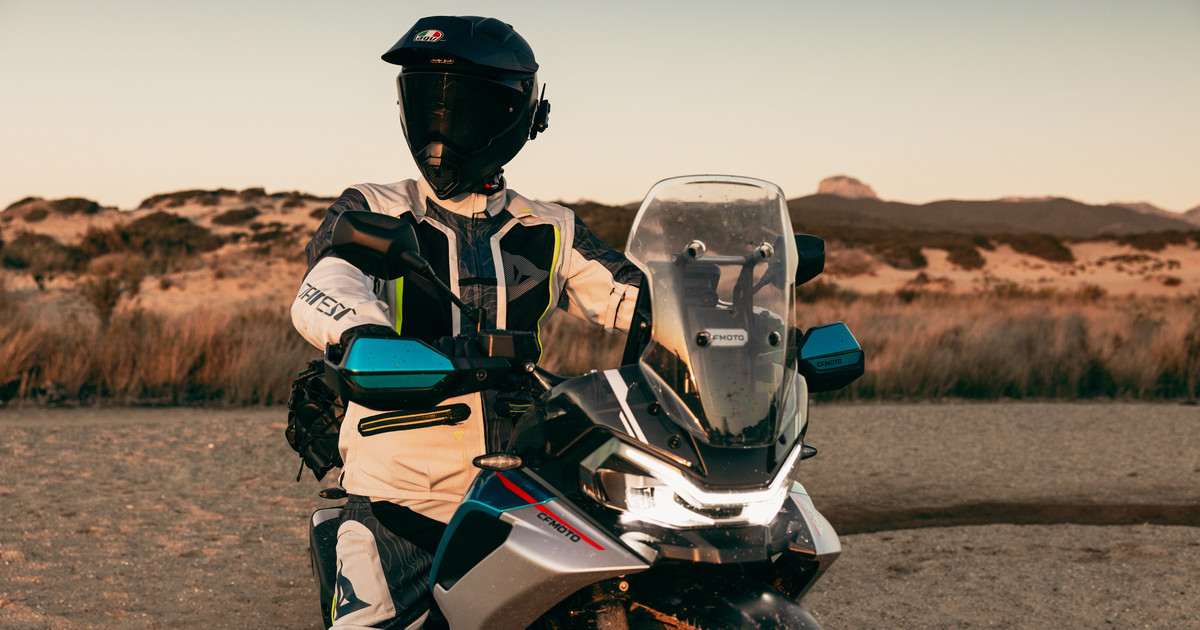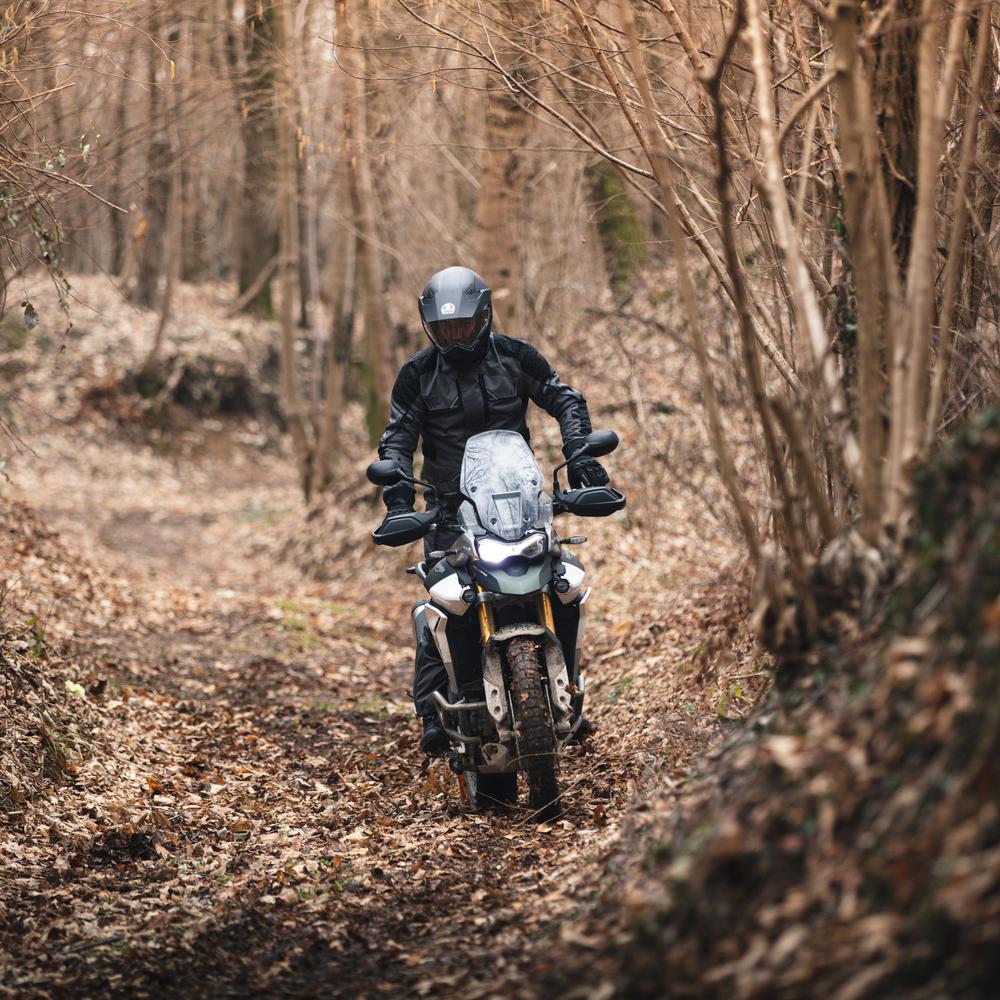


Fall is one of the most unpredictable seasons for motorcycle riders. Mornings can be cold enough for near-winter layers, and a few hours later the sun can send temperatures climbing. Wind and rain can complicate things, as can the changes you run into just by climbing in altitude or moving from one area to the next.
In these conditions, you need gear that can adapt. That's where the four-season motorcycle suit and the idea of gear modularity come in, both designed so you can quickly change your setup as conditions shift along the way.
Four-season motorcycle jackets: One jacket for every kind of weather
The idea is simple. Instead of owning a dedicated jacket for every condition, a four-season jacket lets you adjust your weather protection by adding or removing its layers.
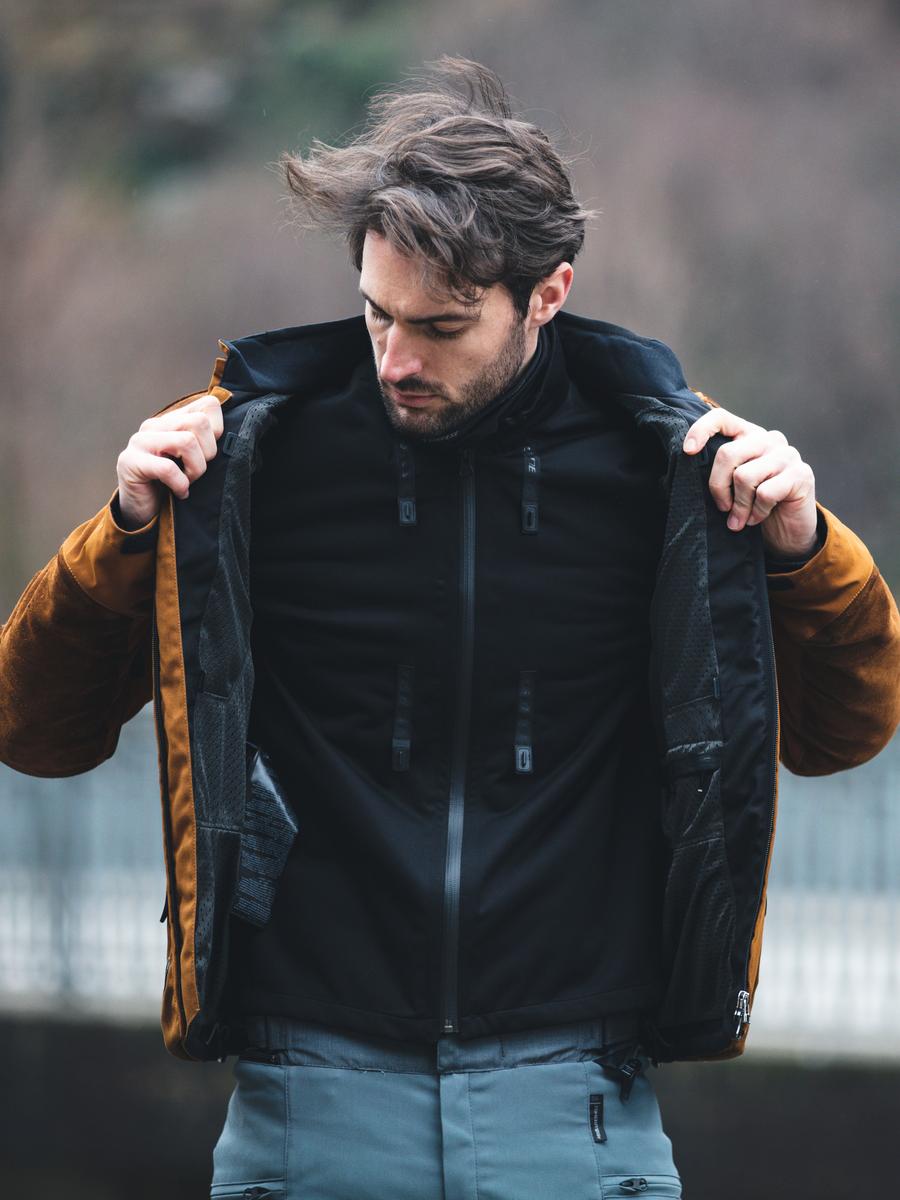
The full setup usually includes a removable inner waterproof membrane and thermal liner. With both layers in, the jacket blocks cold and rain. Pull the thermal liner for milder hours, and pull the membrane too for a lighter jacket with the vents at full flow.
That convertible design is what makes it ideal for fall and its constantly changing temperatures.
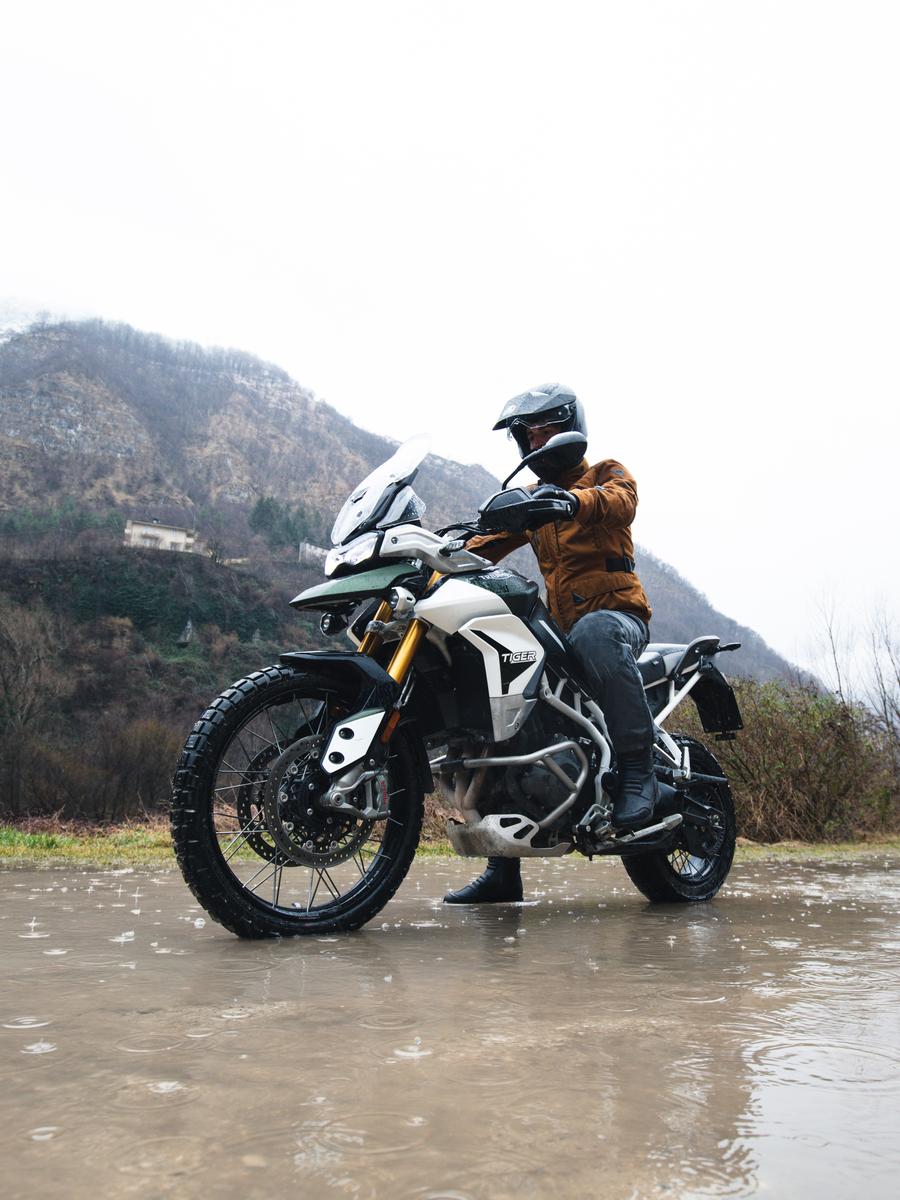
Waterproof membranes for motorcycle jackets: GORE-TEX®, Absøluteshell™, and D-Dry®
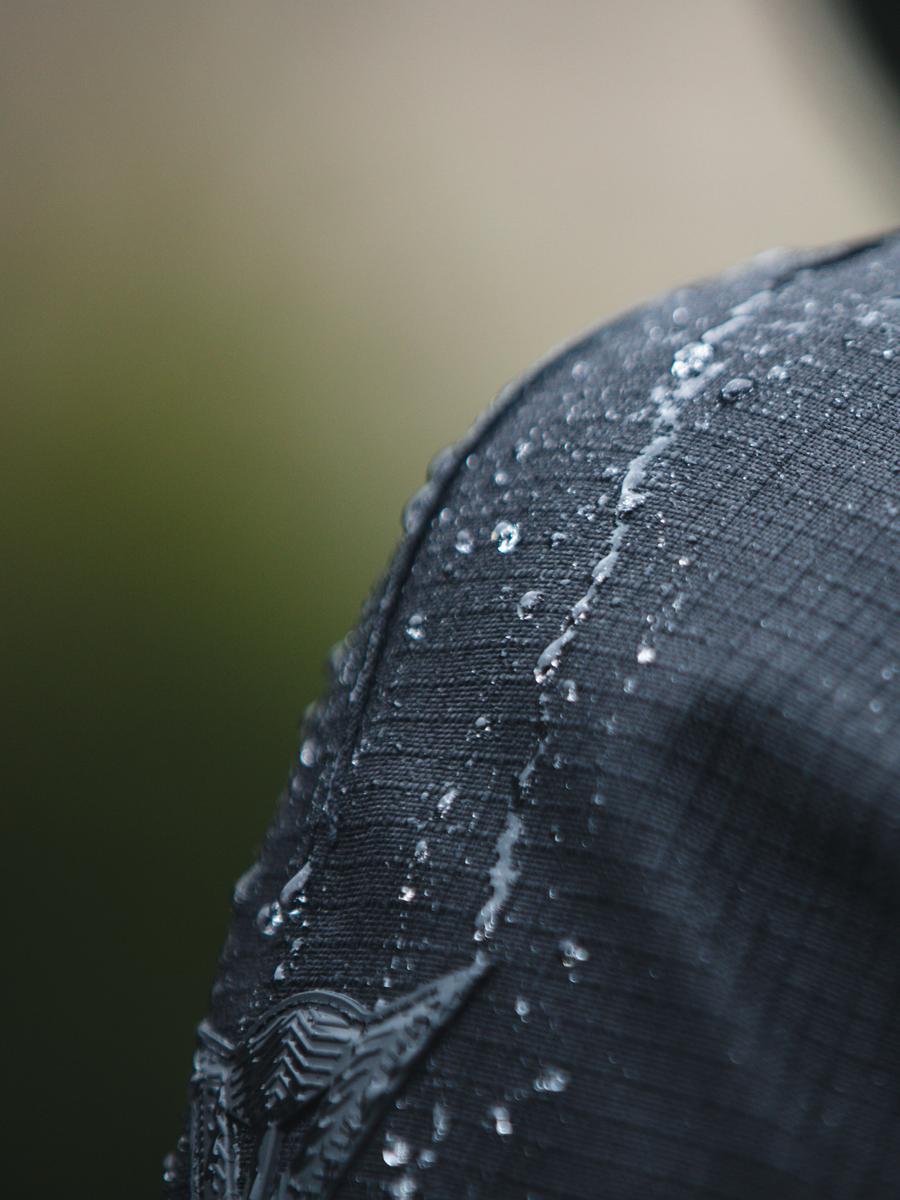
We often talk about waterproof touring motorcycle jackets, but first, let's clear something up. What is a waterproof membrane, exactly? It's a very thin layer with millions of microscopic pores. The pores are too small for water droplets to get in from outside, yet large enough to let the water vapor your body produces escape.
Whether it's GORE-TEX®, Absøluteshell™, or D-Dry®, the goal is to keep rain out without turning the inside of the jacket into a sealed box. The membrane has to strike a balance between waterproofing and breathability, two essential qualities when you spend long hours in the saddle.
Temperature control: How to layer your motorcycle jacket in fall
Early in the day, when temperatures are at their lowest, run the jacket in its warmest setup, with both the membrane and thermal liner in. The thermal liner helps trap heat, while the membrane blocks cold air and any rain. If your route climbs higher, where temperatures can drop even further, having these layers on hand really pays off.
The opposite problem comes up when temperatures rise during the day. When that happens, just remove the thermal liner and, if it's dry out, the membrane too.
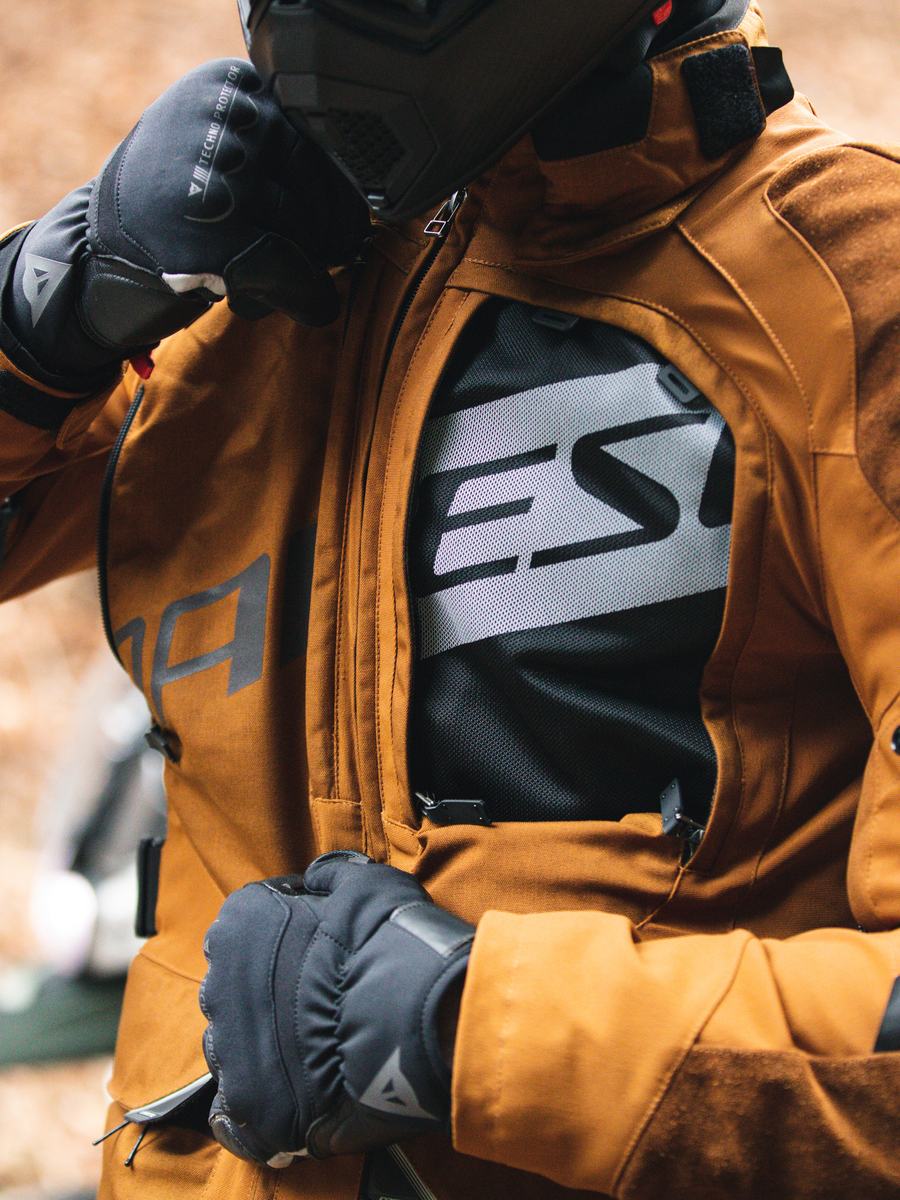
If temperatures climb significantly, you can open the large air vents usually found on the chest, back, and inner arms. Ventilation becomes a key part of the jacket's versatility. It doesn't just make the jacket wearable in summer; it also helps you handle the in-between temperatures typical of fall.


Technical riding base layers: Your first layer of temperature control
Temperature control doesn’t depend on your jacket and pants alone. What you wear underneath can also make a big difference to your comfort while riding.
A technical riding base layer set regulates body temperature, wicks sweat away, and dries faster than cotton. Always wear it as your first layer, next to the skin. Winter base layers are the obvious choice in the cold, but lighter ones also come in handy when temperatures are milder.
In particular, a lightweight long-sleeve technical top can keep your skin from touching the jacket lining directly, making the suit more comfortable when you sweat.
Fall motorcycle gloves: Why you should always carry two pairs
Your hands feel temperature changes fast, too. In fall, it’s worth carrying a spare pair of motorcycle gloves with you, especially on a multi-day trip. A summer glove may be enough during the warmest hours, while a waterproof touring glove offers more protection against rain and wind.
A second pair takes up little space and lets you adapt this part of your gear to the conditions, too.
Why modular gear matters on fall rides
Picture a typical fall day of riding. You head out early on a cold morning, wearing a base layer, the thermal liner, the waterproof membrane, and waterproof gloves. As the hours pass, the temperature rises. You can take out the liner and, if needed, the membrane, then open the air vents for more airflow and switch to lighter gloves.
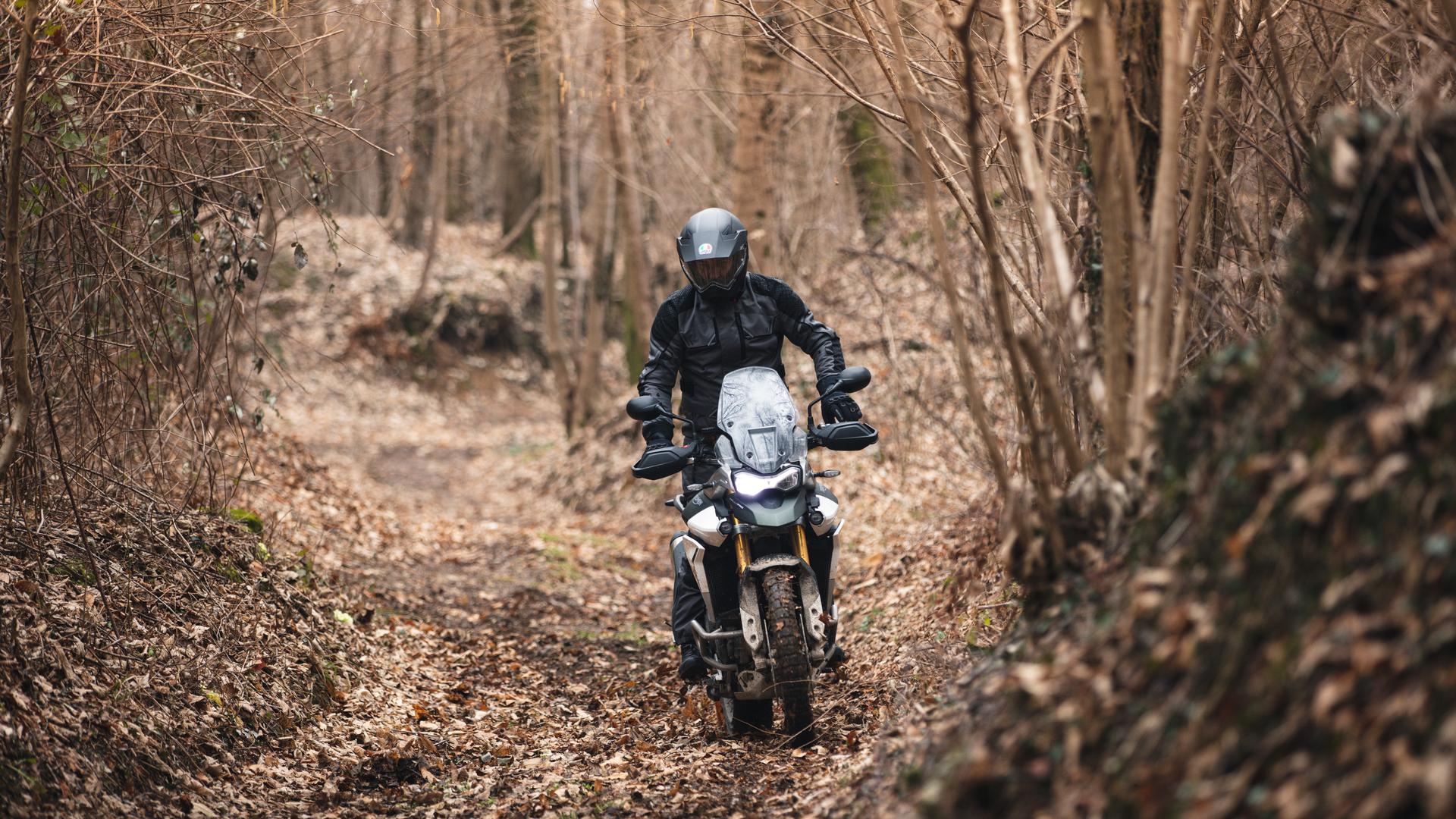
Then the route climbs, the temperature drops, and the thermal liner earns its place again. Shortly after, the rain arrives. The waterproof gloves go back on, the membrane goes back in, and the jacket returns to its most protective setup.
This scenario is far from unusual on a fall motorcycle tour. This is exactly when the advantage of modular gear becomes clear. You don’t need to know the day’s exact temperature, because you can adjust your gear as conditions change.
In short, the four-season motorcycle suit is built to adapt to changing conditions, giving you one set of gear you can reconfigure for temperature, rain, and ventilation needs.
Other options may be more specialized for cold or for riding in the rain, but when the goal is to handle different conditions with the same gear, modularity remains the key advantage.
Laminated and drop-liner membranes: Alternatives to four-season touring suits
Four-season motorcycle suits are the most versatile solution, but they’re not the only option. Some garments are designed to prioritize specific features, which can make them better suited to certain conditions.
Motorcycle suits with a laminated waterproof membrane focus on rain protection. Here, the membrane is bonded directly to the outer fabric, which is especially effective at keeping the shell from getting soaked.
Finally, there are jackets and pants with a drop-liner membrane, which is separate from the outer fabric but not removable. This construction can be especially effective in cold temperatures, due to the insulating layer of air between the outer fabric and the membrane.
Choosing your gear always comes down to the kind of motorcycle trip you’re planning. Whether you go for the maximum versatility of four-season motorcycle suits or for waterproof options with a laminated or drop-liner membrane comes down to personal preference.