

Picking the right motorcycle jacket from so many options isn’t as simple as it sounds. Just walk into any store and you’ll see the range of options: models in fabric or leather, touring, sporty or urban garments, up to waterproof, ventilated or multilayer variants.
The key thing to understand is that each type is built for a specific purpose. Making the right choice guarantees you three key advantages:
- Traveling with maximum comfort
- Safely cope with different weather conditions
- Always having adequate protection for your route.
So in this guide, let’s see how to navigate through the different categories of motorcycle jackets and figure out which one is really the most suitable based on how you use your motorcycle. To help you, in this article we will analyze step by step:
- Security and essential elements: how to read certifications (A, AA, AAA), the differences between hard and soft protectors, and the rules for compatibility with motorcycle airbags.
- Fabric jackets: a comprehensive overview of touring (laminated, multilayer, or summer), urban, sport, and off-road models.
- Leather jackets: the differences between racing-derived sportswear and vintage-inspired urban models.
- Practical guide to choosing: Concrete examples to help you find the perfect garment based on your habits (city commuting, long trips, sporty driving, or summer outings).
- Mistakes not to make: the most common pitfalls during purchase, from underestimating fit to believing in the myth of the “one jacket for all year round.”
The essential features of all motorcycle jackets
Certifications
Before we look at what sets them apart, let's start with what all motorcycle jackets have in common and what really makes them such. A true motorcycle garment, not just any jacket, must protect. Proof of this is a certification issued by an independent third-party body.
In the context of motorcycle jackets and pants, there are 3 reference classes: A, AA and AAA, with class A garments the lightest and triple A the most protective, typically leather suits. To be classified in these categories, a garment must pass laboratory tests that verify its resistance to abrasion and impact. Alternatively, there is class B for garments that protect only from impact and class C for those that protect only from abrasion. But for more specific information on motorcycle jacket and pants certifications, we refer you to our dedicated article.
Integrated Protectors
Now that we’ve covered certifications, let’s look at the protections found in motorcycle jackets. They come in essentially two types: rigid or soft. They are always found on the shoulders and elbows. The back protector, which in many cases can be inserted into a special pocket on the back, usually needs to be purchased separately.
Rigid, or composite, protections provide an outer shell of plastic material covered internally with a softer sponge. They are typical of the more technical jackets, the sportier leather ones or the touring ones designed for the heaviest uses.
Soft protectors, made of flexible, lightweight, perforated material, are most often integrated into urban jackets designed for comfort, or into those that focus on ventilation, making them suitable for hot climates.
But for a more in-depth explanation of the protections built into jackets, and in particular the difference of level 1 and level 2 certified protections, we refer you to our dedicated article.


Motorcycle airbags and jacket compatibility
In addition to the protective padding built into the jackets, there is the motorcycle airbag, a technology invented by Dainese and introduced in the MotoGP World Championship nearly twenty years ago, which is now becoming increasingly common on the road as well.
The evolution of electronic systems, such as Dainese D-air®, has led to the development of lightweight, discreet vests that, thanks to sensors and activation algorithms, inflate in just a few milliseconds only when needed, protecting sensitive areas such as the chest, collarbones, and back with greater effectiveness than traditional protectors.
Airbags can be worn over or under the motorcycle jacket. In the latter case, it is important to check compatibility with the garment being used: it needs to offer enough volume for the system to inflate properly. In short, an airbag vest should not be worn under a jacket that fits very tightly; In that case, it’s better to wear it on top.
The different types of motorcycle jackets
Now for the key questions: What are the types of motorcycle jackets on the market? How do you narrow down the options? Which features are suitable for which use? All simple for an experienced rider, but not so obvious for someone new to motorcycle racing. Let's be clear.
Fabric garments
The large family of fabric motorcycle jackets (both for women and for men) includes numerous subcategories: touring jackets, urban jackets and sport jackets. In particular, the touring jacket segment is very diverse, as the possible needs of those who put a lot of miles on a motorcycle vary depending on the weather, type of road—whether purely asphalt or mixed terrain—and personal preferences. But let’s look at them one by one.
Mangen Absøluteshell™ Pro
Super Sprint D-Dry
Springbok 3L Absøluteshell™
Touring Motorcycle Jackets
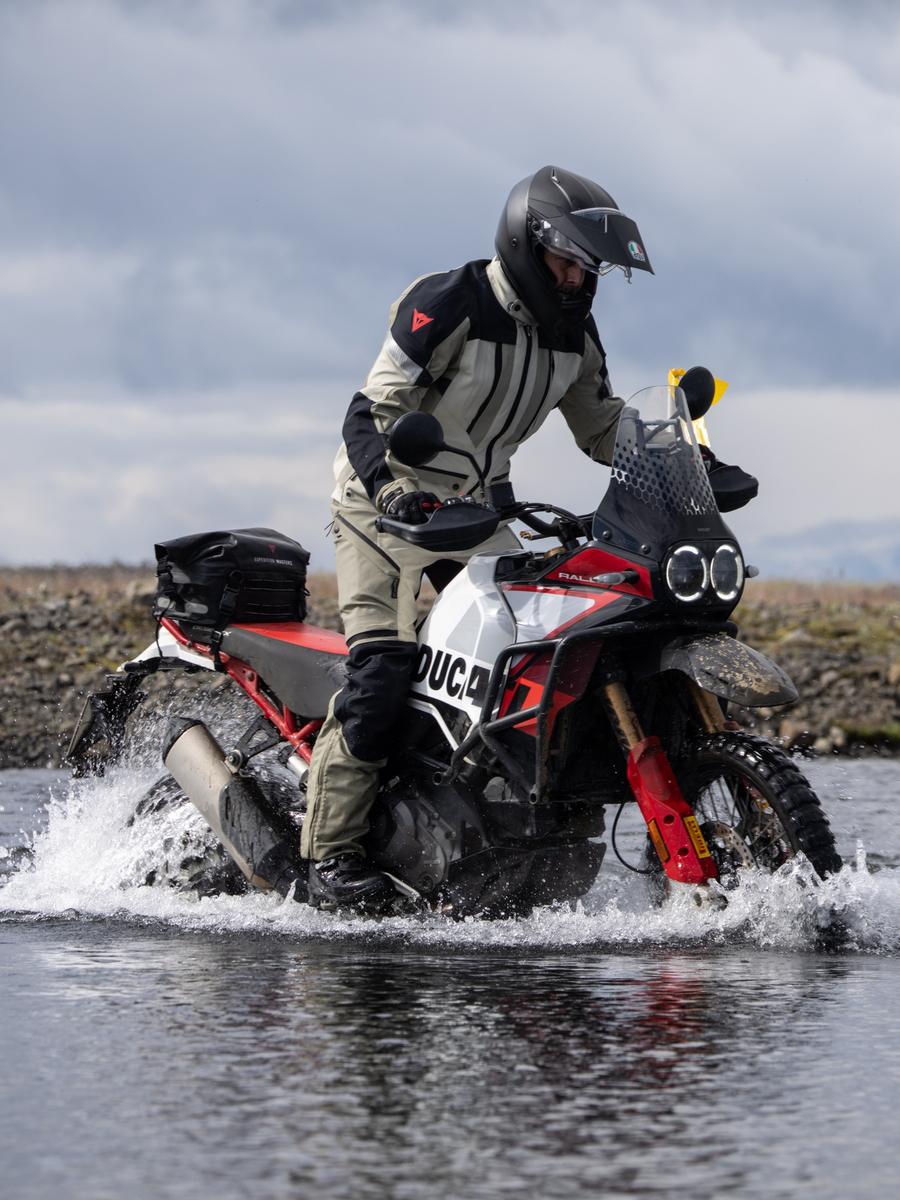
Motorcycle touring is a very broad field, covering a wide spectrum of possible uses for motorcycles. Touring motorcycles can mean very different things to different riders. They range from classic touring motorcycles with fairings, offering a relaxed riding position and generous wind protection, to modern sporty crossovers and adventure bikes suitable for travel on all types of terrain. Beyond their use, the real \\difference between \\touring jackets lies in the construction, that is, in how the waterproof membrane is integrated into the garment. Here are the possibilities.
- Laminated membrane
Waterproof jackets with laminated fabric are the most effective against rain. The waterproof membrane is directly bonded to the outer fabric, which prevents the garment from becoming soaked with water even after prolonged exposure. They are particularly sophisticated, and therefore expensive.
- Floating membrane
Floating membrane jackets are the most suitable for cold weather, but are less effective against water. In these jackets, the waterproof membrane is not bonded to the outer fabric. This creates an air cushion in the middle that acts as insulation against the cold outside.
- Three layers/four seasons
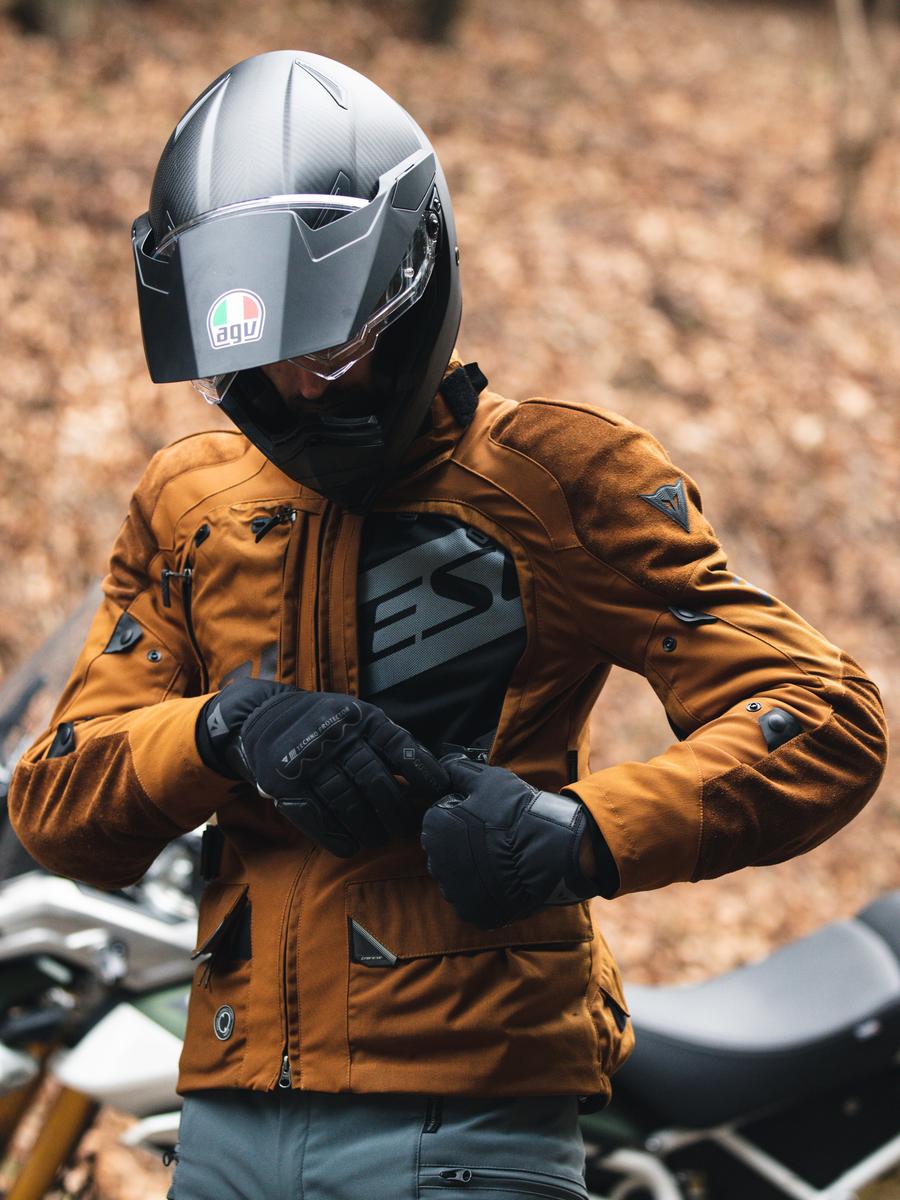
Multi-layered jackets, usually 3 (outer shell, waterproof lining, cushioning), are the most versatile and are also called “four-season” jackets. By playing with layers, you can create garments that are purely for winter or, by removing all the layers and opening the numerous air vents, garments that can be worn even in milder temperatures.
- Ventilated Summer Jackets
For motorcycle riding in summer, the best choice is a fully ventilated jacket: These garments feature large areas of mesh fabric that allow for excellent heat transfer even at low speeds, which is essential for staying perfectly comfortable and always focused on riding.


Off-road
Off-road jackets, designed for an activity that requires significant physical exertion, are generally lightweight, full of pockets and air vents, and feature detachable sleeves to stay cool when temperatures rise. Unlike road jackets, they are often worn over dedicated protectors such as bibs or safety jackets.
Sports jackets in fabric
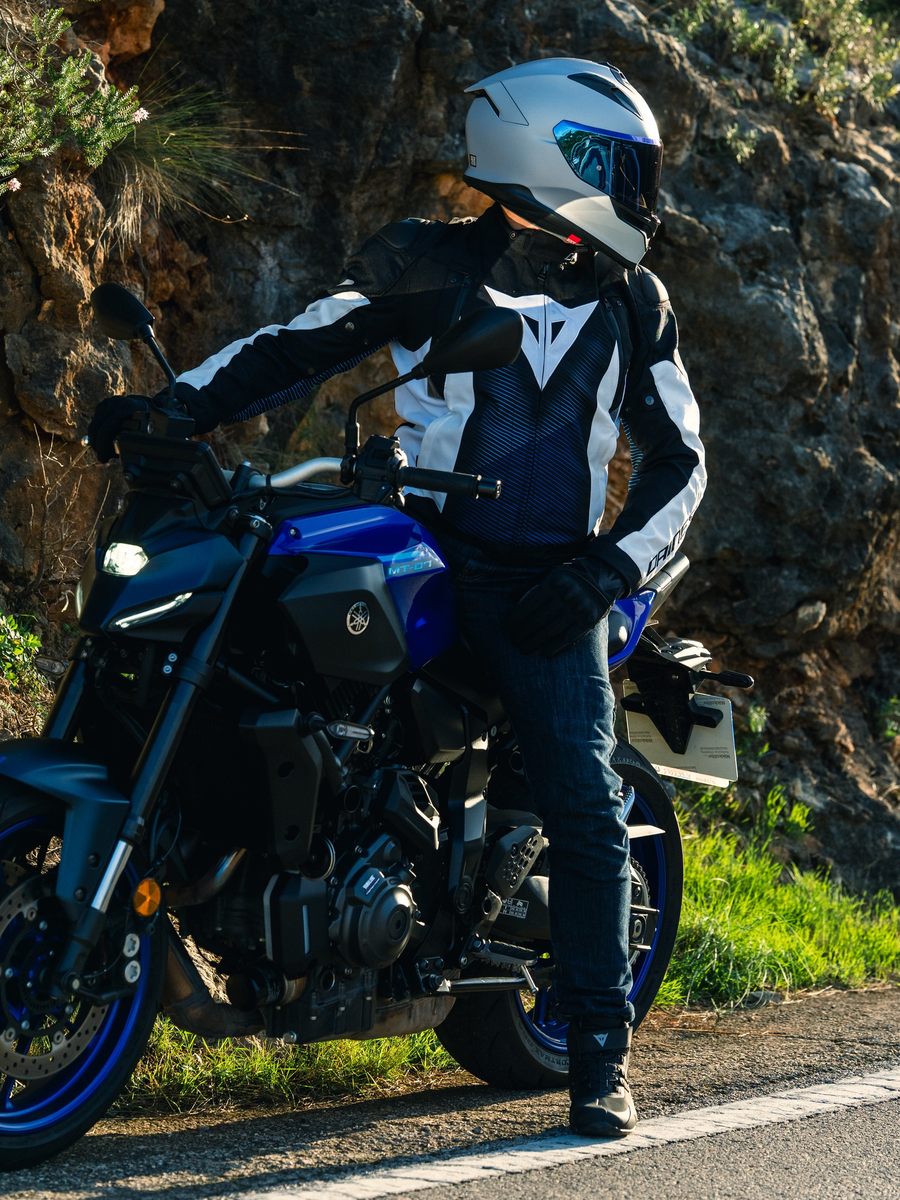
Fabric sports jackets, compared to their leather counterparts, may have similar designs, but they are suited to less intense and demanding motorcycle use. They are generally lighter, softer, and more practical when worn for short trips. They can be made with the integration of a waterproof membrane, with a removable thermal lining, or may feature mesh areas for use at high temperatures.
Urban fabric jackets
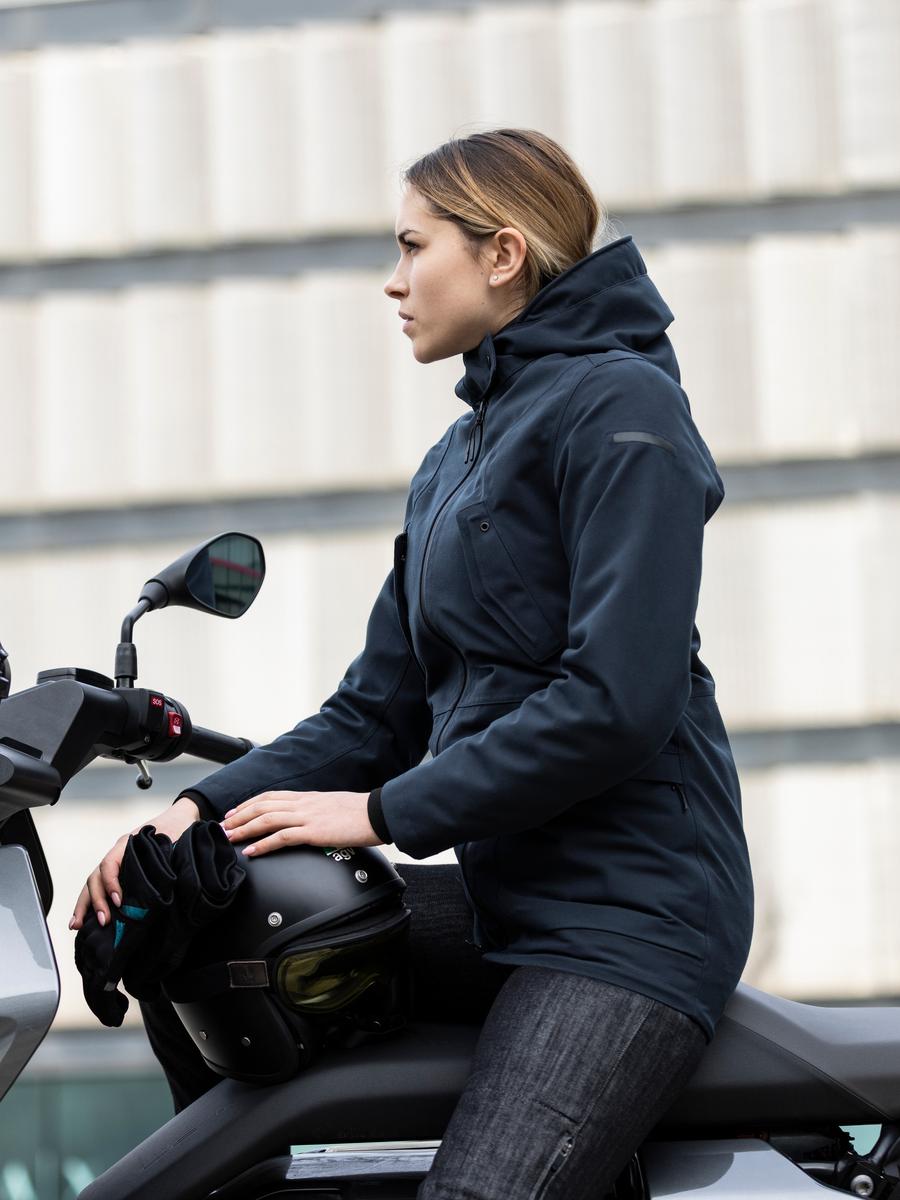
Urban motorcycle jackets are designed to combine the look of an everyday garment with the safety features required of a technical garment. These are garments with an understated, comfort-oriented look, with fewer air vents and pockets, perfect for short trips, to be worn on a scooter, to go to work or run errands. This segment also includes waterproof winter jackets, mid-season jackets, and fully ventilated summer options.
Leather motorcycle jackets
We now move to the family of leather motorcycle jackets (both for men and women), which can basically be of two types: sporty leather jackets or urban, typically vintage-inspired leather jackets.
Sports
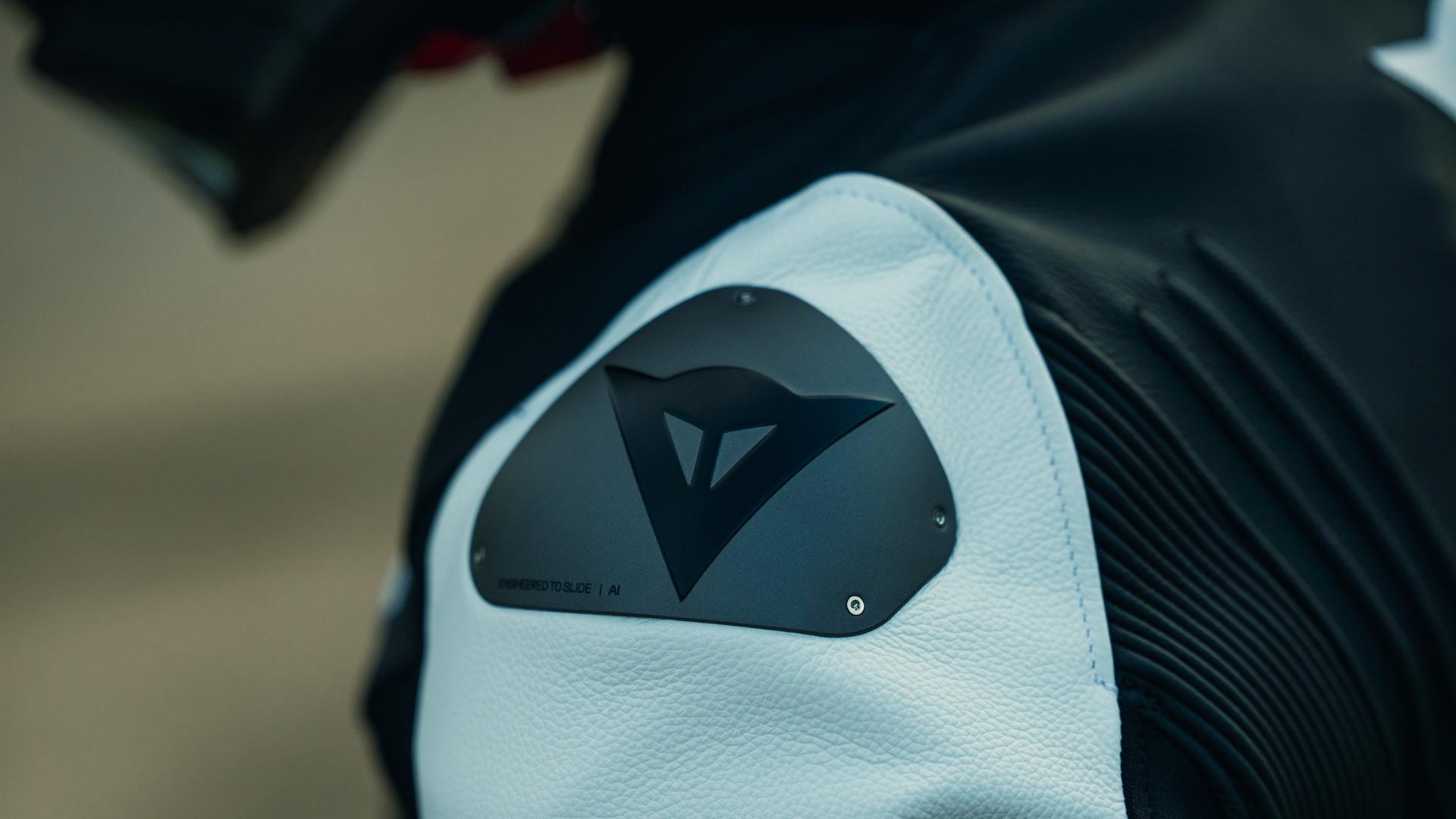
Leather sport jackets are garments that come from the racing world, feature numerous solutions borrowed from track suits, and pair well with sport bikes of various kinds—faired, naked, or even crossover. The main material is leather, which offers excellent abrasion resistance and durability, combined with stretch panels. On Dainese's high-end sport leather jackets, you will find elements such as metal protectors on the shoulders, sliders on the elbows, and an aerodynamic hump on the back. They can be made of perforated leather, suitable for hot climates.
Urban
As mentioned, urban leather motorcycle jackets draw heavily on vintage styling: muted colors, modern but inconspicuous technical solutions. They’re typically paired with scramblers, café racers, or vintage-style bikes. Jackets like these work just as well as everyday wear, letting you carry your style off the motorcycle too.
Whatever style you ride, keeping your leather motorcycle jacket in top condition starts with knowing how to clean a leather motorcycle jacket without ruining it. Find all of Dainese’s care tips in our guide.
How to choose the right motorcycle jacket
Now that we’ve covered the main jacket types, the right choice comes down to how you actually ride. More than the specific model, what matters is understanding when and where you’ll be riding: type of route, climate, and how often you ride. Here are a few common scenarios to help you narrow it down.
- Everyday urban use: if the city is your main terrain, an urban jacket, whether made of leather or fabric, is the natural choice, ideally one that also offers waterproofing for unpredictable weather.
- Weekend rides and mixed use: if you split your time between city streets and open roads, a versatile sport or touring jacket made of fabric, perhaps with a removable waterproof membrane, is the best compromise.
- Long trips and touring: for riders who log serious miles, touring jackets are the clear answer. Laminated models offer the strongest rain protection, while multilayer options adapt better to changing conditions.
- Hot climates and summer use: when the heat climbs, ventilated mesh jackets are the go-to for staying comfortable in the saddle.
- Sports riding: when the riding gets aggressive, leather jackets remain the benchmark for protection and abrasion resistance, especially when riding sport or naked bikes.


Mistakes to avoid when choosing a motorcycle jacket
Choosing a motorcycle jacket isn’t complicated, but a few very common mistakes can easily steer you wrong. Here are the key ones to watch out for.
- Choosing on looks alone: a jacket can look great, but if it doesn’t suit your riding style, it’ll sit in the closet. First comes functionality, then comes style.
- Ignoring certifications: not all “motorcycle” jackets offer the same level of protection. Checking the class — A, AA, or AAA — is essential to understanding how much protection a garment actually offers.
- Underestimating the weather: a jacket that is too warm or lacks ventilation will sit unused for months. The same goes in reverse: a jacket that’s too light will leave you exposed during the shoulder seasons or in the cold.
- Assuming one jacket does it all: it’s one of the most common mistakes riders make. A jacket that is perfect for summer won’t work in winter, and vice versa. Even the most versatile three-layer/four-season jackets struggle above 86°F. If you ride year-round, owning more than one jacket is the norm, not the exception.
- Getting the fit wrong: a jacket needs to sit correctly on the body: not too loose, not too tight. If the protectors shift or won’t stay in place, they can’t do their job.
- Ignoring your actual riding habits: buying a touring jacket for city commuting, or an urban jacket for long hauls, almost always ends in disappointment.
So what is the best motorcycle jacket to buy?
Ultimately, there’s no single “best” motorcycle jacket, but there is technical clothing that’s right for the way you ride.