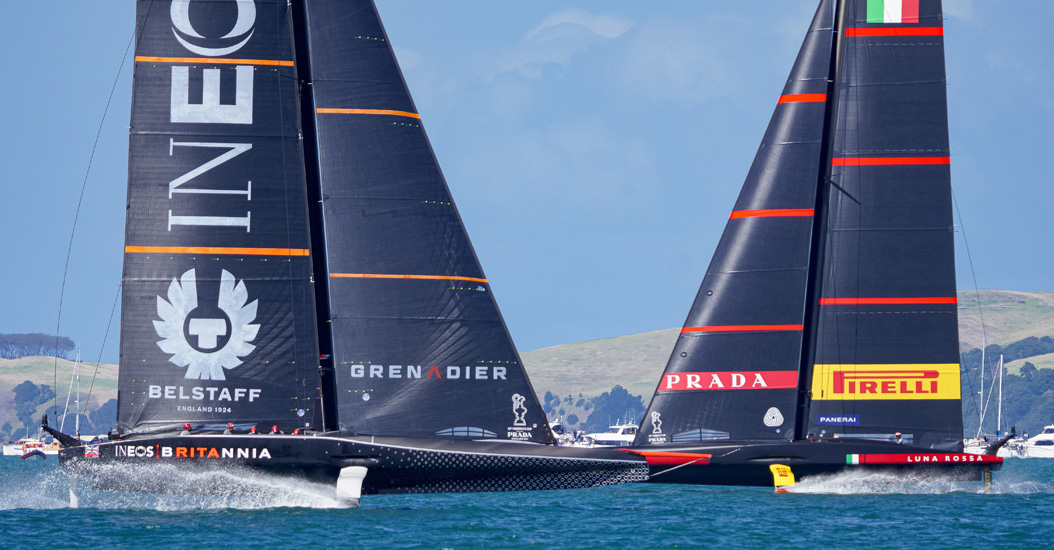
Der 36. America’s Cup presented by PRADA steht in Neuseeland, vor der Küste von Auckland, in den Startlöchern. Luna Rossa Prada Pirelli und Emirates Team New Zealand, Challenger bzw. Defender, treffen vom 6. bis 15. März in einer Reihe von Regatten aufeinander, in denen das schnellste Segelboot und die schnellste Crew aller Meere bestimmt werden. Beide Teams tragen Dainese Sea-Guard, eine speziell für Regatten entwickelte Schutzweste. Aber warum müssen sich diese Sportler schützen?
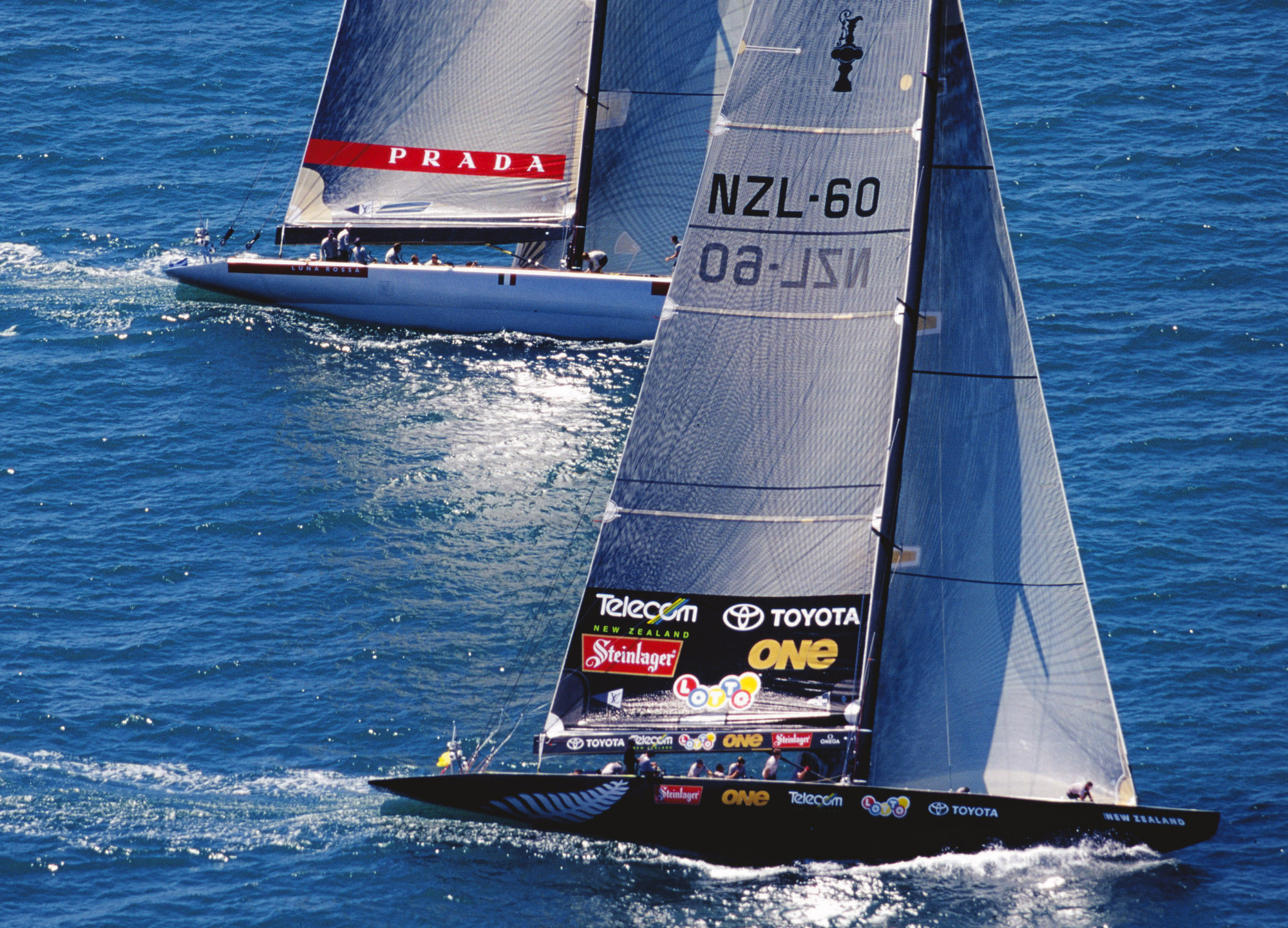
Luna Rossa und Team New Zeland, 2000. © Studio Borlenghi
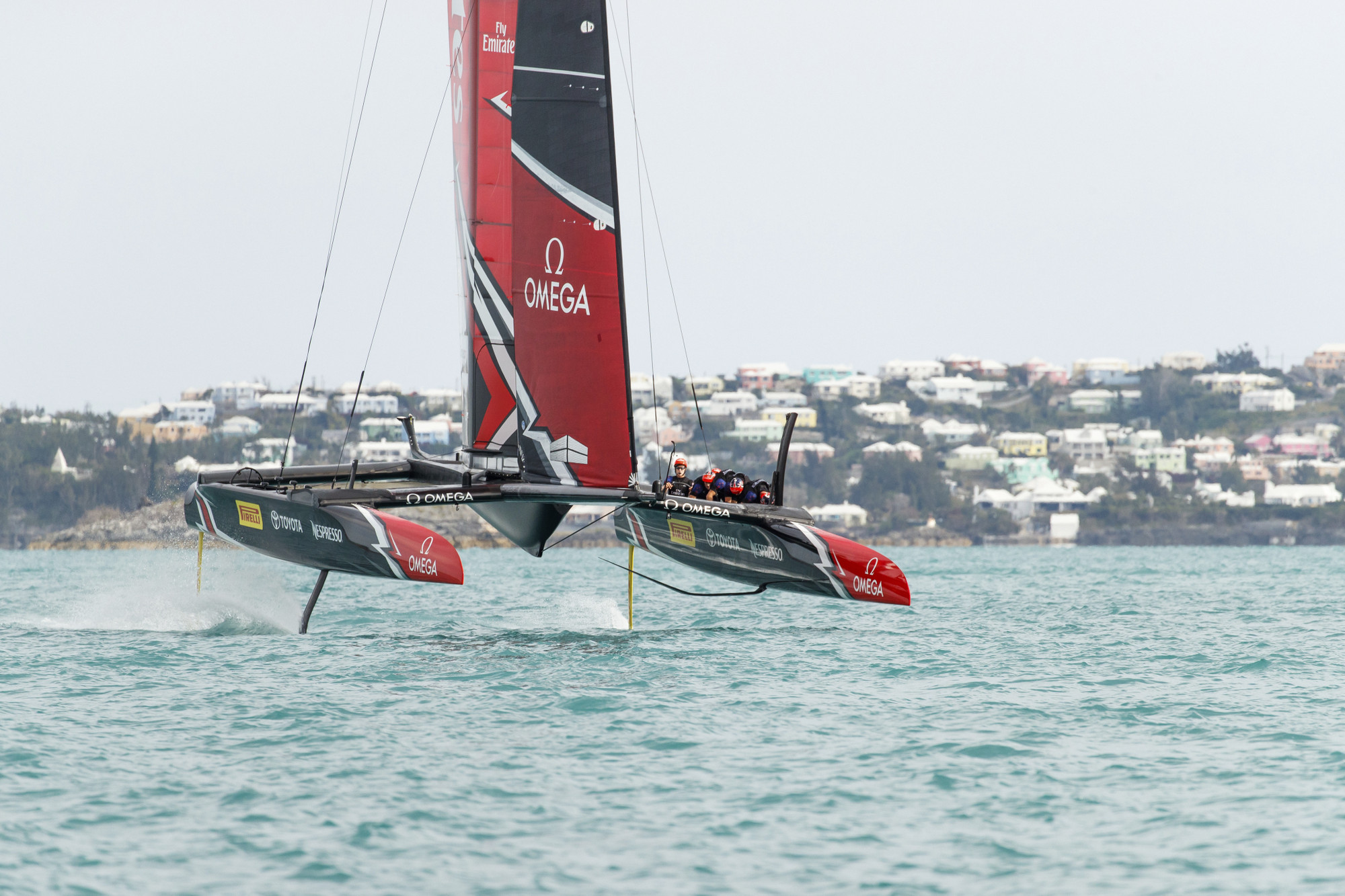
Emirates Team New Zealand, 2017
Die fliegenden Einrümpfer des 36. America’s Cup
Die Boote der AC75-Klasse
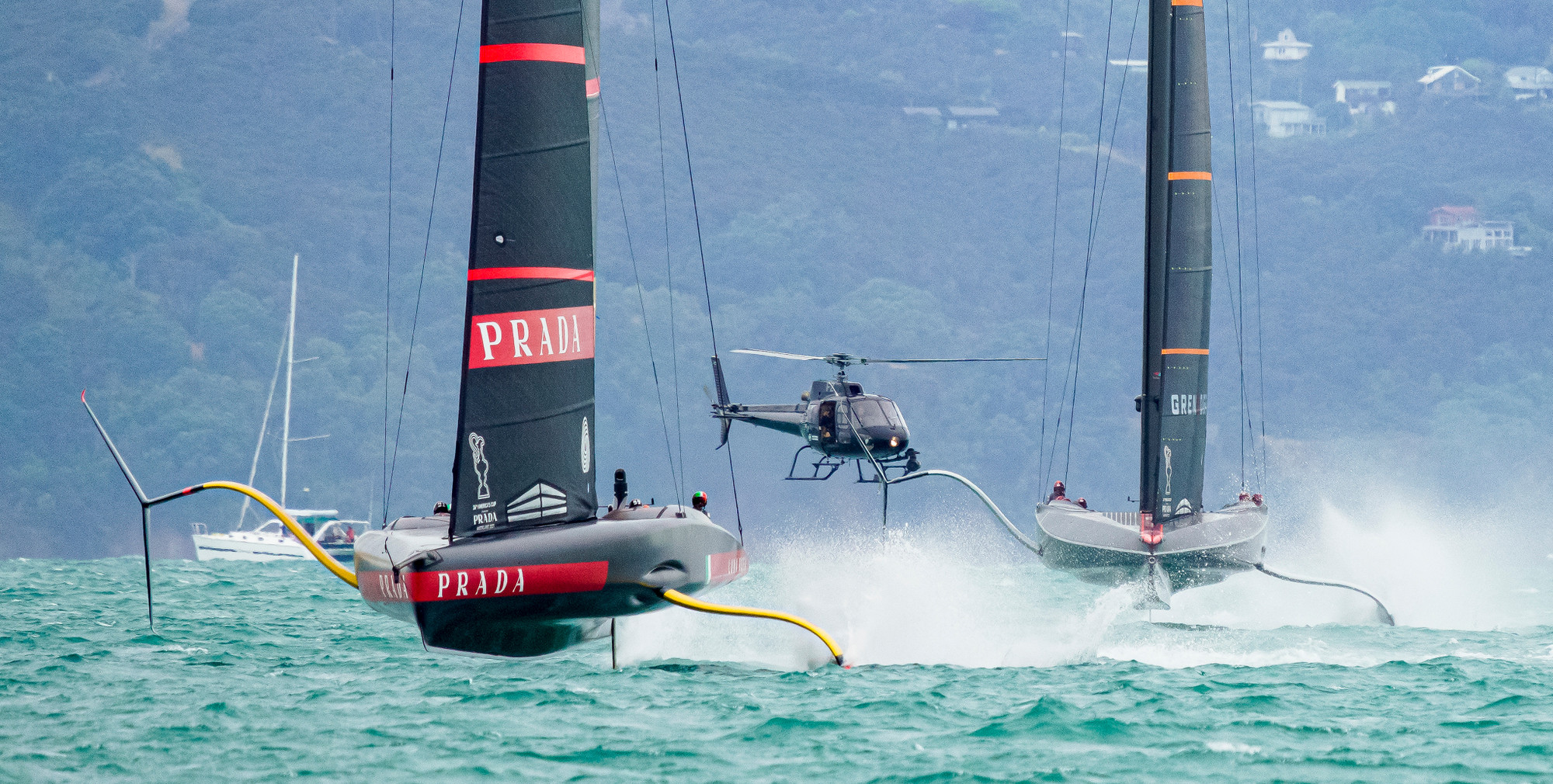
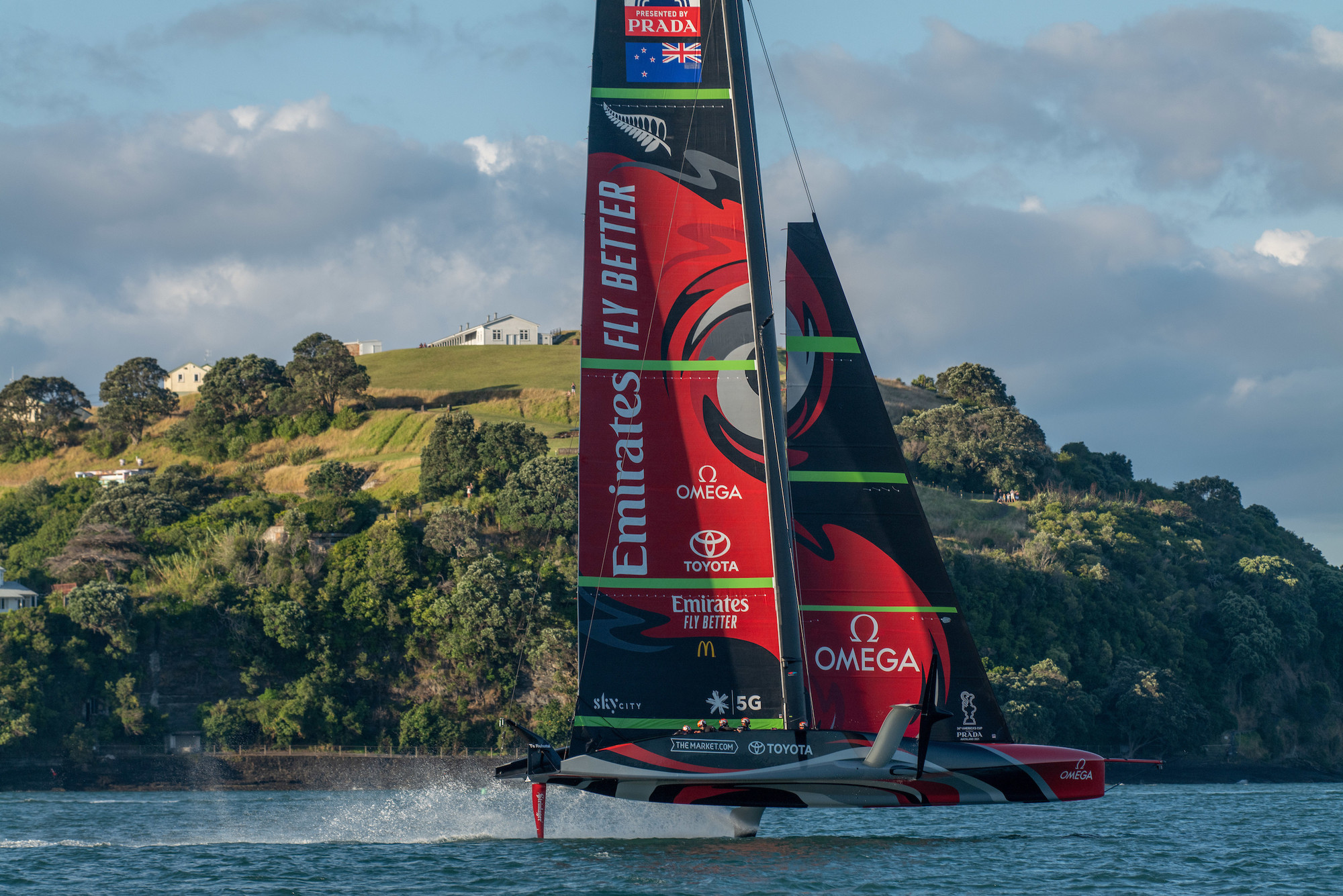
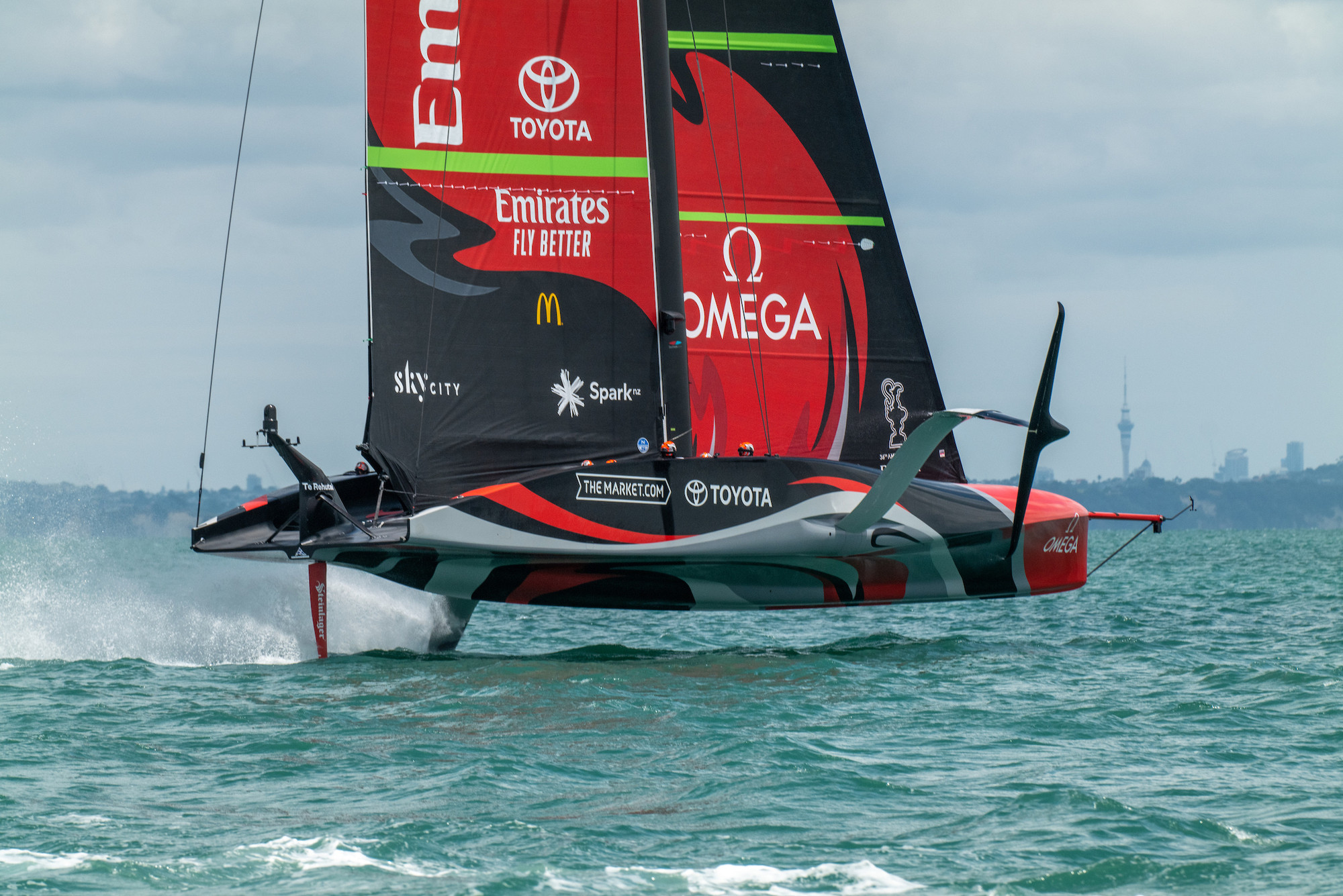
Die Boote des America’s Cup haben sich in nur wenigen Jahren stark verändert. Die einstigen traditionellen Einrumpfboote sind zu fliegenden Einrumpfbooten geworden. Ein fliegender Einrümpfer hat die Besonderheit, dass er mit Foils ausgestattet ist. Diese beweglichen Flügel werden durch ein hydraulisches System gesteuert und sind an den Seiten des Rumpfes positioniert. Durch die Erzeugung von Auftrieb ermöglichen sie es den Booten, sich buchstäblich aus dem Wasser zu katapultieren, während nur die Enden der Foils, oder einem von ihnen, und das Ruder untergetaucht bleiben.
Das physikalische Prinzip, das hinter diesem Phänomen steckt, ist dasselbe, das ein Flugzeug fliegen lässt. Ähnlich wie bei einem Flugzeug mit der Luft, drückt ab einer bestimmten Geschwindigkeit die Kraft senkrecht zur Bewegungsrichtung den Körper nach oben und lässt ihn während der Navigation aufsteigen. Grundsätzlich verhält sich das in Wasser getauchte Foil wie ein Flügel in der Luft.

Luna Rossa und Team New Zeland, 2000. © Studio Borlenghi
Emirates Team New Zealand, 2017
Die fliegenden Einrümpfer des 36. America’s Cup
Why raise the hull out of the water? Because doing so drastically reduces friction and significantly benefits speed. Top speeds are now around 50 knots, or almost 100 kilometers per hour. Boats have evolved to the point that the hulls are designed according to the laws of aerodynamics, rather than those of hydrodynamics, since they remain immersed only when stationary and when maneuvering at reduced speed.
The forces at play
AC75 class boats are 75 feet long (just under 23 meters), weigh 6.5 tons and have a total sail surface area of more than 200 square meters. It is precisely these numbers, and a crew of eleven sailors, that allow them to reach the aforementioned speeds and create the forces that now see sailing classified as an extreme sport in every respect.
Luna Rossa und Team New Zeland, 2000. © Studio Borlenghi
Emirates Team New Zealand, 2017
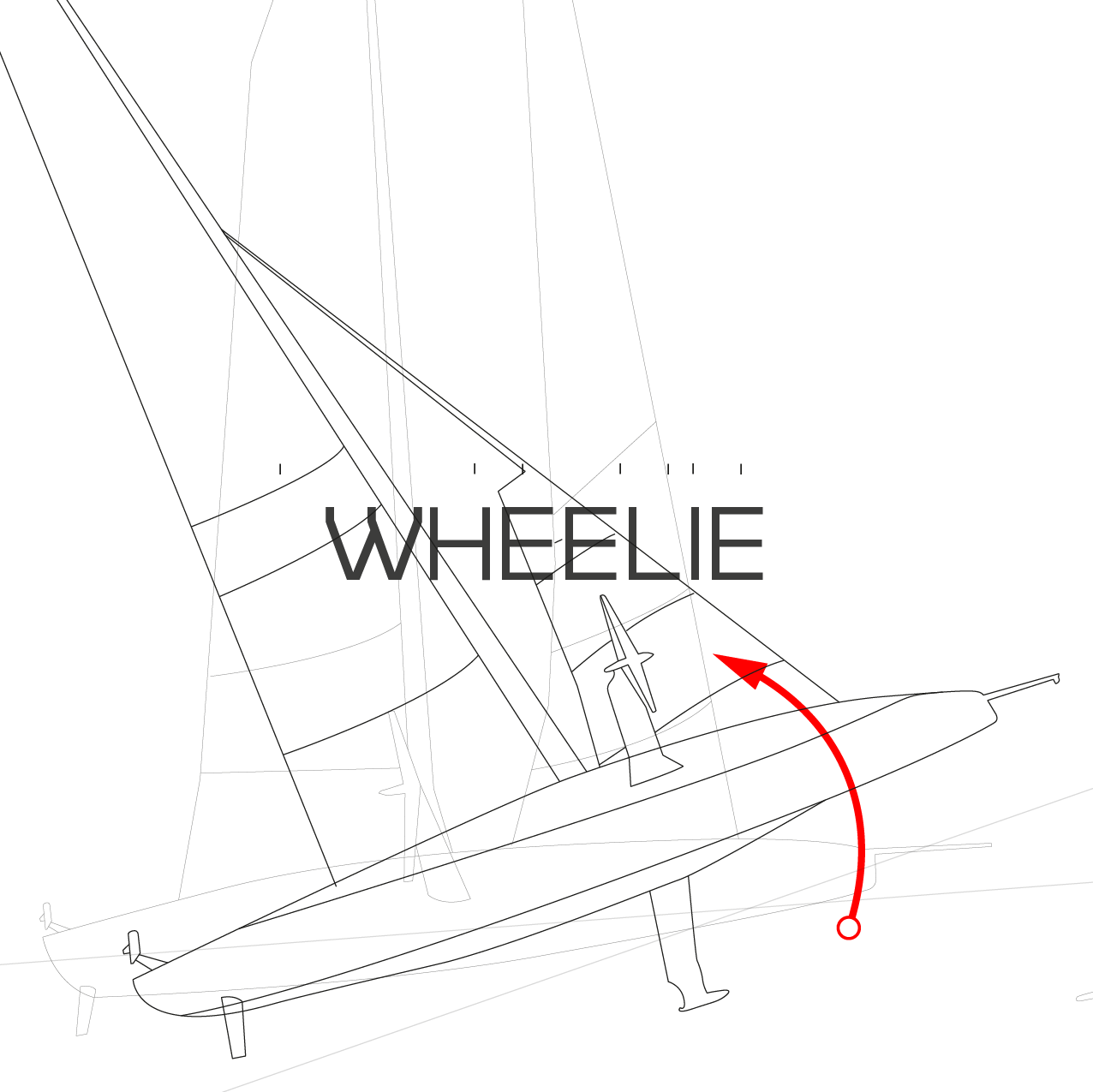
Die fliegenden Einrümpfer des 36. America’s Cup
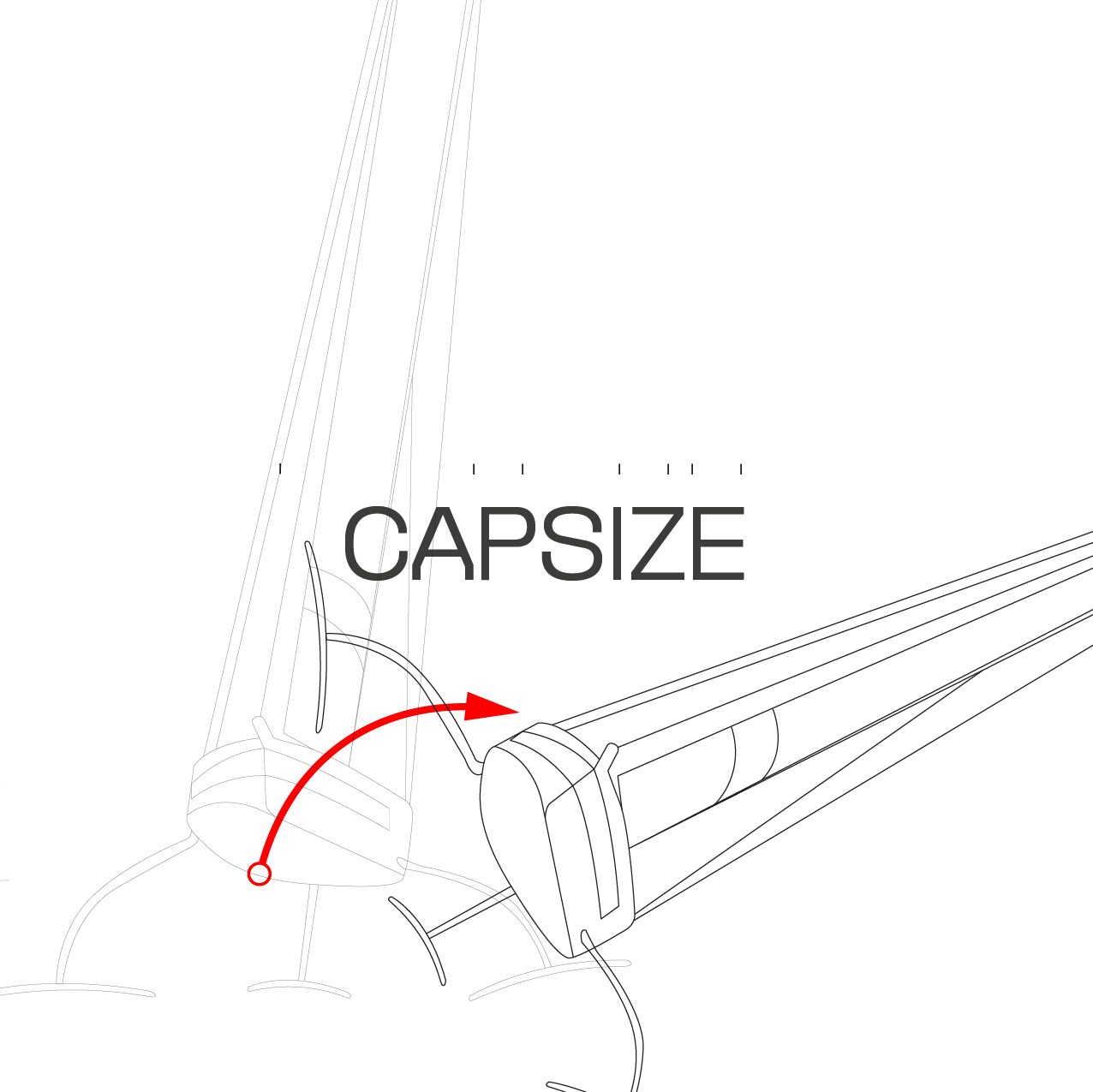
The most classical accident, the capsize
The lateral G-force to which teams are subjected on board reaches 1.5G and, in these extreme situations, any setback can have catastrophic consequences. During the initial stages of the PRADA Cup, the preliminary competition that decides who will be the challenger in the America's Cup, various accidents occurred, one of which caused considerable damage to a boat.
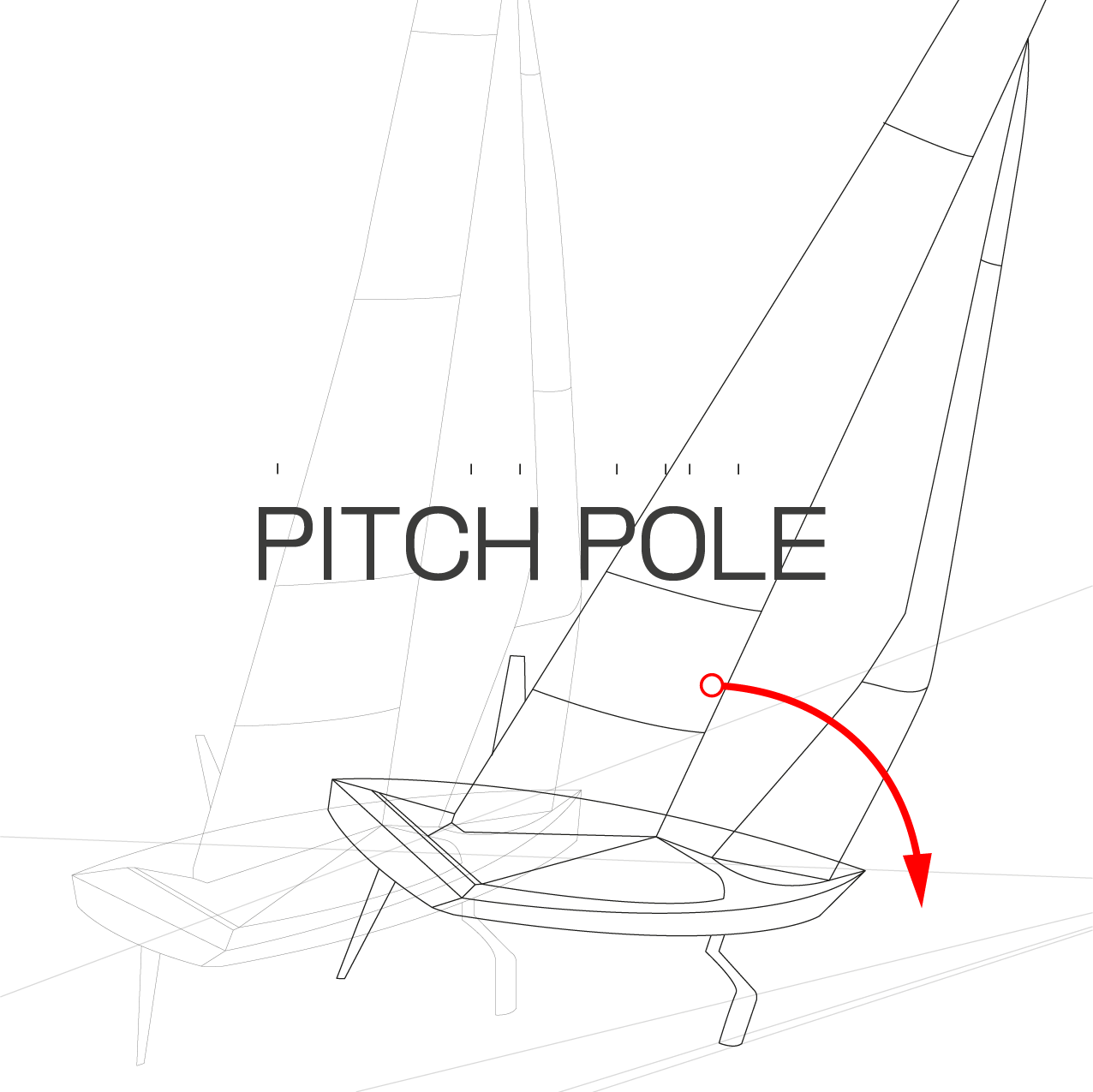
During the round robins, Patriot, American Magic’s monohull, capsized, which caused a leak in the hull and forced the US team to retire. Back in the semifinal race against Luna Rossa Prada Pirelli, Patriot was unable to qualify for the final phase. Other classic accidents to which these boats are prone are the so-called wheelie and the nose-dive, which occurs when the bow sticks into the water and causes a sudden deceleration. Emirates Team New Zealand experienced this during a test race against Ineos Team UK.
var options = { clientId: "dainese", xcontentId: "05412baa-d9d9-46a8-92b4-76dfbb2996ad", sessId: "tbdyoh" }; var player = THRONContentExperience("kjomd", options);
With respect to the flying catamarans of the 35th edition, the flying monohulls of the 36th America's Cup presented by PRADA mark a clear departure from the past and boast increasingly impressive performance. But increased performance also means more risk for the crews. Hence the need for greater on-board safety, as Dainese supports both teams vying for the world’s oldest sporting trophy with its protective technology.